Hardy Bonsai Trees: 12 Species That Handle Cold Winters

This post contains affiliate links. As an Amazon Associate, OurBonsai earns from qualifying purchases at no extra cost to you. Read our disclosure.
In this guide
- What makes a bonsai tree “hardy”?
- 12 hardy bonsai trees
- Species that are less hardy than you might think
- How to protect hardy bonsai roots in winter
- Why hardy trees should not come indoors
- Winter watering for hardy bonsai
- Spring care after a cold winter
- Choosing the right hardy tree for you
- FAQ: hardy bonsai trees
- Final thoughts
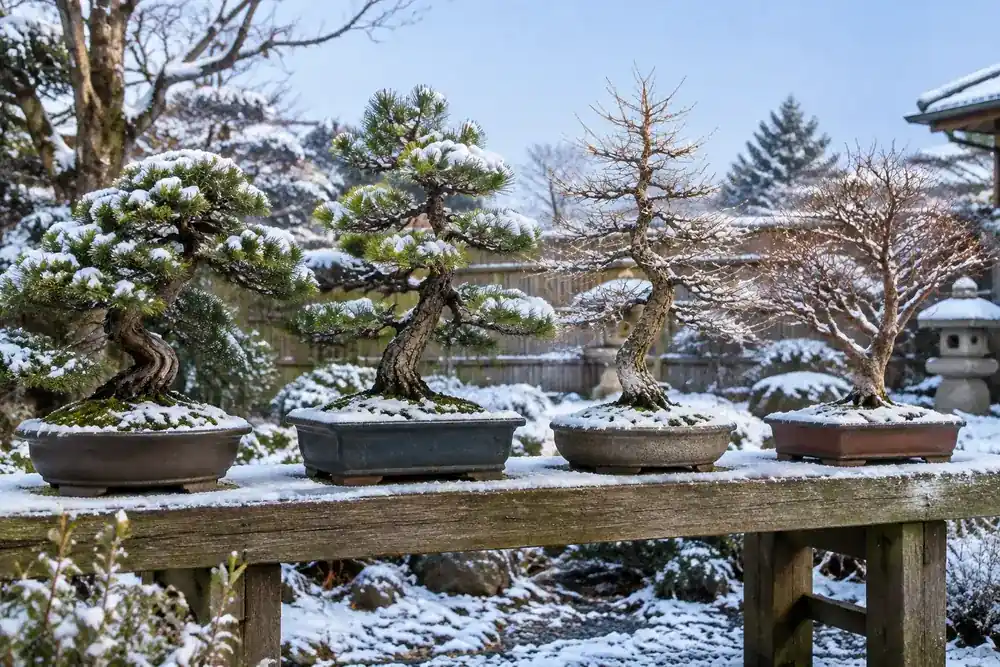
If you live somewhere with cold winters, choosing hardy bonsai trees makes life much easier. Tropical species such as ficus and Fukien tea must come indoors before the first frost, but hardy temperate trees are happiest outside all year. They need the cold to rest, and they reward you with strong spring growth, autumn color and seasonal changes that indoor trees never show.
This guide lists 12 hardy species, explains how cold each can handle in a bonsai pot, and shows how to protect their roots through hard winters.
What makes a bonsai tree “hardy”?
A hardy tree survives freezing temperatures without serious damage. Gardeners describe this using hardiness zones, based on average winter lows. In bonsai, there is one important catch:
Roots in a pot are much less hardy than the tree above ground. In the ground, roots are insulated by soil. In a shallow bonsai pot, they can freeze solid. A rough rule many growers use is to assume a potted tree’s roots are about two zones less hardy than the same tree planted in the ground.
So even hardy trees need some root protection in long, hard freezes. Check your local winter lows on the USDA plant hardiness map.
12 hardy bonsai trees
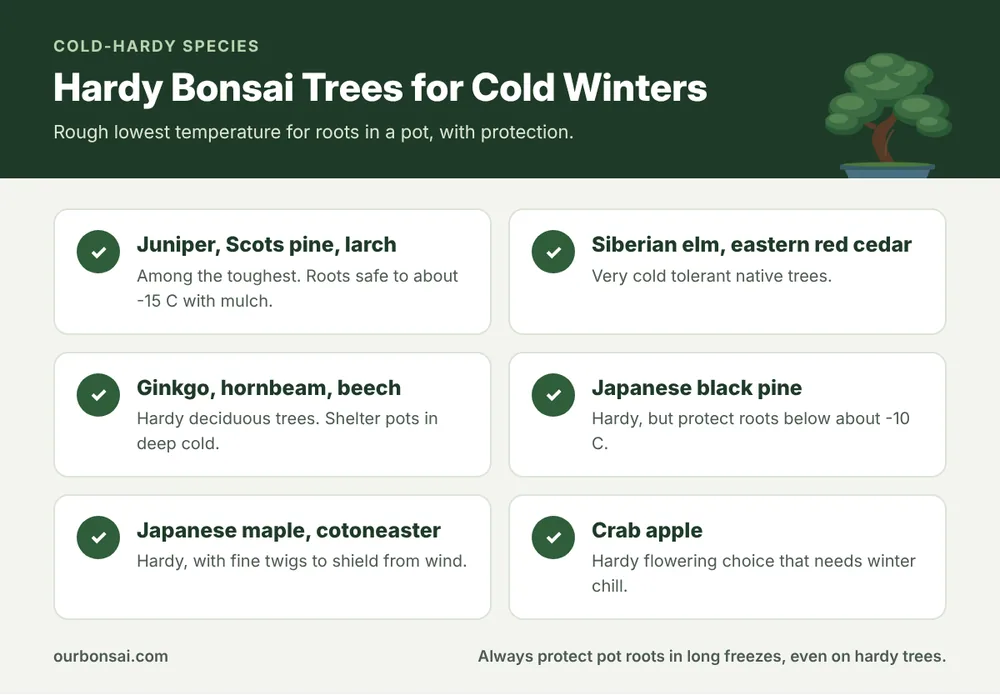
| Species | Type | Hardiness in ground (approx.) | Notes |
|---|---|---|---|
| Juniper | Evergreen conifer | Zone 3 to 4 | Tough, classic beginner tree |
| Scots pine | Evergreen conifer | Zone 3 | Very cold tolerant |
| Larch | Deciduous conifer | Zone 2 to 3 | One of the hardiest |
| Siberian elm | Deciduous | Zone 3 to 4 | Fast, very tough |
| Eastern red cedar | Evergreen conifer | Zone 3 | Native to North America |
| Ginkgo | Deciduous | Zone 3 to 4 | Golden autumn color |
| Hornbeam | Deciduous | Zone 4 to 5 | Fine twigs, smooth bark |
| European beech | Deciduous | Zone 4 to 5 | Holds dry leaves in winter |
| Japanese black pine | Evergreen conifer | Zone 5 to 6 | Classic pine bonsai |
| Japanese maple | Deciduous | Zone 5 to 6 | Shield twigs from wind |
| Cotoneaster | Semi-evergreen shrub | Zone 4 to 5 | Small leaves, red berries |
| Crab apple | Deciduous flowering | Zone 4 to 5 | Spring flowers, fruit |
1. Juniper
Junipers are among the toughest bonsai you can grow and need a cold outdoor winter to stay healthy. Their foliage often turns purple in cold weather, which is normal. Our Japanese juniper bonsai tree care guide covers year-round care.
2. Scots pine
Native across northern Europe and Asia, Scots pine handles severe cold. It has short, blue-green needles and attractive orange upper bark on older trees.
3. Larch
Larch is a deciduous conifer that turns gold and drops its needles in autumn. It is one of the most cold-hardy trees in the world. Our guide to the best soil for larch bonsai covers its root needs.
4. Siberian elm
Very tough, fast-growing and forgiving. A good choice for beginners in cold regions. See our Siberian elm bonsai care guide.
5. Eastern red cedar
A North American juniper relative that tolerates cold, wind and poor soil. Our eastern red cedar bonsai care guide explains how to grow it.
6. Ginkgo
An ancient, extremely hardy tree with fan-shaped leaves that turn bright gold in autumn. Keep its fleshy roots on the dry side in winter.
7. Hornbeam
Hornbeam develops fine twigs and smooth gray bark. It is hardy and responds well to pruning.
8. European beech
Beech often holds its dry, papery leaves through winter. Hardy, but slow and best for patient growers.
9. Japanese black pine
Hardy and tough above ground, though its roots should be protected below about -10°C (14°F) in a pot.
10. Japanese maple
Hardy in most temperate climates, but shield its fine twigs from cold, drying winds and protect the roots in hard freezes.
11. Cotoneaster
A small-leaved shrub with tiny flowers and red berries. Cold tolerant and easy to shape. See our guide to cotoneaster bonsai styles.
12. Crab apple
A hardy flowering tree with spring blossom and small fruit. It needs winter chill to flower well.
Species that are less hardy than you might think
Some common bonsai are hardy in the ground but need extra care in a pot:
- Trident maple: Roots dislike freezing solid. Protect below about -5°C (23°F).
- Chinese elm: Hardy in many areas, but some varieties sold as indoor trees are less so. See our Chinese elm bonsai care guide.
- Satsuki azalea: Shallow, fine roots need protection in hard frost.
- Pomegranate: Only marginally hardy; best protected in a cold greenhouse.
How to protect hardy bonsai roots in winter
- Move pots onto the ground during freezes, off high benches.
- Mulch around pots with bark, straw or leaves, or sink them into a garden bed up to the rim.
- Group pots together so they insulate each other.
- Use a cold frame or unheated greenhouse in very cold regions.
- Use an unheated garage or shed during the worst cold spells, then bring trees back out.
- Keep the soil slightly moist; moist soil holds heat better than dry soil.
A cold frame on Amazon is a simple investment for growers in cold climates. Our list of outdoor bonsai tree types includes more species that suit outdoor growing.
Why hardy trees should not come indoors
It is tempting to bring a tree indoors to protect it. For hardy species, this does more harm than good. Warm rooms stop them from going dormant, and low indoor light weakens them. A juniper or maple kept indoors for a winter often declines over the following year. Protect the roots outside instead.
Winter watering for hardy bonsai
Hardy trees are dormant in winter, but their roots still need some moisture. Dry roots in freezing weather are far more likely to die than moist ones. Check pots every few days, water on mild mornings when the soil surface feels dry, and never water a frozen pot. Trees sheltered under a roof or in a cold frame get no rain, so they need checking more often than trees in the open. Evergreens such as junipers and pines keep losing water through their needles on sunny, windy days, so watch them closely.
Spring care after a cold winter
As days lengthen, buds swell and hardy trees wake up. Late frosts can still damage soft new leaves on maples, ginkgo and crab apple, so keep fleece handy on cold nights. Move trees back onto their benches once the worst frosts are past, start feeding when the first leaves have hardened, and use this time for repotting while buds are just opening.
Choosing the right hardy tree for you
If you are new to bonsai and live in a cold area, juniper, Siberian elm and cotoneaster are the easiest starting points. All three are forgiving, recover well from mistakes and are widely available. If you want seasonal color, add a Japanese maple or ginkgo once you are comfortable with watering and winter protection. Pines and beech are rewarding but slower, so they suit growers who already have a little experience. For more ideas, see our guide to the best trees to make bonsai.
FAQ: hardy bonsai trees
What is the most cold-hardy bonsai tree?
Larch, Scots pine, juniper and Siberian elm are among the hardiest. All handle severe cold above ground.
Can hardy bonsai stay outside all winter?
Yes. They should. Just protect the roots in long, hard freezes.
What is the best hardy bonsai for beginners?
Juniper and Siberian elm are tough, forgiving and easy to find.
Do hardy bonsai need any winter care?
Yes: root protection in deep cold, occasional watering when the soil is not frozen, and shelter from strong wind.
Final thoughts
Hardy bonsai trees such as juniper, pine, larch, elm, ginkgo and maple let you grow bonsai outdoors in cold climates and enjoy the full cycle of the seasons. They will repay you with strong growth, beautiful autumn color and character that only comes from real seasons.