Why Is My Ginkgo Bonsai Dropping Leaves? Causes and Fixes

This post contains affiliate links. As an Amazon Associate, OurBonsai earns from qualifying purchases at no extra cost to you. Read our disclosure.
In this guide
Ginkgo bonsai dropping leaves is one of the most dramatic things a ginkgo does, and in autumn it is completely normal. Ginkgo (Ginkgo biloba) turns bright gold in mid to late autumn and then drops its leaves, often almost all of them within a day or two. It then stands bare until spring. Leaf drop at other times of year, especially green or brown leaves falling in summer, is different and usually points to drought, wet roots, heat or stress. Because ginkgo rarely grows a second set of leaves in the same season, summer leaf drop costs the tree a lot of energy, so it is worth acting quickly.
This guide explains how to tell normal autumn leaf fall from trouble, the most common causes of summer leaf drop, and how to fix them.
Normal autumn leaf drop
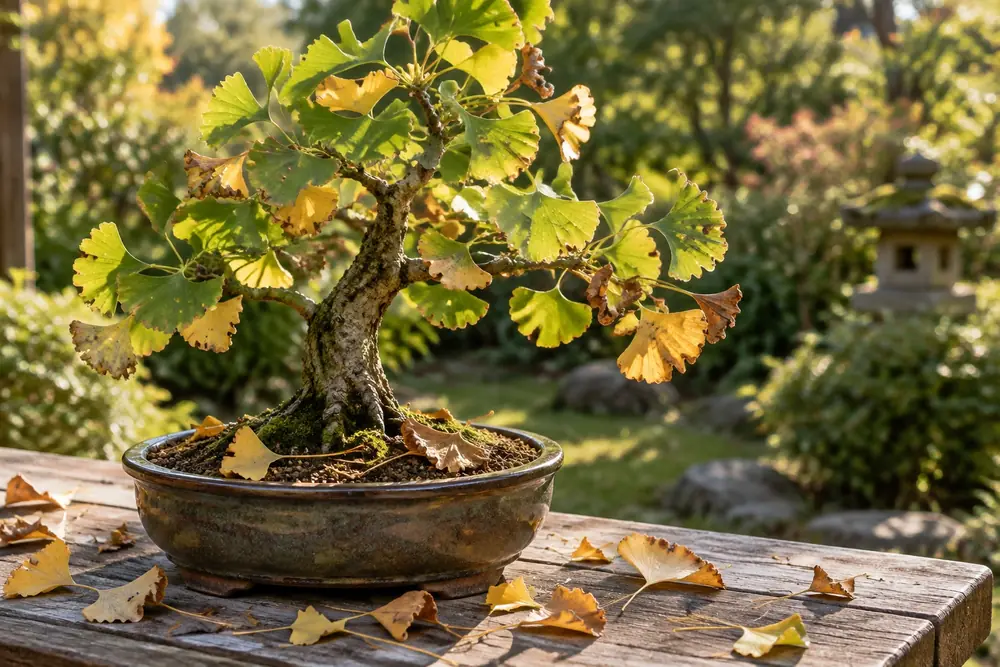
Ginkgo is deciduous. As days shorten and nights cool, the leaves turn a clear, butter-yellow color. A few days to two weeks later, they fall, and on many ginkgo trees most of the leaves fall on the same day. The Wikipedia page on Ginkgo biloba describes this famous, almost synchronized leaf drop.
Signs it is normal autumn leaf fall:
- It happens in mid to late autumn.
- Leaves turn gold first, evenly across the tree.
- Firm, plump buds remain at the shoot tips and on the spur shoots.
Rake up the leaves, keep the tree outdoors in a sheltered spot for winter, and water lightly when the soil is dry.
When leaf drop is a problem
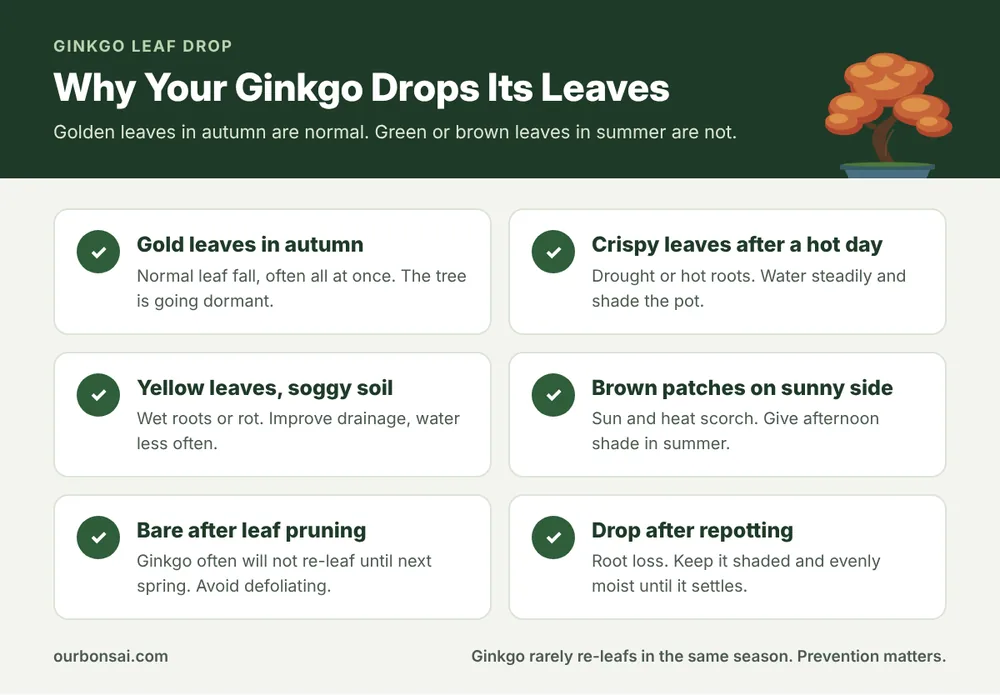
| When | What you see | Likely cause |
|---|---|---|
| Summer | Leaves curl, crisp and fall | Drought, hot roots |
| Summer | Leaves yellow and drop, soil wet | Overwatering, root rot |
| Summer | Brown patches, worst on sunny side | Heat and sun scorch |
| Any time after defoliation | Tree stays bare | Ginkgo often does not re-leaf the same year |
| Spring, after repotting | Some leaves drop | Root disturbance |
| Early autumn, green leaves | Sudden drop | Stress, often from summer drought |
Causes of ginkgo bonsai dropping leaves in summer
1. Drought and hot roots
Ginkgo’s thin, fan-shaped leaves lose water quickly. When a small pot dries out, or the roots overheat in full afternoon sun, leaves curl, turn brown at the edges and drop. Even one very dry day can trigger it.
Fix: check the soil every morning and again in the afternoon on hot days. Water as soon as the top centimeter is dry. Shade the pot (not the whole tree) from strong afternoon sun, and stand pots on gravel or group them to keep roots cooler. Our guide to watering bonsai in summer has practical tips.
2. Wet roots and root rot
Ginkgo roots are fleshy and rot in soggy soil. Leaves turn a dull yellow and fall, and spring growth may be weak. The soil stays dark and may smell sour.
Fix: let the surface dry slightly between waterings, remove any saucer, and keep the tree out of prolonged rain. In early spring, repot into a gritty mix of akadama, pumice and lava. Our guide to root rot in bonsai shows how to check the roots, and our bonsai soil mix ratio guide explains a good mix.
3. Heat and sun scorch
In hot climates, full afternoon sun can scorch ginkgo leaves even when the soil is moist. Leaves develop brown patches, starting on the sunniest side, then fall.
Fix: give morning sun and light afternoon shade in the hottest months, for example under a 30 to 50 percent shade cloth.
4. Defoliation
Many deciduous bonsai are defoliated in early summer to produce smaller leaves. Ginkgo is a poor candidate: it often does not produce a second flush that season, and the tree stays bare until next spring, losing a year of energy.
Fix: do not defoliate ginkgo. If you already have, keep the tree in light shade, water carefully (it uses very little without leaves) and do not feed until it leafs out again.
5. Repotting stress
After repotting in early spring, some leaves may yellow and drop as the tree adjusts to fewer roots. Keep it out of wind and strong sun and the soil evenly moist; it should settle in a few weeks.
6. Kept indoors
Ginkgo is an outdoor tree. Indoors, it grows weak, small leaves and may drop them at odd times. Our guide to types of outdoor bonsai trees explains why ginkgo needs to live outside.
Leaf drop in spring
Leaves dropping soon after they open in spring is less common, and usually tied to the roots. A late frost can damage tender new leaves, which then shrivel and fall; the tree often pushes a few replacement leaves from spur buds if the frost was light. Root damage over winter, from a pot that froze solid or stayed soggy, shows up as leaves that open small, then yellow and drop. If that happens, check the roots, improve drainage and protect the pot better next winter. A newly bought ginkgo moved from a nursery to your garden may also drop a few leaves as it adjusts to different light.
What happens after summer leaf drop?
A ginkgo that drops its leaves in summer will usually stay bare until the following spring, because it rarely pushes new leaves late in the season. That is not necessarily fatal, as long as the buds remain firm and the bark is green underneath. Check with a scratch test: scrape a tiny patch of bark on a branch. Moist, green tissue means it is alive.
Care for a bare summer tree like this:
- Keep it in light shade.
- Water carefully, only when the soil begins to dry; without leaves it uses little water.
- Do not fertilize until new leaves appear next spring.
- Protect the pot from hard frost in winter.
How to prevent summer leaf drop
- Water by checking the soil every day in summer.
- Shade the pot, and the tree in very hot climates, in the afternoon.
- Use gritty, free-draining soil.
- Do not defoliate ginkgo.
- Repot only in early spring, every two to three years.
- Grow it outdoors all year.
FAQ: ginkgo bonsai dropping leaves
Why did my ginkgo drop all its leaves at once?
If it was autumn and the leaves were golden, that is normal. Ginkgo is known for dropping its leaves almost all at once.
Will my ginkgo grow new leaves after dropping them in summer?
Usually not until next spring. Keep the tree healthy through winter and it should leaf out normally.
Why are my ginkgo leaves turning brown and falling in summer?
Most often drought, hot roots or sun scorch. Water more consistently and give afternoon shade.
Should I bring my ginkgo indoors when it drops its leaves?
No. It needs a cold winter dormancy outdoors. Protect the pot from hard frost instead.
Final thoughts
Ginkgo bonsai dropping leaves is a beautiful, normal event in autumn and a warning sign in summer. Check the season and the color of the leaves, then look at watering, drainage, heat and recent work. Prevent summer stress and your ginkgo will hold its fresh green leaves until its famous golden finale. If you are new to the species, our overview of deciduous bonsai tree types shows how ginkgo compares with other deciduous trees.