Lichen Bonsai Bark: Should You Remove It or Keep It?

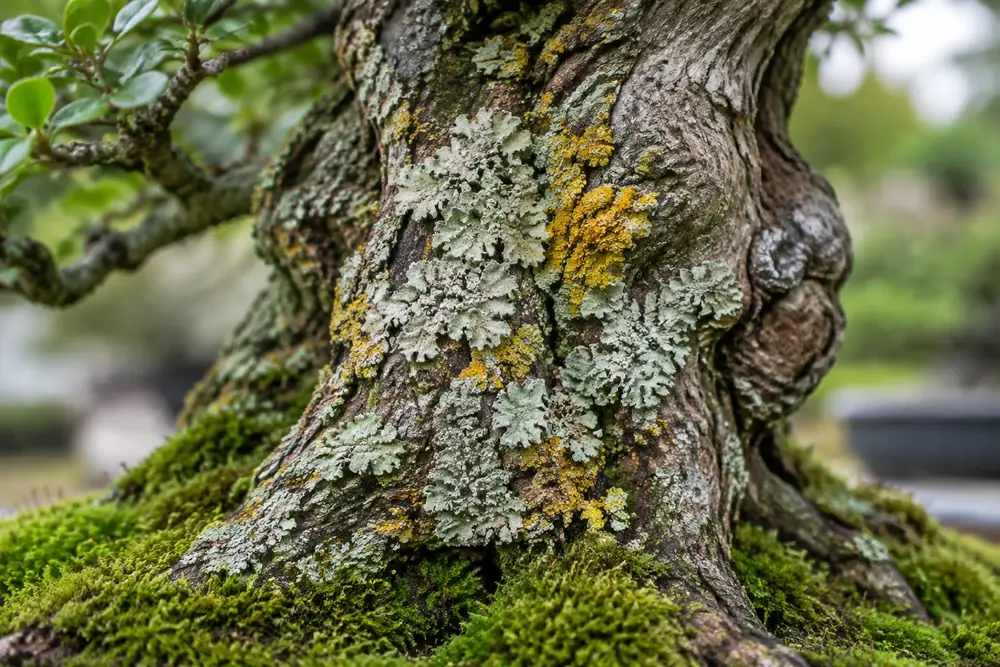
Finding lichen bonsai bark patches, those gray-green crusts, leafy flakes or orange spots on the trunk, worries many growers, but lichen is harmless. It does not feed on the tree or take its water. It simply uses the bark as a surface to live on, getting its food from light, air and rain. Lichen is common on outdoor bonsai, on old, slow-growing trunks and in clean, humid air. Many growers leave a little for an aged look. Others remove it because it hides bark texture or covers trunks that should look smooth. Either choice is fine, as long as you remove it gently.
In this guide
- What lichen is
- Is lichen on bonsai bark harmful?
- Lichen vs moss, algae and disease
- When to keep lichen
- When to remove lichen
- How to remove lichen from bonsai bark safely
- Why lichen grows on some bonsai and not others
- How to slow lichen regrowth
- Lichen on branches that are dying
- Common mistakes
- FAQ: lichen bonsai bark
- Final thoughts
This guide explains what lichen is, when to keep it and how to remove it without damaging the bark.
What lichen is
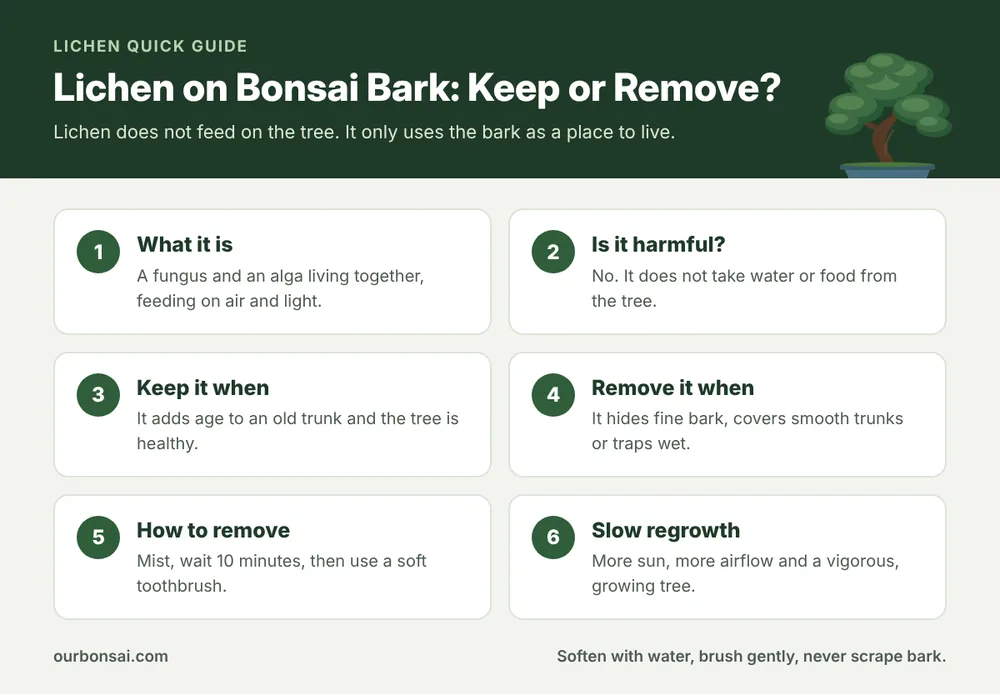
A lichen is not a plant. It is a partnership between a fungus and an alga (or a cyanobacterium). The alga makes food from sunlight, and the fungus gives it shelter and holds water. Together they can live on bare rock, walls, fences and tree bark.
Lichens grow very slowly, often only a millimeter or two a year. That is why they are most common on older trunks and branches that have not changed much for a few years.
There are three main types you may see on bonsai:
| Type | Looks like | Common on |
|---|---|---|
| Crusty (crustose) | Flat crust, gray, white, yellow or orange | Smooth or old bark, deadwood |
| Leafy (foliose) | Flat, lobed flakes, gray-green | Trunks and thicker branches |
| Shrubby (fruticose) | Small tufts or tiny branched strands | Twigs in very humid, clean air |
Is lichen on bonsai bark harmful?
No. Lichen has no roots and does not grow into living tissue. It cannot take sugars or water from the tree. A healthy tree with lichen on its bark is just a healthy tree with a passenger.
There are only a few indirect issues:
- Hidden bark. Thick lichen hides the bark texture and color you worked to develop, such as the flaky bark on pines or the smooth gray bark on beech and trident maple.
- Hidden problems. A dense cover can hide scale insects, cracks or cankers. Inspect the bark under it now and then.
- Trapped moisture. On deadwood (jins and sharis), thick patches hold water against the wood and can speed up rot.
- A sign of slow growth. Lichen spreads most on trunks and branches that are barely growing. On a young tree in training, heavy lichen can mean the tree needs more light or feeding.
So lichen itself is not the problem. It can be a hint to look at the tree’s overall health. Our main bonsai care guide covers the basics.
Lichen vs moss, algae and disease
| What you see | What it likely is | Action |
|---|---|---|
| Gray-green crust or leafy flakes, dry and firm | Lichen | Keep or brush off gently |
| Soft green cushion, spongy when wet | Moss | Keep on soil, remove from trunk |
| Thin green slimy or powdery film | Algae | Brush off, improve airflow |
| White cottony tufts that move or bleed when squashed | Mealybugs or woolly aphids | Treat pests |
| Raised bumps that scrape off and leave a mark | Scale insects | Treat pests |
| Sunken, dark, oozing patch | Canker or disease | See disease guides |
If you are unsure, scrape a tiny piece with a fingernail. Lichen comes off dry and papery with no fluid. Insects and disease look different on close inspection. Our guide to bonsai pests and diseases helps you identify them.
When to keep lichen
- On old, rugged trunks of junipers, pines, olives and other old-looking trees, a little lichen adds a sense of age and calm.
- On rocks in rock-planting or landscape bonsai.
- When the tree is healthy and the lichen does not hide important bark features.
Many Japanese growers value a weathered, aged look. A few small patches of lichen can support that.
When to remove lichen
- On smooth-barked species like trident maple, beech, hornbeam and ficus, where clean gray bark is part of the beauty.
- On young trees in training, where you want to see and develop the trunk.
- On deadwood, where it holds moisture.
- Before a show, when bark should look clean.
- When it covers so much bark that you cannot check for pests or damage.
How to remove lichen from bonsai bark safely
The goal is to lift the lichen without tearing or thinning the living bark below.
- Wet it first. Mist the trunk well, or wrap it in a wet cloth for 10 to 15 minutes. Dry lichen is brittle and grips harder. Wet lichen softens.
- Brush gently. Use a soft toothbrush or a soft brass-free brush. Work in the direction of the bark, a small area at a time.
- Use a wooden pick for stubborn spots. A toothpick or a soft wooden skewer lifts crusts without cutting the bark.
- Rinse. Wash away loose bits with water.
- Stop if bark starts to come off. A little lichen left behind is better than damaged bark.
What not to do:
- Do not use a wire brush on living bark. It scratches and thins it.
- Do not scrape with a knife. You risk cutting into the cambium.
- Do not use bleach or strong chemicals on the trunk. They can damage bark and roots.
- Do not peel the flaky bark of pines and junipers to get at lichen. That bark protects the tree.
Lichen on deadwood
On jins and sharis, you can be firmer. Brush with a stiffer brush once the lichen is wet, let the wood dry, then apply lime sulfur as you normally would. Lime sulfur also helps slow lichen and algae from coming back on deadwood.
Why lichen grows on some bonsai and not others
- Clean air. Lichens are sensitive to air pollution. Plenty of lichen often means good air quality.
- Humidity and rain. Outdoor trees in damp climates collect more lichen.
- Slow growth. Trunks that are not expanding much give lichen time to settle.
- Shade and still air. A shaded, sheltered bench keeps bark damp for longer.
- Age. Older bark has more texture for lichen to grip.
Indoor bonsai rarely grow lichen, because the air is too dry and spores rarely reach them.
How to slow lichen regrowth
You cannot stop lichen spores from landing, but you can make the bark a less inviting home:
- Give more sun. Bright light dries bark faster and helps the tree grow strongly. Our guide on how much light a bonsai tree needs explains what each type needs.
- Improve airflow. Space trees out on the bench and avoid crowded, sheltered corners.
- Water the soil, not the trunk. Aim the water at the soil surface where possible.
- Keep the tree growing. Regular feeding in the growing season helps trunks thicken and shed old bark. See bonsai fertilizer: pellets or liquid.
- Brush lightly once or twice a year. A quick wet brush in spring keeps lichen small.
Lichen on branches that are dying
If lichen covers a branch that is also bare, brittle or not leafing out, the lichen did not kill it. Lichen simply grows well on branches that have stopped growing. Find the real cause, such as root problems, shade or pests. Our guide on why bonsai branches die walks through the options.
Common mistakes
- Treating lichen as a disease. It is not.
- Scrubbing dry lichen. Always wet it first.
- Using a wire brush on living bark.
- Spraying fungicide. It does not help and is not needed.
- Removing every trace from an old tree. A little lichen can look natural.
FAQ: lichen bonsai bark
Does lichen kill bonsai trees?
No. Lichen does not feed on the tree. If a tree with lichen is declining, something else is causing it.
Should I remove lichen from my bonsai?
It is your choice. Remove it from smooth bark, young trees and deadwood. Keep a little on old, rugged trunks if you like the aged look.
What is the best way to remove lichen from bonsai bark?
Wet it well, wait about 10 minutes, then brush gently with a soft toothbrush. Use a wooden pick for stubborn spots.
Can I use vinegar or bleach to kill lichen on bonsai?
It is not recommended. Both can damage bark and run into the soil. Water and a soft brush work well.
Why does my bonsai have orange spots on the bark?
Small, flat orange or yellow spots are usually crusty lichens. If the spots are raised and leave a mark when scraped, check for scale insects.
Final thoughts
Lichen on bonsai bark is harmless and even a sign of clean air. Keep a little on old trunks for character, and remove it from smooth bark, young trees and deadwood by soaking it and brushing gently. If lichen spreads quickly on a young tree, give it more sun, airflow and steady feeding so it grows strongly. A vigorous tree with expanding bark gives lichen little time to settle.