Bonsai Scratch Test: How to Check if Branches Are Alive

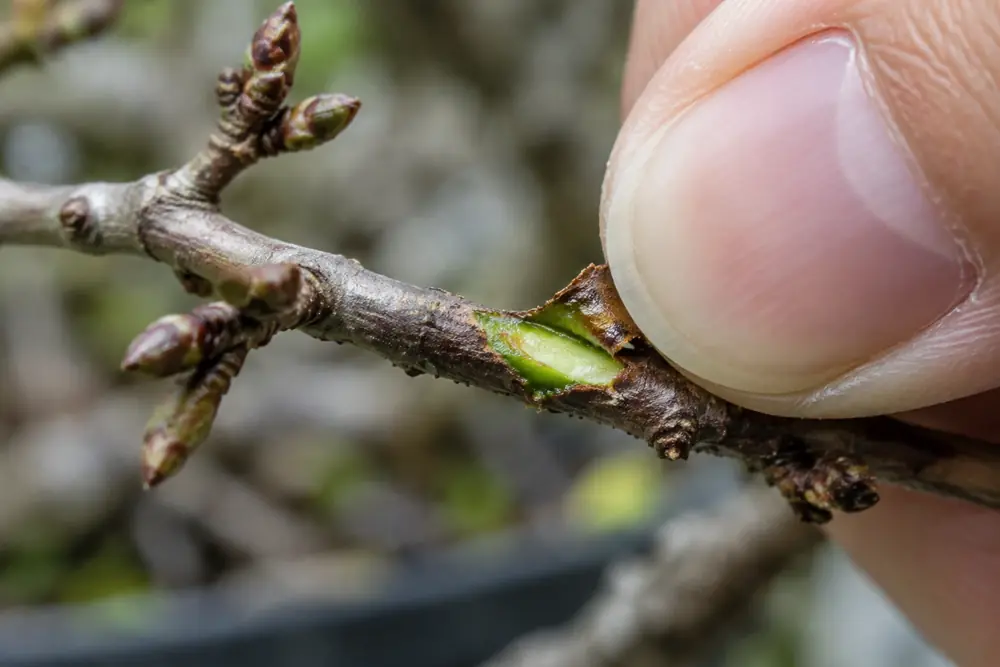
The bonsai scratch test is the quickest way to find out whether a branch is alive. Gently scrape a tiny patch of bark, about the size of a grain of rice, with your thumbnail or the tip of a knife. If the tissue underneath is bright green or moist and creamy, that part of the branch is alive. If it is brown, gray and dry, that part is dead. Start at the branch tips and work toward the trunk, testing several branches, because twigs often die back while the rest of the tree is fine.
In this guide
This guide explains how to do the test properly, how to read the results and what to do next.
Why the scratch test works
Just under the outer bark of every woody branch is a thin layer of living tissue. It includes the vascular cambium, which produces new wood and bark, and the phloem, which carries sugars around the tree. When this layer is alive, it is moist and usually green or pale cream. When it dies, it dries out and turns brown.
Scraping away the thin outer skin reveals this layer, giving you a direct look at whether the branch is still working.
When to use the bonsai scratch test
- In winter, to check whether a bare deciduous tree is dormant or dead.
- In spring, when some branches do not leaf out.
- After frost, drought or root rot, to see how much of the tree survived.
- When a branch wilts or browns, to find out where the dead part ends.
- Before pruning, to know where to cut back to living wood.
How to do the scratch test step by step
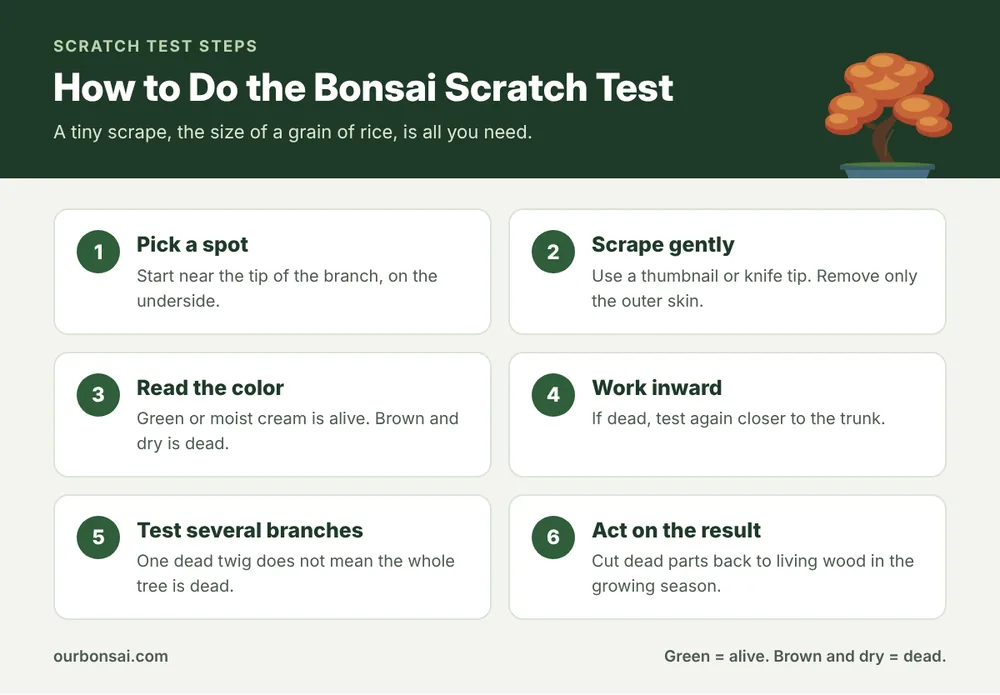
- Choose a spot near the tip. Start on a thin twig near the end of the branch. Use the underside or back so any mark is out of sight.
- Scrape gently. Use your thumbnail, a small knife or a sharp blade. Remove only the thin outer layer, about the size of a grain of rice. Do not dig into the wood.
- Look at the color right away. The color is clearest in the first few seconds.
- Work inward if it is dead. Move a few centimeters closer to the trunk and test again. Repeat until you find living tissue, or reach the trunk.
- Test several branches. Check branches on different sides of the tree, high and low.
- Note what you found. A twist tie or small mark helps you remember where the dead part ends.
How to read the results
| What you see | What it means | What to do |
|---|---|---|
| Bright green, moist | Alive and healthy | Keep caring for the tree |
| Pale green or cream, moist | Alive (normal for some species and older wood) | Keep caring for the tree |
| Mixed green and brown | Partly damaged, may recover | Wait and test again in a few weeks |
| Brown, dry, papery | Dead at that point | Test closer to the trunk |
| Dark, wet, soft or smelly | Rotting tissue | Check the roots and the bark for disease |
Species differences
Not every tree shows bright green under the bark:
- Junipers and many conifers often show reddish brown inner bark that is still moist when alive. Look for moisture rather than color, and check the foliage too.
- Older, thicker branches and trunks have thicker bark. Living tissue may look cream or pale yellow-green.
- Ficus and other latex trees may bleed white sap when scratched, which is a clear sign of life.
- Pines may ooze a little resin, which also means the branch is alive.
When in doubt, compare with a twig you know is alive, such as one carrying healthy leaves.
Other checks to use with the scratch test
The scratch test is reliable, but combine it with a few other signs:
- Bend test. Living twigs flex. Dead twigs snap with a dry crack.
- Bud check. Firm, plump buds mean life. Shriveled, dry buds mean trouble.
- Root check. Slide the tree from its pot. Firm, light roots are alive. Mushy or dry, hollow roots are dead. See our guide to root rot in bonsai.
- Season and species. A bare deciduous tree in winter is normal. Our guide to deciduous bonsai tree types helps you check what kind of tree you have.
What to do after the scratch test
If the whole tree is alive
Keep caring for it normally. If it is a deciduous tree in winter, it is just dormant. Water lightly, protect the roots from hard frost and wait for spring.
If some branches are dead
Wait until the tree is actively growing, so you can see exactly where new buds appear. Then cut dead branches back to just above living wood or a healthy bud. Seal larger cuts with cut paste. Our guide to the best bonsai cut paste alternative lists options. On conifers, dead branches can be turned into jins for character.
Our guide on why bonsai branches die helps you understand the cause, so it does not happen again.
If the tree seems dead everywhere
Test the trunk low down, near the soil, and check the roots. If the base of the trunk and some roots are alive, the tree may still push buds from low down. Keep it in good conditions and wait until late spring before giving up. If the trunk is brown and dry right down to the soil, and the roots are dead, the tree has unfortunately died.
Tips for a clean test
- Keep scratches small. A few tiny scratches heal quickly. Many big ones leave scars.
- Use clean tools. Wipe the blade with rubbing alcohol between trees.
- Avoid the front of the tree. Test on the back or underside.
- Do not test the same spot twice. Move to a fresh spot each time.
- Do not peel bark. You only need to see the layer just under the skin.
How often to repeat the test
If the first result is unclear, wait two to three weeks and test again a little further along the branch. Damage from frost or drought can take time to show, and a branch that looks fine one week may die back the next. In spring, the best test is often simply waiting to see which buds open.
Common mistakes
- Testing only one twig. One dead tip does not mean the whole tree is dead.
- Scratching too deep. You only need to remove the outer skin.
- Expecting bright green on every species. Junipers and old wood may look cream or reddish but still be alive.
- Cutting dead branches too early. Wait until spring growth shows where life ends.
- Throwing out a bare tree in winter. Do the scratch test first.
FAQ: bonsai scratch test
What color should a bonsai branch be under the bark?
Bright green or moist cream means alive. Brown and dry means dead.
Does the scratch test hurt my bonsai?
No, if you keep scratches tiny. Small scratches heal quickly, especially in the growing season.
What if the scratch test shows green but no leaves appear?
The branch is alive. It may be dormant or recovering from stress. Keep caring for the tree and give it time.
Can I do the scratch test on a juniper?
Yes, but living tissue may look reddish brown and moist instead of green. Look for moisture and check the foliage.
How long can a bonsai stay green under the bark after dying?
A few days to a couple of weeks. That is why it helps to repeat the test after two or three weeks if you are unsure.
Final thoughts
The bonsai scratch test is a simple, reliable way to check if a branch is alive. Scrape a tiny patch from the tips toward the trunk, look for green or moist tissue and test several branches. Combine it with bud, bend and root checks, wait for spring before cutting, and you will rarely throw away a tree that was only resting. For general care, see our main bonsai care guide.