Azalea Bonsai Brown Tips: Causes and Fixes

Azalea bonsai brown tips are most often caused by a root ball that dried out, a buildup of fertilizer salts, hard alkaline tap water, or strong afternoon sun. Less often, the cause is wind burn, cold damage or root rot. The pattern tells you which one: browning on the sunny side points to scorch, slow browning on older leaves with a white crust on the soil points to salts, and sudden browning across the tree after a hot day points to drought. Brown leaves are also normal in autumn, when satsuki azaleas drop the larger leaves they grew in spring.
In this guide
- First, rule out normal autumn drop
- Azalea bonsai brown tips: seven causes and fixes
- Dry root ball: the most common cause in summer
- Salt buildup from fertilizer
- Hard, alkaline water
- Sun scorch and wind burn
- When brown tips point to root rot
- Should you cut off brown tips?
- Frequently asked questions
- Final thoughts
First, rule out normal autumn drop
Satsuki azaleas (Rhododendron indicum) and many Kurume hybrids grow two sets of leaves a year. The spring leaves are larger and thinner. The summer leaves, which grow later, are smaller, thicker and stay on through winter. In autumn, the spring leaves yellow, brown and fall off. If the browning is limited to the larger, older leaves lower on each shoot in October or November, and the small leaves at the tips are green, the tree is fine.
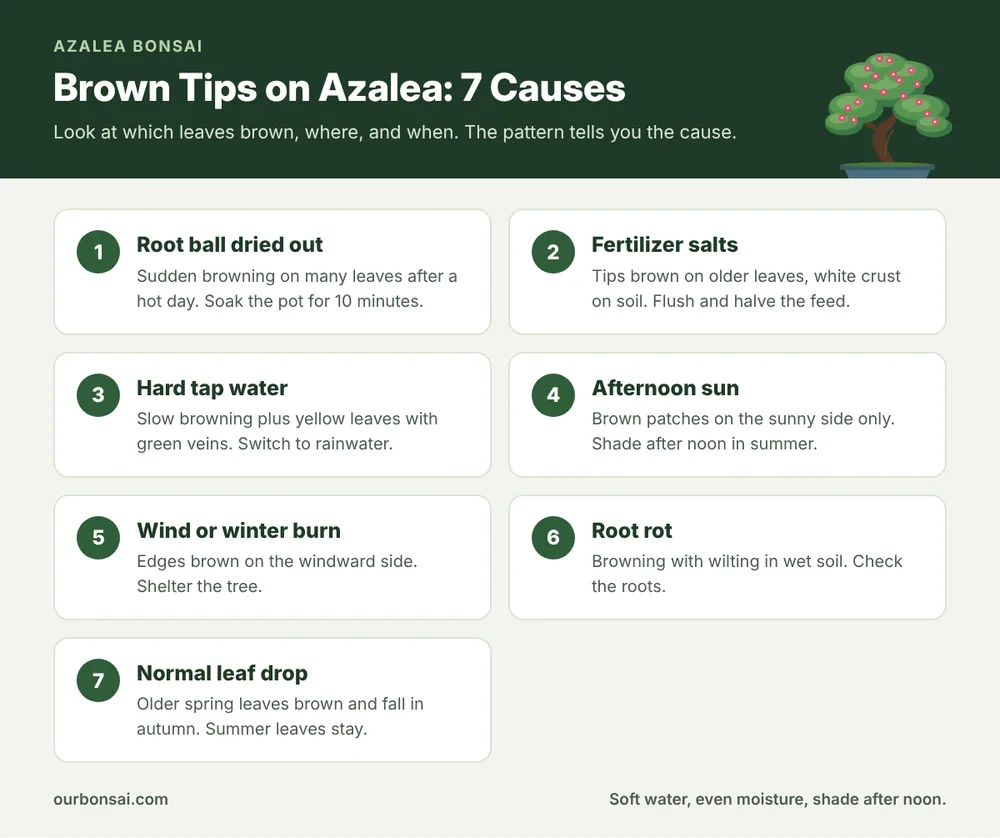
Azalea bonsai brown tips: seven causes and fixes
| Cause | What you see | Fix |
|---|---|---|
| Dry root ball | Sudden crisping, many leaves at once, soft drooping shoots | Soak pot in a bucket for 10 minutes; water more often in heat |
| Fertilizer salts | Tips and edges brown on older leaves, crust on soil or pot | Flush with plenty of rainwater; feed half strength |
| Hard water | Gradual tip burn plus yellow leaves with green veins | Rainwater or filtered water; acid feed |
| Sun scorch | Brown or bleached patches on the sunny side only | Morning sun, afternoon shade above 29 C |
| Wind burn | Edges brown on the windward side | Move to a sheltered spot |
| Winter cold | Brown tips after a hard freeze, evergreen leaves dull | Protect roots below about -5 C |
| Root rot | Browning plus wilting while soil is wet | Unpot, cut rotten roots, fresh kanuma |
Dry root ball: the most common cause in summer
Azaleas have a dense mat of very fine roots. When kanuma soil dries completely, it can shrink away from the pot wall, and water then runs straight down the gap instead of soaking in. The tree looks watered but stays dry inside.
Test by lifting the pot. A dry azalea in kanuma feels light. Kanuma also changes color, from dark brown when wet to pale yellow when dry. If it is dry right through, sit the whole pot in a bucket of rainwater up to the rim for 10 minutes, then let it drain. In summer, check twice a day; in 5 hours of sun a small azalea can need water every day.
Salt buildup from fertilizer
Azaleas are sensitive to salts. Strong feeds, or pellets left on the soil through a hot spell, leave dissolved salts that pull water out of root tips. The leaf edges and tips burn first, often on the oldest leaves.
Fix it by flushing: water heavily, wait 10 minutes, water heavily again. Cut the feed rate in half for the rest of the season, and use an acid fertilizer made for azaleas. Our list of the best fertilizer for azalea bonsai covers gentle options.
Hard, alkaline water
Azaleas want acidic soil, roughly pH 5.0 to 6.0. Hard tap water carries calcium carbonate that raises the pH a little with every watering. Over months, iron becomes harder for the roots to take up, and leaves turn yellow between green veins (a form of chlorosis), then brown at the tips.
Collect rainwater if you can. If not, let tap water stand overnight and use an acid feed or a chelated iron supplement during the growing season. Repotting into fresh kanuma also resets the pH.
Sun scorch and wind burn
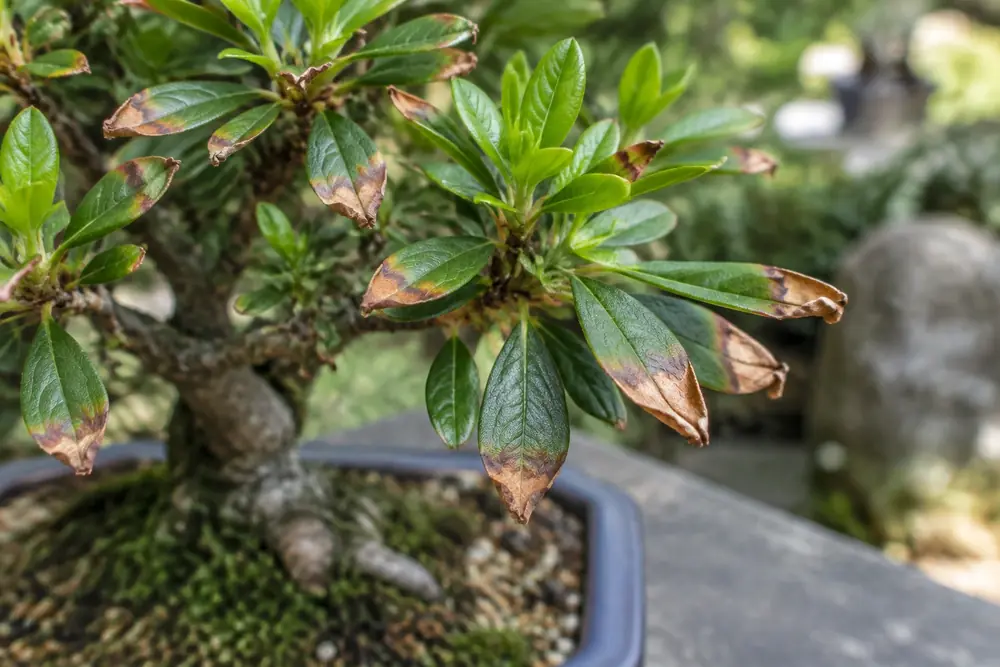
Scorch shows on the side facing the sun: pale bleached patches that turn brown, sometimes in the middle of the leaf rather than only at the tip. Wind burn shows on the side facing the wind, as browning along the edges. Both mean the leaves lost water faster than the roots could supply it.
The fix is placement. Give morning sun and bright shade after midday in summer, and keep the tree out of drafty corners and windy balconies. Our bonsai species section collects the azalea care guides, and the general advice on how much light a bonsai tree needs applies too.
When brown tips point to root rot
If browning comes with wilting, and the soil is wet, check the roots. Healthy azalea roots are pale and springy; rotten ones are dark and soft. Root rot needs a rescue repot. See our guide to root rot in bonsai for the general method.
Should you cut off brown tips?
Brown tissue will not turn green again. You can trim just the brown part with sharp scissors if it bothers you, following the leaf shape, but leave as much green as possible because the leaf is still feeding the tree. If more than half a leaf is brown, remove the whole leaf. New leaves will come in clean once the cause is fixed.
Frequently asked questions
Why are my azalea bonsai leaves brown after flowering?
Flowering takes a lot of water and energy. If the tree was in strong sun or dried out while in bloom, brown tips are common afterward. Remove spent flowers, keep watering evenly, and the summer growth will cover the damage.
Can overwatering cause brown tips on azaleas?
Yes, indirectly. Soggy soil kills roots, and the leaves then brown because they cannot get water. That looks a lot like drought, so always check the soil before watering more.
Is it normal for an indoor azalea to get brown tips?
It is common, because indoor air is dry and light is low. Azaleas do much better outside. If yours is indoors, read our satsuki azalea indoor care guide.
Will an azalea with brown leaves recover?
If the twigs are still green under the bark and buds are firm, yes. Fix the cause and expect new healthy leaves within 4 to 8 weeks in the growing season.
Final thoughts
Brown tips on an azalea are a message, not a disease. Check the soil moisture, think about water quality and feeding, and look at where on the tree the browning sits. Most cases come down to dry roots, salts or hard water. For more on azaleas in general, Clemson Extension’s azalea care factsheet is a reliable reference.