Best Soil for Cotoneaster Bonsai: Mix and Repotting Tips

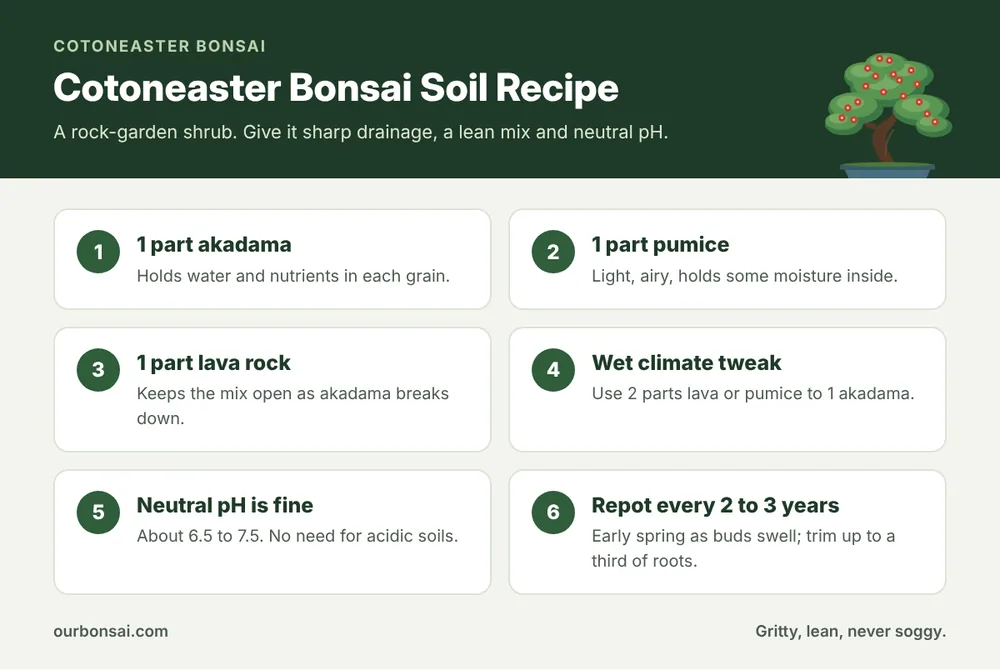
The best soil for cotoneaster bonsai is a gritty, fast-draining mix of roughly equal parts akadama, pumice and lava rock, sieved to 2 to 6 mm grains. Cotoneaster grows wild on dry, rocky slopes and cliffs from Europe to the Himalayas and China, so it handles lean soil and short dry spells far better than waterlogged roots. It is happy with a neutral pH around 6.5 to 7.5, which means you do not need acidic soils like kanuma. In a wet climate, shift the mix toward more lava and pumice; in a hot, dry one, add a little more akadama.
In this guide
Why cotoneaster needs sharp drainage
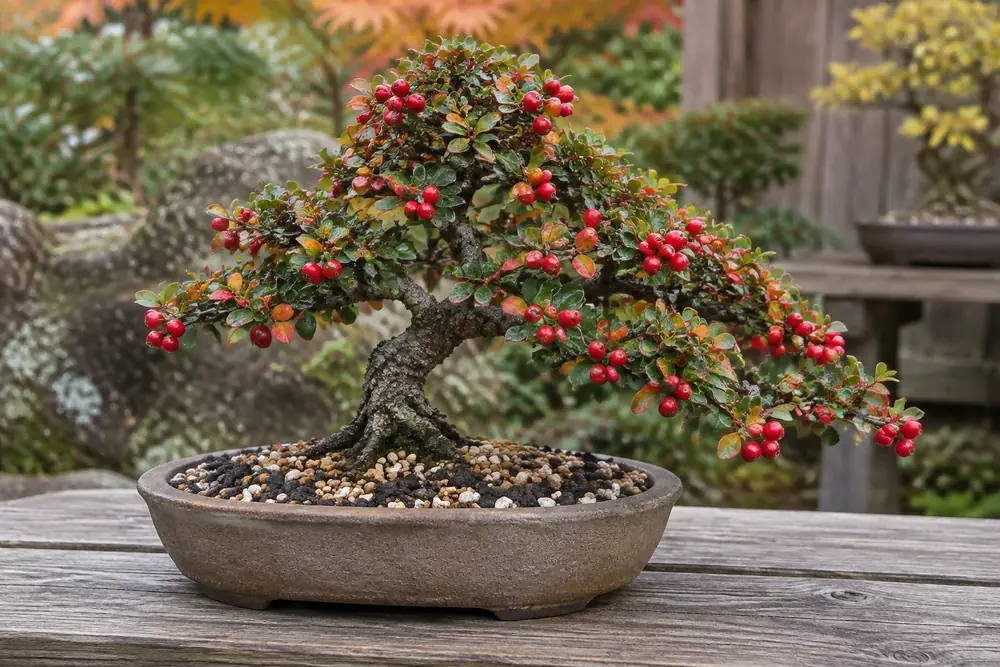
The cotoneasters most often used for bonsai are rockspray cotoneaster (Cotoneaster horizontalis), small-leaved cotoneaster (Cotoneaster microphyllus) and similar low, twiggy species. In nature they creep over rocks and grow in thin soil, where rain drains away quickly. Their roots are adapted to air in the soil.
In a bonsai pot, the most common soil problem with cotoneaster is not drying out but staying too wet. A peat-based or garden soil mix holds water against the roots for days, especially in cool, cloudy weather. The result is yellowing leaves, weak growth and eventually root rot.
Best soil for cotoneaster bonsai: recipe and adjustments
| Climate or situation | Akadama | Pumice | Lava | Notes |
|---|---|---|---|---|
| Standard temperate | 1 | 1 | 1 | Good starting point |
| Wet, cool climate | 1 | 1 | 2 | Faster drainage |
| Hot, dry climate | 2 | 1 | 1 | Holds a bit more water |
| Small shohin trees | 1 | 1 | 1 | Sieve to 1 to 3 mm |
| Large trees, deep pots | 1 | 1 | 1 | Use coarser 4 to 8 mm grains |
Sieve out the dust before mixing. Fine particles fill the gaps between grains and undo the drainage you are paying for. Our bonsai soil mix ratio guide explains each component in more detail.
What each ingredient does for cotoneaster
Akadama is a granular volcanic clay mined in Japan and sold in graded sizes, with harder grades lasting longer in the pot. It soaks up water and nutrients and releases them slowly, which keeps fine roots fed between waterings. It softens and breaks down over 2 to 4 years, which is one reason repotting is needed.
Pumice is a light volcanic rock full of tiny pores. It holds some water inside while leaving air spaces between grains, and it does not break down. It also helps roots branch, because root tips split when they grow into its rough surface.
Lava rock is heavier and holds less water than pumice. Its main job for cotoneaster is structure: it keeps the mix open for years and adds weight that helps the pot stay stable on windy benches.
Together they give what cotoneaster wants most: air around the roots, moisture inside the grains, and fast drainage after rain.
Ready-made mixes
If you would rather buy a mix than make one, look for an inorganic gritty blend designed for bonsai. Our reviews of Bonsai Jack gritty mix and Heron’s bonsai soil mix cover two common options. Check that the grains are mostly in the 2 to 6 mm range and that the bag is not full of dust.
What to avoid
- Garden soil or general compost. Compacts quickly in a shallow pot.
- Peat-heavy mixes. Hold too much water and stay cold.
- Pure organic bark. Breaks down and stays soggy.
- Unsieved akadama. The dust clogs drainage.
For a deeper comparison, see bonsai soil vs regular soil.
Repotting cotoneaster
Cotoneaster is vigorous and tolerates root work well.
- How often: every 2 years for young trees, every 3 to 4 years for mature ones.
- When: early spring as buds swell. Avoid repotting while it is flowering in late spring or in autumn when it carries berries.
- How much root: up to about a third on a healthy tree.
Steps:
- Sieve and mix the soil. Prepare the pot with mesh and tie-in wires.
- Remove the tree, comb out the outer roots with a root hook and remove old soil from the outer half.
- Cut thick downward roots and shorten long roots.
- Pot up, tie in firmly, and work soil into the gaps with a chopstick.
- Water thoroughly and keep the tree out of strong wind for 1 to 2 weeks.
- Wait about 4 weeks before feeding.
Watering cotoneaster in a gritty mix
Gritty soil dries faster than old compost, so check daily in the growing season. Water when the top centimeter is dry, until water runs from the drainage holes. In hot summers, that may be every day. In winter, outdoor cotoneaster needs water only every week or two. Short dry spells are tolerated; days of soggy soil are not. If you are unsure, wait half a day and check again. A slightly dry cotoneaster recovers within hours of watering, while one that has sat wet for a week can take a season to regain its vigor.
Health notes linked to soil
- Yellow leaves in spring: often soil that stays too wet, especially after a cold, rainy spell. Improve drainage at the next repot.
- Poor berry set: usually not soil. Check sun (cotoneaster wants full sun to light shade) and that you are not pruning off the flowering shoots.
- Fire blight: cotoneaster belongs to the rose family and can catch this bacterial disease, which blackens shoot tips like they were scorched. Cut infected shoots well below the damage with sterilized tools. A lean soil and moderate nitrogen feeding make soft, vulnerable growth less likely.
For shaping ideas once the roots are settled, see our guide to cotoneaster bonsai styles.
Frequently asked questions
Can I use cactus soil for cotoneaster bonsai?
It is better than garden soil, but many cactus mixes are fine and peat-based. A gritty bonsai mix of akadama, pumice and lava is better.
Does cotoneaster bonsai need acidic soil?
No. Neutral pH suits it well, and it tolerates slightly alkaline soil.
How often should I repot cotoneaster bonsai?
Every 2 years when young, every 3 to 4 years when mature, in early spring.
Can I reuse old bonsai soil for cotoneaster?
Only if it has been sieved, cleaned and still has firm grains. Broken-down akadama dust should be thrown away.
Final thoughts
Think rock garden, not flower bed. Give cotoneaster a gritty, lean, neutral mix, repot every few years in early spring, and it will reward you with tiny leaves, white flowers and red berries. For more on the species, see the Wikipedia article on Cotoneaster horizontalis.