Bottom Watering Bonsai: When and How to Do It Right

Bottom watering bonsai means standing the pot in a shallow basin of water so the soil soaks it up through the drainage holes. It is a great rescue method when a root ball has dried out so badly that water just runs off the top, and it is gentle enough for freshly applied moss, newly sown seeds and very fine soil. But it should not replace normal watering from above every day. Done all the time, it lets salts build up in the soil and can keep the bottom of the pot too wet.
In this guide
- How bottom watering works
- When bottom watering bonsai is a good idea
- When not to bottom water
- How to bottom water a bonsai step by step
- Adding fertilizer or treatments
- Bottom watering vs top watering
- Bottom watering for different trees
- Bottom watering indoor bonsai
- Common mistakes with bottom watering
- FAQ: bottom watering bonsai
- Final thoughts
This guide explains when bottom watering helps, how to do it properly and the mistakes to avoid.
How bottom watering works
When you stand a pot in water, the soil pulls water upward through tiny spaces between its particles. This is called capillary action. Water moves into every corner of the root ball, including the dry pockets that water poured from above often runs straight past. As water fills the soil, air is pushed out and rises as bubbles. When the bubbles stop, the soil is saturated.
When bottom watering bonsai is a good idea
| Situation | Why bottom watering helps |
|---|---|
| Root ball has dried out completely | Dry soil repels water. Soaking rehydrates it fully |
| Water runs off the surface or down the pot edge | The root ball has shrunk from the pot wall. Soaking fixes it |
| Freshly laid moss or top dressing | Watering from above can wash it away |
| Seeds and tiny seedlings | No risk of washing seeds out of the soil |
| Very fine soil or a mame tree | Gentle, thorough wetting without erosion |
| Before leaving for a few days | Makes sure the whole root ball starts fully wet |
If you often find your trees bone dry, a better daily routine will help more than frequent soaking. Our guide to watering bonsai in summer covers how often to check in hot weather.
When not to bottom water
- As your only method. Fertilizer salts and minerals from tap water build up in the soil if water never flushes down through it.
- When the soil is already wet. Soaking a wet pot only drowns the roots.
- Trees with root rot. They need drier soil, not more water.
- In freezing weather. Wet soil in a pot that then freezes can damage roots.
How to bottom water a bonsai step by step
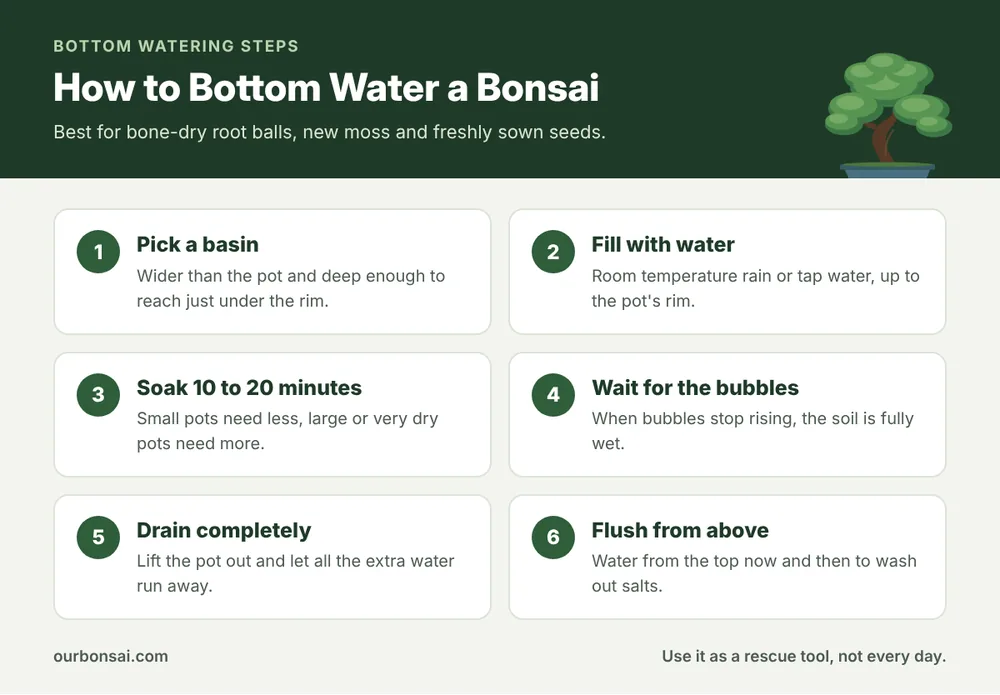
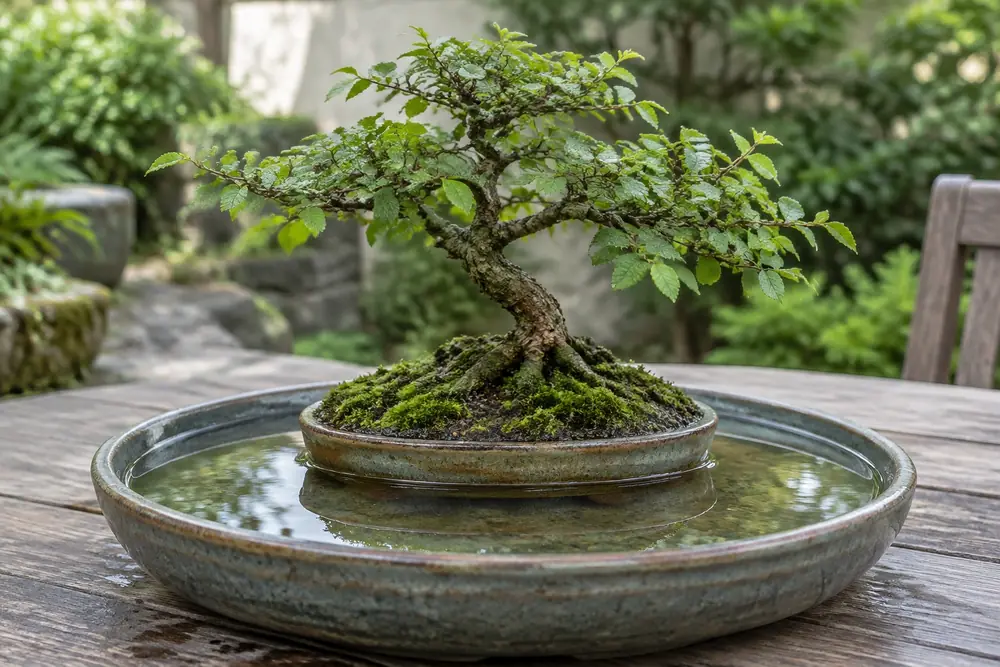
- Choose a container. A washing-up bowl, plastic tray or bucket that is wider than the pot. The water should be able to reach almost to the rim.
- Use room temperature water. Rain water is ideal. Normal tap water is fine for most trees.
- Lower the pot in gently. Set it so the water level sits just below the rim. If the tree floats or tips, hold it or weight the basin edge.
- Watch for bubbles. Air will rise from the soil as water moves in. A very dry root ball may bubble for several minutes.
- Soak for 10 to 20 minutes. Small pots in fine soil may only need 5 to 10 minutes. Large or extremely dry pots may need longer.
- Lift and drain. Take the pot out and let it drain fully on a rack or tilted slightly. Never leave it standing in water.
- Put it back in its usual spot and go back to normal watering from above.
Adding fertilizer or treatments
Bottom watering is a handy way to apply liquid fertilizer evenly to the whole root ball. Mix fertilizer into the basin at the normal strength, soak the tree, then let it drain. Our guide to the best liquid fertilizer for bonsai has good options. Do not soak several trees in the same water if any of them has pests or disease, because the water can carry problems from one pot to the next.
Bottom watering vs top watering
| Bottom watering | Top watering | |
|---|---|---|
| Wets dry pockets | Very well | Can miss them |
| Washes out salts | No | Yes |
| Speed | Slow, one pot at a time | Fast for many trees |
| Disturbs moss and seeds | No | Can |
| Best use | Rescue, seeds, moss, new trees | Daily routine |
The best approach for most growers is to water from above every day with a fine-rose can, such as a Japanese bonsai watering can, and keep bottom watering for special cases.
Bottom watering for different trees
Some species benefit from an occasional soak more than others.
- Azaleas. Their fine roots in kanuma dry out fast. A soak in rain water on very hot days or after a missed watering is a lifesaver.
- Junipers and pines. They prefer to dry slightly between waterings, so keep bottom watering for real emergencies only.
- Ficus and other tropicals indoors. A monthly soak in the sink evens out dry pockets caused by heating.
- Jade and succulents. Rarely needed. If you do soak them, keep it short and let them dry well afterwards.
- Freshly repotted trees. A gentle soak right after repotting settles new soil around the roots without washing it out.
Bottom watering indoor bonsai
Indoor trees, especially in dry, heated rooms, sometimes dry out unevenly. Bottom watering every few weeks helps keep the whole root ball moist. It is also cleaner indoors, since you can do it in the sink. Afterwards, let the pot drain fully before putting it back on its humidity tray. Our guide to watering indoor bonsai in winter explains how winter changes the routine, and our best humidity tray guide shows how to raise humidity without wet roots.
Common mistakes with bottom watering
- Leaving the pot in the water too long. Hours or overnight soaking drowns the roots. Twenty minutes is plenty.
- Using it every day. Salts build up, and the soil never gets the fresh air that top watering pulls through.
- Forgetting to drain. A pot left in a saucer of water keeps the bottom soggy.
- Using very cold water. It shocks tropical trees. Use room temperature water.
- Sharing water between sick and healthy trees. Pests and fungal spores travel in water.
If a tree keeps drying out very fast, it may be root-bound and need repotting into better soil. Our bonsai soil vs regular soil guide explains what to look for.
FAQ: bottom watering bonsai
How long should I soak a bonsai when bottom watering?
Usually 10 to 20 minutes, or until bubbles stop rising from the soil. Small pots need less time.
Is bottom watering better for bonsai?
It is better for specific situations such as a bone-dry root ball, new moss or seeds. For daily watering, top watering is better because it flushes the soil.
Can I bottom water my bonsai every day?
It is not recommended. Use top watering for your daily routine and bottom water only when needed.
Can I add fertilizer when bottom watering?
Yes. Mix liquid fertilizer into the water at the normal strength. Use fresh water for each tree if any of them has pests.
Why does water run straight off my bonsai soil?
The root ball has dried out and shrunk, or the surface has formed a crust. Water slides down the gap between soil and pot. A 15 minute soak from below rewets it, after which top watering works normally again.
Final thoughts
Bottom watering bonsai is a simple, useful technique to keep in your toolkit. Use it to rescue a dried-out tree, protect fresh moss or water seeds, and to make sure the whole root ball is wet before a trip. For everyday care, water from above so the soil is flushed and refreshed. Combine both, and your trees get water exactly where they need it. For more basics, see our main bonsai care guide.