Best Soil for Serissa Bonsai: Mix Recipes That Work

This post contains affiliate links. As an Amazon Associate, OurBonsai earns from qualifying purchases at no extra cost to you. Read our disclosure.
In this guide
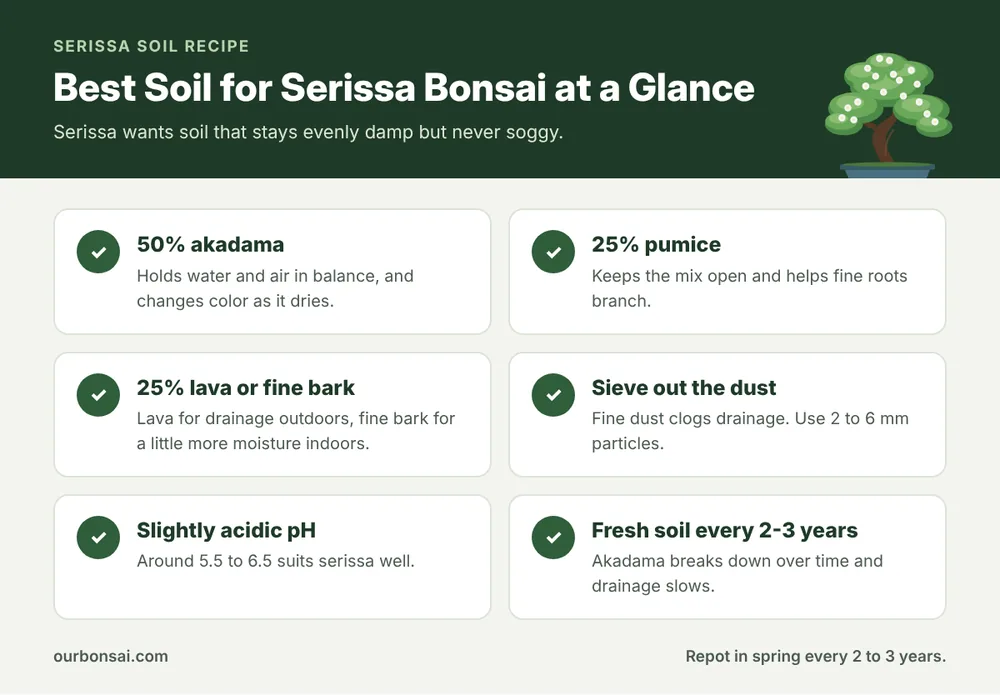
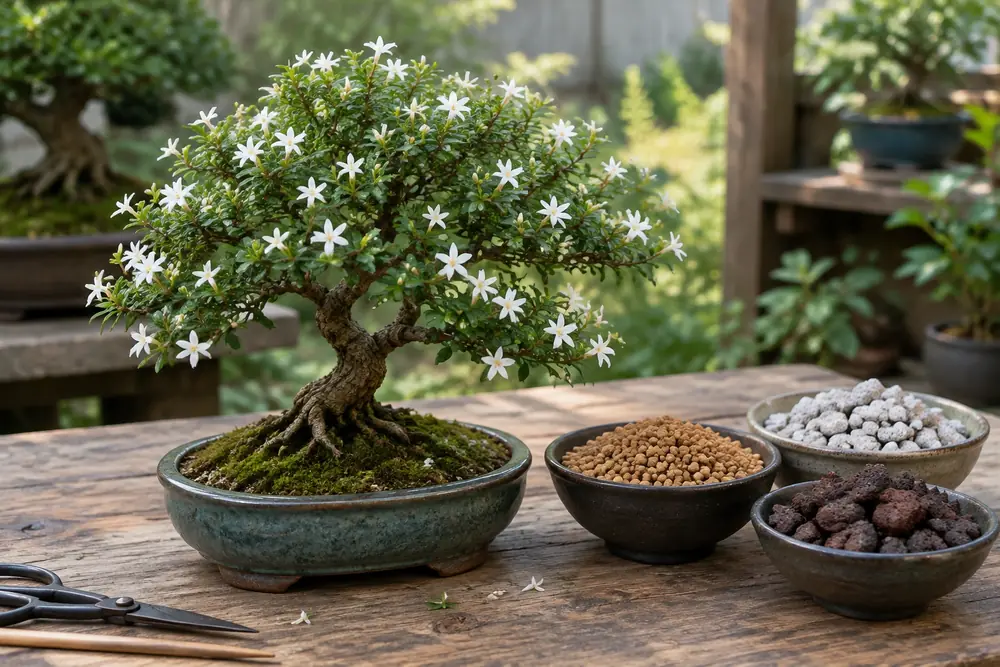
The best soil for serissa bonsai is a fine, free-draining bonsai mix based on akadama that stays evenly moist without ever going soggy. A simple recipe that works for most growers is 50% akadama, 25% pumice and 25% lava rock, sieved to remove dust. If your serissa lives indoors in dry air, swap the lava for fine pine bark to hold a bit more water. Serissa sulks when its soil dries out completely and rots when it stays wet, so the mix has to sit right in the middle.
Below you will find why serissa is so fussy, a few tested recipes, and how to repot without upsetting it.
Why soil matters so much for serissa
Serissa (Serissa japonica), often called snow rose or tree of a thousand stars, is a small evergreen shrub from Southeast Asia. The Wikipedia page on Serissa describes it as a plant of wet, warm places, and that tells you what its roots want: steady moisture and warmth.
Serissa is famous for being sensitive. It drops leaves when it is moved, when it dries out and when its roots sit wet. Its roots are fine and fibrous, and they suffer quickly in the wrong soil. A good mix solves half of the usual serissa problems on its own, including many cases of yellow leaves. Our guide to serissa bonsai yellow leaves shows how often soil and watering are behind it.
What serissa needs from its soil
- Even moisture. Not wet, not dry. The soil should feel like a wrung-out sponge most of the time.
- Good drainage. Water should pass through in seconds, not sit on the surface.
- Air around the roots. Fine roots need oxygen to stay healthy.
- A slightly acidic pH. Around 5.5 to 6.5 suits serissa.
- A fine particle size. Serissa is usually grown small, in small pots. Particles of about 2 to 6 mm fit best.
Regular potting compost fails on several of these. It stays wet, compacts and leaves no air for roots. Our guide on bonsai soil vs regular soil explains the difference in detail.
The best soil mixes for serissa bonsai
| Mix | Recipe | Best for |
|---|---|---|
| Classic | 50% akadama, 25% pumice, 25% lava rock | Outdoor or bright windowsill trees |
| Moisture-holding | 50% akadama, 25% pumice, 25% fine pine bark | Indoor trees in heated rooms |
| All-akadama | 100% sieved akadama | Small trees in a humid spot |
| Pre-mixed | Good quality pre-mixed bonsai soil, sieved | Beginners who want one bag |
You can buy each component separately, for example akadama bonsai soil and pumice for bonsai, and mix them yourself. Our bonsai soil mix ratio guide explains how each ingredient works.
Why akadama is the base
Akadama is a Japanese clay granule that holds water inside each grain while leaving air between grains. That is exactly the balance serissa wants. It also darkens when wet and turns lighter as it dries, which makes it much easier to know when to water a moody little tree.
When to use kanuma
Kanuma is softer and more acidic than akadama. Some growers add 10 to 25% kanuma for serissa in areas with very hard tap water, to keep the pH from creeping up. Our kanuma bonsai soil review covers what it does well.
Pre-mixed soils
If you only have one or two trees, a good pre-mixed bonsai soil saves time. Look for one that is mostly inorganic and sieve out the dust before use. Our premium bonsai soil review and guide to good potting soil for bonsai compare options.
How to repot a serissa bonsai into new soil
Repot every two to three years in spring, just as new growth starts. Serissa does not like disturbance, so keep the job short.
- Prepare the soil. Sieve each component to remove dust, then mix. Slightly dampen the mix.
- Remove the tree. Ease it out of the pot. Do not be surprised by a strong smell from the roots. Serissa roots naturally smell unpleasant when cut or disturbed.
- Comb out the edges. Gently loosen the outer third of the root ball with a chopstick.
- Trim lightly. Cut back long or circling roots by no more than a quarter. Serissa does not tolerate heavy root pruning well.
- Repot. Add a layer of soil, set the tree in place, fill around the roots and work the soil in with a chopstick to remove air pockets.
- Water thoroughly until water runs clear from the drainage holes.
- Aftercare. Keep the tree out of direct sun and wind for two to three weeks, and do not fertilize for about a month.
If you keep serissa indoors, see our guide on the best time to repot tropical bonsai for timing.
Watering serissa in its new soil
With an akadama-based mix, water when the surface starts to turn lighter in color, and water until it drains from the bottom. In practice that is every one to two days in summer and every few days in winter indoors. Never let the soil dry out completely, and never leave the pot standing in water. A humidity tray helps indoor trees a lot.
Signs your serissa needs new soil
Even good soil wears out. Akadama slowly breaks down into finer particles, and the mix holds more water and less air each year. Watch for these signs:
- Water sits on the surface for more than a few seconds before soaking in.
- The soil stays dark and wet for days after watering.
- Roots are growing out of the drainage holes or circling on the surface.
- Growth has slowed and leaves are smaller and paler, even with regular feeding.
If you see two or more of these in late winter, plan a repot for spring.
Common soil mistakes with serissa
- Using regular potting soil. It stays wet, compacts and leads to root rot and yellow leaves.
- Using a very coarse mix. Large particles dry out too fast for serissa’s fine roots.
- Skipping the sieve. Dust fills the gaps between particles and blocks drainage.
- Repotting too often or too hard. Every two to three years with light root pruning is enough.
- Repotting in the wrong season. Spring is best. Avoid mid-summer heat and winter.
FAQ: best soil for serissa bonsai
Can I use regular potting soil for serissa bonsai?
It is not recommended. Potting soil holds too much water and too little air for serissa’s fine roots, which often leads to yellow leaves and root rot.
Does serissa like acidic soil?
It prefers slightly acidic soil, around pH 5.5 to 6.5. Akadama and a little kanuma help keep it there.
How often should I repot a serissa bonsai?
Every two to three years in spring, when new growth begins. Older trees can go a bit longer.
Why do serissa roots smell bad?
It is normal. Serissa roots release an unpleasant smell when they are cut or disturbed. It does not mean they are rotting, as long as they are firm and light colored.
Final thoughts
The best soil for serissa bonsai is mostly akadama, opened up with pumice and either lava rock or fine bark depending on where the tree lives. Sieve out the dust, repot gently every few years in spring, and water as the surface lightens. Get the soil right and serissa becomes far less fussy, rewarding you with its tiny white flowers through much of the year. For more on this tree, see our list of the best flowering indoor bonsai trees.