Carmona Bonsai Pests and Diseases: Identification, Treatment, and Prevention

Quick Answer
Carmona bonsai, also called Fukien tea bonsai, is susceptible to spider mites, scale insects, whiteflies, aphids, and mealybugs. Root rot, fungal infections, and leaf yellowing can also develop when growing conditions are unsuitable. Inspect the leaves, stems, and soil before treating the tree, then choose a remedy that matches the confirmed problem. The Bonsai Empire pest and disease guide provides useful identification guidance for common bonsai problems.
Common problems to check
- Spider mites: Fine webbing, pale speckles, and dull or bronzed leaves.
- Scale insects: Small, attached bumps on stems or leaf surfaces.
- Whiteflies and aphids: Tiny insects beneath leaves or clustered around tender shoots.
- Mealybugs: White, cotton-like deposits around leaf joints and stems.
- Root rot: Persistently wet soil, declining foliage, and damaged roots.
- Fungal problems: Spreading leaf spots, unusual growth, or branch dieback.
Before you treat the tree
- Isolate the affected bonsai from other plants and inspect the undersides of its leaves.
- Check soil moisture, drainage, light exposure, and recent temperature changes.
- Use a treatment labeled for the identified pest or disease and suitable for Carmona or comparable ornamental plants.
Carmona bonsai, commonly known as Fukien tea, can develop pest infestations and diseases even when its foliage looks healthy at first. Small leaves, dense branching, and a compact canopy can make early warning signs easy to miss.
In this guide, I’ll explain how to recognize common Carmona bonsai pests and diseases, distinguish infections from environmental stress, and choose practical treatments that protect the tree without creating additional problems.
In This Guide
How Do You Identify Common Carmona Bonsai Pests?
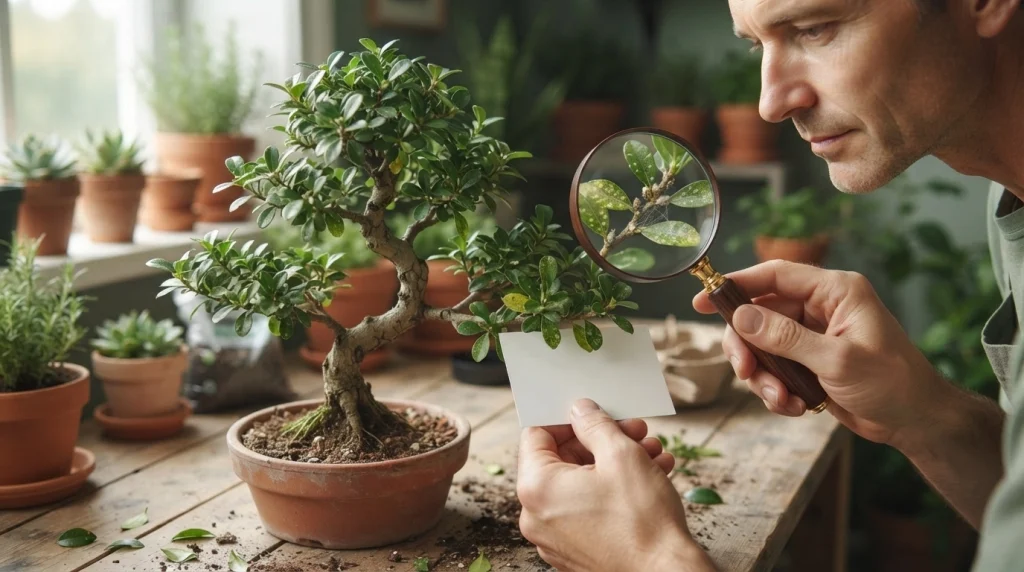
The most common Carmona bonsai pests include spider mites, scale insects, whiteflies, aphids, and mealybugs. Their feeding can cause leaf discoloration, distorted growth, sticky residue, and gradual loss of vigor.
Identifying the pest before treatment matters because different insects occupy different parts of the tree and respond to different control methods.
Spider mites
Spider mites are tiny arachnids that feed on plant cells. They often become troublesome in warm environments with dry air, particularly when a Carmona bonsai spends extended periods indoors.
Look for these signs:
- Fine, pale speckles scattered across leaves.
- Leaves that look dull, dusty, or bronzed.
- Delicate webbing between leaves and small branches.
- Gradual leaf drop when an infestation becomes severe.
Check the undersides of leaves with a magnifying glass. Gently tapping a branch over white paper may also reveal tiny moving mites.
Scale insects
Scale insects feed on sap and often resemble stationary brown, tan, or pale bumps. They attach themselves to stems, twigs, and leaves, where their appearance can be mistaken for natural bark texture.
Heavy infestations may cause yellowing, weak growth, and premature leaf drop. Some scale species also produce honeydew, a sticky substance that can encourage black sooty mold.
Examine suspicious bumps carefully before scraping them away. Their shape, location, and attachment can help distinguish scale insects from normal plant structures.
Whiteflies, aphids, and mealybugs
These pests usually affect soft growth, leaf joints, or the undersides of foliage. A close inspection often reveals more than the damage visible from a distance.
- Whiteflies: Tiny white adults may flutter away when disturbed, while immature stages remain attached beneath leaves.
- Aphids: Small, soft-bodied insects cluster around tender shoots and buds, sometimes leaving curled leaves and sticky honeydew.
- Mealybugs: White, waxy or cotton-like masses collect around leaf axils, stems, and sheltered joints.
Ants crawling over a Carmona bonsai can provide another clue. They may visit plants to feed on honeydew produced by aphids, mealybugs, or certain scale insects.
| Problem | Main sign | First response |
|---|---|---|
| Spider mites | Speckling and fine webbing | Inspect leaf undersides and use a suitable mite treatment. |
| Scale insects | Fixed bumps on stems or leaves | Remove accessible insects carefully and monitor for new ones. |
| Whiteflies | White adults and pale immature insects | Isolate the tree and inspect the undersides of leaves. |
| Aphids | Clusters on tender shoots | Rinse or remove accessible insects and check new growth. |
| Mealybugs | Cotton-like white deposits | Remove visible colonies and select an appropriate targeted treatment. |
Section Takeaway: Look for the pest itself whenever possible. Matching visible evidence to a specific insect reduces unnecessary spraying and improves the chance of effective treatment.
What Diseases and Care-Related Problems Affect Carmona Bonsai?
Carmona bonsai can develop root rot, fungal leaf problems, and branch dieback, but yellow leaves or falling foliage do not automatically indicate disease. Watering errors, inadequate light, temperature fluctuations, and mineral-related nutrient problems can produce similar symptoms.
The safest approach is to examine the entire growing environment before deciding whether a pathogen is responsible.
Root rot from persistently wet soil
Root rot develops when roots remain excessively wet and become damaged, often because poor drainage limits oxygen availability. Damaged roots struggle to supply water and nutrients, so the foliage may yellow, wilt, or drop even when the soil feels wet.
Check for several warning signs:
- The soil remains saturated for an unusually long time.
- The tree declines despite regular watering.
- Drainage holes appear blocked or the growing medium has compacted.
- Visible roots, if accessible, are soft, dark, or deteriorating rather than firm.
Do not respond to a wet, declining tree by automatically watering more often. First assess drainage, soil condition, and root health.
Severe root damage may require careful repotting, but removing soil and cutting roots can further weaken a stressed Carmona. Seek experienced bonsai guidance if extensive root rot is suspected.
Fungal leaf spots and branch dieback
Fungal pathogens can cause leaf spots, lesions, and localized dieback, particularly when foliage stays wet for long periods or airflow is poor. However, similar symptoms can arise from chemical injury, physical damage, or other plant disorders.
Watch for spots that enlarge, merge, or develop unusual margins. Also note whether the problem affects isolated leaves or spreads across several branches.
Remove fallen, visibly diseased material and avoid wetting foliage unnecessarily. Keep pruning tools clean, and avoid cutting healthy branches simply because a few leaves have spots.
For a suspected fungal infection, confirm the likely cause before choosing a fungicide. These products do not treat every type of leaf damage, and they cannot correct unsuitable watering or poor drainage.
Yellowing caused by chlorosis or environmental stress
Chlorosis means that leaves lose their normal green color because chlorophyll production or maintenance is impaired. On Carmona bonsai, this can result from nutrient availability problems, unsuitable growing conditions, damaged roots, or mineral-related issues.
Yellow tissue between veins that remain green can suggest an iron-availability problem, although it is not definitive proof. Widespread yellowing can also accompany overwatering, underwatering, or insufficient light.
Hard water may contribute to mineral accumulation or nutrient availability problems in some growing conditions. Before adding iron fertilizer, check the water source, soil drainage, and general condition of the roots.
Changing several care variables at once makes diagnosis harder. Correct the most likely underlying problem first, then observe whether new growth improves.
Section Takeaway: Disease symptoms and care-related stress frequently overlap. Check moisture, drainage, light, and root condition before treating a presumed infection.
How Do You Treat Carmona Bonsai Pests and Diseases?
Treating Carmona bonsai successfully starts with isolating the tree, confirming the likely cause, and choosing the least disruptive effective intervention. A single spray rarely solves every infestation because eggs, hidden insects, and immature stages may survive the first treatment.
Step 1: Isolate and inspect the tree
Move the affected bonsai away from other plants when practical. Keep it in a suitable, bright, sheltered environment rather than placing it somewhere dark or exposing it to sudden temperature changes.
Inspect the canopy systematically, including:
- The undersides of leaves.
- Young shoots and leaf joints.
- Branch forks and the trunk surface.
- The soil surface and drainage openings.
Photograph suspicious insects or lesions before treatment. Clear pictures can help a local bonsai club, horticultural specialist, or plant clinic identify the problem more accurately.
Step 2: Remove accessible pests
For small infestations, physical removal can reduce pest numbers before further treatment. Rinse suitable foliage gently with lukewarm water or remove individual insects using a soft tool.
Be careful around delicate leaves, flowers, and brittle twigs. Avoid forceful water jets that may damage foliage, dislodge soil, or leave the root ball waterlogged.
For scale insects or mealybugs, carefully remove visible colonies where practical. Avoid applying concentrated rubbing alcohol or homemade chemical mixtures across the canopy because Carmona foliage may be sensitive to harsh treatments.
Step 3: Choose an appropriate treatment
Use a product specifically labeled for the identified pest or disease and suitable for ornamental plants. Insecticidal soaps, horticultural oils, and targeted pesticides may help with particular insects, but their effectiveness depends on the pest and application method.
- For spider mites: Choose a labeled miticide or other treatment proven suitable for mites; ordinary insecticides may not control them.
- For scale insects: Combine careful physical removal with a suitable labeled treatment when needed.
- For whiteflies and aphids: Use an appropriate insecticidal soap or other labeled control, covering the locations where the insects feed.
- For mealybugs: Remove visible colonies and follow a suitable treatment plan that accounts for insects hiding in sheltered joints.
- For suspected fungal disease: Improve growing conditions and use a fungicide only when the suspected pathogen and product label justify it.
Test a treatment on a small part of the plant when the label permits, then watch for leaf damage before treating the entire canopy. Apply products at the labeled concentration and interval; never improvise stronger mixtures.
Avoid spraying during intense sunlight or high heat when the label warns against it. Do not combine oils, soaps, or other pesticides unless their labels explicitly allow that combination.
Step 4: Repeat inspections and reassess
Inspect the tree again after treatment and continue checking it at regular intervals. Repeat applications only as directed by the product label, since some pests require multiple treatments to control newly emerging stages.
Look for living insects, fresh webbing, new feeding damage, and changes in new growth. Existing damaged leaves may not recover, so healthier new growth is often a more useful sign of improvement.
If the tree continues declining, reconsider the diagnosis rather than automatically applying more chemicals. Persistent damage may reflect a second pest, root problems, or unsuitable growing conditions.
Section Takeaway: Effective treatment combines accurate identification, targeted control, and follow-up inspection. More pesticide is not necessarily better.
How Do You Diagnose Yellow Leaves, Leaf Drop, and Other Symptoms?
Yellowing, wilting, and leaf drop are symptoms rather than diagnoses. The timing, distribution, soil condition, and presence of insects provide useful clues about the underlying problem.
Use the following comparison to narrow down the possibilities before changing your care routine.
| Symptom | Possible cause | What to check |
|---|---|---|
| Yellow leaves and wet soil | Overwatering or root damage | Drainage, soil compaction, root condition |
| Wilting and dry soil | Underwatering or root stress | Moisture inside the root ball and recent watering |
| Fine leaf speckles | Spider mites or other leaf damage | Magnified leaf undersides and possible webbing |
| Sticky foliage | Honeydew-producing insects | Aphids, scale insects, mealybugs, whiteflies |
| White or brown leaf spots | Fungal disease, pests, or chemical injury | Whether spots spread and how they are distributed |
| Sudden leaf drop | Water stress, temperature changes, pests, or other stress | Recent moves, drafts, watering changes, and visible insects |
Why does a Carmona bonsai lose leaves after moving indoors?
A change in light intensity, temperature, humidity, or watering conditions can trigger leaf drop. This is especially relevant when a Carmona moves between outdoor and indoor environments or sits near a cold draft.
Keep conditions as stable as practical, provide adequate light, and check the soil before watering. Do not assume that every fallen leaf signals an infestation.
When should you seek expert help?
Ask an experienced bonsai grower or plant-health specialist for help when the trunk or major branches develop extensive dieback, roots appear severely damaged, or a suspected disease continues spreading despite appropriate care.
Bring clear photographs, your watering history, and details about recent changes in light, temperature, and treatment. This information can help distinguish pests from environmental stress and reduce unnecessary intervention.
Section Takeaway: Diagnose the pattern before acting. A careful assessment of the leaves, soil, roots, and recent environmental changes is more reliable than treating symptoms alone.
How Do You Prevent Future Carmona Bonsai Pests and Diseases?
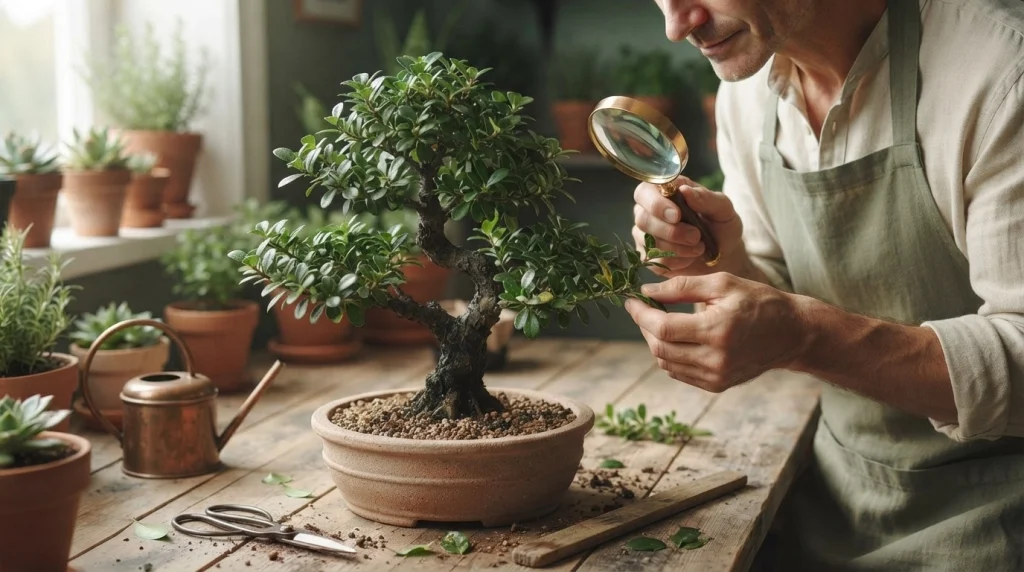
Prevention depends on consistent care, good drainage, adequate light, and regular inspection. A healthy Carmona can still attract pests, but early detection and stable growing conditions make problems easier to manage.
Provide suitable light and stable temperatures
Carmona is a tropical evergreen species that generally needs a bright growing position and protection from cold conditions. Indoors, provide strong natural light or an appropriate grow light without exposing the foliage to damaging heat.
Avoid sudden moves between very different environments. If you relocate the tree seasonally, make the transition carefully and monitor its response.
Water according to soil moisture
Water when the growing medium needs it rather than following a rigid calendar. The rate of drying depends on light, temperature, airflow, soil composition, pot size, and the amount of foliage.
Use a free-draining bonsai substrate that retains enough moisture for the roots without remaining saturated. Ensure excess water can escape through unobstructed drainage holes.
Inspect the tree weekly
During active growth, a quick weekly inspection is a practical preventive routine. Pay particular attention to new shoots, leaf undersides, branch junctions, and areas where foliage grows densely.
- Check for sticky residue, webbing, cotton-like deposits, and unusual bumps.
- Remove fallen leaves and other plant debris from the soil surface.
- Clean pruning tools and avoid transferring pests between plants.
- Inspect newly purchased or recently introduced plants before placing them near the collection.
- Record recurring symptoms so changes in the tree’s condition are easier to recognize.
Feed carefully and avoid unnecessary stress
Use a suitable bonsai fertilizer according to the product directions and the tree’s growth cycle. Excessive feeding cannot compensate for poor light, damaged roots, or inappropriate watering.
Avoid combining aggressive pruning, major root work, and pesticide treatments unless there is a clear reason and the tree can tolerate the intervention. Stacking stressful procedures can make recovery harder to assess.
For more general identification and prevention guidance, consult the Royal Horticultural Society’s Carmona growing information and the broader Bonsai Empire care guide.
Section Takeaway: Regular inspection and consistent growing conditions are your best defenses. Prevention works best when it addresses the tree’s overall health rather than relying on routine pesticide use.
Frequently Asked Questions About Carmona Bonsai Pests and Diseases
What are the most common pests on Carmona bonsai?
Spider mites, scale insects, whiteflies, aphids, and mealybugs are common pests associated with Carmona bonsai. Inspect the undersides of leaves, tender shoots, stems, and leaf joints for insects, webbing, sticky residue, or cotton-like deposits before selecting a treatment.
Can Carmona bonsai recover from spider mites?
Yes, a Carmona bonsai can recover from spider mite damage if the infestation is controlled and the remaining roots and foliage are healthy. Remove accessible mites, apply an appropriate labeled treatment, and monitor the tree for renewed webbing or feeding damage.
Why is my Carmona bonsai turning yellow and dropping leaves?
Yellowing and leaf drop can result from overwatering, underwatering, inadequate light, temperature fluctuations, root damage, or pests. Check soil moisture, drainage, growing conditions, and the undersides of leaves before deciding which corrective action is appropriate.
Does Carmona bonsai need fungicide?
Not routinely. Fungicide is appropriate only when a susceptible disease is reasonably identified and the chosen product is labeled for that problem. Improving drainage, airflow, and sanitation may help prevent some fungal problems, but these measures do not replace targeted treatment when an infection is confirmed.
Can I use neem oil on Carmona bonsai?
A neem-based product may help control certain pests when its label includes the target insect and the intended plant use. Carmona foliage can be sensitive to unsuitable treatments, so follow the label, test a small area when permitted, and avoid application under conditions that increase leaf injury.
Should I repot a Carmona bonsai with root rot?
Repotting may be necessary when severe root damage or a persistently unsuitable substrate prevents recovery. However, root work can add stress to an already weakened tree. Assess drainage and root condition carefully, and seek experienced guidance before removing substantial amounts of soil or roots.
How often should I check my Carmona bonsai for pests?
Inspect your Carmona bonsai at least weekly during active growth and whenever its foliage changes unexpectedly. Check more frequently after finding pests or introducing a new plant. Continue monitoring after treatment because surviving eggs or immature insects can lead to another infestation.
Keep Your Carmona Bonsai Healthy With Early Detection
Carmona bonsai pests and diseases are easier to manage when you identify the problem early and respond with a targeted treatment. Spider mites, scale insects, whiteflies, and mealybugs deserve particular attention, while persistent wet soil and poor growing conditions can contribute to root and fungal problems.
Before treating your tree, inspect its foliage, stems, and growing medium, then review its watering, light, and temperature conditions. This simple process helps you avoid unnecessary chemicals and focus on the cause rather than the symptoms.
Make regular inspection part of your bonsai routine, and keep notes when symptoms appear or treatments are applied. If the problem persists or major branches begin dying back, seek help from an experienced bonsai grower or plant-health specialist.