Olive Bonsai Pests and Diseases: How to Identify and Treat Them

Quick Answer
Olive bonsai pests and diseases commonly include scale insects, spider mites, aphids, peacock spot, olive knot, and root rot. The right treatment depends on whether you find insects, leaf lesions, abnormal growths, or roots damaged by excess moisture. Start by examining both sides of the leaves, the twigs, and the soil before applying any treatment. The UC olive pest and disease guide provides useful identification and management information.
Common Problems and Their Signs
- Scale insects: Look for fixed brown, black, or gray bumps on leaves and branches, sometimes accompanied by sticky honeydew.
- Spider mites: Watch for fine webbing, pale stippling, and leaves that appear dusty or bronze.
- Aphids: Check tender shoots for clusters of small insects, curled growth, and sticky residue.
- Peacock spot: Suspect this fungal disease when dark, rounded leaf spots develop, sometimes with yellow halos.
- Olive knot: Look for unusual woody swellings on twigs or branches, especially around wounds.
- Root rot: Consider root problems when foliage declines despite moist soil and the growing medium drains poorly.
What to Do First
- Isolate the affected bonsai from other trees and inspect it with a hand lens.
- Remove fallen leaves, improve airflow, and correct watering or drainage problems.
- Use a treatment labeled for the identified pest or disease and suitable for olive bonsai, following all label directions.
- Recheck the tree regularly to see whether new damage has stopped appearing.
Olive bonsai are valued for their rugged trunks, small evergreen leaves, and Mediterranean character, but even a healthy-looking tree can develop pests or disease. When troubleshooting an olive bonsai, I would begin with the pattern of damage rather than reaching immediately for a spray.
This guide explains how to recognize common olive bonsai pests and diseases, distinguish infections from environmental stress, and choose practical treatments that protect the tree’s health and shape.
In This Guide
- How can you identify olive bonsai pests and diseases?
- Which pests attack olive bonsai?
- What diseases affect olive bonsai?
- Why are olive bonsai leaves turning yellow or falling off?
- How do you treat olive bonsai pests and diseases?
- How can you prevent future olive bonsai problems?
- Frequently asked questions
How can you identify olive bonsai pests and diseases?
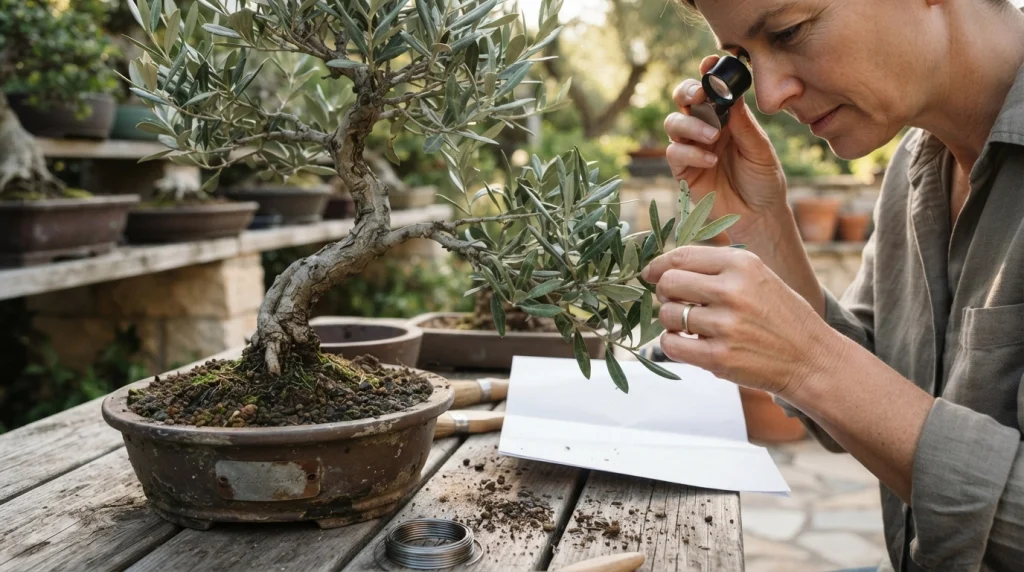
Olive bonsai problems are easiest to diagnose by matching visible symptoms with where they appear and how they develop. Check the leaves, young shoots, bark, soil surface, and drainage before deciding whether the cause is an insect, pathogen, or care mistake.
Start with a close inspection
Olive bonsai, Olea europaea, are woody evergreen trees that generally prefer strong light and well-drained growing conditions. Their small leaves and compact branches can hide pests, so inspect the tree from several angles.
- Leaves: Look for stippling, dark spots, yellowing, curled edges, sticky residue, or premature leaf drop.
- Twigs and trunk: Check for attached insects, unusual swellings, cracks, dead tips, and discolored bark.
- Soil and roots: Check whether water drains freely and whether the soil stays saturated for long periods.
- Growing environment: Review recent changes in sunlight, temperature, watering, airflow, and humidity.
A 10× hand lens is useful for spotting tiny mites, immature scale insects, and other pests that are difficult to see with the naked eye. White paper also helps: gently tap a suspect branch over it and look for small moving specks.
Distinguish pests from growing-condition problems
Not every yellow leaf or brown tip signals an infection. Poor light, root damage, irregular watering, and a sudden change in growing conditions can produce symptoms that resemble pest damage.
For example, a few older leaves yellowing while new growth remains healthy may reflect normal leaf turnover. Widespread yellowing combined with persistently wet soil, however, raises concern about poor drainage or damaged roots.
| What you notice | Possible cause | What to check next |
|---|---|---|
| Fixed bumps on twigs | Scale insects | Inspect beneath leaves and look for honeydew. |
| Fine webbing and pale leaf speckles | Spider mites | Examine leaf undersides with a hand lens. |
| Dark, round leaf spots | Peacock spot or another leaf disease | Look for yellow halos and a history of prolonged leaf wetness. |
| Woody lumps on branches | Olive knot or other abnormal growth | Inspect the swelling and nearby pruning wounds. |
| Yellowing with wet soil and weak growth | Root stress or root rot | Check drainage, watering history, and root condition if necessary. |
| Sticky leaves with black surface growth | Honeydew-producing insects and sooty mold | Find and identify the insects producing the sticky residue. |
Section Takeaway: Diagnose the cause before treating the symptoms. Visible insects, leaf spots, woody galls, and persistently wet soil point toward different solutions.
Which pests attack olive bonsai?
Scale insects, spider mites, and aphids are important pests to check for on olive bonsai, although the exact pest pressure varies with climate and growing conditions. Other olive pests, including whiteflies and certain borers, may also occur in some regions.
Scale insects: brown or black bumps on branches
Scale insects attach themselves to leaves and woody growth, where they feed on plant sap. Some species look like tiny brown, black, gray, or waxy bumps and may be mistaken for part of the bark.
Soft scales can produce honeydew, a sugary waste product that makes leaves and branches sticky. Sooty mold may then grow on that residue, creating a black coating that interferes with normal photosynthesis when the buildup is substantial.
To check for scale, inspect branch junctions, the undersides of leaves, and older twigs. A hand lens can help distinguish insects from natural bark texture.
For light infestations, remove accessible insects carefully and discard heavily infested fallen material. Horticultural oil or insecticidal soap may help when the product label permits use on olives and the target pest, but complete coverage and correct application conditions matter.
Spider mites: stippling, bronzing, and fine webbing
Spider mites are tiny relatives of spiders that feed on individual plant cells. Their feeding often produces pale dots, a dusty appearance, bronzing, and, in heavier infestations, fine webbing.
Hot, dry conditions can favor some mite outbreaks, particularly when a bonsai is stressed. However, webbing alone is not proof of spider mites, so inspect the leaves closely before treating.
- Examine the undersides of affected leaves using a hand lens.
- Tap a branch over white paper and check for moving specks.
- Reduce plant stress by maintaining appropriate watering and strong light.
- If mites are confirmed, use a labeled mite-control product suitable for the tree and growing environment.
Ordinary insecticides may not control mites and can sometimes make mite problems worse by harming beneficial predators. Choose a product specifically labeled for the identified pest rather than assuming any insect spray will work.
Aphids and other sap-feeding insects
Aphids often gather on tender shoots and fresh leaves, where they feed on sap. Signs include clusters of small, soft-bodied insects, curled young growth, sticky honeydew, and sometimes ants visiting the affected branches.
Start with a close inspection of new shoots. If the infestation is light, remove affected insects manually or use a gentle water spray where appropriate, taking care not to dislodge the tree from its pot or saturate the soil unnecessarily.
Whiteflies and mealybugs can also affect container-grown trees. Whiteflies may flutter from the foliage when disturbed, while mealybugs often appear as small, white, cottony masses in protected crevices.
Less common pests and hidden root problems
Olive-growing regions may also have olive scale, black scale, olive psyllids, weevils, or borers. Which species is likely depends on the local climate, nearby host plants, and whether the bonsai spends time outdoors.
Root-feeding pests are harder to identify because damage may appear above the soil as weak growth, wilting, or unexplained decline. Don’t unpot a stressed bonsai simply to search for insects; first inspect the drainage and visible symptoms, then investigate the roots if the evidence warrants it.
For olive-specific pest descriptions, the University of California’s olive pest management guidelines provide a useful reference. Its agricultural recommendations may not translate directly to a small bonsai pot, so follow local product labels and adapt control methods to container growing.
Section Takeaway: Confirm the pest before choosing a treatment. Scale, mites, and aphids damage olives in different ways, and a targeted response is safer than repeated broad-spectrum spraying.
What diseases affect olive bonsai?
Olive bonsai can develop fungal leaf diseases, bacterial infections, and root or crown rot when conditions favor the pathogens involved. Peacock spot, olive knot, and root rot deserve particular attention because they can cause defoliation, branch damage, or serious decline.
Peacock spot: dark circular marks on leaves
Peacock spot is a fungal disease associated with the pathogen Venturia oleaginea, also known in older references as Spilocaea oleaginea. It produces dark, rounded spots on olive leaves, sometimes surrounded by yellow halos.
Infections are favored by suitable temperatures and prolonged leaf wetness, particularly during rainy periods. Infected leaves may fall prematurely, reducing the tree’s ability to support healthy growth.
To assess a suspected case, examine both surfaces of affected leaves and look for distinct dark spots rather than uniform yellowing. Other fungal leaf diseases can look similar, so uncertain or spreading cases may require identification by a plant diagnostic service.
Management focuses on reducing conditions that favor infection and limiting the amount of infected foliage.
- Remove fallen and badly affected leaves without stripping the tree unnecessarily.
- Provide good airflow around the canopy.
- Water the soil rather than routinely wetting the foliage.
- Avoid leaving the tree in a persistently damp, poorly ventilated location.
Fungicides may be appropriate for confirmed disease, but they do not repair existing leaf lesions. Select only a product labeled for the pathogen or disease, olives, and the intended growing setting.
Olive knot: unusual swellings on branches
Olive knot is a bacterial disease caused by Pseudomonas savastanoi. It produces rough, woody galls on twigs and branches, often near leaf scars, pruning wounds, or other damaged tissue.
These swellings are different from scale insects because they form part of the branch itself. As they enlarge, they may weaken or girdle small shoots, contributing to dieback.
Rain and contaminated tools can help spread the bacteria, while fresh wounds provide potential entry points. Wet climates and periods of prolonged rainfall can increase the risk.
On a bonsai, avoid cutting into a suspected gall simply to see how far it extends. First photograph the affected area, isolate the tree where practical, and seek a reliable diagnosis if the swelling is new or spreading.
If removal is appropriate, use clean, disinfected tools and avoid pruning when rain is likely. Sanitize tools between cuts when working on potentially infected tissue, following appropriate tool-disinfection guidance.
*Pro tip:* Removing a major branch or cutting into valuable trunk tissue can permanently change a bonsai’s design. Consult an experienced bonsai grower or plant-health specialist before making irreversible cuts.
Root rot and crown rot: when the soil stays too wet
Root rot is a general term for root tissue damage and decay, often associated with waterlogged growing media and root-infecting organisms such as Phytophthora. Not every case of damaged roots involves the same pathogen, so avoid treating all root decline as one disease.
Olives generally prefer good drainage and are poorly suited to persistently saturated soil. In a shallow bonsai pot, compacted soil or blocked drainage holes can leave roots short of oxygen and encourage further decline.
Warning signs include:
- Yellowing or dropping leaves despite moist soil.
- Weak shoots and declining vigor.
- A growing medium that remains wet unusually long.
- Roots that appear dark, soft, or deteriorated when legitimately exposed for inspection.
Begin by checking the drainage holes and reviewing your watering routine. Don’t water automatically every day; check the soil’s moisture and the tree’s needs instead.
If the tree continues to decline, or the roots are visibly decaying, seek a diagnosis before selecting a fungicide. Some root pathogens require specific management, and a general-purpose spray may not address the underlying cause.
Sooty mold and other leaf diseases
Sooty mold is a dark fungal growth that develops on honeydew left by insects such as soft scales and aphids. It usually grows on the leaf surface rather than invading healthy tissue in the same way as a leaf-spot pathogen.
That distinction matters. Removing the visible black coating without controlling the honeydew-producing insects leaves the underlying problem in place.
Other olive leaf diseases can cause spots, discoloration, or premature leaf loss. If symptoms don’t match the typical signs of peacock spot, don’t assume the diagnosis from color alone.
The University of Florida’s guide to pests and fungal organisms on olives provides additional descriptions of olive-associated problems, including sooty mold and other diseases.
Section Takeaway: Dark leaf spots, woody galls, and declining roots require different responses. Identify the likely disease and correct favorable growing conditions before considering chemical treatment.
Why are olive bonsai leaves turning yellow or falling off?
Yellowing and leaf drop are symptoms, not diagnoses. On olive bonsai, they can result from normal leaf turnover, watering errors, poor light, pests, disease, or root damage.
Yellow leaves with wet soil
If leaves turn yellow while the growing medium remains wet, investigate drainage before adding fertilizer. Roots that receive too little oxygen may struggle to absorb water and nutrients, even when the pot contains plenty of moisture.
Check whether the drainage holes are open and whether the soil has broken down into fine, compacted particles. A persistent sour smell, soft roots, or progressive decline increases concern about root damage.
Yellow leaves with dry soil
When the soil dries excessively, the tree may struggle to replace the water lost through its leaves. Leaves can wilt, curl, turn yellow, or develop dry edges, especially during hot weather or strong wind.
Check moisture below the surface instead of relying on the soil’s appearance alone. Water thoroughly when needed, allowing excess water to drain freely from the pot.
Leaf loss after moving the tree
An abrupt change in light, temperature, wind exposure, or watering can stress an olive bonsai. A tree moved from a bright outdoor position into a dim room may lose foliage because its new environment cannot support the same growth.
Olives are generally outdoor trees that need strong light and seasonal conditions suited to their climate. If yours is kept indoors temporarily, give it the brightest suitable position available and avoid repeatedly moving it between very different environments.
How to distinguish environmental stress from disease
Look at the pattern and progression of symptoms rather than one leaf. Uniform yellowing, dry margins, distinct circular spots, sticky deposits, and localized branch dieback each provide different clues.
| Symptom pattern | Likely direction to investigate | First response |
|---|---|---|
| A few older leaves yellow | Normal turnover or general stress | Check whether new growth remains healthy. |
| Widespread yellowing with saturated soil | Drainage or root problems | Correct watering and inspect drainage. |
| Fine pale speckles across leaves | Spider mites or other feeding damage | Inspect leaf undersides with magnification. |
| Circular dark lesions | Leaf-spot disease | Remove fallen leaves and assess the pattern. |
| One branch declines around a swelling | Olive knot or localized branch damage | Inspect the swelling and avoid unnecessary cutting. |
Keep a simple record of when symptoms started, recent weather, watering, and any treatment already applied. Comparing photographs taken several days apart can reveal whether damage is spreading or remaining stable.
Section Takeaway: Don’t treat yellow leaves with fertilizer or pesticides until you understand the likely cause. Check moisture, drainage, light, and visible pest evidence first.
How do you treat olive bonsai pests and diseases?
Effective treatment starts with identification, isolation, sanitation, and correction of growing conditions. Chemical products should be a targeted option, not the first response to every damaged leaf.
Follow a practical treatment sequence
- Isolate the tree. Move it away from other bonsai when pest spread is possible, while preserving suitable light and temperature.
- Confirm the problem. Inspect leaves, twigs, and soil, using a hand lens where necessary.
- Remove limited sources of trouble. Pick off accessible pests and collect fallen leaves without stripping healthy foliage unnecessarily.
- Correct the growing environment. Improve airflow, adjust watering, and address drainage or light problems.
- Select a targeted treatment. Choose a labeled product appropriate for the confirmed pest or disease and the intended application site.
- Monitor the response. Reinspect the tree and follow the product label for repeat applications, precautions, and intervals.
When should you use insecticidal soap or horticultural oil?
Insecticidal soap and horticultural oils can control certain soft-bodied insects, scale stages, and mites when the product is appropriate for the target pest. Their effectiveness depends on the pest’s life stage, application coverage, and correct use.
These treatments can also injure foliage if applied incorrectly. Avoid spraying a heat-stressed or drought-stressed tree, and follow label restrictions concerning temperature, sunlight, and sensitive plants.
Before treating the whole bonsai, test the product on a small area when the label permits and observe the foliage for signs of damage. Never mix products or increase the concentration beyond the label directions.
When is pruning appropriate?
Pruning can help remove badly infested growth or confirmed diseased branches, but unnecessary cutting creates wounds and can weaken a stressed tree. First determine whether the damage is localized and whether removing the affected tissue is justified.
Use sharp, clean tools and sanitize them appropriately when moving between potentially infected plants. Dispose of diseased material rather than leaving it beside the bonsai or adding it to a compost system that may not destroy the pathogen.
*Pro tip:* If suspected olive knot affects the main trunk, an important branch, or a large section of the canopy, get advice from an experienced bonsai grower before removing living wood.
When should you repot a declining olive bonsai?
Repotting may be necessary when the growing medium has deteriorated, drainage is seriously impaired, or root disease requires intervention. However, repotting is stressful and should not be an automatic response to every case of yellowing.
Check the soil surface and drainage first. If root inspection confirms serious decay, use species-appropriate bonsai practice and consider professional guidance about timing, root removal, and aftercare.
Don’t combine aggressive root pruning, heavy canopy pruning, wiring, and pesticide experiments on an already weakened tree. Reduce avoidable stress and prioritize the most urgent problem.
Section Takeaway: Use the least disruptive effective treatment. Confirm the cause, remove accessible sources of infestation, improve growing conditions, and reserve major pruning or repotting for situations that justify the risk.
How can you prevent future olive bonsai problems?
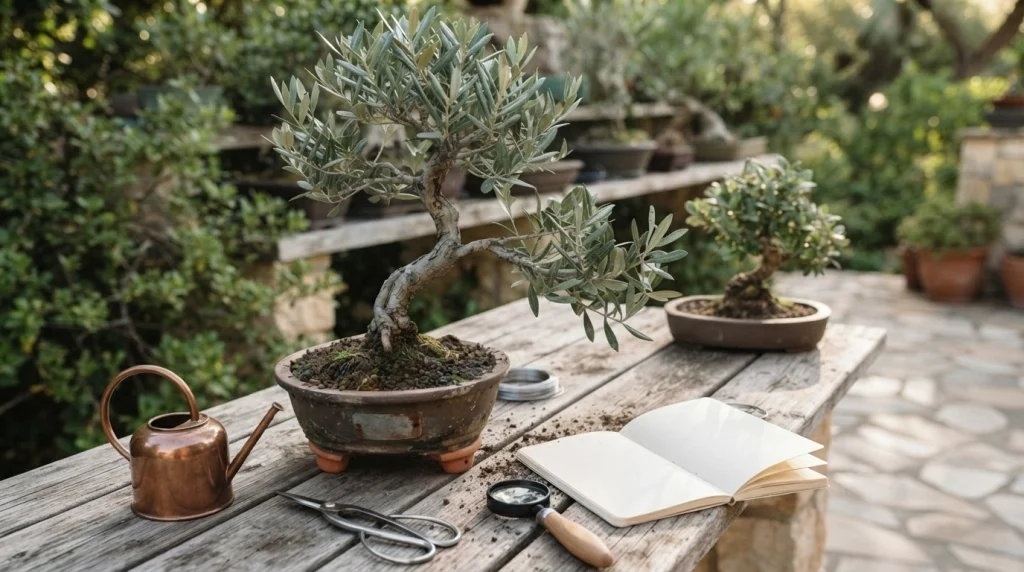
Consistent care makes olive bonsai less vulnerable to pest outbreaks and helps you catch disease before it causes substantial damage. Prevention depends on strong light, suitable watering, good drainage, clean tools, and regular inspections.
Give the tree enough light and airflow
Olives generally thrive outdoors in full sun, provided they are acclimated to the conditions and protected from unsuitable extremes. A dim indoor position can weaken growth and make it harder to maintain a healthy canopy.
Space branches appropriately during routine maintenance so air can move through the foliage. Avoid keeping the tree crowded against other plants, particularly when leaves remain wet after rain.
Water according to soil moisture
Watering frequency should follow the tree’s needs, the weather, and the growing medium rather than a rigid calendar. Small bonsai pots can dry quickly in warm, windy conditions but remain wet much longer during cool, cloudy weather.
- Check the soil regularly, including just below the surface.
- Water thoroughly when the tree needs it, allowing excess water to escape.
- Keep drainage holes open and avoid leaving the pot standing in water.
- Review the soil structure if the medium stays saturated or drains unusually slowly.
Olives tolerate periods of relative dryness better than prolonged waterlogging, but that doesn’t mean a bonsai should be allowed to dry out completely for extended periods. A small container has limited reserves of water, so adjust your routine to the conditions.
Inspect the tree throughout the year
A quick inspection every week is a practical starting point, with more frequent checks during warm weather, after bringing a tree home, or whenever pests have appeared. Look closely at new shoots, leaf undersides, branch junctions, and the soil surface.
Pay particular attention after prolonged rainy weather, when leaf diseases and olive knot may become more concerning. During hot, dry periods, check for mites and signs of water stress.
Use clean tools and quarantine new trees
Newly purchased bonsai can carry pests even when the foliage looks healthy. Keep new arrivals separate from your collection while inspecting them for insects, leaf spots, and abnormal growth.
Clean and disinfect pruning tools appropriately, especially after working on suspected infected tissue. Avoid sharing contaminated soil, fallen leaves, or untreated plant material between trees.
As of 2026, the basic principle remains the same: integrated pest management combines regular monitoring, cultural care, sanitation, and targeted treatment rather than relying on routine pesticide applications.
For broader bonsai growing guidance, the Royal Horticultural Society’s bonsai advice discusses growing conditions and common problems across bonsai species. Use olive-specific information when choosing care practices for Olea europaea.
Section Takeaway: Healthy growing conditions and early detection are your best defenses. Inspect regularly, maintain drainage, provide strong light, and avoid unnecessary wounds or chemical treatments.
Frequently asked questions about olive bonsai pests and diseases
What are the most common pests on olive bonsai?
Scale insects, spider mites, and aphids are useful first suspects when olive bonsai develop sticky leaves, pale stippling, or damaged shoots. Whiteflies and other olive-associated pests can also occur. Inspect the affected growth closely before choosing a treatment.
Why does my olive bonsai have black spots on its leaves?
Black or dark circular spots may indicate peacock spot or another leaf-spot disease. Yellow halos and a history of prolonged leaf wetness can support the suspicion, but appearance alone cannot confirm the pathogen. Remove fallen leaves, improve airflow, and seek a reliable diagnosis if the problem spreads.
How do I get rid of scale insects on an olive bonsai?
Identify the scale, remove accessible insects where practical, and inspect nearby leaves and branches for additional colonies. A suitable horticultural oil or insecticidal soap may help when labeled for the pest and olive trees. Follow the product directions and recheck the tree for newly developing insects.
Can an olive bonsai recover from root rot?
Recovery depends on how much root tissue remains healthy and whether the underlying cause can be corrected. Improve drainage, avoid persistent saturation, and obtain a diagnosis if root decay continues. Severe damage may be difficult to reverse, so avoid unnecessary root pruning on a weakened tree.
Should I spray my olive bonsai whenever leaves turn yellow?
No. Yellow leaves can result from overwatering, underwatering, inadequate light, root damage, normal leaf turnover, or pests and diseases. Check the soil, inspect the foliage, and look for specific evidence before applying any pesticide or fungicide.
Can olive bonsai diseases spread to my other bonsai trees?
Some pests and pathogens can spread between plants through insects, contaminated tools, infected material, or water. Isolate a suspicious tree, sanitize tools, and dispose of affected debris carefully. Not every olive disease affects every other bonsai species, so identify the problem before assuming all nearby trees are at risk.
When should I seek professional help for a sick olive bonsai?
Seek help when the trunk develops unusual galls, major branches die back, root decay progresses, or the diagnosis remains uncertain after inspection. An experienced bonsai grower, horticultural extension service, or plant diagnostic laboratory can help identify the problem before you risk irreversible pruning or inappropriate treatment.
Keep your olive bonsai healthy with early diagnosis
Olive bonsai pests and diseases are easier to manage when you identify the cause before the damage spreads. Scale insects, mites, aphids, peacock spot, olive knot, and root rot each require a different response.
Start with a close inspection, review the tree’s growing conditions, and make one informed change at a time. Strong light, good drainage, clean tools, and regular monitoring will help you protect the tree while preserving its foliage, branches, and overall shape.
If symptoms continue to worsen despite correcting obvious care problems, seek a reliable diagnosis instead of repeatedly applying treatments. A careful approach gives your olive bonsai the best chance to recover and continue growing well.