Chinese Elm Bonsai Dropping Leaves: Causes and Fixes

This post contains affiliate links. As an Amazon Associate, OurBonsai earns from qualifying purchases at no extra cost to you. Read our disclosure.
In this guide
- Is it normal for a Chinese elm to drop leaves?
- When leaf drop is a problem
- 7 causes of chinese elm bonsai dropping leaves
- What to do right now
- Leaf drop by situation
- How long until new leaves appear?
- Indoor or outdoor: which is better?
- Preventing leaf drop
- FAQ: chinese elm bonsai dropping leaves
- Final thoughts
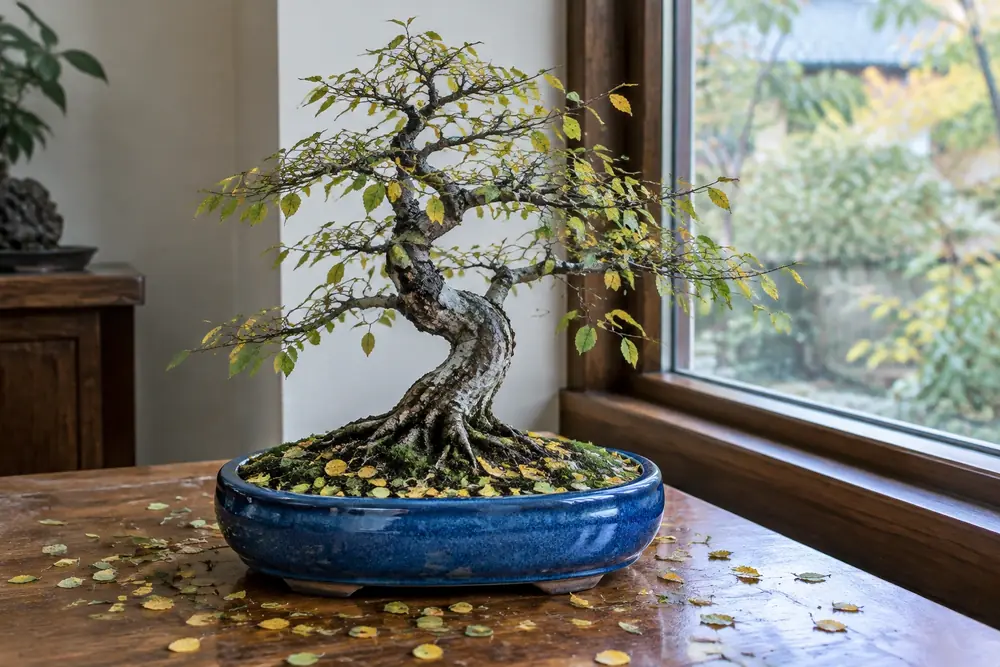
A chinese elm bonsai dropping leaves is one of the most common sights in bonsai, and it often worries new owners. The Chinese elm (Ulmus parvifolia) is known for reacting to almost any change by shedding leaves: a new location, a dry root ball, soggy soil, a cold draft or the arrival of autumn. The reassuring part is that it is also one of the fastest trees to recover. Once the cause is fixed, new buds often appear within a few weeks.
This guide explains when leaf drop is normal, the most common triggers and what to do about each one.
Is it normal for a Chinese elm to drop leaves?
Often, yes. Chinese elm is semi-evergreen. Its behavior depends on where it lives:
- Outdoors in cold winters: it drops most or all of its leaves in autumn, like a deciduous tree.
- Outdoors in mild climates: it keeps some leaves, dropping older ones over winter.
- Indoors: it keeps leaves all year but replaces older ones gradually, and often drops more in autumn and winter as light fades.
It is also normal for a Chinese elm to drop some leaves for a few weeks after it arrives in a new home.
When leaf drop is a problem
- Leaves fall heavily in spring or summer
- Leaves turn yellow, brown or crispy before falling
- The soil is constantly wet or bone dry
- New buds do not appear after several weeks
- Twigs are brittle and brown inside
7 causes of chinese elm bonsai dropping leaves
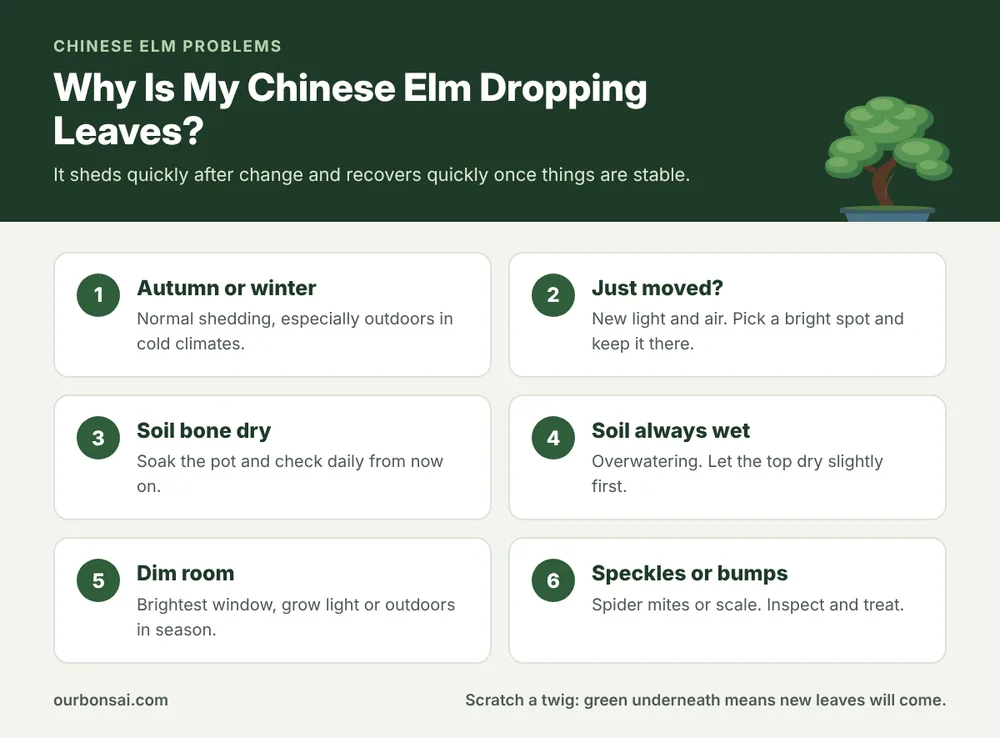
1. Change of location
Chinese elm is very sensitive to sudden changes in light and humidity. Moving it from a greenhouse to a store, from a store to your home, or from a summer outdoors back indoors often causes heavy leaf drop within days.
Fix: pick the brightest suitable spot and leave the tree there. Each move restarts the adjustment. New leaves usually follow within two to four weeks.
2. Dry soil
Chinese elm uses a lot of water in the growing season. If the root ball dries out completely, leaves wilt and fall, often within a day or two.
Fix: soak the pot in a basin of water for ten minutes, let it drain, and check the soil every day. Our Chinese elm bonsai care guide explains the watering rhythm in each season.
3. Overwatering
The opposite problem also causes drop, usually more slowly. Leaves turn soft and yellow before falling, and the soil stays wet for days.
Fix: water only when the top of the soil is just dry, empty saucers and check the drainage holes. If the soil is dense, plan to repot into a gritty mix. Our guide to the best soil for Chinese elm bonsai explains good mixes, and our guide to root rot in bonsai helps if the roots are damaged.
4. Low light
Indoors, light is often far weaker than the tree needs, especially in winter. The tree sheds leaves it cannot support and grows weak, pale shoots.
Fix: move it right next to the brightest window and add a grow light in winter. Our guide to the best indoor grow lights for bonsai helps you choose one. Many indoor elms do much better if they spend spring and summer outdoors.
5. Temperature shocks
Cold drafts from doors or windows, hot air from radiators, or a sudden heat wave can all trigger leaf drop.
Fix: keep indoor elms away from heaters, vents and drafty doors. Outdoors, give light afternoon shade in extreme heat.
6. Pests
Spider mites, aphids and scale insects all weaken leaves until they drop. Spider mites leave fine speckles and webbing, aphids cluster on new shoots and scale appears as small brown bumps on twigs.
Fix: inspect leaf undersides and twigs, rinse the tree and treat with insecticidal soap, neem oil or horticultural oil. Our guide to how to treat bonsai pests step by step covers the process.
7. Repotting or heavy pruning
After repotting, the tree has fewer roots to supply its leaves, so it may drop some. Heavy pruning can also trigger shedding of older leaves.
Fix: keep the tree in bright, indirect light, sheltered from wind, with evenly moist soil. Do not fertilize until new growth appears.
What to do right now
- Check the soil. Dry or soggy?
- Think about recent changes. Moved, repotted, pruned, brought indoors?
- Check the light. Is the tree right next to a bright window?
- Inspect for pests. Leaf undersides and twigs.
- Do the scratch test. Scratch a twig gently. Green underneath means alive.
- Stabilize. Bright light, steady watering, no moves, no fertilizer until new leaves appear.
- Clear fallen leaves so the soil can dry evenly and pests have fewer hiding places.
Leaf drop by situation
| Situation | Most likely cause |
|---|---|
| Just bought or delivered | Change of location |
| Brought indoors in autumn | Lower light and dry air |
| Outdoors in autumn | Normal seasonal shedding |
| Summer, outdoors | Dry soil or heat |
| Winter, indoors | Low light, radiator heat, overwatering |
| After repotting | Root loss, temporary |
| Any season, soil always wet | Overwatering |
How long until new leaves appear?
In the growing season, a healthy Chinese elm usually pushes tiny new buds within two to four weeks after the cause is fixed. New leaves are often small and pale at first and darken as they mature. In winter, indoor trees grow more slowly, and outdoor trees will wait until spring. Once new leaves have hardened, start feeding again. Our guide to the best Chinese elm bonsai fertilizer has good options.
Indoor or outdoor: which is better?
Chinese elm is sold as both an indoor and outdoor bonsai. In most temperate climates, it grows strongest outdoors, with full sun or bright light and a cool winter rest with frost protection for the roots. Indoors, it can do well with very bright light, but it is more prone to leaf drop. Moving an indoor elm outside for spring and summer often transforms its health. Just remember to move it gradually and bring it back inside before frost if you keep it indoors in winter.
Preventing leaf drop
- Choose a bright, stable spot and avoid frequent moves
- Check the soil daily and water when the top is just dry
- Use gritty, fast-draining soil
- Add a grow light in winter for indoor trees
- Keep away from heaters and drafts
- Check for pests every couple of weeks
For more on this species, the Wikipedia article on Ulmus parvifolia covers its natural range and growth habits, which explain its semi-evergreen behavior. A small bonsai humidity tray also helps indoor elms in dry, heated rooms.
FAQ: chinese elm bonsai dropping leaves
Why is my new Chinese elm dropping leaves?
It is adjusting to a new spot with different light and humidity. Give it bright light, steady watering and a few weeks.
Is it normal for a Chinese elm to lose leaves in winter?
Yes, especially outdoors in cold climates. Indoors, some extra drop in winter is also common because of weaker light.
Will my Chinese elm grow its leaves back?
Usually yes, if the twigs are green under the bark. Chinese elm buds back readily, often within a few weeks.
Should I water less when my Chinese elm drops leaves?
A tree with fewer leaves uses less water, so check the soil carefully before watering. Do not let it dry out, but avoid keeping it soggy.
Final thoughts
A Chinese elm bonsai dropping leaves is usually responding to a change, a watering problem or the season. Find the trigger, fix it and keep conditions stable. This resilient tree typically recovers quickly and pushes fresh growth within weeks. For full year-round care, see our Chinese elm bonsai care guide.