How Often to Water Ginseng Ficus Bonsai (Indoor & Outdoor Guide)

This post contains affiliate links. As an Amazon Associate, OurBonsai earns from qualifying purchases at no extra cost to you. Read our disclosure.
In this guide
- Why ginseng ficus is easy to overwater
- How often to water ginseng ficus bonsai by season
- How to check if a ginseng ficus needs water
- How to water a ginseng ficus
- Watering a newly bought ginseng ficus
- The right soil makes watering easier
- Humidity and the indoor environment
- Signs of overwatering and underwatering
- FAQ: how often to water ginseng ficus bonsai
- Final thoughts
If you are asking how often to water ginseng ficus bonsai, the usual answer is every three to seven days indoors, but only when the top 2 cm of soil feels dry. The ginseng ficus, a Ficus microcarpa grown on a thick, swollen root bulb, stores water in that bulb, so it handles a short dry spell well and needs watering less often than thin-rooted bonsai. Its biggest enemy is the opposite: soil that stays wet, which rots the roots and then the bulb itself. In winter, under lower light, many trees need water only once a week or less.
This guide covers seasonal watering, how to check the soil, how to water without harming the bulb, and the warning signs of over and underwatering.
Why ginseng ficus is easy to overwater
Ginseng ficus are among the most common bonsai sold in supermarkets and garden centers. They are often potted in dense, peaty soil, with a decorative saucer underneath and sometimes a layer of glued gravel on top. All of that holds water. Combine it with a watering schedule borrowed from other houseplants, and the soil around the bulb stays wet for days.
The bulb is actually a swollen section of root and lower trunk that stores water and food. The Wikipedia page on Ficus microcarpa describes it as a tough, adaptable fig, and the bulb is part of why. But the bulb can also rot from the outside if it sits in wet soil, and from the inside if the roots below it rot first. Our guide to root rot in bonsai explains how that happens.
How often to water ginseng ficus bonsai by season
| Situation | Typical frequency | Notes |
|---|---|---|
| Indoors, spring and summer, bright window | Every 3 to 5 days | Small pots in warm rooms dry faster |
| Indoors, autumn and winter | Every 5 to 10 days | Lower light, slower growth |
| Under a grow light all year | Every 3 to 5 days | Steady growth, steady water use |
| Outdoors in summer, light shade | Every 1 to 3 days | Heat and wind dry the pot fast |
| In dense store-bought soil | Much less often, and repot | The soil holds water for a long time |
These are typical ranges. Always check the soil before watering.
How to check if a ginseng ficus needs water
- Finger test. Push a finger about 2 cm into the soil beside the bulb. If it is dry at that depth, water. If it is cool and damp, wait.
- Chopstick test. In deeper pots, leave a wooden chopstick in the soil for ten minutes. A damp, dark chopstick means wait.
- Weight test. A dry pot feels noticeably lighter.
- Glued gravel? If the top of the soil is covered in glued-on stones, you cannot check properly. Carefully break it away; it also stops water and air reaching the roots.
How to water a ginseng ficus
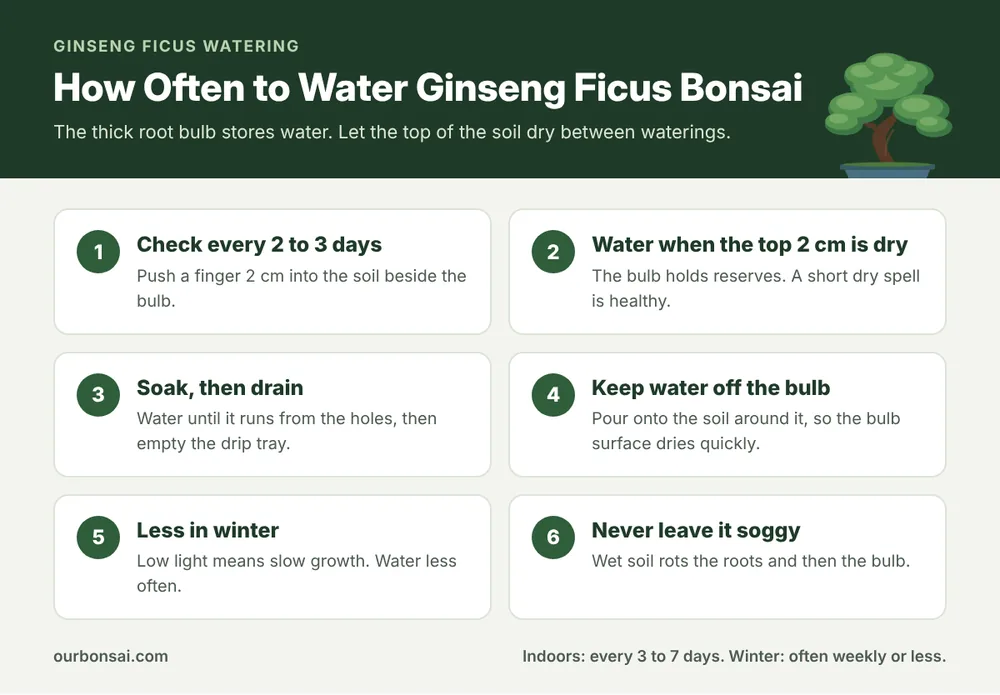
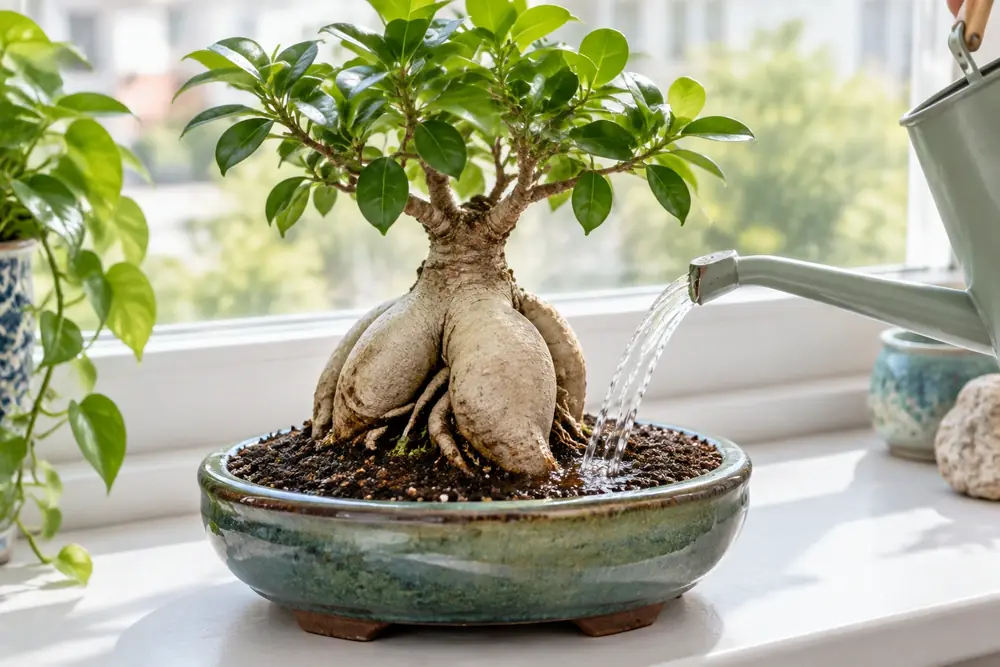
- Water the soil, not the bulb. Pour slowly onto the soil around the bulb so the bulb’s surface stays mostly dry.
- Water until it drains from the holes at the bottom, then wait a minute and water again.
- Empty the drip tray after about ten minutes. Never leave the pot standing in water.
- Use room-temperature water. Cold water can shock tropical roots and trigger leaf drop.
- Let the top dry before the next watering.
A small watering can with a long, narrow spout makes it easy to water around the bulb. Our review of stainless steel bonsai watering cans covers one option, or browse small long-spout watering cans.
Watering a newly bought ginseng ficus
A ginseng ficus straight from the store needs a little detective work before you settle into a routine:
- Check the soil the day you bring it home. Many arrive soaked from the store’s watering, so the first watering may not be needed for several days.
- Remove any glued gravel on the surface so you can see and feel the soil.
- Take it out of any decorative pot without holes and use a pot or tray that lets water drain away.
- Expect some leaf drop in the first weeks as it adjusts to your home’s light. Do not respond by watering more.
- Plan a repot into proper bonsai soil in late spring or early summer.
The right soil makes watering easier
If your ginseng ficus is still in dense store soil, repotting into a fast-draining mix in late spring or early summer is the single best thing you can do for it. A gritty mix of akadama, pumice and lava, or a good ready-made ficus mix, drains in seconds and dries evenly. Our ficus ginseng bonsai soil recipe gives exact ratios. In a gritty mix you will water a little more often, but the risk of rot almost disappears.
Humidity and the indoor environment
Ginseng ficus enjoys humid air, but humidity is not a reason to water more. In dry, heated rooms, set the pot on a humidity tray with pebbles and water, so the pot sits above the water line. Our pick of the best humidity trays for bonsai has good options. Keep the tree away from radiators, heating vents and air conditioners, and in the brightest spot you can. Our guide to watering indoor bonsai in winter covers the heating season in more detail.
Signs of overwatering and underwatering
| Overwatering | Underwatering |
|---|---|
| Yellow leaves that drop while soft | Leaves curl, crisp and drop |
| Soil smells sour, stays dark for days | Soil pulls away from the pot edge |
| Soft, dark patches on the bulb | Bulb looks wrinkled or shrunken |
| Fungus gnats or white mold on the soil | Pot feels very light |
A wrinkled bulb on dry soil usually plumps up within days of a good soak. A soft bulb on wet soil is more serious: check the roots and cut away any rot.
FAQ: how often to water ginseng ficus bonsai
Should I water my ginseng ficus every day?
No. Indoors, check every two or three days and water only when the top 2 cm is dry. Daily watering is a common cause of rot.
Is it OK to mist a ginseng ficus?
A light morning mist of the leaves is fine, but avoid soaking the bulb. A humidity tray is more effective.
How long can a ginseng ficus go without water?
A healthy tree in good soil can usually manage a week or more in cool conditions, thanks to the water stored in the bulb.
Why is the soil on my ginseng ficus always wet?
Usually dense store soil, a saucer of water underneath, glued gravel on top, or too little light. Fix the cause and repot when the season allows.
Final thoughts
Now you know how often to water ginseng ficus bonsai: check every few days, water when the top 2 cm is dry, soak and drain, keep water off the bulb and water less in winter. Get the soil right and your ginseng ficus becomes one of the easiest bonsai to keep healthy. For shaping ideas once it is thriving, see our ginseng ficus bonsai styles.