How Often to Water Jade Bonsai (Indoor & Outdoor Guide)

This post contains affiliate links. As an Amazon Associate, OurBonsai earns from qualifying purchases at no extra cost to you. Read our disclosure.
In this guide
- Why jade bonsai need less water
- How often to water jade bonsai by season
- How to tell when a jade bonsai needs water
- How to water a jade bonsai
- What changes how often your jade needs water
- Does water quality matter for jade?
- Watering jade bonsai indoors vs outdoors
- Signs of overwatering and underwatering
- FAQ: how often to water jade bonsai
- Final thoughts
If you are asking how often to water jade bonsai, the short answer is much less often than other bonsai. Jade (Crassula ovata) is a succulent that stores water in its thick leaves and stems. Water it thoroughly, then let the soil dry out almost completely before watering again. In spring and summer that usually means every 7 to 14 days; in winter, every 2 to 4 weeks. Check the soil and the leaves rather than following a calendar, because pot size, soil and light change the timing a lot.
Overwatering kills far more jade bonsai than underwatering. A jade can go weeks without water and recover; a jade kept in wet soil can rot in days. This guide shows how to find the right rhythm.
Why jade bonsai need less water
Jade comes from dry, rocky hillsides in South Africa, where rain is irregular. It survives by storing water in its leaves and using a water-saving form of photosynthesis called crassulacean acid metabolism, which lets it keep its pores closed during the hot day. In a bonsai pot, that means a jade uses water slowly and needs its roots to dry out between waterings to stay healthy.
The two things that make watering easy are a gritty, fast-draining soil and a pot with good drainage holes. Our Bonsai Jack succulent soil review covers one ready-made option; in short, use mostly pumice, lava and a little akadama, never plain potting soil.
How often to water jade bonsai by season
| Situation | Typical frequency | Notes |
|---|---|---|
| Indoors, spring and summer, bright window | Every 7 to 14 days | Faster in a small pot and a sunny spot |
| Outdoors, summer | Every 4 to 7 days | Heat and wind dry the pot quickly |
| Indoors, autumn and winter | Every 2 to 4 weeks | Cool, dim conditions mean little growth |
| Just repotted | Wait about 1 week, then water | Lets damaged roots callus |
| In regular potting soil | Much less often, and repot | Dense soil stays wet for a long time |
These are typical ranges, not rules. Always confirm with the soil and leaf checks below.
How to tell when a jade bonsai needs water
The chopstick test
Push a wooden chopstick deep into the soil, near the middle of the pot, and leave it for ten minutes. If it comes out damp or with soil stuck to it, wait. If it comes out dry and clean, it is time to water.
The leaf squeeze test
Gently squeeze a leaf between finger and thumb. A well-watered jade leaf is firm and plump. A slightly soft leaf, or fine wrinkles on the surface, means the tree is using its stored water and is ready for a drink.
The weight test
Lift the pot just after watering, then again every few days. A dry pot feels noticeably lighter. After a few weeks you will know the difference by feel.
How to water a jade bonsai
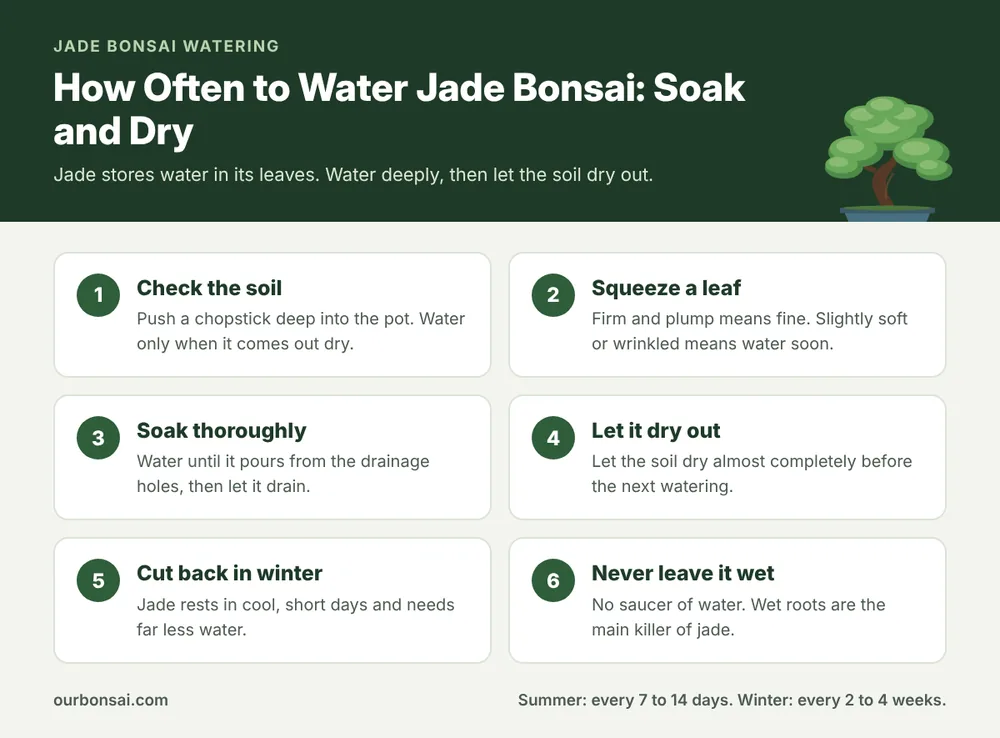
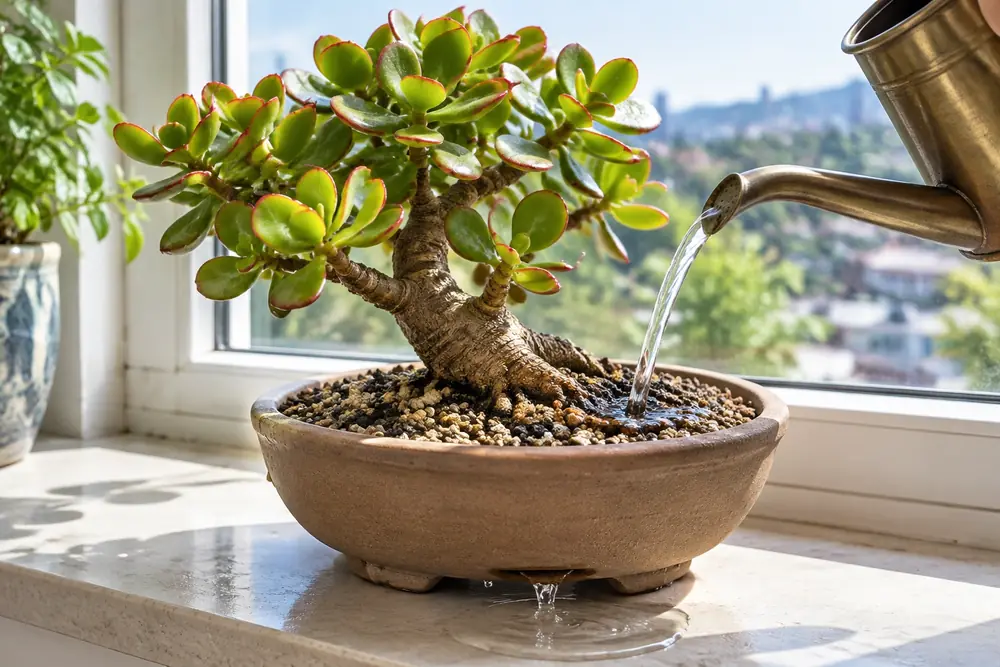
- Water deeply. Pour water slowly over the whole soil surface until it runs freely from the drainage holes. Our pick of stainless steel bonsai watering cans has some good options for a gentle flow, or browse small bonsai watering cans.
- Let it drain completely. Never leave the pot standing in a saucer of water.
- Water the soil, not the leaves. Water sitting in the leaf joints can cause rot in cool weather.
- Water in the morning so any splashes dry during the day.
- Wait. Do not water again until the soil has dried out and the leaves begin to soften slightly.
What changes how often your jade needs water
- Pot size and depth. A shallow bonsai pot dries in days; a deep nursery pot can hold water for weeks. Jade suits shallow pots for this reason.
- Soil. Gritty mineral soil dries quickly and safely. Peat-based soil holds water so long that even a weekly schedule can rot the roots.
- Light. More light means more growth and more water use. A jade under a grow light drinks noticeably more than one in a dim corner.
- Temperature. Warm rooms speed drying. A cool room in winter slows it right down.
- Tree size. A big jade with lots of leaves stores more water but also uses more; a small, young jade in a tiny pot dries fastest of all.
Whenever one of these changes, for example after repotting or a move, check the soil every few days until you learn the new rhythm.
Does water quality matter for jade?
Jade tolerate ordinary tap water well. In very hard water areas, a white crust can build up on the soil and pot over time; flush the pot with rain water or filtered water every month or two, or repot into fresh soil when the crust builds up. Use water at room temperature, since very cold water on warm roots is a small but needless shock.
Watering jade bonsai indoors vs outdoors
Indoors, light is the big factor. A jade in a bright south or west window grows and uses water; one in a dim room barely grows and needs very little. In winter, indoor jade often need water only every three to four weeks. Overwatering a jade in low winter light is the most common way to lose one. Our guide to watering indoor bonsai in winter covers this season in detail.
Outdoors in summer, jade enjoy the sun and warmth and grow strongly. Check every few days, especially in small pots. After heavy rain, make sure the pot drains freely. Bring the tree in before nights fall below about 45°F (7°C); jade cannot take frost.
Signs of overwatering and underwatering
| Overwatering | Underwatering |
|---|---|
| Soft, mushy, yellow or translucent leaves | Wrinkled, thin, deflated leaves |
| Leaves dropping while still plump | Leaves dropping after shriveling |
| Black, soft stems near the soil | Dry, papery older leaves |
| Soil stays damp for a week or more | Soil completely dry and pulling from the pot |
Underwatering is easy to fix: soak the tree and the leaves plump up within a few days. Overwatering is more serious. If you see soft, mushy leaves or a dark stem, take the tree out of the pot and check for rot. Our guide to jade bonsai pests and diseases covers rot and other common problems, and the Clemson Extension jade plant fact sheet confirms the same soak and dry approach.
FAQ: how often to water jade bonsai
Should I water my jade bonsai every week?
Only if the soil is dry. In summer, a jade in a small pot and bright light may need weekly water. In winter, it usually needs much less.
Can I mist my jade bonsai?
No need. Jade prefer dry air, and misting can encourage fungal spots. Water the soil instead.
How long can a jade bonsai go without water?
A healthy jade can go three to four weeks without water, or longer in winter, thanks to the water stored in its leaves.
Why are my jade bonsai leaves wrinkled even though I water often?
Wrinkled leaves on a tree in wet soil usually mean the roots have rotted and cannot take up water. Check the roots right away.
Final thoughts
Now you know how often to water jade bonsai: soak it, let it dry, and repeat, which usually means every one to two weeks in summer and every few weeks in winter. Use gritty soil, check the leaves, and when in doubt, wait a few more days. Jade forgives thirst much more readily than wet feet. For shaping ideas once your watering is on track, see traditional jade bonsai styles.