Juniper Bonsai Dropping Leaves: Normal Shedding or a Problem?


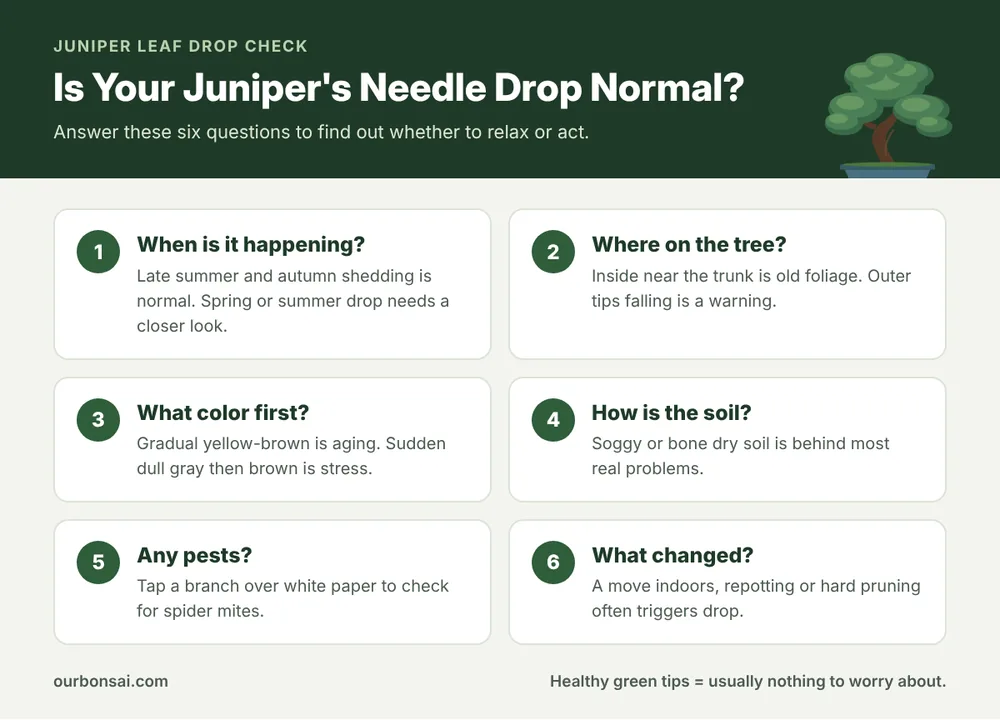
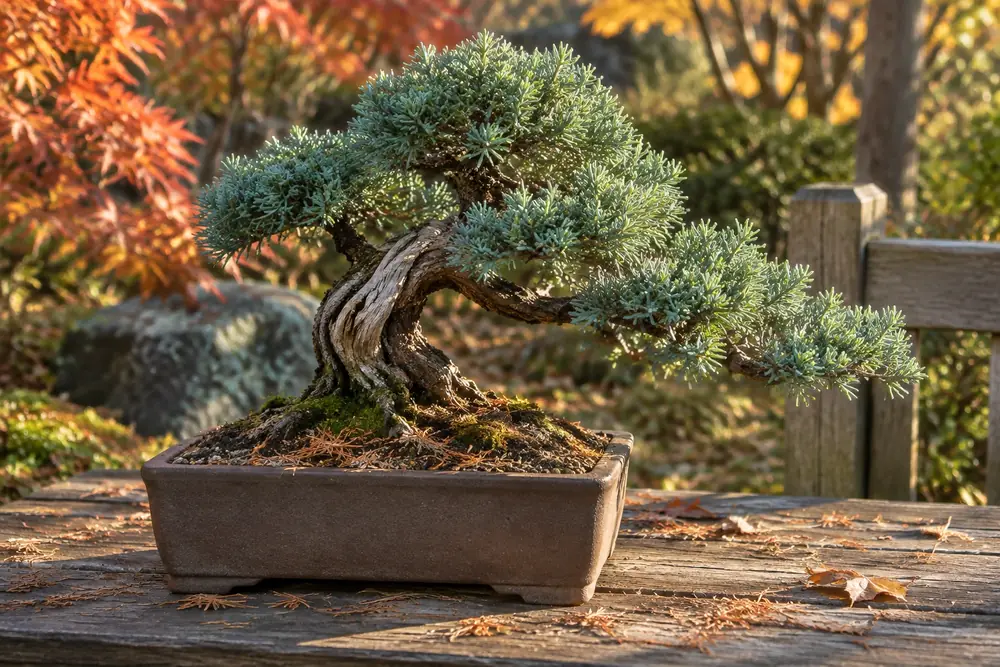
A juniper bonsai dropping leaves, or more accurately needles and scale foliage, is often doing exactly what it should. Every year junipers shed their oldest foliage from the inside of the canopy, usually in late summer and autumn. That is normal. Needle drop becomes a concern when it comes from the outer tips, happens suddenly in spring or summer, or follows a dull, grayish change in color. In those cases the usual causes are being kept indoors, overwatering, drying out, spider mites or stress after repotting or heavy pruning.
In this guide
This guide helps you work out which kind of drop you are looking at and what to do about it.
Do junipers actually drop leaves?
Junipers do not have broad leaves. Depending on the variety, they have sharp needle foliage, soft scale foliage or a mix of both. Japanese garden juniper (Juniperus procumbens ‘Nana’) has mostly needles, while Chinese juniper varieties like Shimpaku have scales. Both are evergreen, but each needle or scale only lives a few years. As the tree grows outward, the oldest foliage on the inside becomes shaded, turns yellow-brown and falls. The Wikipedia page on Juniperus procumbens gives good background on how this low, spreading species grows.
So a little needle litter on the soil is no cause for alarm on its own.
Normal shedding vs a real problem
| Normal shedding | Problem drop |
|---|---|
| Late summer to autumn | Any time, often spring or summer |
| Inner, older foliage near the trunk | Outer tips and new growth |
| Needles turn yellow-brown gradually first | Foliage turns dull gray-green, then brown quickly |
| Outer foliage bright and healthy | Whole branches thinning |
| Soil moisture normal | Soil soggy for days or bone dry |
If your tree fits the left column, gently brush out the loose needles and carry on. If it looks more like the right column, read on.
Causes of a juniper bonsai dropping leaves
1. Being kept indoors
Junipers need full sun, fresh air and a cold winter rest. Indoors they slowly lose foliage, starting with the inside and then the tips, until the tree collapses. If yours has been indoors, read our guide to Japanese juniper bonsai indoors and move it outside as soon as you can.
2. Overwatering
Constantly wet soil damages the roots. Without healthy roots, the tree cannot support all its foliage and starts dropping it. Our guide to root rot in bonsai shows the warning signs.
3. Drying out
A small juniper in a shallow pot can dry out in a single hot afternoon. Fine roots die and, a week or two later, foliage turns brown and falls. Check the soil daily in summer, and see our guide on watering bonsai in summer.
4. Spider mites and other pests
Spider mites are the most common juniper pest. They suck sap from the foliage, which turns speckled and bronze and eventually drops. Our guide to juniper bonsai pests and diseases covers mites, scale and other problems.
5. Stress after repotting or pruning
Removing a lot of roots or foliage at once can lead to needle drop over the following weeks. This is why most growers never repot and prune hard in the same year. Our juniper bonsai soil recipe guide also covers when to repot.
6. Shade inside the canopy
A dense, unthinned juniper shades its own interior. Inner foliage weakens and drops, leaving bare branches with green only at the tips. Thinning the pads lets light in and keeps inner growth alive.
What to do about juniper needle drop
- Check where the drop is. Inner and autumn? Clean it out. Outer tips? Work through the next steps.
- Move it outdoors into a spot with at least six hours of sun. If it has been indoors for a long time, start with morning sun only for a week.
- Check the soil. Push a finger 1 to 2 cm into the soil. Water only when it is dry at that depth, and then soak the whole pot.
- Check for pests. Tap a branch over white paper and watch for tiny moving dots. Look for webbing deep inside the foliage.
- Do not prune, wire or repot until the tree is pushing healthy new growth again.
- Feed lightly once it grows. A balanced fertilizer in spring and summer helps it rebuild. See our best fertilizer for juniper bonsai.
Needle drop through the year
Knowing what to expect each season makes it much easier to spot a real problem.
| Season | What is normal | What is not |
|---|---|---|
| Spring | Very little drop, strong new green tips | Dull foliage, no new growth by late spring |
| Summer | Occasional old needles inside | Speckled, bronzed foliage (mites) or crispy tips (drought) |
| Autumn | Noticeable shedding of old inner foliage | Outer tips browning and falling |
| Winter | Some bronze or purple color in cold weather | Foliage that crumbles when touched |
The bronze or purple winter color of many junipers is a natural response to cold and turns green again in spring. It is not needle drop and needs no treatment.
Cleaning out shed needles
Old needles that stay stuck inside the tree trap moisture and give pests a place to hide. A couple of times a year, especially in autumn:
- Gently run your fingers through the foliage pads from the inside out to release loose brown needles.
- Use tweezers to pull out dead material from crotches and tight spots.
- Brush fallen needles off the soil surface so they do not hold moisture against the trunk.
This also makes it easy to see if any new browning is starting.
Preventing problem needle drop
- Keep junipers outdoors in full sun all year, with root protection in hard frosts.
- Use a gritty, fast-draining soil.
- Water by checking the soil, not by the calendar.
- Thin dense foliage pads each year so light reaches the inside.
- Inspect for spider mites every few weeks in hot, dry weather.
- Space out big jobs like repotting and heavy pruning.
For a full routine, see our main juniper bonsai care guide.
FAQ: juniper bonsai dropping leaves
Is it normal for a juniper bonsai to drop needles?
Yes. Junipers shed old inner foliage every year, mostly in late summer and autumn. Drop from the outer tips is not normal.
Why is my juniper bonsai losing needles indoors?
Junipers do not get enough light or the cold winter rest they need indoors. Move it outside to stop the decline.
Will the needles grow back?
Not on bare, leafless wood. Junipers grow new foliage from existing green tips, so protect the healthy growth you still have.
Can spider mites make a juniper drop its needles?
Yes. Heavy mite infestations turn foliage speckled and bronze, and it eventually falls off.
Should I fertilize a juniper that is dropping needles?
Only if the drop is normal autumn shedding or the tree is already pushing new growth. A stressed juniper with damaged roots cannot use fertilizer, so fix the cause first.
Final thoughts
A juniper bonsai dropping leaves is usually just shedding old foliage, especially in autumn. Look at where the drop comes from and how the outer foliage looks. If the tips are healthy and green, clean out the old needles and enjoy the tree. If the outer growth is dulling and falling, act quickly on light, watering and pests, and the tree has a good chance of bouncing back. For help with browning foliage, see our guide to Japanese juniper bonsai turning brown.