Mulch Bonsai Winter Protection: What to Use and How Deep

This post contains affiliate links. As an Amazon Associate, OurBonsai earns from qualifying purchases at no extra cost to you. Read our disclosure.
In this guide
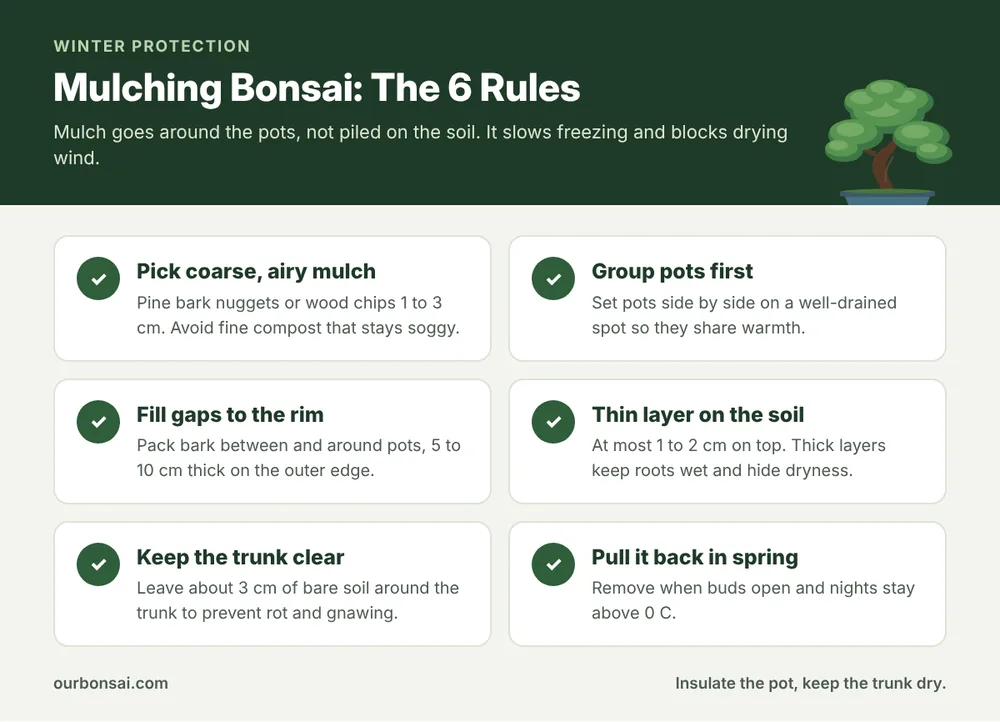
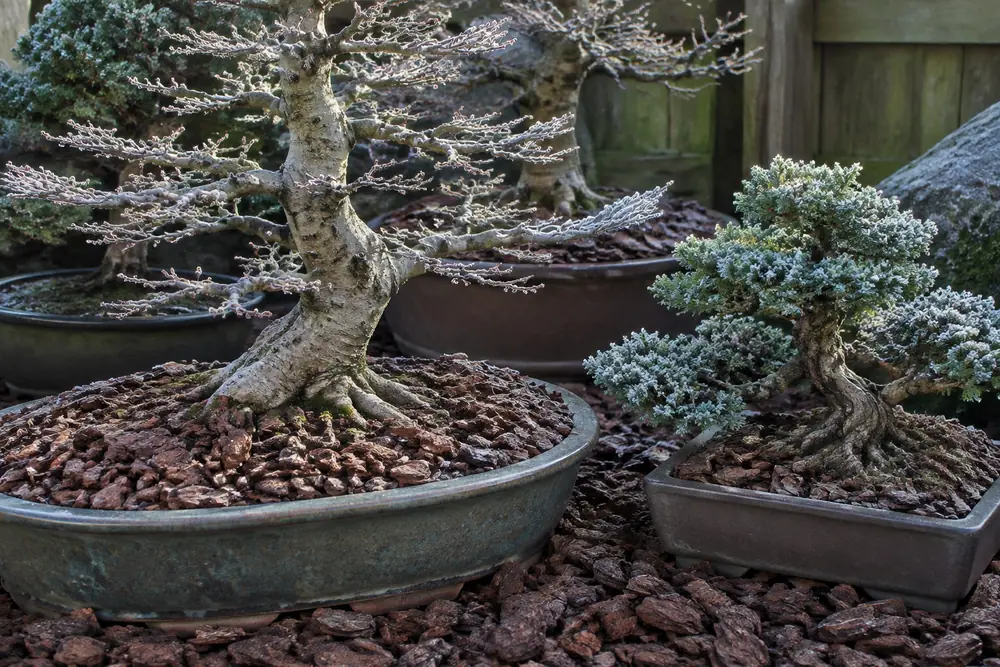
The easiest way to mulch bonsai winter pots is to group them on a well-drained patch of ground and pack coarse pine bark or wood chips between and around them, right up to the rims, at least 5 to 10 cm thick on the outside edges. Keep the soil surface itself to a thin 1 to 2 cm layer at most, and leave about 3 cm of bare soil around each trunk. Done this way, mulch slows down how fast the root balls freeze, shields them from wind, and can be the difference between a healthy tree and dead roots in a zone 6 or 7 winter.
How mulch actually protects a bonsai
Mulch does not create heat. It slows the movement of heat. A single bonsai pot standing alone on a bench loses warmth from all sides and can freeze through in one hard night. The same pot surrounded by bark loses heat only through the top, and the ground underneath adds a little warmth back. The effect is similar to a tree growing in the ground, where the roots never meet the full cold of the air.
Mulch also stops frost heave. Repeated freezing and thawing can lift a small root ball and tear fine roots. A stable, insulated pot thaws slowly and evenly.
Best mulch materials for bonsai, compared
| Material | Insulation | Drainage | Notes |
|---|---|---|---|
| Pine bark nuggets (1 to 3 cm) | Good | Excellent | First choice. Cheap, slow to rot, does not pack down |
| Wood chips | Good | Good | Fine if untreated. Avoid colored landscape chips |
| Perlite | Very good | Excellent | Light and clean but blows away; best inside a cold frame |
| Straw | Good | Fair | Works well over buried pots; can harbor mice |
| Dry oak or beech leaves | Fair | Fair | Free; mat down when wet, so keep them in a mesh bag |
| Garden compost, peat | Poor once wet | Poor | Holds water against the pot. Skip it |
| Sawdust | Poor | Poor | Packs into a wet crust. Skip it |
If you need to buy bark, look for horticultural pine bark sold for orchids or soil conditioning. A search for pine bark mulch nuggets shows the size range.
How to mulch bonsai winter pots step by step
- Wait for the first frosts. Trees need a few nights near freezing to harden. Mulching too early, in warm weather, keeps roots active longer than you want.
- Choose the spot. Sheltered from the prevailing wind, out of midday sun if possible, and on ground where water drains away. A low spot that floods will rot roots.
- Lay a base. A few centimeters of gravel or bark under the pots keeps the drainage holes clear.
- Group the pots. Tallest at the back, shortest in front. Leave just enough room between them to get a hand in.
- Fill the gaps. Pour bark between the pots up to the rims. Build the outer edge of the group 10 cm thick or more.
- Clear the trunk. Pull mulch back so the nebari (surface roots) and trunk stay dry.
- Add fleece on the worst nights. Below about -10 C, drape horticultural fleece over the whole group.
Mulching alone vs other methods
Mulch is a tool, not a full winter plan. On its own, it is usually enough in USDA zone 7 and milder. In zone 6, combine it with a sheltered wall or a cold frame. In zone 5 and colder, pots normally need an unheated garage or to be buried in the ground and then mulched over. Our longer guide on types of outdoor bonsai trees lists hardiness for the common species, so you can judge which trees need more than mulch.
Mulch also works indoors in a different sense: inside a cold frame, packing perlite or bark between pots smooths out the temperature swings that happen when the sun hits the lid.
Mistakes that turn mulch into a problem
- Piling mulch up against the trunk. Constant damp bark at the base invites rot and gives mice a hidden spot to chew. Keep a clear collar.
- Thick mulch on top of the soil. It hides how wet the soil is, and you water less carefully. A soggy root ball in winter is where root rot in bonsai begins.
- Using fine, soft materials. Compost, peat and sawdust soak up rain and hold it against the pot walls.
- Forgetting to water. Mulched pots under eaves or in a frame still dry out over weeks. Check with a chopstick every week or two.
- Leaving mulch on too long. Warm, damp mulch in spring is perfect for slugs and fungal problems. Pull it back once buds open.
Watering under mulch
Mulch slows evaporation, so mulched pots need water less often than exposed ones. That is good news in winter, but it also means you can drown them without noticing. Brush the top layer aside and test the soil before watering. Water in the morning on a day above freezing. If the soil feels cold and wet a week after watering, wait longer next time.
Frequently asked questions
Can I use leaves to mulch bonsai in winter?
Yes, dry leaves from oak, beech or maple work, but they mat down and hold water when wet. Stuff them into a mesh bag or chicken-wire cage around the group so they stay fluffy. Remove any leaves that show mold.
Should I mulch indoor bonsai?
No. Tropical species indoors do not need root insulation, and a mulch layer on the soil makes it harder to judge watering. Indoor trees benefit more from light and humidity. See our guide to watering indoor bonsai in winter.
Do evergreen bonsai need mulch?
Their roots need the same protection as deciduous trees. The difference is that pines and junipers also need light, so mulch them where they still get daylight, and avoid covering foliage for long periods.
When should I remove winter mulch from bonsai?
When nights stay above about 0 C and buds are opening, usually in March or April. Remove it in stages over a week or two so roots adjust, and keep fleece ready for a late frost.
Final thoughts
Good winter mulching is cheap, quick, and mostly about where the mulch goes. Insulate the sides of the pots, keep the trunk and soil surface fairly clear, and keep checking moisture underneath. For the year-round basics, our bonsai care hub is the next stop, and the Wikipedia article on mulch explains the different materials in more depth.