Is My Schefflera Bonsai Dying? Signs, Causes and How to Save It

If your schefflera bonsai dying is the worry keeping you up at night, take a breath. Dwarf schefflera is one of the toughest indoor bonsai there is, and a tree that has dropped most of its leaves is very often still alive. The usual causes are overwatering, a cold draft, too little light or a sudden move. Fix the cause, keep the tree warm and bright, and it will usually push out new leaves within a month or two.
In this guide
- Is it dying or just stressed?
- Warning signs of a schefflera bonsai in trouble
- The 6 most common causes of a schefflera bonsai dying
- How to save a dying schefflera bonsai step by step
- How long does recovery take?
- When a schefflera bonsai cannot be saved
- Common mistakes when trying to save a schefflera
- FAQ: schefflera bonsai dying
- Final thoughts
This guide shows you how to tell a stressed schefflera from a dead one, what the most common causes look like, and a step-by-step plan to bring it back.
Is it dying or just stressed?
The dwarf umbrella tree (Schefflera arboricola) is a tropical plant from Taiwan and Hainan. As the Wikipedia page on Schefflera arboricola notes, it grows as a sprawling shrub in warm, humid forests. When conditions change, its first reaction is to drop leaves. That looks dramatic, but leaf drop is a survival move, not the end.
Do these two quick checks before you panic:
- The scratch test. Gently scrape a tiny bit of bark on a branch with your fingernail. Bright green underneath means the branch is alive. Brown and dry means that part is dead.
- The bend test. Living stems are flexible. Dead stems snap cleanly and look dry inside.
If the trunk and main branches are green under the bark, your tree can recover. Even a completely bare schefflera with live stems will usually re-sprout.
Warning signs of a schefflera bonsai in trouble
| Sign | What it usually means |
|---|---|
| Many leaves turning yellow and dropping | Overwatering, low light or a recent move |
| Green leaves dropping suddenly | Cold draft or a sharp temperature change |
| Black spots or black leaf edges | Root rot, cold damage or a fungal leaf spot |
| Drooping, limp leaves | Either bone-dry soil or rotten roots |
| Sticky leaves, tiny bumps on stems | Scale insects |
| Fine webbing, pale speckled leaves | Spider mites |
| Soft, wrinkled or mushy trunk | Serious root or trunk rot |
The 6 most common causes of a schefflera bonsai dying
1. Overwatering
This is the number one killer. Schefflera likes moist soil, but not wet soil all the time. When the pot never dries, roots run out of air, start to rot, and the leaves turn yellow and fall. A sour smell from the soil is a strong clue. If you suspect it, read our guide to root rot in bonsai.
2. Cold drafts and low temperatures
Schefflera is tropical. Below about 10 °C (50 °F) it suffers, and a cold window pane, an open door in winter or an air conditioning vent can trigger sudden leaf drop. Keep it between 15 and 27 °C (60 to 80 °F).
3. Not enough light
Schefflera tolerates lower light than many indoor bonsai, but in a dark corner it slowly sheds leaves and grows long, weak shoots. A bright window with some morning sun, or a grow light, keeps it dense. Our guide to how much light a bonsai tree needs explains how to judge your spot.
4. Underwatering
Less common, but it happens, especially in small pots near a heater. The soil pulls away from the pot edge and the leaves droop, then crisp. Soak the pot in a basin for 10 minutes to rehydrate the root ball.
5. A sudden move
A new home, a new window or a trip from a garden center often causes a wave of leaf drop in the first few weeks. Keep the tree in one bright spot and let it settle.
6. Pests
Scale insects, spider mites and mealybugs all love schefflera, especially in dry indoor air. Check under the leaves and along the stems. Our guide on scale on bonsai trees and spider mites on bonsai trees show how to deal with each one.
How to save a dying schefflera bonsai step by step
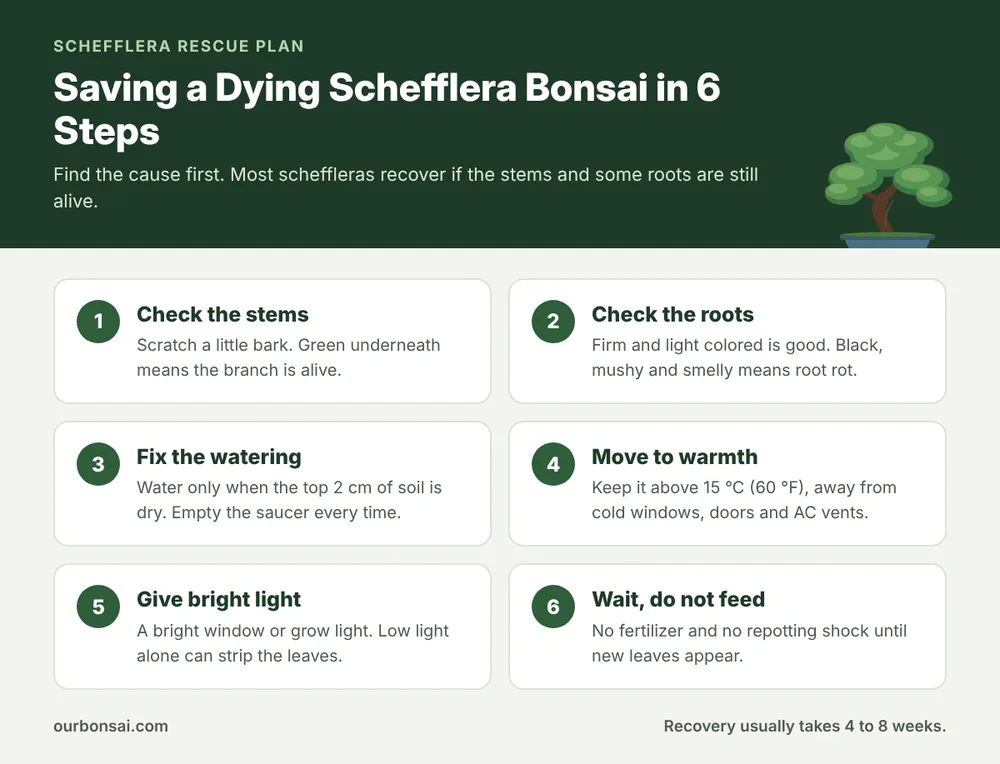
- Confirm it is alive. Do the scratch test on the trunk and a few branches. Mark any dead branches to remove later.
- Check the roots. Slide the tree out of its pot. Healthy roots are firm and light brown or white. Rotten roots are black, mushy and smell bad.
- Treat root rot if you find it. Trim away the soft, dark roots with clean scissors. Repot into fresh, fast-draining bonsai soil in a pot with good drainage holes. Our bonsai soil vs regular soil guide explains why normal potting compost causes trouble.
- Reset the watering. From now on, water only when the top 2 cm (about an inch) of soil feels dry, then water until it runs out of the bottom. Never leave water standing in the saucer.
- Move it somewhere warm and bright. Away from drafts and heaters, close to a bright window or under a grow light.
- Raise the humidity. A humidity tray under the pot helps a lot in heated rooms.
- Leave it alone. Do not fertilize, prune hard or repot again until you see new growth. A stressed tree cannot use fertilizer and it can burn weak roots.
How long does recovery take?
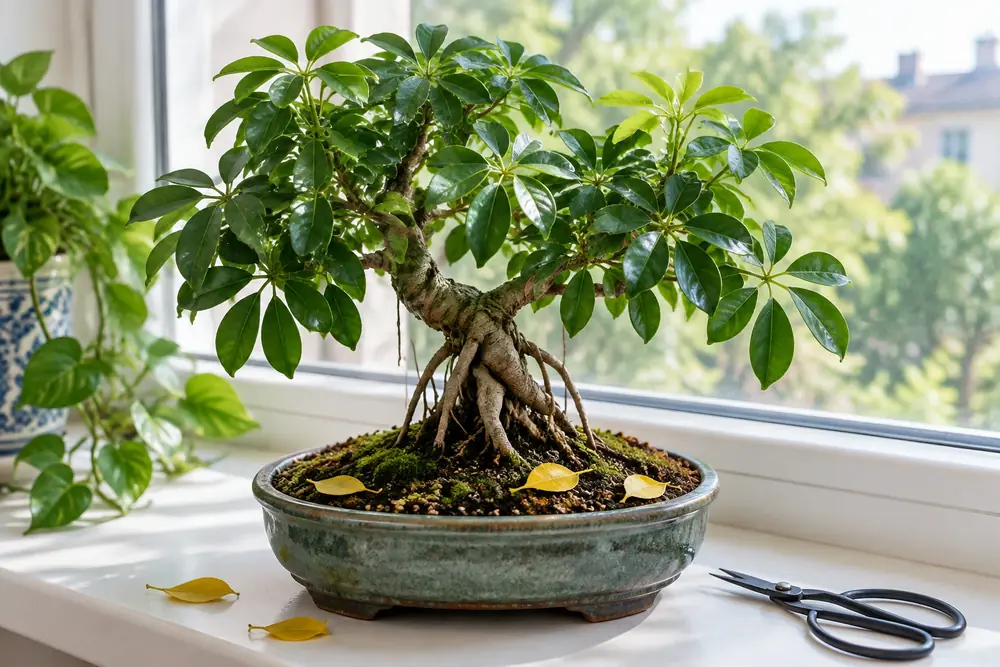
Small buds usually appear along the stems within 3 to 6 weeks if the roots were healthy. If you had to cut away a lot of rotten roots, expect 6 to 10 weeks. Schefflera is a strong grower, and once new leaves appear it often fills out faster than before. When it is growing again, start feeding lightly every two weeks with a balanced liquid fertilizer. Our liquid bonsai fertilizer picks work well for indoor trees.
When a schefflera bonsai cannot be saved
A tree is beyond saving when the trunk is soft and mushy all the way to the soil, the bark peels off easily and is brown underneath everywhere, and there are no firm roots left. At that point, try taking cuttings from any green branch tips. Schefflera roots easily from cuttings in moist soil or water, so you can start a new tree from the old one.
Common mistakes when trying to save a schefflera
- Watering more because the leaves are falling. If the soil is already wet, more water makes it worse.
- Feeding to “boost” it. Fertilizer stresses damaged roots. Wait for new growth.
- Moving it around every few days. Each move is another shock. Pick one good spot and stay there.
- Cutting off all bare stems. Bare does not mean dead. Wait for the scratch test and new buds before pruning.
For general indoor care habits that prevent most of these problems, see our guide on how to take care of a bonsai tree inside and our full dwarf schefflera bonsai care guide.
FAQ: schefflera bonsai dying
Why is my schefflera bonsai losing all its leaves?
The most common reasons are overwatering, a cold draft, low light or a recent move. Check the soil moisture first, then the temperature and light where the tree sits.
Will a schefflera bonsai grow back leaves?
Yes. As long as the stems are green under the bark and some roots are healthy, schefflera re-sprouts readily, often within a month.
Can a schefflera bonsai live in low light?
It tolerates lower light than most bonsai, but it will slowly drop leaves and get leggy in a dark spot. Bright, indirect light or a grow light keeps it healthy.
Should I repot a dying schefflera?
Only if the roots are rotting or the soil stays soggy. Otherwise, fix the watering, light and temperature first and repot in spring when the tree is growing.
Final thoughts
A schefflera bonsai dying is usually a schefflera bonsai complaining. Check that the stems are alive, look at the roots, fix the watering, and give it warmth and bright light. Then be patient. This is one of the most forgiving bonsai trees you can own, and with the cause fixed it will very likely reward you with a fresh flush of glossy leaves.