Is My Ginseng Ficus Bonsai Dying? Signs and How to Save It

This post contains affiliate links. As an Amazon Associate, OurBonsai earns from qualifying purchases at no extra cost to you. Read our disclosure.
In this guide
A ginseng ficus bonsai dying usually shows it in the leaves first: they yellow, drop by the dozen, or the canopy thins until only a few remain. The good news is that the ginseng ficus (Ficus microcarpa grown on a thick, swollen root bulb) is one of the toughest indoor trees there is. Many trees that look half dead are only stressed, and they can recover in a few weeks once you fix the cause. The one thing you must check first is the root bulb: if it is still firm, the tree is very likely alive.
This guide walks you through the warning signs, how to test whether your tree is still alive, the most common causes of decline, and a step-by-step rescue plan.
Signs your ginseng ficus bonsai is dying
Some signs are mild and some are serious. Here is how to read them:
| Sign | How serious | What it usually means |
|---|---|---|
| A few yellow leaves | Mild | Normal leaf turnover, or a recent move |
| Heavy leaf drop | Moderate | Stress from light, cold drafts or watering |
| Wrinkled or shriveled root bulb | Serious | Underwatering or dead roots that cannot take up water |
| Soft, mushy spots on the bulb | Very serious | Root rot spreading into the bulb |
| Sour smell from the soil | Serious | Soil staying wet, roots rotting |
| Brittle twigs that snap dry | Serious | Those branches have died back |
| White cottony patches | Moderate | Mealybugs or scale feeding on sap |
If you see several of the serious signs together, act today rather than waiting.
Is my ginseng ficus still alive? Two quick tests
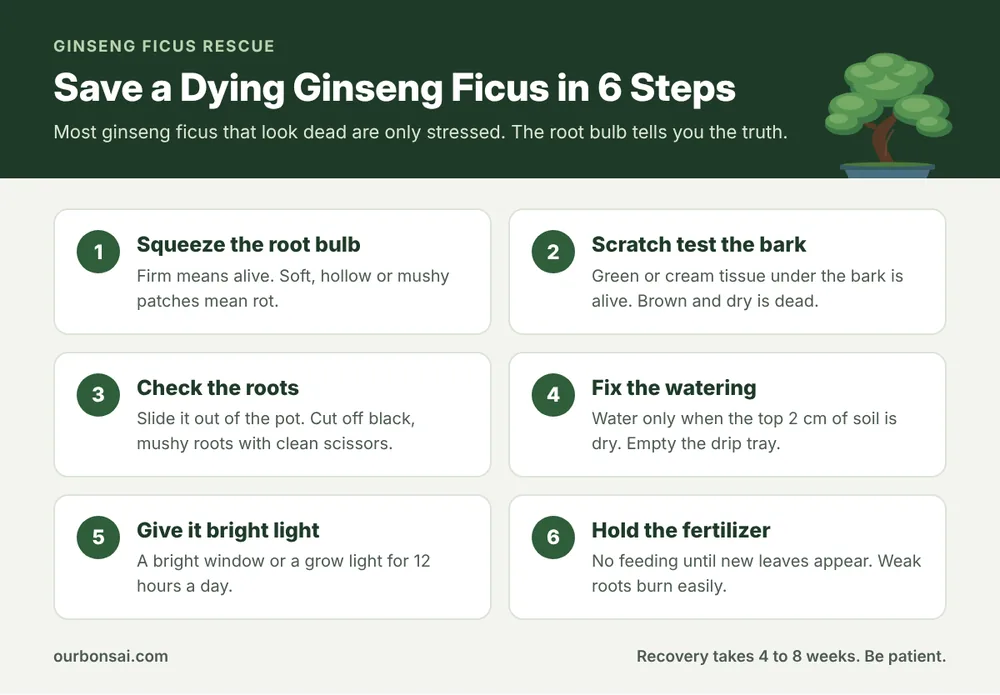
1. The bulb squeeze. Gently squeeze the swollen root bulb (the “ginseng” part). A healthy bulb feels as firm as a potato. A bulb that gives under your fingers, feels hollow, or has wet dark patches is rotting. Small soft areas can be cut out; a bulb that is soft all the way around is usually beyond saving.
2. The scratch test. Use a fingernail to scratch a tiny patch of bark on a thin branch. Bright green or cream tissue underneath means the branch is alive. Brown, dry tissue means that branch is dead. Work your way down toward the trunk until you find green. Even if every twig is dead, green tissue in the trunk means the tree can push new shoots.
Why is my ginseng ficus bonsai dying?
Overwatering and root rot
This is the most common cause by far. Ginseng ficus are often sold in dense, peaty soil with a drip tray underneath. Water sits around the roots, they suffocate and rot, and the rot can move into the bulb. Signs: yellow leaves that fall while still soft, a sour smell, and a soft bulb. Our guide to root rot in bonsai shows how to recognize and treat it.
Underwatering
The opposite problem is common in heated homes in winter. The soil dries completely, fine roots die and the bulb starts to wrinkle. Leaves go crispy rather than soft.
Not enough light
Ficus need bright light. A tree on a coffee table or a north window slowly starves: leaves drop, new growth is long and pale, and the tree weakens until pests take over. Our guide on how much light a bonsai tree needs explains what “bright” really means indoors.
Cold and drafts
Ficus microcarpa is tropical. Temperatures below about 55°F (13°C), cold window glass in winter, or blasts from an air conditioner or an outside door cause sudden leaf drop. The Wikipedia page on Ficus microcarpa notes its tropical origin, which explains why it hates cold.
Pests
Scale, mealybugs and spider mites all feed on sap and are most common on weak indoor trees. Check under leaves and along stems. Our ficus bonsai pests and diseases guide covers how to treat each one.
How to save a dying ginseng ficus bonsai
Step 1: Take it out of the pot
Slide the tree out and look at the roots. Healthy roots are firm and light brown or white. Rotten roots are black, mushy and pull apart easily.
Step 2: Cut away rot
Using clean, sharp scissors, cut off every rotten root. If the bulb has small soft patches, cut back to firm, clean tissue and let the cut dry for a few hours. Dust large cuts with a little cinnamon or a fungicide powder.
Step 3: Repot into fast-draining soil
Replace the old dense soil with a gritty, free-draining mix. Our ficus ginseng bonsai soil recipe gives exact ratios, or you can use a ready-made ficus bonsai soil mix. Use a pot with drainage holes and no standing water underneath.
Step 4: Water carefully
Water once thoroughly after repotting, then only when the top 2 cm of soil feels dry. Empty the drip tray every time.
Step 5: Move it to bright, warm light
Place it in the brightest window you have, away from drafts and heaters. If your home is dark in winter, a grow light helps a lot; see our picks for the best indoor grow lights for bonsai.
Step 6: Raise humidity and wait
Set the pot on a humidity tray and leave it alone. No fertilizer until new leaves appear, no pruning and no wiring. New buds usually show within four to eight weeks.
What not to do with a struggling ginseng ficus
- Do not keep watering a tree that has dropped its leaves. With no leaves it uses very little water.
- Do not feed a sick tree. Fertilizer burns damaged roots.
- Do not move it around the house looking for a better spot every few days. Pick the best place and leave it there.
- Do not cut the bulb deeply unless the rot is clearly spreading.
How to keep it healthy once it recovers
Once new leaves have hardened, move back to a normal routine. Feed every two weeks with a balanced liquid fertilizer at half strength from spring to early autumn. Keep the tree in the same bright spot all year, turning it a quarter turn every week or two so all sides get light. In summer, a ginseng ficus enjoys a sheltered spot outdoors in light shade once nights stay above 60°F (15°C), which builds a much stronger tree. Bring it back in before nights cool down in autumn, and expect a few leaves to drop as it adjusts. Repot every two to three years in spring, when the roots fill the pot.
FAQ: ginseng ficus bonsai dying
Can a ginseng ficus come back after losing all its leaves?
Yes. As long as the bulb is firm and the trunk is green under the bark, a leafless ginseng ficus often re-buds within a month or two in bright, warm conditions.
Why is the bulb of my ginseng ficus wrinkled?
Usually the tree has been too dry, or the roots that feed the bulb have died. Water thoroughly and check the roots. A wrinkled but firm bulb often plumps up again.
Why is my ginseng ficus bulb soft?
Softness means rot inside the bulb, usually from soil that stays wet. Cut back to firm tissue and repot into gritty soil as soon as possible.
How long does a ginseng ficus take to recover?
Expect four to eight weeks for new leaves and a full season to look healthy again.
Final thoughts
A ginseng ficus bonsai dying is usually reacting to one fixable problem: wet roots, dry roots, too little light or a cold draft. Check the bulb, scratch the bark, repair the roots and give the tree bright, warm light, and most trees bounce back. Once it is growing again, the ginseng ficus bonsai styles guide has ideas for shaping it.