
Why Are New Bonsai Leaves Turning Brown?

Quick Answer
New bonsai leaves usually turn brown because tender growth is losing water faster than the roots can replace it, the roots are staying too wet, or fresh foliage has been damaged by strong sun, fertilizer salts, pests, disease, or a sudden environmental change. Start by comparing the browning pattern with soil moisture and recent care changes using this plant problem diagnosis guide.
Check these clues first
- Crispy tips: Check for dry soil, hot wind, intense sun, or fertilizer salt buildup.
- Soft brown growth: Check for constantly wet soil, slow drainage, and declining roots.
- Brown patches: Look for sudden sun exposure, chemical spray injury, or leaf disease.
- Speckled leaves: Inspect the undersides for spider mites and other sap-feeding pests.
- Bronze new leaves: Confirm whether the species naturally produces reddish or bronze young foliage before treating it.
Best first move
- Change only the most likely problem first, then watch the next flush of growth instead of trying several treatments at once.
If you’re wondering, why are new bonsai leaves turning brown, focus on the newest growth rather than the whole tree. Tender leaves can reveal water, root, light, pest, and fertilizer problems before older foliage shows the same damage.
I treat brown new growth as a clue, not a diagnosis. The pattern, texture, soil condition, and timing usually tell me far more than the color alone.
In This Guide
What Do Brown New Leaves on a Bonsai Mean?
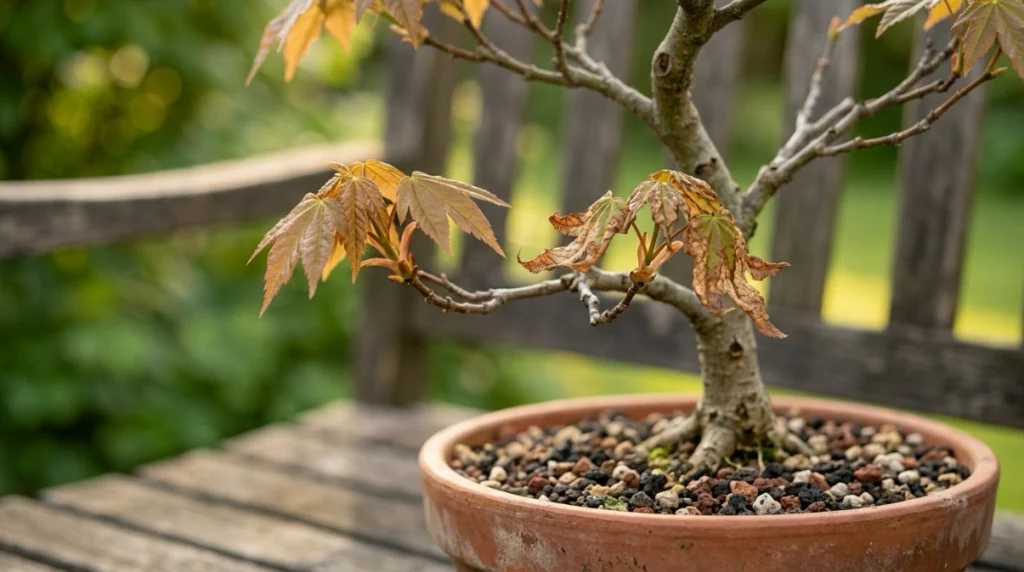
Brown new leaves mean that young tissue has changed color or died before it fully matured. The important distinction is whether that color is normal pigmentation or damaged tissue.
Definition: New-growth browning is discoloration or tissue death affecting recently opened leaves, extending shoots, buds, or tender branch tips before the foliage has fully hardened.
Some deciduous species can produce reddish, copper, or bronze young leaves. Healthy foliage should usually expand normally, feel intact, and develop its expected mature color.
Damaged foliage behaves differently. Brown areas may become dry, brittle, curled, soft, spotted, or progressively larger.
- Normal young color: Leaves remain flexible and continue expanding.
- Water stress: Tips or margins often become dry and crispy.
- Root stress: New growth may brown, wilt, stall, or drop.
- Sun injury: Exposed surfaces can develop pale, tan, or brown patches.
- Pest damage: New leaves may show stippling, distortion, webbing, or sticky residue.
This distinction prevents unnecessary treatment. A naturally bronze flush does not need fertilizer, pesticide, or emergency repotting.
Why Are New Bonsai Leaves Turning Brown?
The most common causes are watering problems, damaged roots, sudden light changes, heat, fertilizer salts, pests, and disease. New leaves are especially vulnerable because their tissues have not fully hardened.
1. The root zone became too dry
A small bonsai pot holds limited moisture. Hot weather, wind, strong sun, and a fast-draining mix can therefore dry the root zone surprisingly quickly.
Young leaves often react first. Look for crisp tips, curled margins, limp shoots, or foliage that feels papery.
The Arnold Arboretum’s bonsai collection care guidance emphasizes checking actual root-ball moisture and watering thoroughly when it has dried appropriately.
2. The soil is staying wet for too long
Brown leaves do not always mean a tree needs more water. Damaged roots can leave foliage looking thirsty even while the growing medium remains wet.
- Water drains slowly from the pot.
- The soil remains wet much longer than usual.
- Young growth wilts despite moist soil.
- Leaves yellow before becoming brown.
- The root zone develops an unpleasant smell.
Repeated watering can make this cycle worse. Roots need oxygen as well as moisture.
3. Tender leaves were exposed to stronger sunlight
New foliage that developed in shade can scorch after a sudden move into intense direct sunlight. This often produces dry tan or brown patches on the most exposed leaves.
I pay particular attention to changes made during the previous week. Moving a bonsai from a sheltered position into strong afternoon sun can matter more than the total number of daylight hours.
4. Fertilizer or soluble salts damaged the roots
Heavy feeding can increase soluble salts around roots. Chemical stress can then show as scorched leaf tips, weak growth, or browning margins.
Suspect this when symptoms appear soon after fertilizing. Do not respond by adding another product.
5. Pests are feeding on the newest growth
Aphids, spider mites, scale insects, mealybugs, and other pests can weaken tender foliage. Bonsai Empire’s pest and disease guide highlights these groups among common bonsai problems.
- Spider mites: Fine pale stippling, bronzing, dryness, or webbing.
- Aphids: Clusters around soft shoots and distorted new leaves.
- Scale: Fixed brown, tan, or pale bumps on leaves and stems.
- Mealybugs: White cotton-like material around protected joints.
6. Disease or spray injury affected tender tissue
Fungal or bacterial leaf problems can create spreading lesions rather than uniform dry edges. Chemical sprays can also burn young leaves if they are too concentrated or unsuitable for the species.
Section Takeaway: Browning is a symptom shared by several unrelated problems. Always match the leaf pattern with soil moisture, roots, light, pests, and recent care changes before treating.
How Can You Diagnose Brown New Bonsai Growth?
Start with the appearance of the damaged tissue. Then check what changed shortly before the browning appeared.
| What You See | Most Likely Possibilities | Check First |
|---|---|---|
| Crispy brown tips | Dry soil, heat, wind, salts | Root-zone moisture and recent fertilizer |
| Soft brown leaves | Wet roots, poor drainage, root decline | Drainage speed and soil moisture |
| Dry patches on exposed leaves | Sun or heat injury | Recent location or light change |
| Tiny pale or brown speckles | Spider mites or other pests | Leaf undersides with a 10× hand lens |
| Expanding brown spots | Leaf disease or chemical injury | Spot pattern, sprays, airflow |
| Bronze leaves that keep expanding | Possible normal pigmentation | Species and mature leaf color |
Inspect the whole tree, not one leaf
Check at least several leaves from different parts of the canopy. One damaged leaf can reflect old physical injury rather than an active problem.
- Examine both leaf surfaces.
- Look around buds and branch junctions.
- Check for sticky residue or fine webbing.
- Compare exposed foliage with shaded foliage.
- Check whether water exits the drainage holes freely.
Indoor tropical bonsai deserve extra attention for mites, scale, mealybugs, and aphids. The University of Michigan’s indoor bonsai guidance discusses these common indoor pests and the risk of keeping roots overly wet.
Review what changed
Think back to the days before symptoms appeared. A care change is often the strongest clue.
- Was the bonsai moved outdoors?
- Did temperatures rise sharply?
- Did you fertilize recently?
- Was a pesticide, oil, or homemade spray applied?
- Was the tree recently repotted?
- Did watering frequency change?
What Should You Do When New Bonsai Leaves Turn Brown?
Stabilize the tree first and avoid aggressive treatment. Correct the most likely stress while protecting the healthy foliage and roots that remain.
Step 1: Check moisture before watering
Do not water because the leaves look dry. Check the growing medium itself.
If it is appropriately dry for the species, water thoroughly until excess water exits the drainage holes. If it is still wet, do not add more water automatically.
Step 2: Protect tender growth from sudden stress
If browning began after a move into stronger light, give the bonsai temporary protection from intense afternoon sun. Reintroduce stronger exposure gradually when the species requires it.
Do not move an outdoor species permanently indoors just because its leaves are damaged. Its long-term placement still needs to match the species.
Step 3: Pause unnecessary fertilizer
Stop feeding temporarily if browning began soon after a strong fertilizer application. More fertilizer will not repair tissue that is already dead.
Resume normal feeding only after the cause is clearer and the tree shows stable growth. Follow the product label and species-specific care needs.
Step 4: Inspect and isolate suspected pests
Move a pest-infested bonsai away from nearby plants when practical. Identify the pest before choosing a treatment.
- Check leaves with a 10× magnifier.
- Look closely at tender shoots.
- Inspect stems for scale-like bumps.
- Check surrounding plants for similar symptoms.
When using any pesticide or horticultural oil, follow the label exactly. Test sensitivity when the label recommends it.
Step 5: Avoid emergency repotting without evidence
Repotting is not a universal cure for brown foliage. Root work can place additional stress on a bonsai that is already struggling.
Consider repotting only when you have a genuine root or soil problem and appropriate seasonal timing. Species requirements come first.
Pro tip: If saving the tree would require major root pruning or removal of live branches, get help from an experienced grower or local bonsai club before making an irreversible cut.
Section Takeaway: Make one sensible correction at a time. Healthy replacement growth is a better recovery signal than trying to save leaf tissue that has already turned brown.
How Can You Prevent New Bonsai Leaves From Browning?
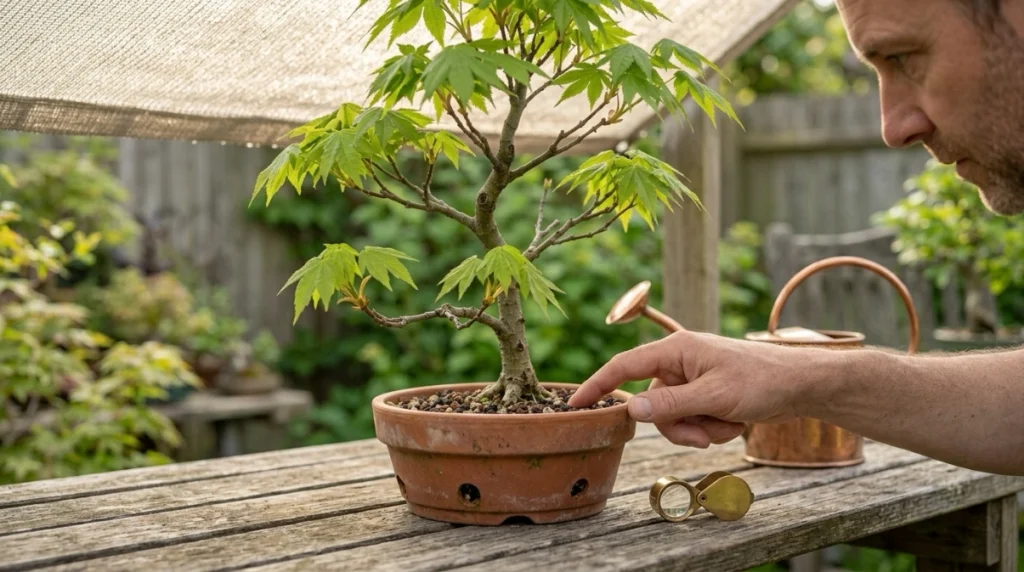
Prevention comes from keeping roots and foliage within the conditions your species expects. Fixed watering calendars and one-size-fits-all indoor advice create many avoidable problems.
Water according to the tree
Check moisture instead of watering every Monday or every third day. Pot size, soil particle size, foliage density, temperature, wind, and season all change water use.
- Water thoroughly rather than giving frequent small sips.
- Keep drainage holes unobstructed.
- Do not leave ordinary bonsai pots standing in water.
- Increase monitoring during hot or windy weather.
Acclimate fresh foliage to stronger light
A bonsai moved from winter protection or an indoor position may need gradual exposure to stronger sunlight. Tender new growth can be less tolerant than hardened foliage.
Watch the newest leaves during the transition. Scorch often appears first on the most exposed parts of the canopy.
Inspect new growth regularly
I make the newest shoots part of every routine inspection because they reveal problems early. A quick check can catch mites, aphids, scale, distorted growth, or unusual spotting before damage spreads.
- Look above and below the leaves.
- Check new shoots and buds.
- Watch for sticky honeydew.
- Look for webbing or pale stippling.
- Compare this week’s growth with the previous flush.
Know what normal growth looks like for your species
A Japanese maple, Chinese elm, ficus, juniper, and azalea do not respond to care in exactly the same way. Even leaf color during emergence can differ.
As of 2026, species-specific diagnosis remains more useful than treating “bonsai” as one plant type. Identify the tree before making major changes to water, light, fertilizer, or winter protection.
Frequently Asked Questions
Can new bonsai leaves naturally look brown or bronze?
Yes. Some species and cultivars produce reddish, copper, or bronze young foliage that later changes color as it matures. Healthy new leaves should continue expanding and remain flexible, while damaged tissue often becomes dry, brittle, spotted, curled, or progressively darker.
Can overwatering make new bonsai leaves turn brown?
Yes. Soil that stays saturated can reduce root health and interfere with normal water uptake. New growth may wilt, yellow, brown, or stop developing even though the pot still contains plenty of moisture.
Why are only the tips of new bonsai leaves turning brown?
Brown tips commonly point toward moisture stress, heat, low humidity in sensitive indoor species, or excess soluble salts. Check the actual root-zone moisture and recent fertilizer use before deciding that the tree simply needs more water.
Should I remove brown new leaves?
You can remove completely dead foliage when it comes away easily, but avoid stripping a weak bonsai unnecessarily. Partly green leaves may still contribute to photosynthesis, so fixing the underlying cause matters more than making the tree look tidy.
Should I fertilize a bonsai with brown new growth?
Not automatically. Fertilizer will not correct sunburn, damaged roots, pests, or drought stress, and excessive salts can worsen leaf-tip injury. Identify the likely cause and wait for stable growth before returning to an appropriate feeding routine.
How long does it take a bonsai to recover from brown leaves?
Dead brown tissue will not turn green again. Recovery is better judged by stable buds, firm shoots, healthy roots, and a new flush of undamaged foliage, with timing varying by species, season, and severity of the original stress.
When should I worry about brown new growth?
Act quickly when browning spreads rapidly, branches begin dying back, the soil smells foul, roots appear soft, or pests are multiplying. Widespread decline after repotting or an unexplained loss of multiple shoots also deserves closer investigation.
Final takeaway: When new bonsai leaves turn brown, diagnose the pattern before treating the color. Check moisture, drainage, light, recent fertilizer, pests, and species-specific growth first, then make the smallest correction that addresses the most likely cause.
If the next flush grows clean and healthy, you’re moving in the right direction. Keep observing the tree rather than changing several parts of its care routine at once.