
How to Prevent Mealybugs on Bonsai
Quick Answer
The best way to prevent mealybugs on bonsai is to inspect new plants before they join your collection, keep trees separated enough for easy inspection, maintain healthy growing conditions, and check hidden leaf and branch joints every week. The UC IPM mealybug guide also recommends cultural controls, early detection, and protecting natural enemies where appropriate.
Best Prevention Habits
- Inspect weekly: Check leaf axils, branch forks, tender shoots, bark crevices, and the trunk base.
- Quarantine newcomers: Keep new or suspicious trees away from established bonsai while you monitor them.
- Avoid crowding: Prevent foliage from touching nearby plants and keep inspection routes open.
- Keep trees healthy: Match watering, light, soil, and fertilizing to the species instead of following a rigid schedule.
- Clean tools: Wipe tools, benches, pots, and work surfaces after handling suspicious plants.
- Act early: Remove isolated pests before a hidden colony develops.
One More Check
- If the canopy looks clean but the tree remains weak, inspect the soil line and consider whether root mealybugs could be present.
Mealybugs are among the easiest bonsai pests to recognize once you know their hiding places. The problem is that the first insects usually settle where a casual glance misses them.
I have found that prevention takes far less effort than chasing a colony through a dense bonsai canopy. A five-minute inspection often saves weeks of repeated treatment.
In This Guide
- What Are Mealybugs on Bonsai?
- How Can You Prevent Mealybugs Before They Reach Your Bonsai?
- How Should You Inspect a Bonsai for Early Mealybug Signs?
- Which Conditions Make Mealybug Problems Worse?
- What Should You Do If You Find One or Two Mealybugs?
- How Do You Protect a Bonsai Collection Long Term?
- Mealybug Prevention FAQ
What Are Mealybugs on Bonsai?
Mealybugs are small sap-feeding insects in the family Pseudococcidae. Females and immature stages often have a white, powdery, waxy covering that makes colonies resemble bits of cotton.
Definition: A mealybug is a soft-bodied insect that feeds on plant sap while protecting itself beneath a waxy coating. Many species hide in sheltered parts of stems, foliage, bark, or roots.
- White wax: The most recognizable clue around stems and leaf joints.
- Sticky honeydew: Sugary waste may make foliage or the bench beneath a bonsai feel tacky.
- Sooty mold: Dark fungal growth can develop on accumulated honeydew.
- Weak growth: Large populations may contribute to yellowing, stunting, leaf drop, or twig decline.
- Ant activity: Ants may visit honeydew-producing colonies and interfere with natural predators outdoors.
UC IPM reports adult female mealybugs ranging roughly from 1/20 to 1/5 inch, depending on species. Their small size explains why a colony can establish before you notice individual insects.
Where do mealybugs hide on bonsai?
Dense bonsai structure gives them plenty of protected feeding sites. I inspect the places where two plant surfaces nearly meet before looking at exposed leaves.
- Leaf axils and petiole bases
- Branch forks and crotches
- Fresh buds and tender shoots
- Bark cracks and pruning scars
- The trunk base and pot rim
- Under leaves and inside dense foliage
- Around roots and inside the root ball
Indoor ficus bonsai deserve particular attention because ficus species are known mealybug hosts. Some mealybug species can also attack junipers, cypress, and other woody ornamentals.
How Can You Prevent Mealybugs Before They Reach Your Bonsai?

The strongest prevention method is stopping mealybugs from entering the collection. New trees, cuttings, pots, and nearby houseplants can all carry hidden insects.
Inspect every new bonsai before placing it
Use bright light and rotate the tree slowly. A 10× hand lens helps when suspicious white material is too small to identify clearly.
- Look under every accessible leaf.
- Check branch forks and leaf axils.
- Inspect the trunk base and pot rim.
- Look for sticky honeydew or ants.
- Check visible surface roots and drainage holes.
- Keep the newcomer away from established trees while monitoring it.
I never place a nursery tree directly among established bonsai anymore. Even a tree that looks spotless gets its own temporary area first.
Do not let plant canopies touch
Mealybug crawlers can move across plant surfaces, while insects can also travel on hands, tools, pots, and plant material. Physical separation makes that movement harder.
You do not need huge gaps between trees. Leave enough space to inspect every side without pushing branches through neighboring foliage.
- Keep benches uncluttered.
- Remove fallen leaves promptly.
- Do not share dirty humidity trays.
- Wash reusable pots before repotting another tree.
- Clean tools after handling suspicious plants.
Iowa State University Extension also emphasizes close, regular inspection because mealybugs frequently hide beneath leaves and near leaf-stem junctions. Their houseplant mealybug guidance recommends checking plants closely at least weekly.
How Should You Inspect a Bonsai for Early Mealybug Signs?
For most of my trees, I make a quick pest check part of normal watering. Once a week, I perform a slower inspection under good light.
That routine matters because the first warning sign may be wax or honeydew rather than an obvious moving insect.
Use the same inspection route every time
- Start with new growth: Check buds, soft stems, and developing leaves.
- Move to leaf joints: Examine every obvious protected junction.
- Check undersides: Turn several leaves from different parts of the canopy.
- Follow branches inward: Look into forks and bark crevices.
- Inspect the trunk base: Examine the transition between trunk, surface roots, and soil.
- Check the pot: Look beneath the rim, around drainage holes, and on the bench.
The white material should not be diagnosed from color alone. Mineral deposits, fungal growth, dried sap, and pieces of substrate can sometimes resemble pests.
Watch for indirect warning signs
- Unexpected sticky patches
- Ants repeatedly climbing the trunk
- Localized yellowing
- Distorted tender growth
- Cotton-like material returning after cleaning
- Decline concentrated around one branch
The broader Bonsai Empire pest and disease guide also stresses correct pest identification before choosing a treatment. That is especially important on small bonsai, where unnecessary spraying can add stress.
Section Takeaway: Early prevention is mostly an inspection habit. Learn the hiding places, follow the same route each week, and investigate unusual wax or stickiness immediately.
Which Conditions Make Mealybug Problems Worse?
Bad bonsai care does not create mealybugs. The insects must arrive from somewhere.
However, a stressed tree can suffer more from feeding, while dense growth and crowded plant displays give pests more places to hide and spread.
| Factor | Higher-Risk Situation | Better Prevention Habit |
|---|---|---|
| Inspection | Only checking when damage appears | Quick checks during care plus a detailed weekly inspection |
| New plants | Placed immediately beside established trees | Kept separate and monitored before joining the collection |
| Spacing | Branches and foliage touching neighboring plants | Enough separation to inspect every side easily |
| Watering | Fixed calendar regardless of soil moisture | Water according to species, substrate, weather, and actual moisture |
| Tools | Moving directly between infested and healthy plants | Clean tools and hands after handling suspicious material |
| Canopy | Interior growth so dense it cannot be inspected | Maintain species-appropriate structure with visible interior branches |
Keep the bonsai vigorous without overfeeding it
Correct light, drainage, watering, and fertilizer help a bonsai tolerate ordinary environmental stress. They also make unusual pest-related changes easier to spot.
Avoid trying to prevent insects by keeping soil constantly wet or spraying foliage on a schedule. Neither practice replaces inspection and may create separate care problems.
Pay extra attention indoors
Indoor and greenhouse plants can experience mealybug problems throughout the year because temperatures remain mild. Natural predators are also less available indoors.
As of 2026, prevention still centers on integrated pest management: exclude pests, inspect regularly, keep plants healthy, and use targeted controls only when necessary.
Section Takeaway: Healthy culture supports prevention, but sanitation and early detection stop spread. Do not rely on watering, humidity, or fertilizer changes as a substitute for checking the tree.
What Should You Do If You Find One or Two Mealybugs?
Finding a single mealybug does not automatically mean the entire bonsai needs a heavy pesticide treatment. Treat it as a warning to isolate and inspect.
- Move the bonsai away from other plants.
- Inspect the entire canopy and pot.
- Remove visible insects carefully.
- Clean the area where the tree was sitting.
- Check neighboring plants.
- Repeat inspections over the following weeks.
For a tiny above-ground infestation, physical removal can reduce the population before it spreads. UC IPM notes that small houseplant infestations may sometimes be spot-treated with a cotton swab using 70% or weaker isopropyl alcohol.
Alcohol can injure sensitive foliage, so avoid soaking the tree and test cautiously first. Insecticidal soap or horticultural oil should also be used only when the product label allows use on the plant.
Do not forget root mealybugs
Some mealybugs live around roots rather than foliage. White wax around the root ball, drainage holes, or potting medium deserves closer investigation.
The UC IPM ground mealybug guidance shows why root infestations require different management from exposed leaf colonies.
Do not repot a healthy-looking bonsai impulsively just because you suspect root pests. Repotting and root pruning are stressful operations and should match the species and season.
Pro tip: If confirming root mealybugs would require major root disturbance or out-of-season repotting, ask an experienced grower or local bonsai club before making irreversible cuts.
How Do You Protect a Bonsai Collection Long Term?
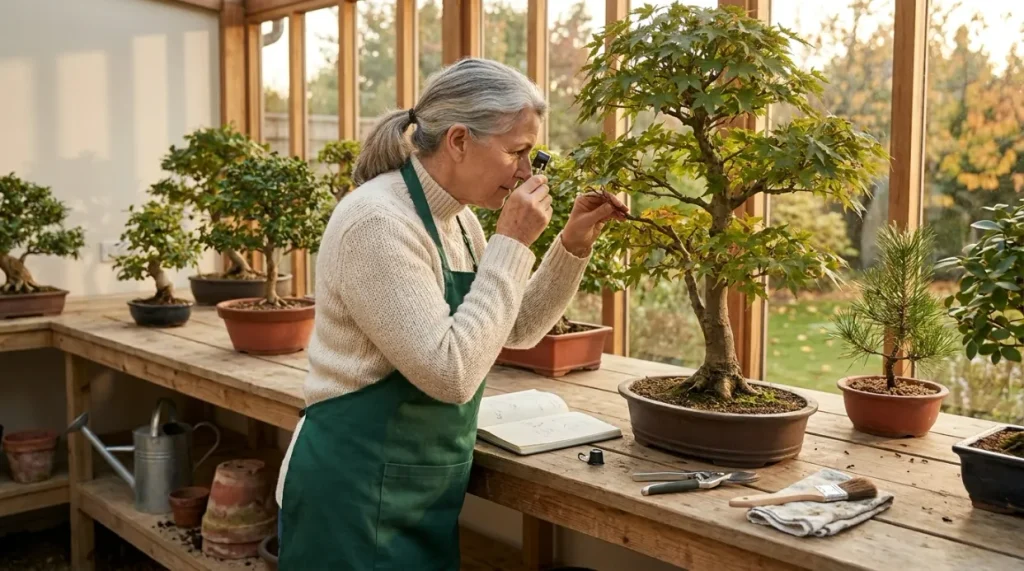
The best long-term system is boring and consistent. That is exactly why it works.
- Every watering: Notice sticky leaves, white wax, ants, or sudden weak growth.
- Every week: Inspect hidden foliage and branch junctions closely.
- After buying a tree: Keep it separate while monitoring for hidden pests.
- After handling pests: Clean hands, tools, benches, and reusable containers.
- During active growth: Watch tender shoots carefully because pests can hide in expanding foliage.
- Before moving trees indoors: Inspect outdoor bonsai thoroughly.
Outdoor growers should also avoid unnecessary broad-spectrum insecticide use. Natural enemies can help suppress mealybugs, while indiscriminate spraying may remove those beneficial insects.
If ants are repeatedly attending a mealybug colony outdoors, address the ants as part of the management plan. Ants feed on honeydew and can interfere with beneficial predators and parasites.
Keep simple pest records
I keep short notes when I see suspicious insects, especially on trees that have had previous problems. The date, species, location, and treatment are enough.
- Date first noticed
- Bonsai species
- Where insects appeared
- Nearby plants exposed
- Control method used
- Date of last observed pest
Those notes reveal patterns quickly. If the same bench or indoor window repeatedly produces problems, I know to inspect the environment instead of treating each tree as an isolated event.
Section Takeaway: A collection-wide prevention system beats emergency treatment. Regular inspection, quarantine, sanitation, good spacing, and careful records make mealybugs much easier to contain.
Mealybug Prevention FAQ
How often should I check my bonsai for mealybugs?
Check your bonsai casually whenever you water and perform a closer inspection about once a week. Examine leaf axils, branch forks, undersides of leaves, bark crevices, the trunk base, pot rim, and visible root area.
Can a healthy bonsai still get mealybugs?
Yes. Healthy bonsai can still acquire mealybugs from infested plants, tools, pots, or other contaminated material. Good care helps the tree stay vigorous, but exclusion and regular inspection are the main ways to prevent an infestation from becoming established.
Do mealybugs spread from one bonsai to another?
Yes. Mobile immature stages can crawl, and pests may also travel on touching foliage, hands, tools, containers, or plant material. Keeping suspicious trees isolated and preventing canopies from touching reduces the chance of collection-wide spread.
Should I spray neem oil regularly to prevent mealybugs?
Routine pesticide spraying is usually unnecessary when no pest is present. Inspect first and use a targeted product only when needed, following its label and confirming that your bonsai species tolerates it.
Can mealybugs live in bonsai soil?
Yes. Ground or root mealybugs can live around roots and within growing media. White wax near drainage holes, roots, or inside the root ball can indicate a below-ground infestation that needs different management from ordinary foliar mealybugs.
Are ants a sign of mealybugs?
Ants do not prove that mealybugs are present, but repeated ant activity can be a useful clue. Mealybugs produce sugary honeydew, which attracts ants, so inspect the tree for white wax, sticky residue, aphids, or scale insects as well.
What is the single best way to prevent mealybugs on bonsai?
The most useful habit is early inspection. Check new trees before introducing them, isolate suspicious plants, and examine hidden parts of established bonsai weekly so a few insects can be removed before they develop into a larger colony.
Final takeaway: Preventing mealybugs on bonsai is mostly about controlling introductions and catching insects early. Keep new plants separate, inspect hidden areas weekly, maintain clean tools and benches, give every tree species-appropriate care, and respond to the first confirmed pest instead of waiting for visible damage.