Why Are Bonsai Branches Dying?
Quick Answer
Bonsai branches usually die because the branch is no longer receiving enough water, oxygen, light, or healthy vascular flow. Common causes include underwatering, waterlogged roots, poor drainage, disease, pests, environmental stress, wiring damage, and pruning mistakes. Start by checking the soil, roots, bark, foliage, and recent care changes rather than treating the tree blindly. Good bonsai care practices can prevent many recurring dieback problems.
Common Causes of Dying Branches
- Too little water: Fine roots dry out and can no longer supply the branch.
- Too much water: Constantly wet soil reduces oxygen around roots and may encourage root decay.
- Root damage: Weak or damaged roots often cause foliage and branches above them to decline.
- Pests or disease: Scale, borers, mites, fungal diseases, and cankers can contribute to branch dieback.
- Wiring damage: Wire that cuts deeply into expanding bark can interfere with normal tissue function.
- Environmental stress: Heat, frost, sudden light changes, wind, and poor placement can damage vulnerable growth.
Before You Cut Anything
- Confirm whether the branch is truly dead by checking flexibility, buds, foliage, and the tissue beneath a tiny section of bark.
A dying branch can make an otherwise healthy bonsai look alarming. I treat branch dieback as a warning sign rather than a diagnosis because several unrelated problems can cause the same symptom.
The safest approach is to inspect the entire tree before reaching for fertilizer, fungicide, or pruning shears. Below, I’ll show you how I work through the likely causes and decide what deserves action.
In This Guide
Is a Dying Bonsai Branch Always a Serious Problem?
No. One dead twig doesn’t automatically mean your entire bonsai is dying, although sudden or spreading branch loss deserves attention.
Branch dieback means tissue begins dying from a branch tip or another point and progresses along the branch. The underlying cause may involve roots, water, weather, disease, pests, or physical damage.
- One isolated twig: Often less concerning, especially after pruning, minor damage, or seasonal stress.
- Several branches at once: More likely to indicate a whole-tree problem involving roots, watering, or environment.
- Dieback spreading inward: Requires closer inspection for disease, severe root stress, or vascular damage.
- New shoots dying: Suggests the tree is struggling to support active growth.
- Branch death plus leaf loss: Check water, drainage, roots, pests, and recent placement changes promptly.
Species also matters. A deciduous Japanese maple behaves differently from a juniper, pine, ficus, or Chinese elm.
Deciduous trees naturally shed leaves during dormancy, but the branches should remain alive. Evergreen foliage may age and drop too, yet entire branches turning brittle isn’t ordinary seasonal shedding.
What Causes Bonsai Branches to Die?
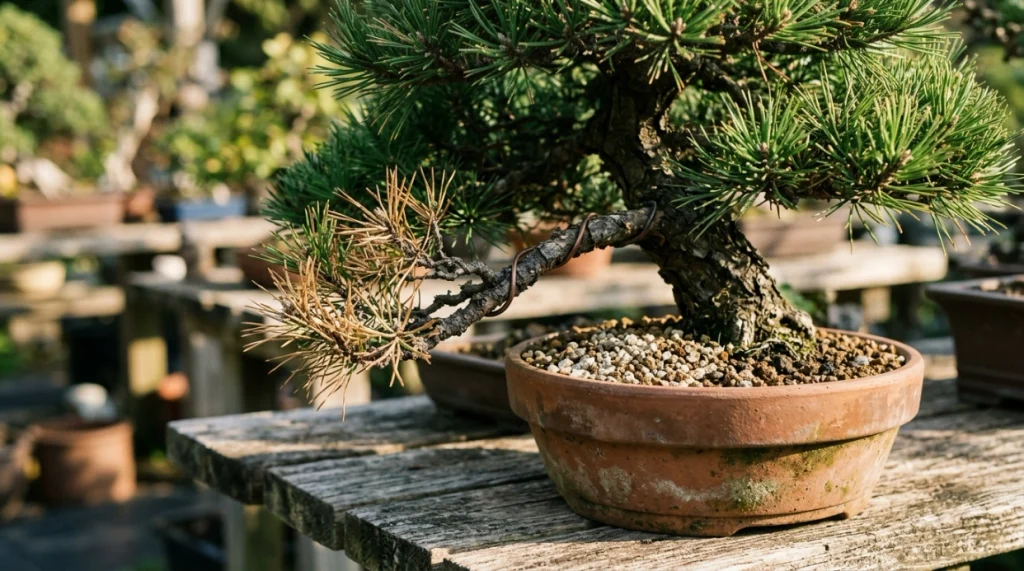
The most common causes are water stress, unhealthy roots, environmental damage, poor light, pests, disease, and physical injury. More than one problem can occur at the same time.
1. Underwatering and Drought Stress
A bonsai has much less soil around its roots than a landscape tree. That small root zone can dry surprisingly quickly during warm, windy, or sunny weather.
Once fine feeder roots lose too much moisture, they can’t supply the foliage effectively. Tender shoots and branch tips may be the first areas to decline.
- Dry soil throughout the pot
- Crisp or curled foliage
- Brittle young shoots
- Soil pulling away from the pot edge
- Dieback starting near branch tips
I prefer checking the substrate instead of watering by the calendar. Bonsai Empire likewise recommends monitoring actual soil moisture and watering thoroughly when the soil becomes slightly dry rather than relying on a fixed schedule.
You can review their bonsai watering guidance for the same moisture-based approach.
2. Excess Water and Poor Root Aeration
Constantly saturated soil creates the opposite problem. Water fills air spaces within the substrate, leaving roots with less oxygen.
Colorado State University Extension notes that overwatering can restrict oxygen uptake around tree roots. Root trouble may then appear above ground as weak growth and declining foliage.
Their information on healthy tree roots provides useful background on water, oxygen, and root health.
- Soil stays wet for an unusually long time
- Water drains slowly from the pot
- Leaves yellow or wilt despite moist soil
- New growth becomes weak
- Roots become soft or deteriorated
Don’t diagnose root rot from dark root color alone. Root color varies with species, age, substrate, and staining.
3. Root Damage or a Root-Bound Tree
A damaged root system may be unable to support every branch. This can happen after severe drought, inappropriate repotting, root decay, compacted substrate, or prolonged poor drainage.
An old, compacted root ball can also become difficult to wet evenly. Water may run around the outer edge while portions of the root mass remain dry.
4. Too Little Light
Branches that receive inadequate light can gradually weaken. Dense interior growth is especially vulnerable when the outer canopy blocks light for long periods.
This doesn’t mean you should suddenly move a stressed tree into harsh midday sun. A major change in exposure can create a second source of stress.
5. Heat, Frost, Wind, and Sudden Environmental Change
Extreme weather can damage twigs even when the roots remain alive. Small bonsai pots also heat and cool faster than the ground around landscape trees.
- Hot, drying wind can increase moisture loss.
- Unexpected frost can damage tender new shoots.
- Intense sun can scorch foliage accustomed to shade.
- Moving tropical bonsai into cold conditions can cause severe stress.
6. Pests and Diseases
Scale insects, mites, borers, and other pests may weaken specific areas of a tree. Diseases can also cause localized or spreading branch dieback.
Cankers are especially important when branch death appears alongside sunken, cracked, discolored, or damaged bark. Some cankers can girdle a branch and interrupt movement through its tissues.
- Sticky residue or honeydew
- Fine webbing
- Scale-like bumps
- Small holes or frass around woody tissue
- Sunken or discolored bark
- Unusual fungal growth
7. Wiring or Pruning Damage
Bonsai wire must be monitored as branches thicken. Wire left too long can bite deeply into bark and injure underlying tissue.
Pruning can also cause dieback when a branch is damaged, torn, or cut at the wrong point for that species and season. Major styling on an already stressed tree creates another burden.
Section Takeaway: Bonsai branch dieback usually points to a problem elsewhere in the tree. Check water, roots, environment, bark, pests, and recent styling before choosing a treatment.
How Do I Diagnose a Dying Bonsai Branch?
Diagnose the pattern before treating the symptom. Start with the easiest observations and avoid disturbing the roots unless other evidence justifies it.
Use the Pattern of Damage as a Clue
| What You See | Possible Cause | What to Check Next |
|---|---|---|
| Crispy tips and very dry soil | Underwatering or heat stress | Moisture deeper in the root ball |
| Wilting while soil stays wet | Root dysfunction or poor drainage | Drainage rate, soil condition, root health |
| One wired branch declines | Wire or mechanical injury | Bark beneath and around the wire |
| Sunken or cracked bark | Possible canker or injury | Extent and spread of damaged tissue |
| Sticky foliage or bumps on stems | Sap-feeding pests such as scale | Branch joints and leaf undersides |
| Interior branches weaken gradually | Low light or excessive shading | Canopy density and placement |
Check the Soil Before Blaming the Branch
Push a finger or wooden chopstick gently into the substrate where practical. Surface appearance alone may not show what’s happening deeper in the pot.
Check whether the root ball is evenly moist, bone dry, or persistently saturated. Also watch how quickly water exits the drainage holes.
Inspect the Branch From Tip to Trunk
Look for a clear transition between healthy and damaged tissue. Check buds, leaf attachment points, bark color, wire marks, cracks, swelling, sap, holes, and unusual deposits.
A living branch is generally more flexible than a thoroughly dead one. Healthy buds during the appropriate season are another encouraging sign.
Review What Changed Recently
One of my most useful troubleshooting habits is asking what changed before symptoms appeared. Bonsai often respond to a change rather than a mysterious new problem.
- Was the tree moved indoors or outdoors?
- Did temperatures suddenly rise or fall?
- Was it recently repotted?
- Did you change the watering routine?
- Was fertilizer recently applied?
- Was the tree wired or heavily pruned?
- Did the light exposure change?
As of 2026, the basic diagnostic principle remains straightforward: patterns and context matter more than one isolated symptom. A yellow leaf or brown twig alone rarely identifies a cause.
Section Takeaway: Work from the whole tree toward the dying branch. Soil moisture, root function, symptom pattern, and recent changes usually tell you more than the dead twig itself.
Can a Dead Bonsai Branch Come Back to Life?
A truly dead branch cannot return to life. If the living tissues within that branch have died completely, recovery must come from surviving buds or new growth elsewhere.
A stressed branch, however, may look worse than it is. Some branches lose foliage but retain living buds and vascular tissue.
How to Check Whether a Branch Is Still Alive
- Look for healthy buds: Firm, viable buds are encouraging.
- Test flexibility: Small living twigs usually bend more readily than dead, brittle ones.
- Check bark carefully: A tiny scratch may reveal green living tissue beneath the surface.
- Follow the branch inward: A dead tip doesn’t always mean the whole branch is dead.
Don’t repeatedly scratch bark along a valuable branch. Every wound creates unnecessary damage.
Also remember that species respond differently. Some deciduous trees back-bud readily, while many conifers are less forgiving when foliage and living buds are lost from old wood.
What Should I Do When a Bonsai Branch Is Dying?
Correct the underlying stress before performing major styling. A weak tree generally needs stability more than another aggressive intervention.
- Check moisture first. Determine whether the root ball is dry, wet, or unevenly watered.
- Inspect drainage. Confirm water can pass through the substrate and drainage holes.
- Check light and temperature. Compare current placement with the needs of your particular species.
- Inspect for pests. Examine leaves, needles, branch joints, bark, and sheltered crevices.
- Examine wiring. Remove wire carefully if it is cutting deeply into swelling bark.
- Look for diseased tissue. Sunken lesions, discolored bark, unusual sap, or spreading dieback deserve closer attention.
- Reduce additional stress. Avoid unnecessary fertilizing, repotting, defoliation, or major styling until you understand the problem.
Should You Prune the Dead Branch?
Confirmed dead wood can often be removed, but timing and technique depend on the species and your design plans. Diseased tissue may also require different handling from naturally dead wood.
The University of Minnesota Extension recommends removing dead or dying branches as part of sound pruning practice. Its tree and shrub pruning guidance also emphasizes clean cuts and proper branch placement.
Pro tip: Before making an irreversible cut into live wood, especially near the trunk or an important primary branch, get advice from an experienced bonsai grower or local bonsai club if you’re uncertain.
Should You Repot a Bonsai With Dying Branches?
Not automatically. Repotting is itself stressful because it disturbs the root system.
If the tree has reasonable drainage and no strong evidence of a root emergency, disturbing stressed roots may make matters worse. Root inspection becomes more justified when persistent wetness, severe compaction, poor drainage, or clear root deterioration points toward the pot.
Pro tip: Root pruning is irreversible. If you suspect severe root disease but aren’t confident identifying healthy and damaged roots, consult an experienced grower before cutting.
How Can I Prevent Bonsai Branch Dieback?
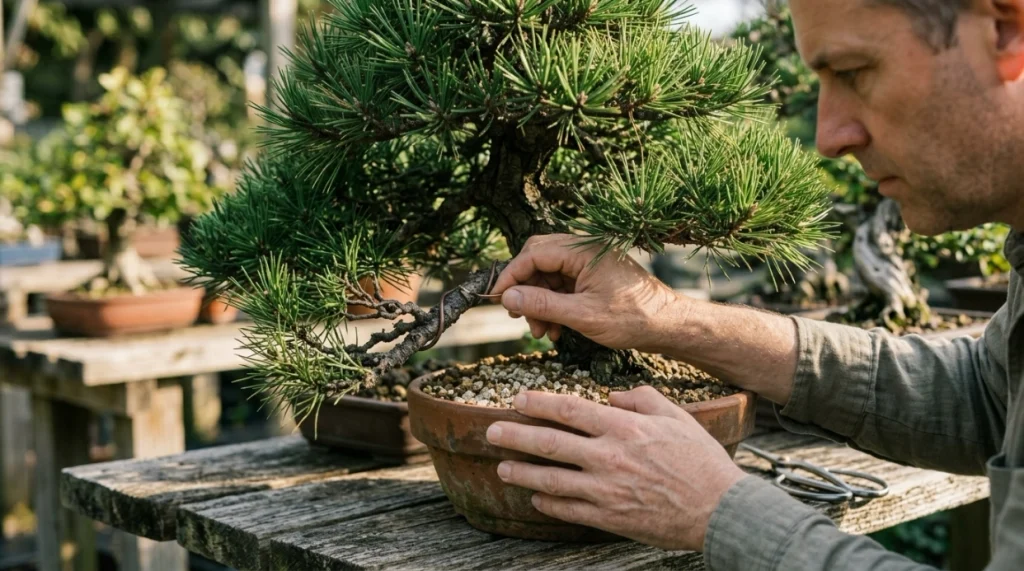
Prevention comes from keeping the roots and canopy balanced. Healthy roots, appropriate light, correct seasonal care, and careful styling give branches the best chance of remaining strong.
- Check moisture instead of watering by schedule. Weather and tree growth change water demand constantly.
- Use free-draining bonsai substrate. The mix should hold useful moisture while allowing oxygen around roots.
- Know your species. A tropical ficus and a temperate juniper do not share the same placement needs.
- Watch wire frequently. Fast spring growth can make wire marks deepen quickly.
- Avoid stacking stressful techniques. Heavy pruning, repotting, defoliation, and major wiring shouldn’t automatically happen together.
- Inspect the tree often. Catch pests, weak shoots, drainage changes, and wire bite before serious damage develops.
- Protect vulnerable roots. Small pots can heat, dry, and freeze faster than soil in the ground.
- Maintain useful light inside the canopy. Don’t allow outer growth to permanently shade every interior branch.
I find regular observation more valuable than emergency treatment. Five quiet minutes examining a tree each week often reveals trouble while the problem is still small.
Pay particular attention during spring growth, summer heat, periods of strong wind, and major seasonal transitions. Those are times when moisture demand and branch growth can change quickly.
FAQs About Dying Bonsai Branches
Why are the tips of my bonsai branches dying?
Branch-tip dieback often points to water stress, heat, root problems, or recent environmental changes. Check moisture throughout the root ball, not just at the surface, and inspect new growth for pests or damage before changing your care routine.
Why is only one branch on my bonsai dying?
A single dying branch may have suffered localized wire damage, breakage, shading, disease, pest injury, or loss of vascular flow. Compare that branch with healthy branches and inspect the point where the damaged section joins living wood.
Should I cut dead branches off my bonsai?
You can generally remove confirmed dead branches when doing so suits the species and design. First make sure the branch is truly dead and determine whether disease is involved, because diseased material may require extra sanitation and careful disposal.
Can overwatering cause bonsai branches to die?
Yes. Persistently saturated substrate can reduce oxygen around the roots and contribute to root decline. Damaged roots may then struggle to supply water and nutrients to the canopy, resulting in weak growth, wilting, leaf loss, or branch dieback.
Can underwatering kill one branch instead of the entire bonsai?
Yes. Drought stress doesn’t always damage every branch equally. Fine roots serving one portion of the canopy may be affected more severely, and exposed or weaker branches can decline before the rest of the tree.
How long should I wait before deciding a bonsai branch is dead?
There isn’t one reliable number of days for every species. Check for flexible twigs, viable buds, living tissue beneath the bark, and expected seasonal growth before deciding, especially when a deciduous bonsai is dormant.
Can fertilizer save a dying bonsai branch?
Fertilizer doesn’t repair dead tissue and can add stress when roots are already damaged. Correct water, drainage, light, temperature, pest, or disease problems first, then resume appropriate fertilizing when the tree is actively recovering.
The main takeaway is simple: don’t treat a dying bonsai branch in isolation. Find out why the branch is losing support, correct that underlying problem, and give the remaining healthy tissue stable conditions to recover.
Keep watching the tree after making changes rather than changing several things at once. A careful, measured response makes it much easier to see what actually helps your bonsai.
