
Why Are My Bonsai Leaves Sticky? Causes, Pests, and Fixes

Quick Answer
If your bonsai leaves are sticky, the most likely cause is honeydew from sap-feeding pests such as aphids, soft scale, mealybugs, or whiteflies. Check the leaves, stems, and new growth carefully before treating, because common bonsai pests and diseases can produce different warning signs.
What to check first
- Aphid clusters: Look around tender shoots, buds, and leaf undersides.
- Scale bumps: Check stems and leaves for brown, tan, gray, or white bumps.
- Cottony patches: White waxy material around leaf joints may indicate mealybugs.
- Flying insects: Tiny white insects that rise when disturbed may be whiteflies.
- Sooty coating: Black surface mold often develops where honeydew has accumulated.
Best first move
- Separate the affected bonsai from nearby plants, identify the pest, and then choose a treatment labeled for that plant and pest.
Sticky bonsai leaves can be alarming because the tree may otherwise look healthy. In most cases, though, the residue gives you a useful clue about what is happening.
When I troubleshoot a sticky bonsai, I start with the newest growth and leaf undersides. Those protected areas often reveal the pest before widespread yellowing or leaf drop begins.
In This Guide
Why Are My Bonsai Leaves Sticky?
Sticky bonsai leaves usually mean a sap-feeding insect is producing honeydew. Honeydew can coat leaves, branches, pots, benches, windowsills, and surfaces beneath the tree.
Honeydew definition: Honeydew is a sugar-rich waste liquid produced by certain insects while they feed on plant sap. Aphids, soft scales, mealybugs, and whiteflies are common honeydew producers.
The residue often feels shiny or tacky rather than oily. Heavy deposits can make adjacent leaves stick together.
Ants are another useful clue. They may visit an infested bonsai repeatedly because they feed on sugary honeydew.
Does sticky residue mean the bonsai itself is leaking sap?
Usually, no. Wounded branches and freshly damaged leaves can release plant sap, but this normally stays close to the injured tissue.
A widespread sticky coating across several leaves points more strongly toward insects. Check directly above the stickiest leaves because honeydew can drip from pests feeding higher in the canopy.
Why is black mold appearing with the stickiness?
Black or charcoal-colored material may be sooty mold. These fungi grow on honeydew rather than directly invading healthy leaf tissue.
Heavy coatings can reduce the amount of light reaching the leaf surface. UC Integrated Pest Management explains that managing the honeydew-producing insects is the key to controlling sooty mold.
Section Takeaway: Sticky leaves are usually a symptom, not the root problem. Find the honeydew-producing pest before concentrating on cleaning the residue.
Which Pests Make Bonsai Leaves Sticky?

Aphids, soft scale, mealybugs, and whiteflies are the main suspects. They all feed on plant sap and may leave honeydew behind.
Spider mites are common bonsai pests too, but they do not normally produce sticky honeydew. Their classic clues are stippling, bronzed foliage, and fine webbing.
| Pest | Where to Look | Sticky Honeydew? | Other Clues |
|---|---|---|---|
| Aphids | New shoots, buds, leaf undersides | Yes | Clusters, curled growth, white cast skins |
| Soft scale | Stems, branches, leaf veins | Yes | Brown, tan, or rounded bumps |
| Mealybugs | Leaf axils, branch joints, protected crevices | Yes | White cotton-like wax |
| Whiteflies | Leaf undersides | Yes | Tiny white adults fly when disturbed |
| Spider mites | Leaf undersides, fine twigs | No | Stippling, bronzing, fine webbing |
Aphids
Aphids are small, soft-bodied insects that often gather on tender new growth. Their feeding may cause curled leaves, yellowing, distorted shoots, and sticky foliage.
The University of Minnesota Extension notes that aphids produce a sticky waste product after feeding. Their aphid identification guidance also recommends checking young leaves and developing stems.
Soft scale
Scale insects are easy to miss because they can resemble small bumps rather than insects. Soft scales produce honeydew, while armored scales generally do not.
If sticky leaves occur with raised brown or tan spots on branches, scale should move high on your suspect list. UC IPM provides useful scale insect identification information for comparing these signs.
Mealybugs and whiteflies
Mealybugs often hide inside branch forks and leaf joints. Their white waxy coating makes established colonies easier to recognize.
Whiteflies usually remain under leaves until disturbed. If tiny white insects fly up when you gently move the foliage, inspect the leaf undersides closely.
Section Takeaway: Sticky residue narrows the pest list. Aphids, soft scale, mealybugs, and whiteflies deserve the closest inspection.
How Do I Inspect a Bonsai With Sticky Leaves?
Inspect the entire tree before applying any treatment. A five-minute examination can prevent you from treating the wrong problem.
I prefer using bright natural light and a small magnifying lens. Small scale crawlers and young aphids can be easy to miss with the naked eye.
- Isolate the bonsai. Move it away from other bonsai and houseplants while you investigate.
- Inspect new growth. Aphids commonly gather around soft shoots, buds, and young leaves.
- Turn over every suspicious leaf. Whiteflies, aphids, and other pests often remain underneath.
- Study stems and branch forks. Look for scale bumps, mealybug wax, eggs, or unusual deposits.
- Check below the canopy. Honeydew may drip onto lower leaves and make the apparent source misleading.
- Look for secondary signs. Ants, sooty mold, curling, yellowing, and poor new growth can strengthen the diagnosis.
Should you inspect the soil too?
Yes, but sticky foliage usually directs attention above the soil first. Check the growing medium for unusual insects, persistent wetness, or declining root-zone conditions while you are examining the tree.
Do not repot simply because you found sticky leaves. Repotting adds stress and will not solve an aphid or scale infestation living in the canopy.
Section Takeaway: Identify the pest before reaching for a spray. Where the residue appears is less important than where the insects are actually feeding.
How Do You Treat Sticky Bonsai Leaves?
Treatment should target the pest, not just the stickiness. Begin with the least disruptive method that suits the infestation and bonsai species.
- Keep the tree isolated. This reduces the chance of pests reaching nearby plants.
- Remove obvious pests. A gentle stream of water can dislodge many aphids from suitable broadleaf bonsai.
- Remove accessible scale carefully. Soft physical removal may reduce established colonies on sturdy branches.
- Choose a labeled treatment if needed. Insecticidal soap or horticultural oil may help with certain pests when the product label permits use on your plant.
- Cover hidden feeding areas. Leaf undersides and branch junctions are common places for survivors.
- Repeat inspections. Eggs or newly emerged insects can remain after the first treatment.
Can I simply wash the sticky leaves?
You can gently clean honeydew from foliage, but cleaning alone will not stop new residue. Remove or control the insect producing it first.
Use care with delicate foliage and newly extended shoots. Aggressive rubbing can cause more damage than the residue itself.
Should I spray dish soap, alcohol, or homemade mixtures?
I avoid improvised concentrations on valuable bonsai because species differ in their sensitivity. A mixture that appears harmless on one tree may scorch another tree’s foliage.
Use a product specifically labeled for the pest and suitable plants. Follow the label’s dilution, temperature, sunlight, and repeat-application instructions.
Never assume more product works better. Bonsai have limited soil volume and relatively small canopies, so unnecessary chemical stress can be significant.
Should you fertilize a pest-stressed bonsai?
Do not try to force recovery with extra fertilizer. Maintain normal species-appropriate care while controlling the infestation.
As of 2026, the basic approach remains straightforward: correct identification, good growing conditions, isolation when needed, and targeted pest management provide the safest path forward.
Section Takeaway: Control the pest first, clean the residue second, and keep normal bonsai care stable. Avoid adding several treatments at once.
What If My Bonsai Is Sticky but Has No Visible Pests?
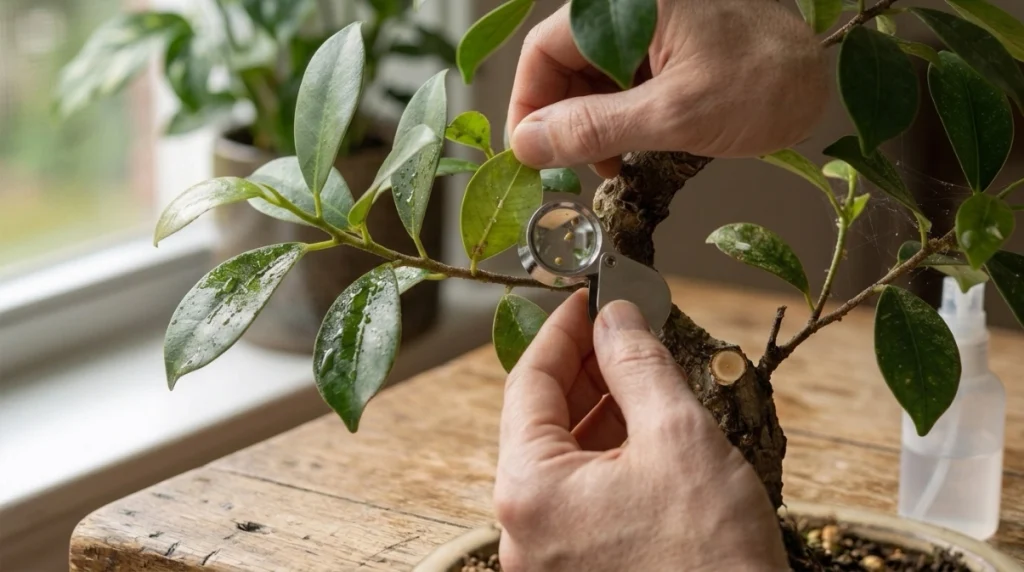
Not seeing insects does not immediately rule them out. Young pests may be tiny, hidden under leaves, tucked against stems, or protected inside waxy coverings.
Inspect the bonsai again with magnification. Check at different times of day and pay special attention to foliage directly above sticky areas.
Could the residue come from a branch wound?
Yes. Fresh pruning damage, broken shoots, or mechanical injury can release sap or latex on some species.
Wound-related stickiness is usually localized. Honeydew tends to appear across several leaves or surfaces below feeding insects.
Could a foliar product leave leaves sticky?
Some sprays, leaf products, or treatment residues can leave an unusual surface film. Think about anything applied shortly before the stickiness appeared.
If you recently sprayed the bonsai, read the product label before washing or combining it with another treatment. Mixing products without guidance can increase the risk of foliage damage.
What if black sooty mold is present but I cannot find insects?
Sooty mold is a strong reason to keep searching for a honeydew source. Examine nearby plants too, because residue can sometimes fall from infested foliage positioned above the bonsai.
Continue monitoring even after cleaning. Fresh sticky deposits appearing within days suggest the source is still active.
Section Takeaway: No visible insects does not mean no pests. Reinspect hidden areas and rule out wounds or recent spray residues before changing your care routine.
Frequently Asked Questions
Are sticky bonsai leaves always caused by pests?
No. Sap from damaged tissue and residues from some sprays can also feel sticky. However, widespread stickiness across several leaves strongly justifies checking for aphids, soft scale, mealybugs, and whiteflies.
Can sticky leaves kill a bonsai?
The sticky honeydew itself is usually not the main threat. A large pest population can weaken foliage and young growth, while heavy sooty mold can reduce useful light reaching the leaves.
Why are ants crawling on my sticky bonsai?
Ants are attracted to sugary honeydew produced by sap-feeding insects. Their presence should prompt a close inspection for aphids, scale, mealybugs, or other honeydew-producing pests.
Do spider mites make bonsai leaves sticky?
Spider mites do not normally produce honeydew. Look instead for fine webbing, pale stippling, bronzing, dull foliage, and tiny moving specks on leaf undersides.
Why are my ficus bonsai leaves sticky?
A sticky ficus bonsai should be checked closely for scale, aphids, mealybugs, and whiteflies. Inspect stems, leaf joints, new growth, and the undersides of leaves before changing watering or fertilizer.
Should I isolate a bonsai with sticky leaves?
Yes, if pests are suspected. Temporary isolation protects nearby bonsai and houseplants while you identify the cause and confirm that treatment has stopped the infestation.
How do I know when the pest problem is gone?
Continue inspecting the bonsai for several weeks. You want to see no live pests, no new honeydew, no fresh sooty mold, and healthy new growth before placing the tree back beside other plants.
Sticky bonsai leaves are frustrating, but they also provide an early warning. Find the source, identify the pest carefully, and make the smallest effective correction.
If identification remains uncertain, photograph the insects and damaged foliage clearly. A local bonsai club, experienced grower, or horticulture extension service can help you confirm what you are seeing before you use a stronger treatment.