Boxwood Bonsai Yellow Leaves: Causes, Fixes and Prevention

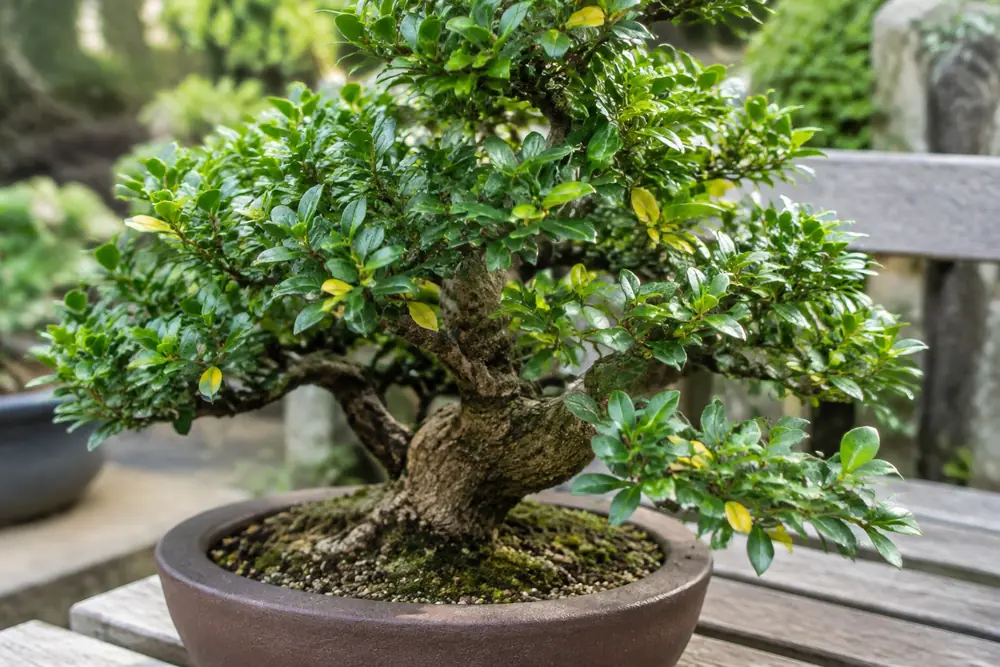
Boxwood bonsai yellow leaves are a common sight, and most of the time the cause is simple: the roots are too wet, the tree is hungry, or the weather has stressed it. Boxwood (Buxus) is one of the toughest bonsai species, but its small, dense leaves react quickly when something is off. The trick is to look at the pattern. Which leaves are yellow, what color exactly, and in which season? Those clues point you straight to the cause.
In this guide
This guide covers the main reasons boxwood bonsai leaves turn yellow, how to tell them apart, and how to fix each one. It applies to the common bonsai boxwoods: Japanese and Korean boxwood (Buxus microphylla), common boxwood (Buxus sempervirens) and Harland boxwood (Buxus harlandii).
Why boxwood bonsai leaves turn yellow
A boxwood leaf stays on the tree for two to three years. When the tree is short of water, oxygen or nutrients, it pulls resources out of older leaves first, and those leaves turn yellow and drop. When the problem is in the weather or with pests, the damage usually shows on the outer, exposed leaves instead.
Boxwood also differs from many popular bonsai in one way: it likes soil that is close to neutral, around pH 6.5 to 7.2, rather than acidic. So the azalea advice about acidic soil and rain water does not apply here. The Clemson University boxwood fact sheet notes the same thing for garden boxwood: good drainage matters far more than soil acidity.
6 causes of boxwood bonsai yellow leaves
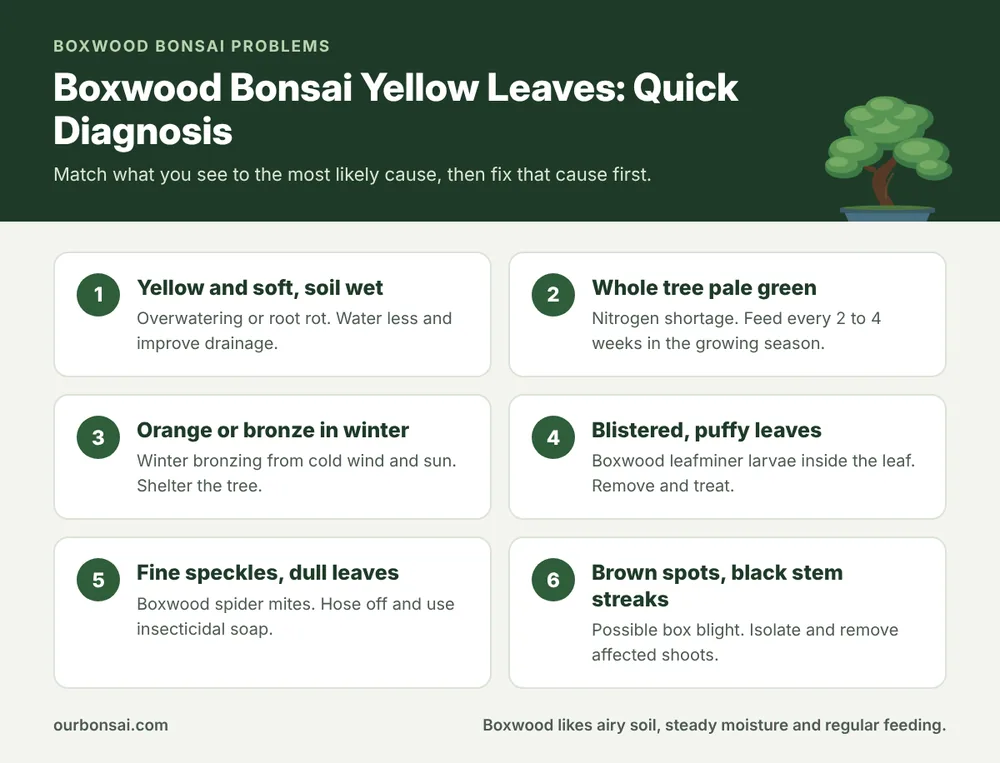
1. Overwatering and root rot
Boxwood roots are shallow and fine. In soil that stays wet, they run out of oxygen and start to rot. The leaves turn yellow, then a dull straw color, and drop. In bad cases whole branches die back. Boxwood is also prone to Phytophthora root rot in waterlogged soil.
Fix: water only when the top centimeter of soil is just dry. Make sure the pot drains freely and is not standing in a saucer of water. Use a gritty mix rather than garden soil. If the roots are brown and mushy, read our guide to root rot in bonsai and repot carefully.
2. Lack of nitrogen and magnesium
Boxwood grows a lot of leaves for its size and is a hungry tree in a small pot. Nitrogen shortage shows as an even, pale yellow-green color over the whole tree, starting with the oldest leaves. Magnesium shortage shows as yellowing at the leaf edges and between the veins of older leaves.
Fix: feed every two to four weeks from spring to early autumn with a balanced bonsai fertilizer. Our guide to the best liquid fertilizer for bonsai trees compares easy options. A light dose of Epsom salt once in spring helps if magnesium is the issue.
3. Winter bronzing
Japanese and common boxwood often turn orange, bronze or yellowish in winter, especially when they get winter sun and cold, drying wind. This is a stress reaction, not a disease. The leaves usually green up again in spring when growth starts.
Fix: keep outdoor boxwood bonsai in a sheltered spot in winter, out of strong wind and away from bright afternoon sun. Protect the roots from hard frost by placing the pot on the ground or mulching around it.
4. Boxwood leafminer
The boxwood leafminer is a tiny fly whose larvae live inside the leaf. Infested leaves look puffy and blistered on the underside, then turn yellow and brown. Hold a leaf up to the light and you may see the small orange larvae inside.
Fix: pick off and destroy the worst leaves. Prune lightly in spring before the adults emerge, and treat with a systemic product labeled for leafminers if the infestation is heavy.
5. Boxwood spider mites
Mites suck sap from the leaf surface and leave fine yellow or white speckles. The leaves look dusty and dull and can turn yellow overall. They are worst in hot, dry weather.
Fix: hose the tree down well, especially the undersides, and treat with insecticidal soap or horticultural oil. Our guide to spider mites on bonsai trees explains how to break the cycle.
6. Box blight and other fungal problems
Box blight causes brown spots on leaves, black streaks on young stems and rapid leaf drop, often in warm, wet weather. Volutella blight turns whole shoots yellow then straw colored, with pink spores in humid weather. The RHS guide to box blight shows clear photos of both.
Fix: isolate the tree, cut out affected shoots into healthy wood, clean your tools, clear fallen leaves and water the soil rather than the foliage.
How to diagnose your boxwood bonsai step by step
- Check the soil. Wet and heavy a day after watering means overwatering. Dry and pulling away from the pot means underwatering.
- Look at which leaves are yellow. Old inner leaves point to hunger or root problems. Outer, exposed leaves point to weather, sun or pests.
- Turn some leaves over. Blisters mean leafminer. Speckles and fine webs mean mites. Brown spots with dark margins point to fungus.
- Note the season. Bronze or orange leaves in winter are usually winter bronzing.
- Think about recent changes. Repotting, a move indoors or outdoors, or a heat wave can all cause temporary yellowing.
Indoor Harland boxwood with yellow leaves
Harland boxwood, sold as an indoor bonsai, is a subtropical species and behaves a bit differently. Indoors, yellow leaves usually come from too little light, dry air or a pot kept too wet. Put it in the brightest window you have, use a humidity tray and water only when the topsoil is starting to dry. Our Brussel’s Harland boxwood bonsai review covers what to expect from this popular tree, and our guide on how much light a bonsai tree needs helps you pick the right spot.
Preventing yellow leaves on a boxwood bonsai
| Habit | Why it helps |
|---|---|
| Gritty, fast-draining soil | Keeps roots airy and prevents rot |
| Water when the topsoil is just dry | Avoids both soggy and bone-dry roots |
| Feed every 2 to 4 weeks, spring to autumn | Keeps leaves dark green |
| Winter shelter from wind and sun | Reduces winter bronzing |
| Thin the canopy each year | Improves air flow and lowers blight risk |
| Inspect leaf undersides monthly | Catches leafminers and mites early |
Thinning matters more than people think. Boxwood grows into a very dense ball, and the inner leaves get little light and air. Inner leaves yellowing and falling is often just shade. Regular thinning, as shown in our boxwood bonsai styles guide, keeps the inside healthy. For soil, a mix like the ones in our bonsai soil mix ratio guide works well for boxwood.
FAQ: boxwood bonsai yellow leaves
Will yellow boxwood leaves turn green again?
Leaves that are bronzed by winter often green up in spring. Leaves yellowed by root problems or hunger usually do not and will drop. Watch the new growth instead.
Why is my boxwood bonsai turning orange?
That is usually winter bronzing from cold wind and sun. Move the tree to a more sheltered spot. It is a cosmetic problem if the roots are healthy.
Should I remove yellow leaves from my boxwood bonsai?
Pull them off once they come away easily. It tidies the tree and improves air flow inside the canopy, which helps prevent fungal problems.
How often should I water a boxwood bonsai to avoid yellow leaves?
There is no fixed schedule. Check daily and water when the top of the soil is just dry. Outdoors in summer that may be daily, in winter much less.
Final thoughts
Most cases of boxwood bonsai yellow leaves come from wet roots, hunger or winter weather. Get the soil and watering right first, feed through the growing season, and give the tree winter shelter. Then check for leafminers, mites and blight, because those are easy to fix early and hard to fix late. For a wider look at leaf color problems, see our guide to bonsai leaves turning yellow or brown.