Schefflera Bonsai Winter Care: Light, Water and Warmth

This post contains affiliate links. As an Amazon Associate, OurBonsai earns from qualifying purchases at no extra cost to you. Read our disclosure.
In this guide
- Ideal winter temperature
- Schefflera bonsai winter care checklist
- Light in winter
- Watering a schefflera in winter
- Humidity and aerial roots
- Why is my schefflera dropping leaves in winter?
- Pests to watch
- Fertilizer, pruning and repotting
- Summer outside, winter inside
- A simple weekly winter routine
- Using winter to plan your schefflera’s shape
- Schefflera variegated varieties
- Common schefflera winter mistakes
- FAQ: schefflera bonsai winter care
- Final thoughts
Schefflera bonsai winter care is about as easy as indoor bonsai gets. Dwarf schefflera (Schefflera arboricola, also called Heptapleurum arboricola), known as the Hawaiian umbrella tree, is a tough tropical plant from Taiwan and southern China. It handles indoor conditions better than most bonsai, tolerates a bit of neglect and grows all year. Winter still brings a few challenges: shorter days, dry heated air and the risk of overwatering. Handle those and your schefflera will stay lush until spring.
This guide covers temperature, light, watering, humidity and the most common winter problems.
Ideal winter temperature
| Temperature | Effect |
|---|---|
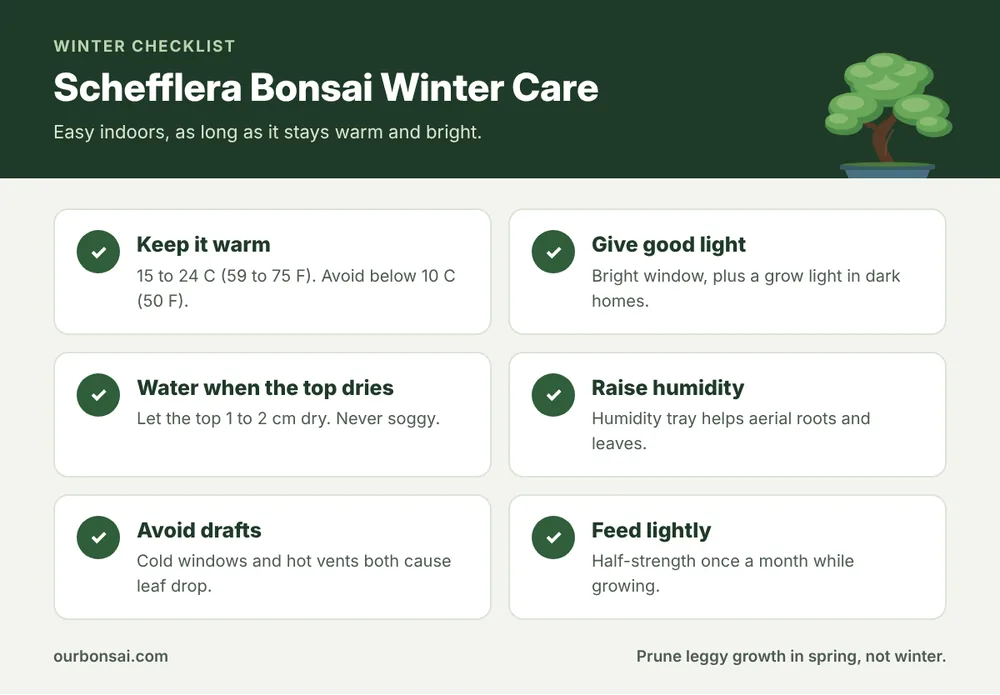
| 18 to 24°C (64 to 75°F) | Ideal, steady slow growth |
| 15 to 18°C (59 to 64°F) | Fine, growth slows |
| 10 to 15°C (50 to 59°F) | Tolerated, some leaf drop possible |
| Below 10°C (50°F) | Stress, leaf drop, root rot risk if wet |
| Frost | Damage or death |
If your tree spent summer outdoors, bring it in before nights fall below about 12°C (54°F).
Schefflera bonsai winter care checklist
Light in winter
Schefflera is famous for tolerating lower light than most bonsai, which is why it often appears on lists of bonsai for low light. But tolerating is not the same as thriving. In low light, it:
- Grows long, weak stems with big gaps between leaves.
- Produces larger leaves.
- Drops lower and inner leaves.
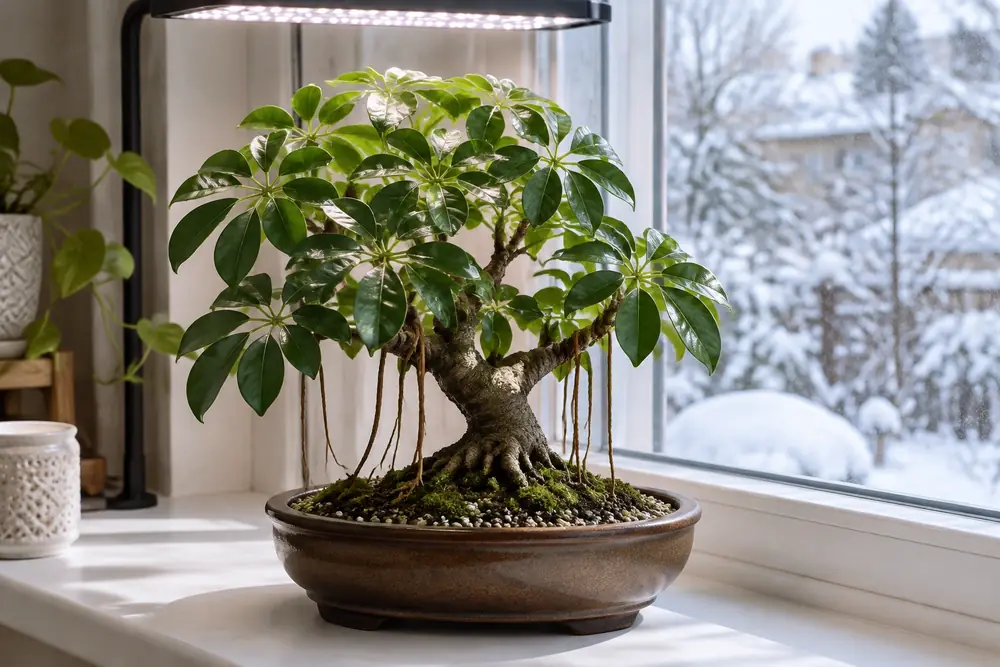
For a compact bonsai, give it the brightest window you have, and in dark winters add a grow light for 10 to 12 hours a day. Our guide to the best grow lights for bonsai helps you choose one. Turn the pot every week or two so it grows evenly.
Watering a schefflera in winter
Schefflera likes its soil to dry slightly between waterings, and it dislikes sitting in wet soil, especially in a cool room.
- Check the soil every few days.
- Water thoroughly when the top 1 to 2 cm feel dry.
- Let excess water drain and empty the saucer.
- In a warm room, that might be every five to seven days; in a cool room, less often.
The most common way to lose a schefflera in winter is overwatering in low light and cool temperatures. Yellow leaves with wet soil, or black spots on the leaves, are warning signs. Our tips on watering indoor bonsai in winter explain more.
Humidity and aerial roots
Schefflera produces thin aerial roots from its trunk and branches when humidity is high. These can be trained down into the soil to thicken the trunk or create a banyan look. In dry heated rooms, aerial roots usually stop growing. That is harmless, but a humidity tray under the pot helps keep both leaves and roots healthier.
Why is my schefflera dropping leaves in winter?
- Overwatering in cool, low-light conditions.
- Cold drafts from windows, doors or air conditioners.
- Too little light, especially inner and lower leaves.
- A sudden move from outdoors or another room.
- Hot, dry air from a heater.
A few lower leaves turning yellow and dropping is normal over time. Heavy, sudden drop points to one of the causes above. Our guide on why bonsai lose leaves suddenly helps narrow it down.
Pests to watch
Indoor schefflera can attract spider mites, scale and mealybugs in winter. Check under the leaves and along stems every week. Fine webbing and speckled leaves point to spider mites. Wipe leaves with a damp cloth to keep them clean and reduce pests.
Fertilizer, pruning and repotting
- Fertilizer: Feed at half strength once a month if it keeps growing under good light. Pause if growth stops.
- Pruning: Light trimming is fine. Save harder pruning and leaf reduction for spring and summer, when it buds back quickly.
- Repotting: Late spring to early summer.
For year-round care and styling tips, see our full dwarf schefflera bonsai care guide. If you are looking for a tree, our Brussel’s Hawaiian umbrella bonsai review covers a widely available option, or browse schefflera bonsai on Amazon.
Summer outside, winter inside
Schefflera grows much more compact and vigorous if it spends summer outdoors in bright shade or morning sun. Bring it in before nights get cool, check it for pests first, and expect some leaf drop as it adjusts to lower indoor light.
A simple weekly winter routine
- Every two or three days: Check the top of the soil with a finger.
- When dry at 1 to 2 cm: Water thoroughly and drain.
- Weekly: Turn the pot, wipe dust off a few leaves and check underneath for pests. Refill the humidity tray.
- Monthly: Feed at half strength if new leaves are still appearing, and trim any shoot that has grown much longer than the rest.
This takes only a few minutes and keeps your schefflera dense and healthy until it can go back outside in late spring.
Using winter to plan your schefflera’s shape
Winter is a slow season for growth, but a good time to plan. Look at your tree from all sides and decide:
- Which long stems to shorten in spring. Schefflera buds back well from bare stems, so you can cut hard once it is growing strongly.
- Where you want aerial roots. In spring, raise humidity and guide new aerial roots down into the soil with a straw or tube to build a multi-trunk banyan look.
- Whether to reduce leaf size. Defoliation in early summer, on healthy trees, produces smaller replacement leaves.
- Whether it needs a larger pot for development, or a shallower one for display.
Make notes or take photos now, so you are ready to act when the tree wakes up in late spring.
Schefflera variegated varieties
Variegated schefflera, with yellow or cream patches on the leaves, needs a little more care in winter. The pale parts of the leaf cannot make food, so these trees need even more light to stay healthy. They also grow more slowly and are more sensitive to cold. Give them the warmest, brightest spot you have and water a little more cautiously.
Common schefflera winter mistakes
- Watering on a fixed schedule without checking.
- Placing it far from any window because it is “low-light tolerant”.
- Leaving it on a cold windowsill at night.
- Putting it next to a radiator.
- Heavy pruning in midwinter.
FAQ: schefflera bonsai winter care
Can schefflera bonsai survive in low light in winter?
Yes, it survives better than most, but it grows leggy. A grow light keeps it compact.
How often should I water a schefflera in winter?
When the top 1 to 2 cm of soil is dry. Usually every five to ten days indoors, depending on warmth.
Can schefflera stay outside in winter?
Only in frost-free climates where nights stay above about 10°C (50°F).
Why are my schefflera leaves turning black?
Usually overwatering combined with cold. Let the soil dry more and move the tree somewhere warmer. The Wikipedia page on Schefflera arboricola has more on its native conditions.
Final thoughts
Schefflera bonsai winter care comes down to warmth above about 15°C, as much light as you can give, careful watering and a little extra humidity. It is one of the most forgiving bonsai for beginners, and with a grow light it can stay compact and green all winter.