Root Over Rock Bonsai: How to Create It Step by Step

This post contains affiliate links. As an Amazon Associate, OurBonsai earns from qualifying purchases at no extra cost to you. Read our disclosure.
In this guide
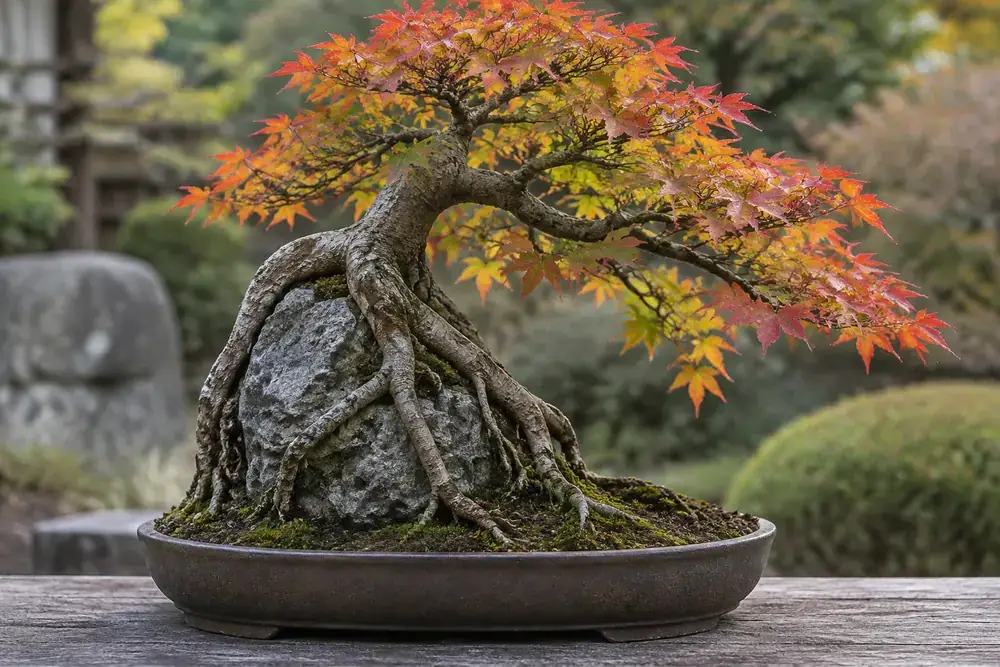
A root over rock bonsai is one of the most dramatic styles in bonsai. The tree’s roots wrap over a stone and grip it tightly before plunging into the soil below, like a tree clinging to a cliff or growing over a boulder in the mountains. In Japanese the style is called sekijoju. It takes a few years to develop, but the steps are simple, and the result is a bonsai full of age and character.
This guide covers the best trees and rocks to use, how to grow long roots, how to attach them to the rock and how to care for the tree as the roots develop.
What is root over rock bonsai?
In root over rock, the tree sits on top of or against a rock, and its roots run over the surface of the stone and down into the soil in the pot. Over time, the roots thicken, grow bark and fuse tightly to the rock’s shape. It is different from clinging-to-a-rock style (ishitsuki), where the tree grows entirely on the rock in pockets of soil without reaching the pot. Our guide to types of bonsai shows how these styles compare.
Best trees for root over rock
The ideal tree grows strong, long roots quickly and thickens them readily.
| Tree | Why it works |
|---|---|
| Trident maple | The classic choice. Fast, thick roots that fuse to rock |
| Ficus | Vigorous roots and aerial roots; great indoors |
| Chinese elm | Fast-growing, forgiving |
| Japanese maple | Good, slower than trident |
| Juniper | Possible, but slower to develop thick roots |
| Azalea | Fine roots; works with patience |
Young trees, cuttings or seedlings with long roots are easiest. Our guide to the best trees to make bonsai lists vigorous options. For ficus, our ginseng ficus bonsai styles guide shows how its thick roots can be shown off.
Choosing the rock
- Hard and stable. Granite, basalt, hard sandstone or other stones that do not crumble or dissolve. Avoid soft limestone, which can raise soil pH.
- Interesting shape. Grooves, ridges and cracks give roots natural paths to follow.
- The right size. The rock should balance the tree, typically similar in width to the planned canopy or slightly smaller.
- A stable base so it sits securely in the pot.
Many growers collect rocks themselves (where allowed), or buy them from bonsai suppliers.
How to grow long roots first
Root over rock needs roots long enough to reach from the top of the rock into the soil below. If your tree’s roots are short:
- Plant it in a tall, narrow container such as a deep pot, a plastic pipe or a cut bottle filled with free-draining soil.
- Let it grow freely for one or two seasons. Roots will grow down to the bottom.
- When they are long enough, carefully remove the tree and wash the soil off.
How to create a root over rock bonsai
Step 1: Prepare the tree
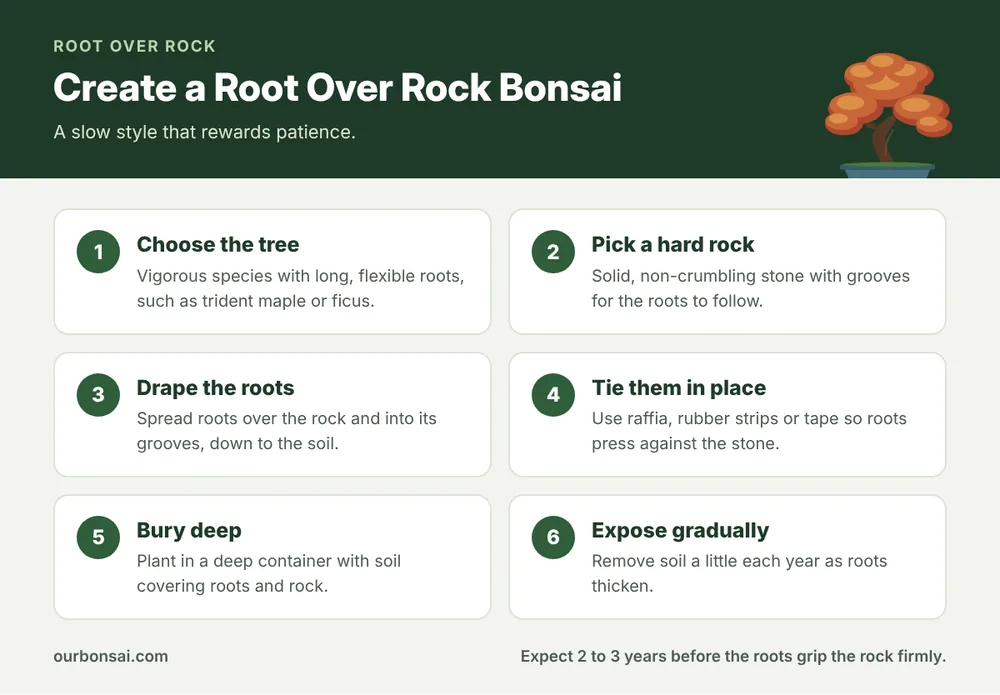
Do this in early spring for temperate trees, or late spring for tropical trees, the same timing as repotting. Wash the soil gently from the roots. Trim any thick, unusable roots, keeping the long ones that will go over the rock.
Step 2: Position the tree on the rock
Sit the tree on the rock where it looks most natural. Spread the roots over the stone, guiding them into grooves and around the sides. Spread them evenly so the rock is gripped from several directions.
Step 3: Tie the roots in place
Wrap the roots and rock firmly with raffia, rubber strips, grafting tape or plastic wrap. Some growers use bonsai wire with protective tubing. The aim is to keep roots pressed tightly against the stone so they grow into its shape.
Step 4: Bury the whole thing
Plant the tree and rock in a deep container, such as a large training pot or a box, and cover the rock and roots completely with soil. Buried roots grow and thicken much faster than exposed ones. A deep training pot such as those in our large deep bonsai pots review works well.
Step 5: Grow it strongly
Give the tree full sun (for sun-loving species), regular water and plenty of fertilizer for one to three growing seasons. Let the top grow freely; vigorous top growth thickens the roots.
Step 6: Expose gradually
After one to two years, start removing a little soil from the top of the rock each year. Exposing roots too quickly can dry them out and kill them. Remove ties once the roots have gripped the rock; check that they are not cutting in. When most of the rock is visible, move the tree into a shallower bonsai pot.
Aftercare during development
- Water carefully; a deep container dries more slowly at the bottom.
- Feed generously in the growing season.
- Check ties each spring and loosen any that are biting into the roots.
- Protect exposed roots from frost in winter, as they are more vulnerable than buried ones.
- Use a free-draining soil. Our guide to bonsai soil mix ratios explains good blends.
Common root over rock mistakes
- Using roots that are too short to reach the soil.
- Choosing a soft, crumbly rock.
- Exposing the roots too early, before they have thickened.
- Leaving ties on so long that they strangle the roots.
- Placing the tree off-balance on the rock so it looks awkward.
Styling the tree above the rock
While the roots develop underground, you can start planning the canopy. Root over rock trees usually look best with a fairly compact crown and a strong, slightly curving trunk that rises from the top of the stone. Think of the rock as part of the trunk’s base: the design should flow from roots, over the rock, up into the branches. Avoid a canopy so large that it hides the rock you worked hard to expose. Many growers prefer informal upright or slanting styles for this reason, and keep the first branch fairly high so the rock remains visible. Light wiring in the first years helps set the basic shape while the tree grows strongly.
FAQ: root over rock bonsai
How long does it take to make a root over rock bonsai?
Usually two to three years before the roots grip the rock firmly, and several more years to refine the tree.
Can I use any rock for root over rock?
Use hard, stable stone. Avoid soft limestone, sharp-edged or crumbly rocks.
What is the easiest tree for root over rock?
Trident maple is the classic and easiest. Ficus is a great choice for indoor growers.
Can I make root over rock with an older tree?
It is harder because old roots are thick and stiff, but you can sometimes use a tree with long, flexible roots, or grow new ones first. The Wikipedia article on bonsai shows root over rock among the traditional styles.
Final thoughts
A root over rock bonsai takes patience, but the steps are simple: grow long roots, drape them over a hard, interesting rock, tie them tightly, bury everything and let the tree grow strongly, then expose the roots little by little. The reward is a tree that tells a story of roots clinging to stone. For a good starting tree, see our Brussel’s trident maple bonsai review, and pick up some grafting tape on Amazon to tie the roots.