Bonsai Sap Leaking: Is It Normal and How to Stop It

Bonsai sap leaking from a cut or wound is usually nothing to worry about. Ficus bleeds milky white latex after every cut, maples drip clear sap if pruned in early spring, and pines and junipers ooze sticky resin to seal their wounds. These are normal defense reactions and stop on their own. Leaking becomes a concern when it appears without a cut, keeps flowing for days, smells sour or foamy, or comes out as amber gum on fruit trees like cherry and plum. Those point to stress, disease or boring insects.
In this guide
This guide explains each type of sap leak and what to do about it.
Why trees leak sap
Sap is the fluid that carries water, sugars and nutrients through the tree. When you cut or injure a branch, some of it escapes. Many trees also produce special fluids to protect wounds: latex in ficus, resin in conifers, gum in stone fruits. These seal the wound, block insects and keep out fungi.
The amount of sap a tree leaks depends on the species, the season and the size of the wound. Spring, when sap is rising fast, is when most trees bleed the most.
Types of sap leaks on bonsai
| What leaks | Common on | Usually means | Action |
|---|---|---|---|
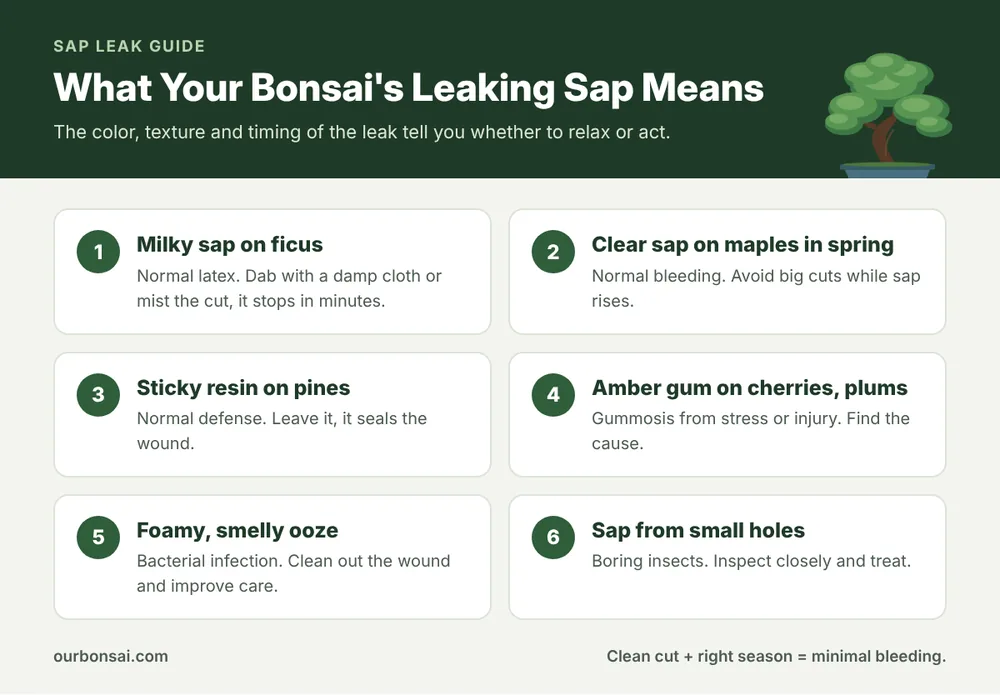
| Milky white latex | Ficus, some euphorbias | Normal reaction to a cut | Dab, mist or let it dry |
| Clear, watery sap | Maples, birch, hornbeam in spring | Pruned while sap is rising | Avoid big spring cuts |
| Sticky, clear to white resin | Pines, junipers, spruce | Normal wound sealing | Leave it alone |
| Amber, jelly-like gum | Cherry, plum, apricot, peach | Gummosis from stress or injury | Find and fix the cause |
| Dark, foamy, sour-smelling ooze | Elms, oaks, many species | Bacterial infection (slime flux) | Clean wound, improve care |
| Sap or frass from tiny holes | Many outdoor trees | Boring insects | Inspect and treat |
Normal sap leaks
Milky latex on ficus
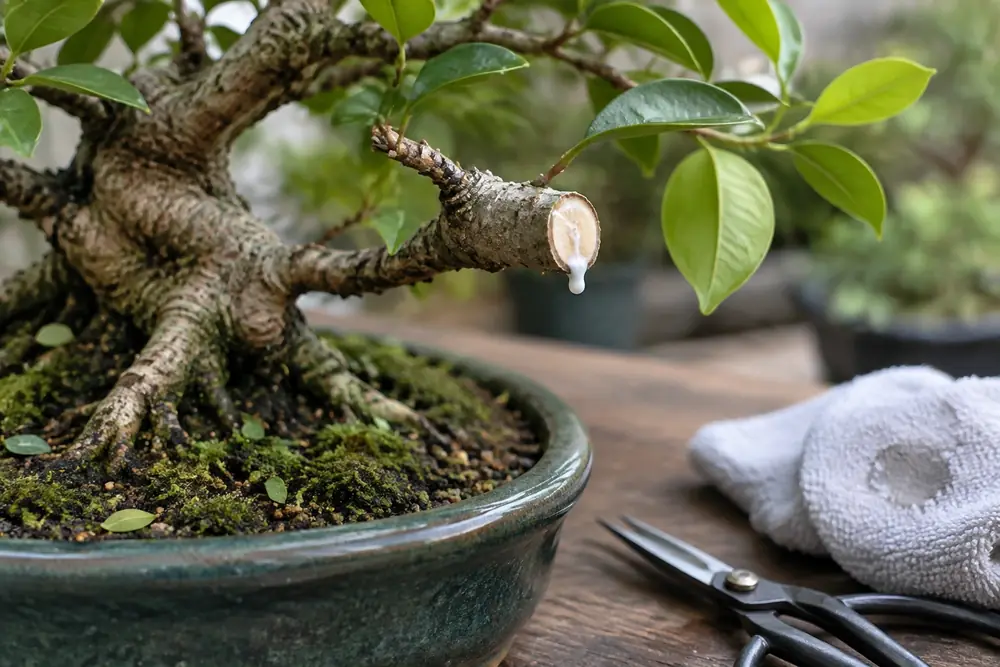
Every ficus bleeds white latex when cut. It is sticky and can irritate skin, so wear gloves if you are sensitive. The flow stops within minutes. To speed it up, dab the cut with a damp cloth, mist it with water or press a little cut paste on it once the flow slows. Our Golden Gate ficus bonsai care guide has more on pruning ficus.
Clear sap on maples in spring
Maples, birches and hornbeams can drip clear sap for hours or even days if cut in late winter or early spring. It looks alarming, but a healthy tree loses only a little energy. To avoid it, do major pruning on maples in late autumn or after the leaves have fully hardened in early summer. Our guide on when to prune deciduous bonsai explains the timing.
Resin on pines and junipers
Conifers ooze resin from cuts and from jins and sharis. Resin seals the wound and protects it. It hardens into a white crust over time. Leave it in place. If it is on a visible spot, you can carefully clean it off with rubbing alcohol once it has done its job.
Sap leaks that need attention
Gummosis on fruit trees
Amber, jelly-like gum oozing from the bark of cherries, plums, apricots and other stone fruit trees is called gummosis. It is a stress response to injury, frost, waterlogged roots, fungal or bacterial canker, or insects. A small amount around a pruning cut is normal. Gum appearing from intact bark, or in large amounts, means you should find the underlying cause. Check watering, look for borers and see our guide to bacterial diseases in bonsai trees.
Bacterial ooze (slime flux)
Dark, foamy, sour or fermented-smelling liquid running down the bark is usually a bacterial infection in the wood. It often starts at an old wound. It is rarely fatal on its own but signals a stressed tree.
Boring insects
Small round holes with sap or sawdust-like frass around them point to boring beetles or moth larvae. These can kill branches. Inspect closely and consider treatment. Our bonsai pests and diseases guide covers common pests.
How to stop sap leaking after pruning
- Prune in the right season. Match timing to the species to reduce bleeding.
- Use sharp, clean tools. Clean cuts seal faster than torn ones. See our bonsai cutting tool reviews.
- Dab or mist the cut. For ficus, water helps the latex coagulate.
- Apply cut paste once the flow slows. Our guide to the best bonsai cut paste alternative lists options.
- Leave resin alone on conifers.
- Make big cuts in stages. Removing a large branch in two steps, first leaving a stub, then cutting the stub later, reduces bleeding and dieback.
How to treat a problem leak
- Clean the area. Wash away gum or ooze with water.
- Inspect the bark. Look for holes, cracks, sunken patches or soft wood.
- Remove dead tissue. Cut away dead, discolored bark and wood with a clean knife back to healthy tissue.
- Seal the wound with cut paste.
- Fix the cause. Improve drainage, protect from frost, treat pests and keep the tree healthy with good light and balanced feeding.
- Disinfect your tools between cuts and trees.
Preventing sap problems
- Learn the right pruning season for each species.
- Keep tools sharp and clean.
- Seal large cuts.
- Avoid wounding the bark with wire or rough handling.
- Water by need so roots never sit wet for long.
- Protect fruit trees from hard frost and drying wind.
Common mistakes
- Panicking about ficus latex. It is normal and stops on its own.
- Pruning maples hard in early spring. They will bleed heavily.
- Scraping fresh resin off pines. It is protecting the wound.
- Ignoring gum on fruit trees. It is a sign the tree is stressed.
FAQ: bonsai sap leaking
Is it normal for my bonsai to leak sap after pruning?
Yes, for most species. Ficus, maples and conifers all leak sap, latex or resin from fresh cuts. It stops as the wound seals.
How do I stop my ficus bonsai from bleeding white sap?
Dab the cut with a damp cloth or mist it with water. The latex coagulates within minutes. Then seal larger cuts with cut paste.
Why is my cherry bonsai leaking amber gum?
That is gummosis, a stress response to injury, frost, wet roots, disease or insects. Find and fix the underlying cause.
Is bonsai sap harmful to people?
Ficus latex can irritate sensitive skin and is toxic to pets if eaten. Wear gloves and keep cuttings away from animals. Our guide on whether bonsai trees are poisonous to cats and dogs has more.
Should I seal every pruning cut to stop sap?
No. Small cuts on healthy trees seal themselves. Use cut paste on cuts wider than a pencil, on species that bleed heavily, and on trees prone to dieback.
Can heavy sap loss kill a bonsai?
Rarely. Even a maple that bleeds for a day after a spring cut usually recovers fully. The bigger risk is the wound itself letting in infection, which is why clean cuts and sealing matter.
Final thoughts
Bonsai sap leaking is usually just a tree sealing a fresh wound. Ficus latex, maple sap in spring and pine resin are all normal. Watch for amber gum on fruit trees, foamy ooze or sap coming from small holes, which signal stress, infection or insects. Prune in the right season with clean tools, seal larger cuts and keep the tree healthy, and sap leaks will rarely be a problem. For general care, see our main bonsai care guide.