Is My Pomegranate Bonsai Dying? Signs and How to Save It

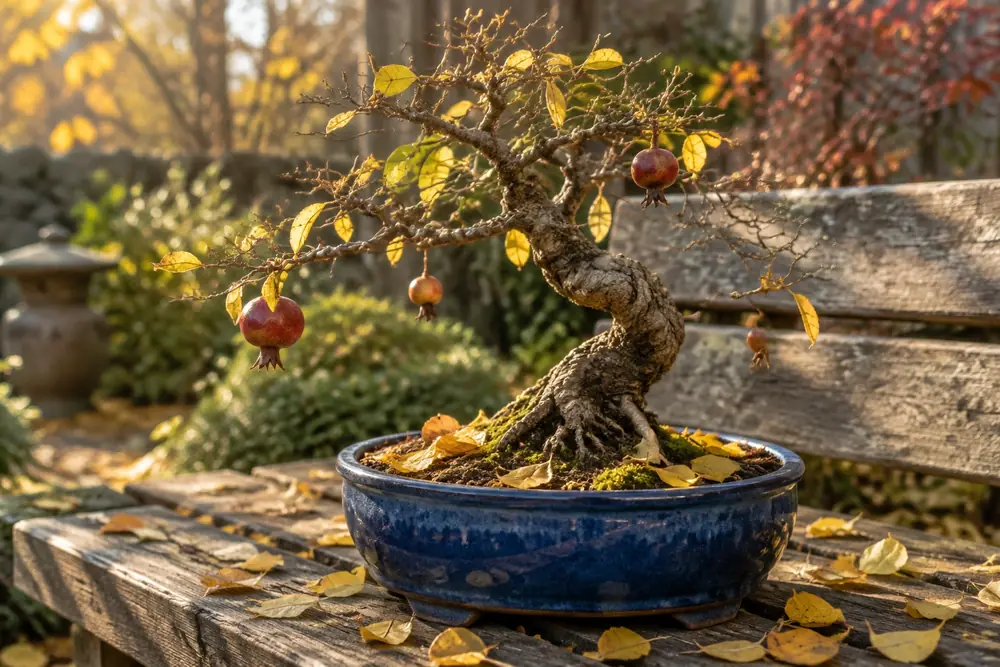
A pomegranate bonsai dying can be hard to spot correctly, because a healthy pomegranate also looks dead every winter. Most pomegranates are deciduous: their leaves turn yellow and fall in autumn, and the tree stays bare until spring. That is normal dormancy, not decline. Real trouble shows as leaves wilting or browning in the growing season, flowers and fruit dropping, bare branches that are brown under the bark, or no buds opening in spring. The usual causes are wet roots, frozen roots in winter, drought in summer and, for indoor trees, too little light.
In this guide
This guide helps you tell dormancy from decline and shows you how to save a struggling tree.
Dormant or dying?
The pomegranate (Punica granatum) sheds its leaves in autumn in most climates. The Wikipedia article on pomegranate notes that some dwarf and tropical types are semi-evergreen in warm conditions, but most bonsai pomegranates go fully bare in winter.
| Dormant (normal) | Dying (problem) |
|---|---|
| Leaves turn yellow and fall in autumn | Leaves brown, curl or drop in spring or summer |
| Bare branches flexible, green under bark | Branches brittle, brown under bark |
| Buds firm and plump through winter | Buds shriveled or soft |
| New leaves open in spring | No buds open by late spring |
| Soil moisture normal | Soil soggy for weeks, or bone dry |
If it is autumn or winter and the branches are green under the bark, your pomegranate is resting. Water sparingly, protect the roots from hard frost and wait for spring. Our pomegranate bonsai winter care guide explains how.
The scratch test
Gently scrape a small spot of bark with your fingernail on the trunk and several branches.
- Green and moist: alive.
- Brown and dry: dead at that point.
Test from the tips inward. Often only the outer twigs have died, and the tree is alive lower down.
Common reasons a pomegranate bonsai dies
1. Overwatering and root rot
Pomegranates need plenty of water in summer, but much less when leafless in winter. Keeping the summer routine into the cold months, or using dense soil that stays wet, rots the roots. Signs include yellowing in the growing season, a sour smell and soft roots. See our guide to root rot in bonsai.
2. Frozen roots
Pomegranate branches tolerate some frost, but roots in a small pot freeze much more easily than roots in the ground. A pot that freezes solid for days can kill the roots, and you only find out in spring when no buds open. Protect pots in hard winters by setting them on the ground, surrounding them with mulch or moving them into an unheated, frost-free shed. If your tree spends winter inside, our guide to watering indoor bonsai in winter helps you avoid the opposite problem of soggy roots.
3. Drought in summer
A flowering, fruiting pomegranate in a shallow pot can dry out in an afternoon. Flowers and fruit drop first, then leaves crisp. Repeated drought weakens the tree.
4. Too little light
Pomegranates need full sun to grow and flower well. Kept indoors in a dim room, they become leggy, drop leaves and slowly decline. Our guide on how much light a bonsai tree needs explains why. A grow light for bonsai helps indoor trees.
5. Pests
Aphids, whiteflies and mealybugs love the soft new shoots of pomegranates. Heavy infestations weaken the tree and spread sooty mold. See our guides to aphids on bonsai trees and whiteflies on bonsai trees.
6. Too much stress at once
Heavy pruning, repotting and defoliation in the same season can exhaust even a vigorous pomegranate. Spread big jobs out.
How to save a dying pomegranate bonsai step by step
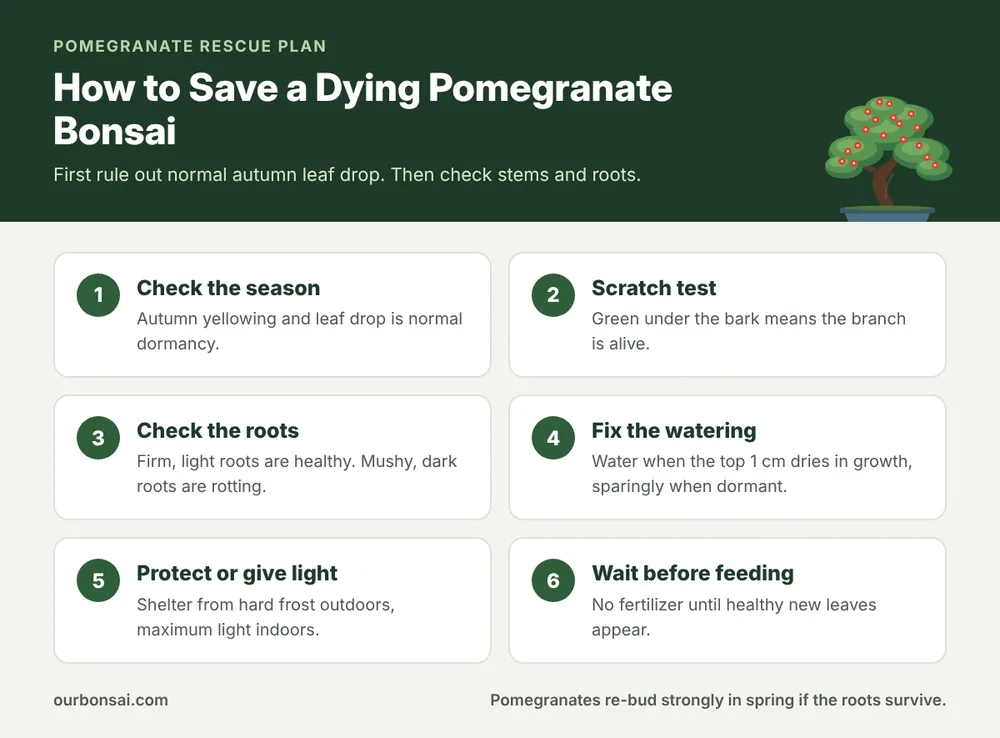
- Confirm it is not just dormant. Check the season and do the scratch test.
- Check the roots. Slide the tree out of its pot. Trim dark, mushy roots back to firm tissue with clean scissors.
- Repot if needed. If roots were rotting, repot into fresh, gritty bonsai soil, ideally in spring. Our bonsai soil mix ratio guide explains a good mix.
- Fix the watering. In the growing season, water when the top centimeter dries. In winter, water only enough to keep the roots from drying out.
- Give it light and warmth in the growing season. Full sun outdoors from spring to autumn.
- Protect it in winter. Shelter the pot from hard frost, or move it to an unheated, frost-free space.
- Treat pests if you found any.
- Hold off on fertilizer until healthy new leaves appear.
- Remove dead wood once new growth shows which parts are alive.
How long does recovery take?
If the cause was water or pests in the growing season, new buds often appear within three to six weeks. If roots were damaged in winter, you will not know the full picture until spring. Pomegranates are vigorous and often re-bud strongly from the trunk and lower branches even when the upper branches died. Those new shoots can be used to rebuild the tree.
Preventing problems
- Use free-draining soil and water by need.
- Water generously in summer, sparingly in winter.
- Keep the tree outdoors in full sun in the growing season.
- Protect roots from hard frost.
- Inspect new shoots for aphids and whiteflies.
- Spread repotting, heavy pruning and other stressful jobs across different years.
Common mistakes when trying to save a pomegranate
- Throwing out a bare tree in winter. Leafless is normal. Do the scratch test first.
- Watering a dormant tree like a summer tree. Wet, cold soil is the main winter killer.
- Bringing it into a warm living room for winter. It may push weak, pale shoots that collapse, then struggle in spring.
- Cutting off branches too early. Wait until spring growth shows what is alive.
- Feeding a struggling tree. Fertilizer salts burn damaged roots.
- Repotting in autumn. Roots grow slowly in cold soil. Spring is best for pomegranates.
What to do with dead branches
Once spring growth is well underway, cut dead branches back to living wood. Small dead stubs can be carved into short jins for character, which suits the twisting, rugged look of old pomegranates. Seal larger cuts with cut paste.
FAQ: pomegranate bonsai dying
Why is my pomegranate bonsai losing its leaves in autumn?
That is normal. Most pomegranates are deciduous and drop their leaves for winter. Check that the branches are green under the bark.
How do I know if my pomegranate bonsai is dead?
If the branches are brittle and brown under the bark all the way to the trunk, and no buds open by late spring, it is likely dead.
Can a pomegranate bonsai recover from root rot?
Yes, if enough healthy roots remain. Trim the rotten roots, repot into gritty soil and water carefully.
Can I keep a pomegranate bonsai indoors in winter?
You can, in a cool, bright, frost-free spot. A warm, dim room leads to weak growth. Outdoors with root protection is often better.
Why did my pomegranate bonsai not leaf out in spring?
Most often the roots froze or rotted over winter. Check the roots and do the scratch test from the tips down to find any living tissue.
Final thoughts
Before deciding your pomegranate bonsai is dying, rule out normal winter dormancy. If it really is struggling, check the stems and roots, fix the watering, give it full sun in the growing season and protect the roots from hard frost. Pomegranates are tough and vigorous, and most recover well once the cause is removed.