Is My Boxwood Bonsai Dying? Signs and How to Save It

This post contains affiliate links. As an Amazon Associate, OurBonsai earns from qualifying purchases at no extra cost to you. Read our disclosure.
In this guide
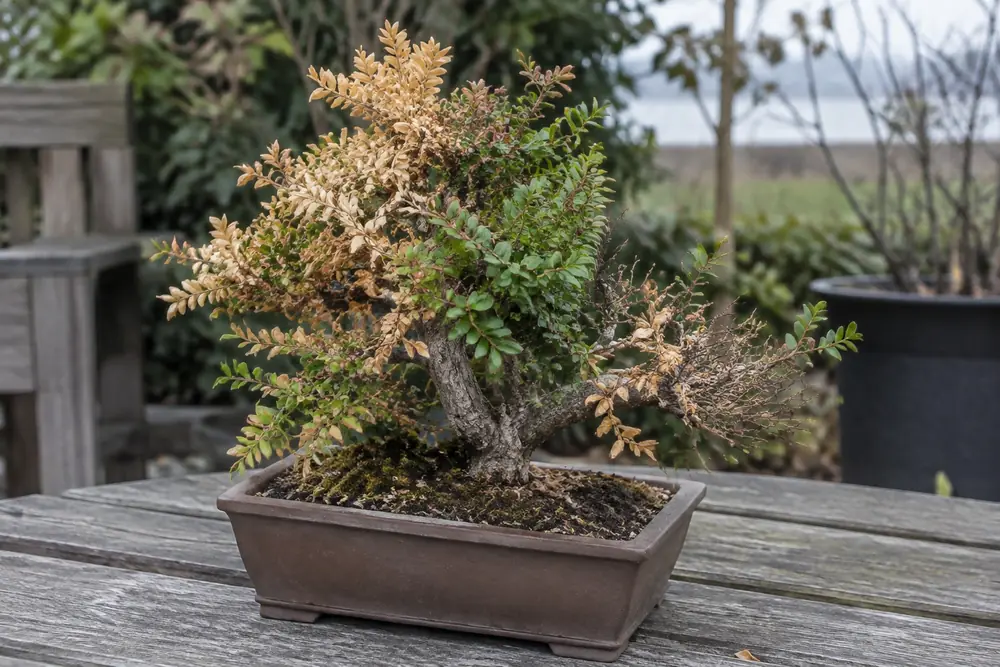
A boxwood bonsai dying is usually suffering from one of a few problems: roots rotting in wet soil, box blight, a dried-out root ball, winter damage or, for indoor trees, too little light. Boxwood (Buxus) is one of the toughest bonsai species and buds back well from old wood, so even a tree with large bare patches can often be saved if the roots and trunk are still alive. The key is to diagnose the cause quickly, because some of these problems, especially blight and root rot, move fast.
This guide helps you tell whether your boxwood is dying or just stressed, explains the common causes and gives a step-by-step rescue plan.
Stressed or dying?
Usually stress, recoverable:
- Some yellow or orange leaves in winter (winter bronzing)
- A few old inner leaves yellowing and dropping in spring
- Leaves dull and curling after a hot, dry day
- Twigs flexible and green under the bark
Serious, act now:
- Whole shoots turning straw-colored or brown
- Dark brown leaf spots and black streaks on young stems
- Soil that smells sour and stays wet
- Roots that are dark, soft and fall apart
- Bark peeling or soft at the base of the trunk
- No green under the bark anywhere
How to check if your boxwood is alive
Scratch test
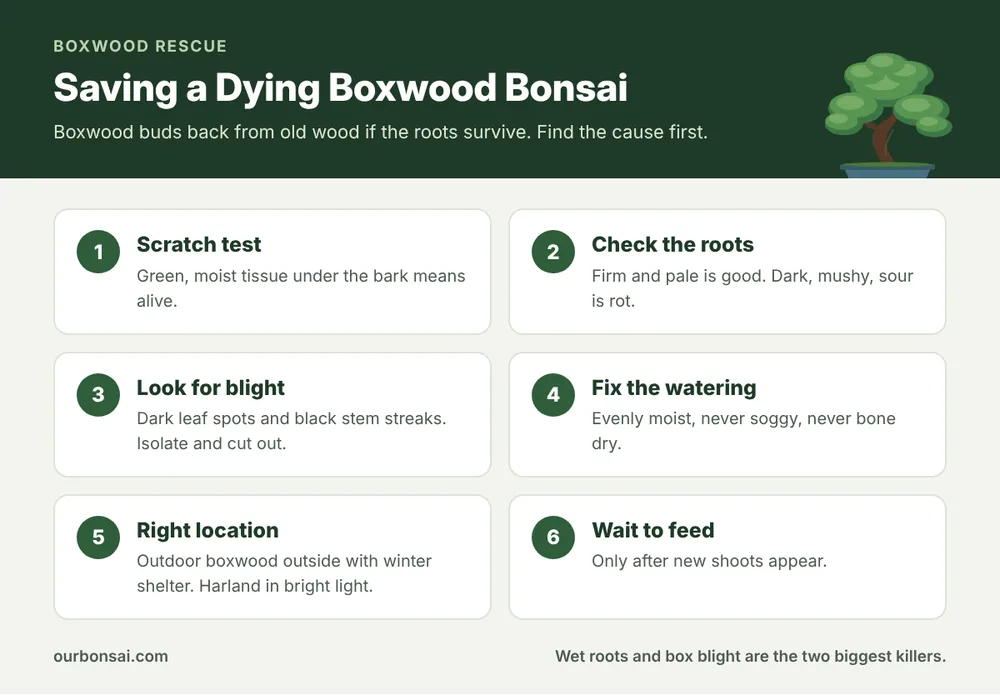
Gently scratch a small patch of bark on a twig with your fingernail. Green and moist means alive. Brown and dry means that part is dead. Work back toward the trunk until you find green.
Root check
Ease the tree out of the pot. Healthy boxwood roots are fine, fibrous and light colored. Rotting roots are dark, soft and often smell sour. The bark on the lower trunk may also be discolored if root rot has spread.
6 reasons a boxwood bonsai is dying
1. Root rot
Boxwood is very prone to root rot, including Phytophthora, in wet, poorly drained soil. Foliage turns pale, then straw-colored, often starting on one side, and the tree declines over weeks.
Fix: remove the tree from the pot, cut away rotten roots to firm tissue and repot into a gritty, fast-draining mix. Our guide to root rot in bonsai explains each step, and our bonsai soil mix ratio guide helps you build the right soil.
2. Box blight
A fungal disease that causes dark brown leaf spots, black streaks on young stems and rapid leaf drop, leaving bare patches. It spreads in warm, humid weather and on wet foliage. The RHS box blight guide shows the symptoms clearly.
Fix: isolate the tree from other boxwood. Cut out all affected shoots into healthy wood in dry weather, cleaning your tools between cuts. Collect every fallen leaf and clipping. Water the soil, not the foliage, and thin the canopy for airflow. Fungicides labeled for box blight can help protect new growth.
3. Drought
A small pot can dry out completely in summer heat. Leaves dull, curl and turn brown, and fine roots die.
Fix: soak the pot in a basin for ten minutes, let it drain and check the soil daily, twice in heat waves. Our guide to watering bonsai in summer has more tips.
4. Winter damage
Hardy in the ground, boxwood is more vulnerable in a pot. Hard freezes can kill roots, and cold, drying wind can desiccate leaves while the soil is frozen, causing heavy bronzing and dieback.
Fix: in winter, place the pot on the ground in a sheltered spot, mulch around it or move it to an unheated shed or garage with some light. Keep it out of strong wind.
5. Low light (indoor boxwood)
Japanese and common boxwood kept indoors will decline. Even the indoor-friendly Harland boxwood needs bright light. In dim rooms, leaves drop from the inside out and the tree weakens.
Fix: move outdoor species outside. Give Harland boxwood the brightest window or a grow light. Our Brussel’s Harland boxwood bonsai review covers its needs.
6. Pests
Boxwood leafminer, boxwood mites, psyllids and, in parts of Europe, box tree caterpillars can severely weaken a tree. Caterpillars can strip a boxwood in days.
Fix: inspect leaves and inner branches. Remove caterpillars by hand, hose off mites and remove blistered leaves with leafminer larvae. Our guide to how to treat bonsai pests step by step explains treatments.
How to save a dying boxwood bonsai
- Diagnose. Scratch test, roots, leaves and stems.
- Isolate it if you suspect blight or pests.
- Fix the roots if needed. Repot only if roots are rotting.
- Cut out dead and diseased wood with sterilized tools, in dry weather.
- Fix the watering. Evenly moist, never soggy, never bone dry.
- Place it correctly. Outdoors in bright light with some afternoon shade for outdoor species; brightest indoor spot for Harland boxwood.
- Do not fertilize until new shoots appear, then feed at half strength.
- Be patient. New buds can take four to eight weeks.
Recovery timeline
| Time | What to expect |
|---|---|
| 1 to 2 weeks | Decline slows, no new dieback |
| 4 to 8 weeks | Small buds appear on branches and sometimes on bare wood |
| 2 to 3 months | New shoots extend and fill gaps |
| Next season | Canopy fills in, ready for light shaping |
Boxwood is slow to fill large gaps, but it does buds back from old wood. Thinning the remaining foliage lets light reach the bare areas and encourages new buds there.
When to give up
If, after several weeks in good conditions during the growing season, the scratch test finds no green on any branch or at the base of the trunk, and the roots are dark and rotten throughout, the tree has most likely died. Before you throw it away, check the very base of the trunk just above the soil. Boxwood occasionally sends up new shoots from the base even when most of the top has died, and those shoots can be grown into a new tree.
If the tree died from box blight, do not reuse the soil, and clean the pot thoroughly with a disinfectant before using it again. Clean your tools and keep any new boxwood away from that area for a while, because the fungus can survive in fallen leaves for years.
Preventing problems next year
- Use gritty, fast-draining soil
- Check the soil daily and water when the top is just dry
- Water the soil, not the leaves, and water in the morning
- Thin the canopy every year for light and airflow
- Clean tools before pruning
- Shelter outdoor boxwood from winter wind and protect the roots from hard frost
- Inspect leaves and inner branches every few weeks
For styling ideas once your tree is healthy again, our boxwood bonsai styles guide shows open, airy designs that also help prevent disease. A simple pump sprayer makes it easier to apply treatments evenly if you need them.
FAQ: boxwood bonsai dying
Why is my boxwood bonsai turning brown?
Most often root rot, box blight or drought. Check the soil and roots, then look closely at the leaves and stems for spots and black streaks.
Can a boxwood bonsai recover from box blight?
Often yes, if you act early. Cut out affected shoots, clear fallen leaves, improve airflow and keep the foliage dry.
Why is my boxwood bonsai turning orange in winter?
Usually winter bronzing from cold wind and sun. Move it to a sheltered spot. It normally greens up in spring.
Will a boxwood regrow from bare branches?
Yes. Boxwood buds back from old wood if the branch is alive. Give it light and time.
Final thoughts
A boxwood bonsai dying is usually fighting wet roots, blight, drought or winter damage. Use the scratch test and check the roots, act quickly on blight, fix the watering and keep the tree in the right place. Boxwood is resilient and will often fill back in over a season or two. For a general rescue plan for any species, see our main bonsai care guide.