Ginkgo Bonsai Yellow Leaves: Normal Autumn Color or a Problem?

This post contains affiliate links. As an Amazon Associate, OurBonsai earns from qualifying purchases at no extra cost to you. Read our disclosure.
In this guide
- Autumn yellow: completely normal
- When yellow leaves are a problem
- Causes of ginkgo bonsai yellow leaves outside autumn
- Early or patchy autumn color
- What good autumn color tells you
- Should I remove yellow leaves from my ginkgo?
- How to keep ginkgo leaves green in summer
- FAQ: ginkgo bonsai yellow leaves
- Final thoughts
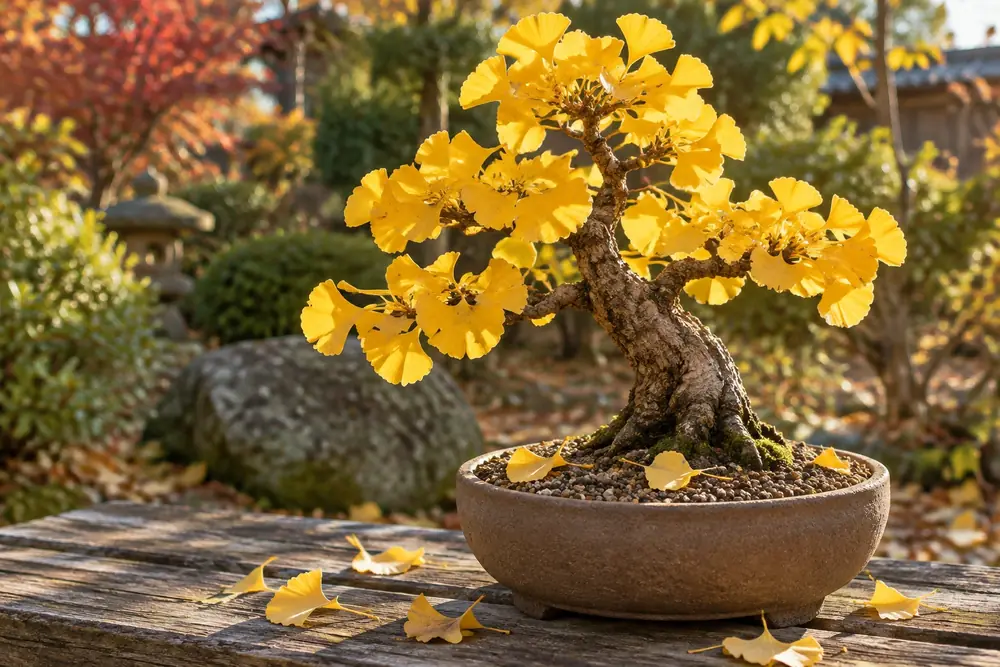
Ginkgo bonsai yellow leaves can be the best moment of the year or a warning sign, and the season tells you which. In autumn, ginkgo (Ginkgo biloba) turns a brilliant, even butter-yellow and then drops all its leaves within a week or two. That is one of the most beautiful sights in bonsai, and completely normal. Yellow leaves in spring or summer, on the other hand, usually point to a problem with water, roots, nutrition or light.
This guide explains how to tell normal autumn color from trouble, the main causes of yellowing outside autumn, and how to fix each one.
Autumn yellow: completely normal
Each autumn, as days shorten and temperatures fall, ginkgo breaks down the green chlorophyll in its leaves, revealing the yellow pigments underneath. The whole tree turns gold at once, and then the leaves often fall within a few days, sometimes almost all on the same day. The Wikipedia page on Ginkgo biloba describes this famously synchronized leaf drop.
A healthy autumn change looks like this:
- It happens in mid to late autumn, after the first cool nights.
- The color is even and bright across the whole tree.
- Leaves fall soon after turning.
- Buds for next year are firm and plump.
If that is what you see, there is nothing to fix. Clear the fallen leaves from the soil and let the tree rest outdoors for winter.
When yellow leaves are a problem
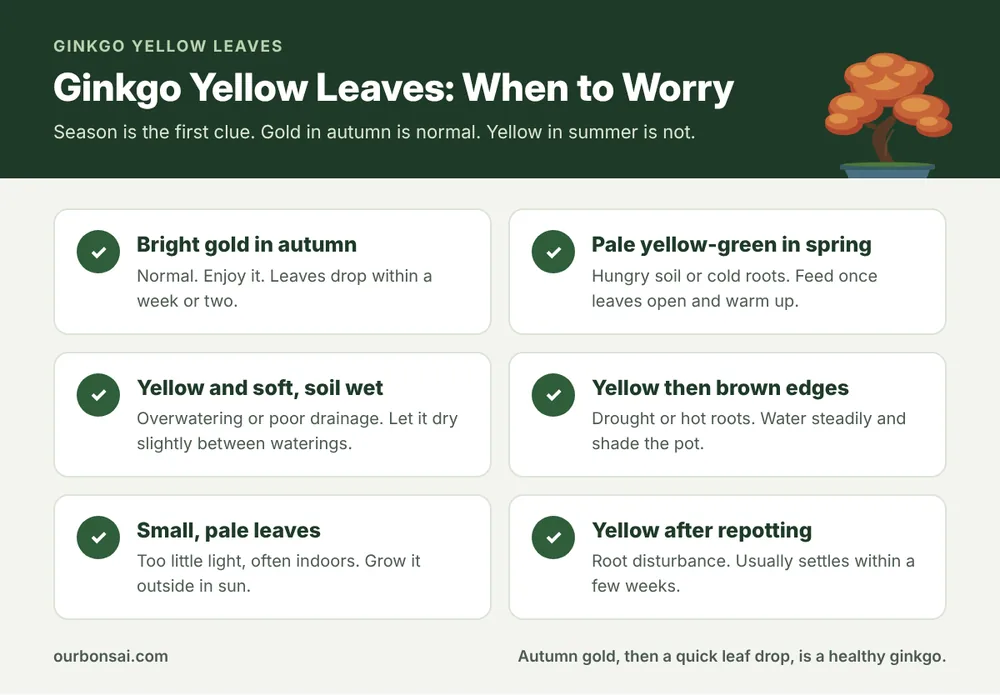
| When | What it looks like | Likely cause |
|---|---|---|
| Spring | Leaves open pale yellow-green | Hungry soil, cold roots, root damage |
| Summer | Leaves yellow and drop, soil wet | Overwatering, root rot |
| Summer | Yellow then brown, crispy edges | Drought, hot roots |
| Any time | Small, pale, thin leaves | Too little light |
| After repotting | Some leaves yellowing | Root disturbance |
| Early autumn, patchy | Some branches yellow early | Stress, root loss on one side |
Causes of ginkgo bonsai yellow leaves outside autumn
1. Overwatering and poor drainage
Ginkgo roots are thick and fleshy and rot quickly in soil that stays wet. Leaves turn a soft, dull yellow in summer and drop early. The soil may smell sour or grow algae.
Fix: water only when the top centimeter of soil starts to dry, remove any saucer, and repot into a gritty mix of akadama, pumice and lava in early spring. Our guide to root rot in bonsai explains how to check and treat damaged roots.
2. Drought and hot roots
On hot days, a small pot can dry out or heat up enough to damage roots. Leaves yellow, then the edges turn brown and crispy, often first on the sunniest side.
Fix: check the soil every morning in summer and again in the afternoon during heat waves. Shade the pot from strong afternoon sun. Our article on watering bonsai in summer has practical tips.
3. Hungry soil
Bonsai soil holds few nutrients. A ginkgo that has not been fed may open pale yellow-green leaves in spring and grow weakly. Yellowing between darker veins is a sign of chlorosis, usually from a shortage of nitrogen or iron.
Fix: feed with an organic or balanced fertilizer from spring, once leaves have opened, to late summer. Our guide to the best bonsai plant food covers suitable options, or browse organic bonsai fertilizer cakes.
4. Too little light
Ginkgo is an outdoor tree that likes full sun or light shade in the hottest part of the day. Indoors or in deep shade, it produces small, pale, yellowish leaves and weak shoots.
Fix: grow it outdoors all year. Our guide to types of outdoor bonsai trees explains why ginkgo belongs outside.
5. Cold roots in spring
A late frost or very cold, wet soil in early spring can damage new roots, and the first leaves may come out pale. They usually green up as the weather warms.
Fix: protect the pot from hard late frosts and avoid watering heavily on cold days.
6. Repotting stress
Some yellowing in the weeks after repotting is common because the tree has lost roots. Keep it out of strong sun and wind, keep the soil evenly moist and do not feed for a month.
Early or patchy autumn color
Sometimes a ginkgo turns yellow in late summer or early autumn, weeks before other trees, or only on some branches. Early, patchy yellowing is usually a sign that the tree was stressed during summer. Common reasons are a few days of drought, roots that overheated in a dark pot, or root loss on one side of the pot. The tree shuts down those leaves early to save water.
On its own, an early autumn is not a disaster, but it tells you to look at your summer routine. Check that the pot does not dry out on hot afternoons, that the soil drains well and that the pot is shaded in the hottest part of the day. If only one side yellowed early, check the roots on that side at the next spring repotting.
What good autumn color tells you
A healthy ginkgo usually gives the brightest, most even gold. A tree that turns dull, brownish yellow, or drops its leaves while still green, has often been stressed. In that sense, autumn color is a useful end-of-year report card. Note what you saw, and adjust watering, feeding and summer shade for the following year.
Should I remove yellow leaves from my ginkgo?
In autumn, no need; they will fall by themselves. Just clear them off the soil so they do not keep it damp. In summer, you can remove fully yellow or brown leaves to keep the tree tidy, but focus on fixing the cause. Do not strip healthy leaves, because ginkgo often does not produce a second set in the same season.
How to keep ginkgo leaves green in summer
- Grow it outdoors in sun with light afternoon shade in hot climates.
- Use a gritty, free-draining soil; our bonsai soil mix ratio guide shows how to build one.
- Water by checking the soil every day in the growing season.
- Shade the pot in heat waves.
- Feed regularly from spring to late summer.
- Repot only in early spring, and not every year.
FAQ: ginkgo bonsai yellow leaves
Why did my ginkgo bonsai turn yellow all at once?
If it is autumn, that is ginkgo’s normal, famously sudden color change before leaf drop.
Why are my ginkgo leaves yellow in summer?
Usually wet roots, drought, hungry soil or too little light. Check the soil moisture first.
Will yellow ginkgo leaves turn green again?
No. In summer, focus on fixing the cause so the remaining and future leaves stay green.
When does a ginkgo bonsai lose its leaves?
In mid to late autumn, shortly after turning gold. New leaves appear the following spring.
Final thoughts
Ginkgo bonsai yellow leaves are a celebration in autumn and a warning in spring or summer. Check the season first, then the soil, the light and your feeding. Fix the cause, and your ginkgo will stay fresh green all summer before putting on its golden autumn show.