Best Live Bonsai Trees on Amazon: 10 Picks by Species

As an Amazon Associate we earn from qualifying purchases. See our affiliate disclosure.
In this guide
- Our Top Picks at a Glance
- 1. Brussel’s Golden Gate Ficus, Small (Best Overall)
- 2. Brussel’s Chinese Elm, Medium (Best Outdoor Beginner Tree)
- 3. Brussel’s Dwarf Jade, Large (Easiest Care)
- 4. Brussel’s Green Mound Juniper, Large (Best Classic Juniper)
- 5. Brussel’s Satsuki Azalea, Small (Best Flowering)
- 6. Brussel’s Trident Maple, Medium (Best for Styling)
- 7. Brussel’s Brazilian Rain Tree, Medium (Most Unusual Indoor Tree)
- 8. Brussel’s Jaboticaba (Best Bark and Fruit)
- 9. Brussel’s Harland Boxwood (Oldest Tree Under the Specimen Tier)
- 10. 15+ Year Dwarf Juniper with Bamboo Stand (Best Mature Gift Tree)
- Also Worth a Look
- Who Actually Sells Live Bonsai on Amazon?
- How to Choose a Live Bonsai Online
- Frequently Asked Questions
- Final Verdict
Quick answer: the best live bonsai tree on Amazon for most buyers is the Brussel’s Golden Gate Ficus, a nursery-grown 4-year-old indoor tree that ships potted with a humidity tray. For an outdoor tree, choose the Brussel’s Medium Chinese Elm. If you want something a step up from the usual beginner species, the Brussel’s Brazilian Rain Tree folds its leaves at night and is the most interesting indoor bonsai we found.
Amazon is a perfectly good place to buy a live bonsai, with one condition: buy from a nursery that grows the trees, not from a reseller. Most of the trees below come from Brussel’s Bonsai in Mississippi, the largest bonsai nursery in the US, which ships from its own greenhouses and states the species, age and height on every listing. We compared ten trees across the species that do best for home growers. Listings were checked on November 1, 2026; stock and prices change often. We have not grown these specific trees, so the notes come from the listings and from general knowledge of each species.
Our Top Picks at a Glance
| Tree | Indoor/Outdoor | Age and size (per listing) | Best for |
|---|---|---|---|
| Brussel’s Golden Gate Ficus (Small) | Indoor | 4 yrs, 5-8 in | Best overall |
| Brussel’s Chinese Elm (Medium) | Outdoor | Medium size | Best outdoor beginner tree |
| Brussel’s Dwarf Jade (Large) | Indoor | 6 yrs, 10-14 in | Easiest care |
| Brussel’s Green Mound Juniper (Large) | Outdoor | 7 yrs, 14-18 in | Best classic juniper |
| Brussel’s Satsuki Azalea (Small) | Outdoor | 4-5 yrs, 5-8 in | Best flowering |
| Brussel’s Trident Maple (Medium) | Outdoor | 5 yrs, 8-12 in | Best for styling |
| Brussel’s Brazilian Rain Tree (Medium) | Indoor | 5 yrs, 10-14 in | Most unusual indoor tree |
| Brussel’s Jaboticaba | Indoor | 6 yrs, 8-10 in | Best bark and fruit |
| Brussel’s Harland Boxwood | Outdoor | 8 yrs, 10-14 in | Oldest tree under the top price tier |
| 15+ Year Dwarf Juniper with Bamboo Stand | Outdoor | 15+ yrs (per listing) | Best mature gift tree |
1. Brussel’s Golden Gate Ficus, Small (Best Overall)
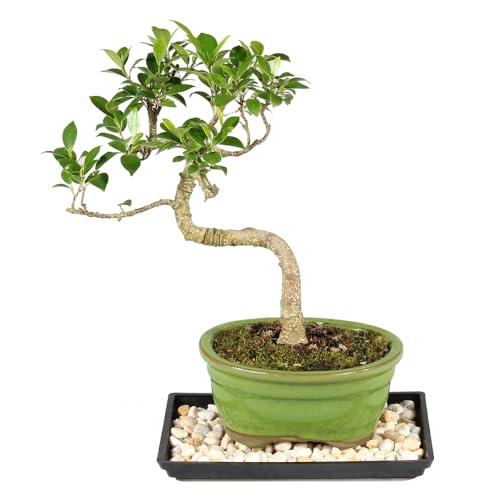
| Species | Ficus microcarpa |
|---|---|
| Age / height | 4 years, 5 to 8 in |
| Where it lives | Indoors, bright light |
| In the box | Ceramic pot, humidity tray |
| Ships from | Mississippi; not to AK or HI |
The Golden Gate ficus is the tree we recommend to almost everyone buying their first bonsai online. Ficus microcarpa tolerates dry indoor air, bounces back from missed waterings and buds freely after pruning. Brussel’s ships it in a ceramic bonsai pot on a humidity tray, so it is ready to display the day it arrives.
Expect a few yellow leaves in the first fortnight; that is transit stress, not a sick tree. See our Golden Gate ficus review for the full care routine, and the species care guide.
Pros
- Forgiving indoor species
- Pot and tray included
- Named species, age and size on the listing
Cons
- Small at 5 to 8 inches
- Some leaf drop after shipping
Best for: first-time buyers who want an indoor tree that survives.
2. Brussel’s Chinese Elm, Medium (Best Outdoor Beginner Tree)

| Species | Ulmus parvifolia |
|---|---|
| Size | Medium (see listing for current height) |
| Where it lives | Outdoors; tolerates a cool bright room in winter |
| In the box | Ceramic pot, care guide |
Chinese elm is the best outdoor species to learn on. It has small leaves, fine ramification, a trunk that thickens quickly and an easy-going attitude to pruning. The medium Brussel’s tree gives you more trunk and branch structure to work with than the small version. Read our review of Brussel's Chinese elm and the care guide before it arrives.
It is semi-deciduous: in a cold climate it drops its leaves in autumn and regrows them in spring. That is normal and not a sign of trouble.
Pros
- Best species for learning pruning
- More tolerant of placement than juniper
- Grown by a specialist nursery
Cons
- Needs to live outdoors most of the year
- Autumn leaf drop alarms new owners
Best for: anyone with a balcony or garden.
3. Brussel’s Dwarf Jade, Large (Easiest Care)

| Species | Portulacaria afra |
|---|---|
| Age / height | 6 years, 10 to 14 in |
| Where it lives | Indoors, sunny window |
| In the box | Bonsai pot, humidity tray |
Dwarf jade is a succulent, which makes it the most forgiving bonsai you can buy. The large Brussel’s tree is six years old and 10 to 14 inches tall with a woody trunk, which is a lot of tree for an indoor species. Portulacaria afra wants bright light, very free-draining soil and infrequent, thorough watering.
It grows quickly in summer and takes hard pruning well, so it is also a good tree to learn clip-and-grow styling on. Our dwarf jade review has more.
Pros
- Nearly impossible to kill by neglect
- Large size for an indoor tree
- Fast summer growth
Cons
- Overwatering is fatal
- Soft wood does not hold wire well
Best for: busy people and anyone who has lost a bonsai before.
4. Brussel’s Green Mound Juniper, Large (Best Classic Juniper)

| Species | Juniperus procumbens ‘Nana’ |
|---|---|
| Age / height | 7 years, 14 to 18 in |
| Where it lives | Outdoors only |
| In the box | Pot, care guide |
If you want the picture-book bonsai, a juniper is it, and the large Brussel’s tree at seven years and 14 to 18 inches has real presence. Green mound juniper is hardy, cheap to grow and wires beautifully, which is why it is the most common bonsai species in the world.
The rule that cannot be broken: it lives outside. Junipers kept indoors stay green for months after they have died. Put it on a sunny patio, protect it from hard freezes and it will thrive. Our green mound juniper review explains the routine.
Pros
- The traditional look
- Seven years old with good size
- Hardy and easy to wire
Cons
- Outdoor only, no exceptions
- Needs winter protection in cold zones
Best for: buyers with outdoor space who want the classic silhouette.
5. Brussel’s Satsuki Azalea, Small (Best Flowering)

| Species | Rhododendron indicum |
|---|---|
| Age / height | 4 to 5 years, 5 to 8 in |
| Where it lives | Outdoors, afternoon shade in summer |
| In the box | Pot, humidity tray |
Satsuki azaleas are the flowering bonsai of Japan, with a late-spring bloom that covers the whole tree. They need acidic, well-draining soil, consistent moisture and shelter from hot sun. In return you get fine branching and weeks of colour. Our satsuki azalea review covers the soil and water details that matter.
Pros
- Spectacular flowers
- Fine branching from a young age
Cons
- Fussier about soil and water than the others
- Outdoor only
Best for: growers who want a flowering tree and will follow the care sheet.
6. Brussel’s Trident Maple, Medium (Best for Styling)

| Species | Acer buergerianum |
|---|---|
| Age / height | 5 years, 8 to 12 in |
| Where it lives | Outdoors, winter dormancy required |
Trident maple is the species serious growers reach for when they want to develop a tree quickly: fast trunk thickening, quick wound healing, strong back-budding and a spreading root base. At five years and 8 to 12 inches it is a genuine styling project. It drops its leaves in autumn and needs cold winter rest. See our trident maple review.
Pros
- Fastest species to develop
- Excellent autumn colour
Cons
- Bare in winter
- Must be outdoors
Best for: hobbyists who want to prune, wire and grow a tree over years.
7. Brussel’s Brazilian Rain Tree, Medium (Most Unusual Indoor Tree)

| Species | Chloroleucon tortum (Brazilian rain tree) |
|---|---|
| Age / height | 5 years, 10 to 14 in |
| Where it lives | Indoors in winter, full sun outside in summer |
| In the box | 10 in ceramic humidity tray included |
The Brazilian rain tree is the conversation piece on this list. Its tiny compound leaves fold up at night, in rain and in strong heat, and the trunk develops ridges and fissures that look ancient on a young tree. It is a tropical, so it comes indoors for winter and enjoys full sun outdoors in summer.
It is not harder to keep than a ficus, but it does want more light and warmth, and it has small thorns. A good second tree for someone who already has a ficus or jade.
Pros
- Unique leaf movement
- Interesting trunk even when young
- Humidity tray included
Cons
- Wants strong light
- Small thorns
- Dislikes cold draughts
Best for: growers ready for something beyond the beginner species.
8. Brussel’s Jaboticaba (Best Bark and Fruit)

| Species | Plinia cauliflora (jaboticaba) |
|---|---|
| Age / height | 6 years, 8 to 10 in |
| Where it lives | Indoors in winter, outdoors in summer |
| In the box | Decorative container, humidity tray, deco rocks |
Jaboticaba is a Brazilian fruit tree with glossy leaves, new growth flushed pink and cinnamon bark that peels in curls. Mature trees flower and fruit directly on the trunk. As a bonsai it is upright, graceful and tolerant of indoor conditions in winter.
Like the rain tree, it wants warmth and bright light and should go outside in summer. It is slower growing than a ficus, so buy it for its looks rather than for rapid development.
Pros
- Beautiful peeling bark
- Pink new growth
- Container and tray included
Cons
- Slow growing
- Needs warmth and humidity
Best for: indoor growers who want a tree that does not look like everyone else’s.
9. Brussel’s Harland Boxwood (Oldest Tree Under the Specimen Tier)

| Species | Buxus harlandii |
|---|---|
| Age / height | 8 years, 10 to 14 in |
| Where it lives | Outdoors |
| In the box | 10 in rock container, care instructions |
Harland boxwood has small glossy leaves, pale bark that develops a corky, fissured texture, and a naturally dense habit that takes to clip-and-grow styling. At eight years this is the oldest Brussel’s tree in our list, and it ships in a rock-style container. See our Harland boxwood review and the boxwood styling guide.
Pros
- Eight years old
- Handsome bark with age
- Dense, easily shaped foliage
Cons
- Outdoor only
- Slow trunk development
Best for: buyers who want an older outdoor tree with character.
10. 15+ Year Dwarf Juniper with Bamboo Stand (Best Mature Gift Tree)

| Species | Juniperus procumbens ‘Nana’ |
|---|---|
| Age | 15+ years, per the seller |
| Where it lives | Outdoors |
| In the box | Glazed ceramic pot, bamboo stand |
This is a smaller grower’s listing for a much older juniper than Brussel’s sells on Amazon, shipped in a glazed pot on a bamboo stand. If you want a mature-looking tree as a significant gift, it is one of the few options at this age on the platform.
Two honest notes: the moss is artificial, and although the listing says indoor/outdoor, every juniper needs to live outdoors. The seller also warns that live trees can suffer in return shipping, so be sure before you order.
Pros
- Genuinely old tree for Amazon
- Gift-ready presentation
Cons
- Artificial moss
- Marketed as indoor/outdoor; it is outdoor
- Smaller seller with less track record
Best for: a milestone gift for someone with a garden or balcony.
Also Worth a Look
- Brussel’s Dwarf Hawaiian Umbrella: the best tree for a room without a sunny window.
- Brussel’s Large Golden Gate Ficus, 7 years: the same beginner-proof species at 10 to 16 inches.
- Love My Bonsai 20-year Mikawa Yatsubusa Japanese maple: a true specimen tree, covered with others in our guide to premium bonsai trees.
Who Actually Sells Live Bonsai on Amazon?
Three kinds of seller show up in search results. Nurseries such as Brussel’s Bonsai and Love My Bonsai grow the trees and ship from their own greenhouses; their listings name the species, age and size, and they offer a short guarantee period. Plant brokers buy from wholesale growers and relabel; quality varies and listings are often vague. Decor sellers list artificial trees with words like “bonsai” and “juniper” in the title; read carefully, because “preserved” and “artificial” trees are not alive. If you want a tree that needs no care at all, see our guide to realistic artificial bonsai instead.
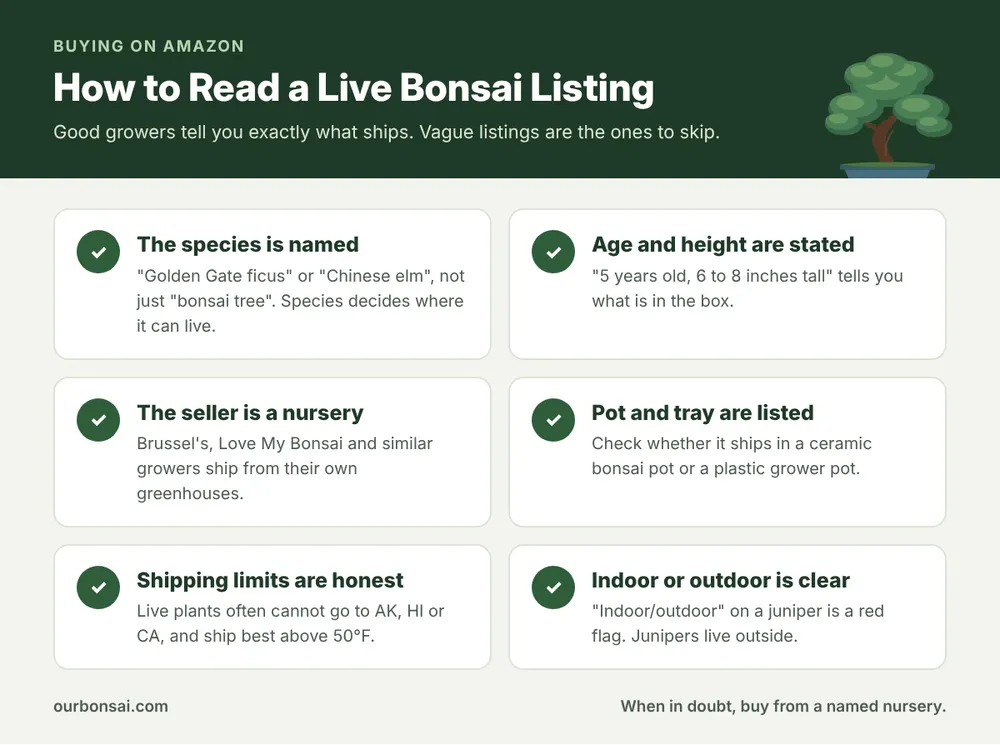
How to Choose a Live Bonsai Online
Start with where the tree will live
Tropical species (ficus, jade, schefflera, rain tree, jaboticaba) live indoors. Temperate species (juniper, elm, maple, azalea, boxwood) live outdoors and need a cold winter rest. Our guide to the most popular indoor bonsai helps if you are unsure.
Buy in the right season
Growers recommend shipping when night temperatures stay above 50°F along the route. A tropical ficus sent across the northern states in January can arrive damaged. In cold months, pick expedited shipping and be home to unpack it.
Expect a young tree
Most Amazon bonsai are 3 to 8 years old. They are healthy, correctly potted starting points, not finished show trees. Thickening the trunk and refining the branches is the hobby. If you want a tree with decades of work in it, look at the specimen listings from Love My Bonsai, which start at several hundred dollars.
Unpack, water, wait
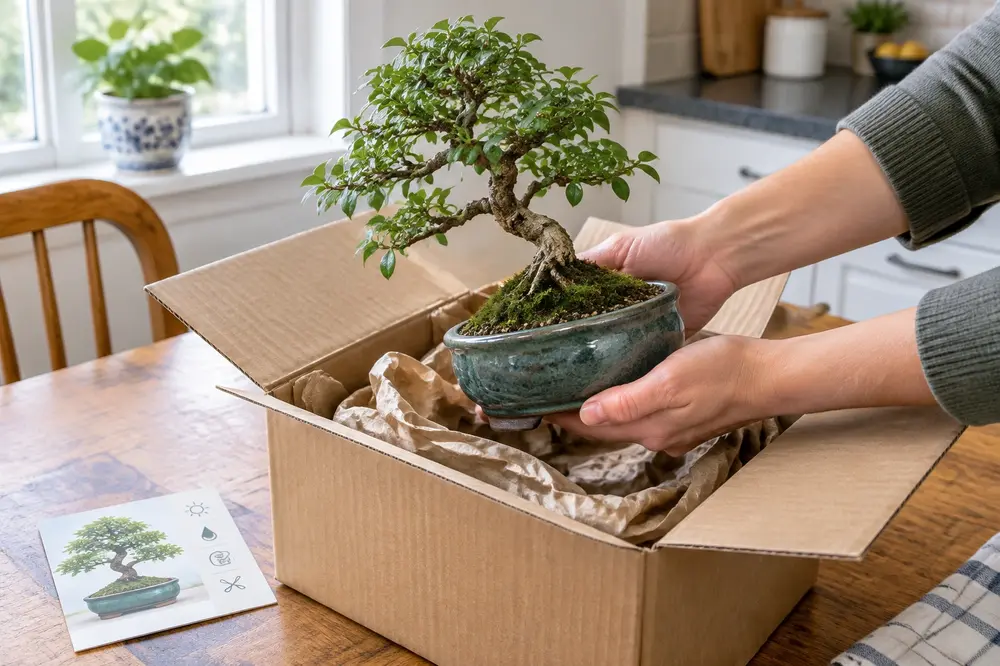
Open the box the day it arrives, water thoroughly, and place the tree in its final spot. Do not prune, repot or feed for two weeks. Our list of common beginner mistakes covers the first month.
Frequently Asked Questions
Is it safe to buy a live bonsai tree on Amazon?
Yes, if you buy from a nursery seller such as Brussel’s Bonsai, which grows and ships its own trees and states species, age and size. Avoid listings that do not name the species.
How do bonsai trees survive shipping?
Nurseries ship trees in fitted boxes with the pot secured, usually within two to four days. Some leaf drop afterwards is normal. Trees ship best when temperatures along the route stay above 50°F.
What is the easiest live bonsai to buy online?
Dwarf jade for indoors, Chinese elm for outdoors. Both tolerate beginner mistakes and ship well.
Can I keep a juniper bonsai from Amazon indoors?
No. Junipers need outdoor light and a cold dormancy. They often stay green indoors for months while dying, which is why so many gift junipers fail.
Do Amazon bonsai trees come with a pot?
Most Brussel’s trees ship in a ceramic bonsai pot, often with a humidity tray. Cheaper listings may ship in a plastic grower pot; the listing will say.
Are the ages on bonsai listings accurate?
Nursery listings state the age from cutting or seed and are generally reliable. Treat ages from unbranded sellers as approximate.
What should I do when my bonsai arrives?
Unpack it immediately, water until it drains, put it in bright light (or outdoors for temperate species), and leave it alone for two weeks before any pruning or repotting.
Final Verdict
For a first indoor tree, the Brussel’s Golden Gate Ficus is the safest live bonsai on Amazon. For outdoors, the Brussel’s Medium Chinese Elm. If you already own one of those and want something with character, the Brussel’s Brazilian Rain Tree or the Jaboticaba will keep you interested for years. Whichever you choose, read how to care for a bonsai indoors before the box arrives.