Winter Care Indoor Bonsai Checklist: Light, Water and Heat

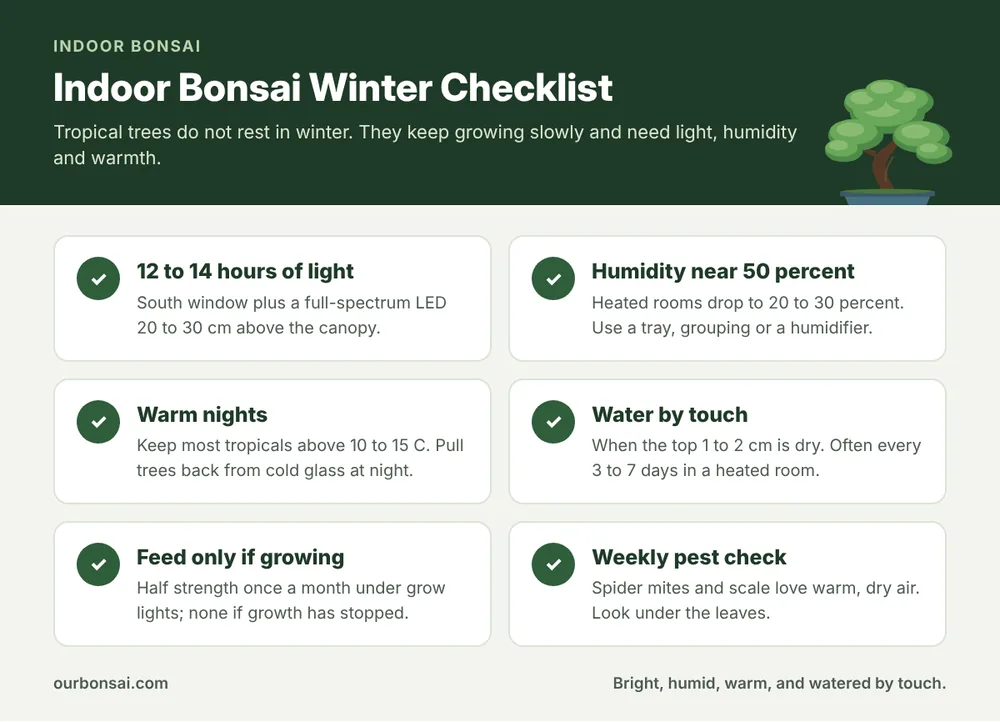
Good winter care indoor bonsai routines come down to four numbers: 12 to 14 hours of strong light a day, humidity around 50 percent, night temperatures above 10 to 15 C (50 to 59 F) depending on species, and water only when the top 1 to 2 cm of soil feels dry. Tropical trees like ficus, jade, Fukien tea and schefflera do not go dormant. They keep growing slowly through winter, so they suffer when a home gets dark, dry and drafty. Fix those three things and most indoor bonsai come out of March looking as good as they went in.
In this guide
Why winter is hard on indoor bonsai
In summer, a south window gives a tree several hours of strong sun. In December, the sun is low, days are short, and window light can drop to a fraction of summer levels. At the same time, central heating dries the air, often below 30 percent relative humidity, while many tropical bonsai come from places where humidity rarely falls below 60 percent. Add cold air sinking off window glass at night and warm blasts from vents during the day, and the tree is stressed from three sides at once.
The usual signs are long, pale shoots with big gaps between leaves, yellowing inner leaves, crispy edges, and sudden leaf drop. None of them mean the tree is dying. They mean one of the conditions below is off.
Light: the factor that matters most
Light decides how much energy the tree makes, and winter light indoors is almost always too low. A bright south-facing windowsill is the minimum. East and west windows usually are not enough from November to February.
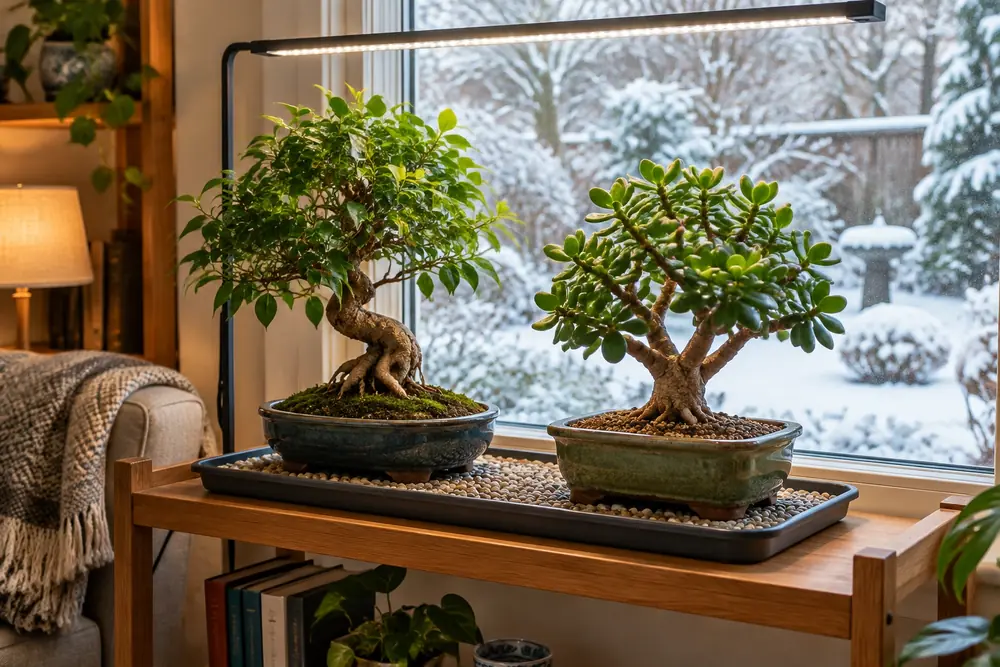
A grow light changes everything. A full-spectrum LED bar or panel hung 20 to 30 cm above the canopy, on a timer for 12 to 14 hours a day, keeps ficus and jade compact and green all winter. You do not need anything expensive; look for “full spectrum” and a real wattage of at least 20 to 30 W for one or two small trees. Our tested picks are in the guide to the best indoor grow lights for bonsai, and how much light a bonsai tree needs explains the numbers.
Minimum winter temperatures by species
| Species | Lowest night temperature | Winter notes |
|---|---|---|
| Ficus (retusa, microcarpa, Golden Gate) | About 10 to 12 C (50 to 54 F) | Drops leaves after moves or drafts, regrows in weeks |
| Jade (Crassula, Portulacaria) | About 7 to 10 C (45 to 50 F) | Likes it cool and dry in winter; water sparingly |
| Fukien tea (Carmona) | About 15 C (59 F) | The fussiest. Hates cold glass and dry soil |
| Dwarf schefflera | About 10 to 13 C (50 to 55 F) | Tolerates lower light than most |
| Brazilian rain tree | About 15 C (59 F) | Folds leaves at night; heavy drop in cold |
| Serissa | About 10 to 12 C (50 to 54 F) | Drops leaves at any change. Keep stable |
The coldest place in a heated home is often right against the window glass at night. On freezing nights, either slide the tree 30 to 50 cm back into the room or put a sheet of cardboard between the pot and the glass after dark.
Keep trees away from radiators, fireplaces and heating vents. A constant stream of hot dry air does more harm than a cool room.
Humidity without the myths
Misting feels helpful but raises humidity for only a few minutes. Things that work better:
- A gravel humidity tray under the pot, with water below the top of the gravel. It adds a little moisture right around the tree. Our roundup of humidity trays for bonsai shows the options.
- Grouping plants so their leaves share moist air.
- A small room humidifier set to 50 percent. This is the only method that reliably lifts a whole room.
- Moving the tree out of rooms with wood stoves or strong heaters.
Winter care indoor bonsai: watering and feeding
Heated rooms dry soil faster than many people expect, but low light means roots take up less. The answer is to water by touch, never by the calendar. Push a finger or chopstick 1 to 2 cm into the soil. Water thoroughly when it feels dry, until water runs out of the drainage holes, then empty the saucer. In most homes that works out at every 3 to 7 days, slower for jade.
Use room-temperature water. Ice-cold tap water in winter can shock tropical roots. The full method is in our article on watering indoor bonsai in winter.
Fertilizer depends on growth. A ficus under a grow light that is still putting out leaves can take a half-strength liquid feed once a month. A tree on a dim windowsill that has stopped growing should get none until spring.
Pests that thrive indoors in winter
Warm, dry, still air is ideal for spider mites, scale and mealybugs. Once a week, turn the tree and check the undersides of leaves and the junctions of stems for fine webbing, white cotton, or small brown bumps. Wipe scale off with a cotton bud dipped in rubbing alcohol. Rinse mites off in the shower and raise humidity. Our guide to spider mites on bonsai trees covers the next steps if they return.
Common winter mistakes
- Keeping hardy species indoors. Junipers, maples and most pines sold as “indoor bonsai” need cold winters outside. They fade in a warm living room.
- Moving the tree around. Every move to a new light level causes some leaf drop. Find a good spot and leave it.
- Watering on a summer schedule. Waterlogged soil in low light leads to root rot.
- Leaving it on the windowsill behind closed curtains. That pocket between curtain and glass is the coldest place in the house at night.
- Repotting in midwinter. Wait until spring when growth picks up, unless the tree is in real trouble.
Frequently asked questions
Why is my indoor bonsai dropping leaves in winter?
Usually a change in light, a cold draft, or soil that stayed wet too long. Ficus and serissa drop leaves after almost any move. If the twigs are still flexible and green under the bark, the tree will regrow once conditions settle.
Do indoor bonsai need a dormancy period?
Tropical species do not. They only slow down. Subtropical species such as Chinese elm and pomegranate do better with a cool winter around 5 to 12 C if you can give them a bright unheated room.
Is a north window okay in winter?
Not on its own. North light is too weak for most bonsai from autumn to spring. Add a grow light or move the tree to a south-facing window.
Can I put my indoor bonsai outside on a warm winter day?
Only if the temperature stays well above its minimum all day and night. Swings between a warm room and cold air stress tropical species, so most growers keep them inside until nights stay above 12 to 15 C.
Final thoughts
Indoor bonsai do not need special winter tricks. They need the same things they get in summer, delivered in a home that works against them. Add light, add moisture to the air, keep them off cold glass and away from heaters, and water by touch. For more on keeping tropical species inside year round, see how to take care of a bonsai tree inside, and for the science of artificial lighting the Wikipedia article on grow lights is a good primer.