Kinsai Azalea Bonsai: Care, Styling and Growing Tips

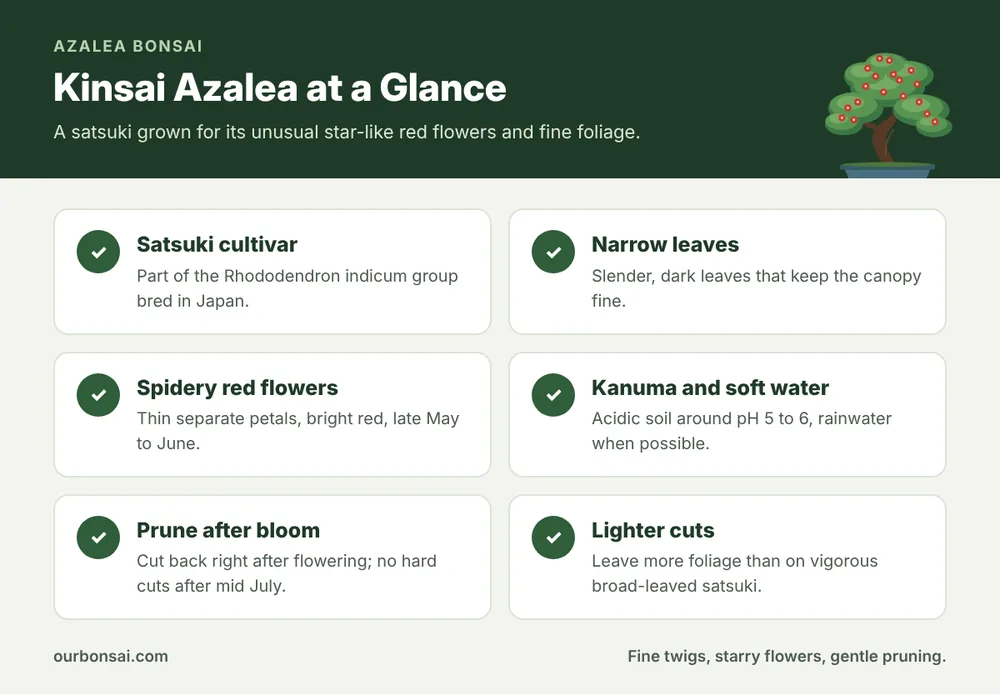
Kinsai azalea bonsai are grown from ‘Kinsai’, a satsuki cultivar of the Rhododendron indicum group with narrow, slender leaves and bright red flowers made of thin, separated petals that look like small stars. It blooms in late May to June, like other satsuki. Care follows satsuki rules: kanuma soil, rainwater or other soft water, morning sun with afternoon shade above about 29 C (85 F), pruning right after flowering, and a cold winter outdoors with root protection below about -5 C (23 F). Because its foliage is finer than most azaleas, go a little lighter with pruning and leave more leaves to feed the tree.
In this guide
What makes Kinsai different
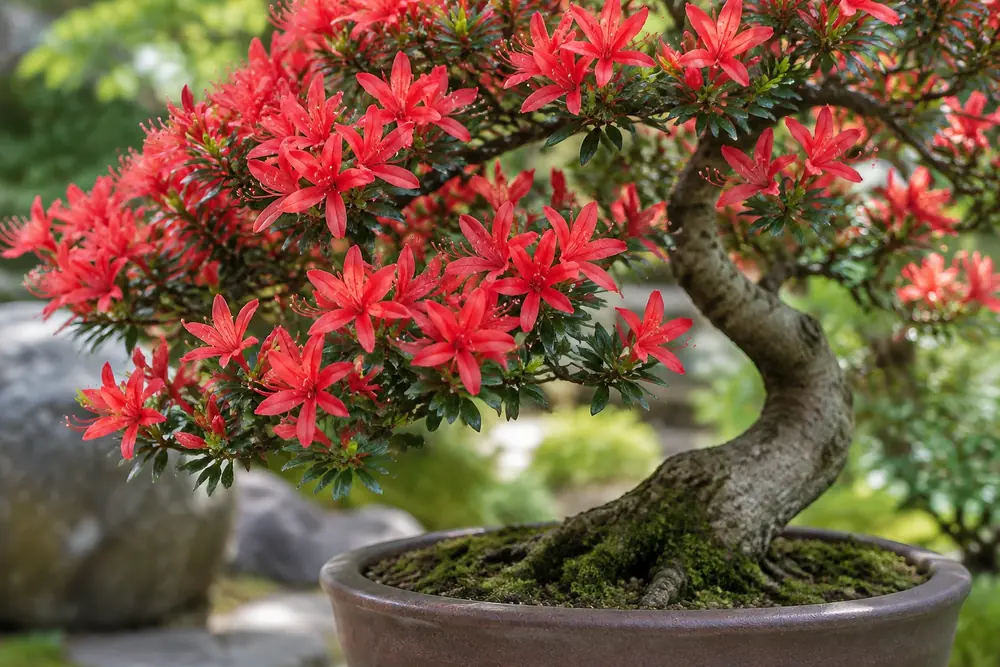
Most satsuki have broad, rounded petals that overlap into a cup or trumpet. Kinsai’s petals are narrow and separate, so each flower looks like a spidery star instead of a bell. The color is a strong orange-red that stands out against dark green leaves.
The leaves are narrower than those of most satsuki too. That gives the tree a finer, lighter canopy, which suits small and medium bonsai. You will see Kinsai sold fairly often as a ready-made indoor bonsai in the United States, even though it is an outdoor tree.
Kinsai azalea bonsai care needs
| Need | What Kinsai wants |
|---|---|
| Light | 4 to 6 hours of morning sun; shade after noon in hot summers |
| Soil | Pure kanuma, or kanuma with up to 30 percent pumice |
| Water | Evenly moist; water when kanuma surface turns pale |
| Water quality | Rainwater or low-lime water; hard water causes yellow leaves |
| Feeding | Acid fertilizer from after bloom until late summer |
| Winter | Outdoors or cold frame; protect roots below about -5 C |
| Repotting | Every 2 to 3 years, early spring or right after flowering |
Light and placement
Kinsai sets next year’s flower buds on new shoots in July and August. Too little sun in summer means few flowers. Too much afternoon sun scorches the narrow leaves and cooks the shallow roots. An east-facing spot, or a bench under 30 to 50 percent shade cloth in the afternoons, works well. In spring and autumn, it can take full sun in most climates.
If you received your Kinsai as an indoor gift, move it outside gradually over about two weeks, starting with an hour or two of morning sun. Our satsuki azalea indoor care guide explains why azaleas decline indoors over time.
Watering and soil
Kanuma is the best soil for Kinsai, as for all satsuki. It is acidic, holds water inside each grain and drains well between grains. Its color change, dark when wet and pale when dry, tells you when to water. Our list of the best soil for azalea bonsai covers sources and mixes.
Water the soil, not the flowers. Wet petals spot and fade quickly, and Kinsai’s thin petals collapse faster than broad ones.
Pruning and styling a Kinsai
The rule is simple: prune right after the flowers fade, and not after mid July.
- Pick off spent flowers and seed pods as soon as blooming ends. Seed production costs energy.
- Cut new shoots back to one or two leaves where they are too long.
- Thin crowded spots where several shoots come from one point (azaleas often push whorls of 4 to 6). Keep two.
- Leave more foliage than you would on a vigorous satsuki. Kinsai’s narrow leaves make less food each, so a heavily cut tree recovers more slowly.
Kinsai suits informal upright, slanting and small cascade styles. Its fine twigs make good shohin trees. Wire with soft aluminum after pruning, and bend slowly; azalea wood is brittle. Our guide to Japanese bonsai tool kits covers the scissors and cutters you will need.
Winter care for Kinsai
Like every satsuki, Kinsai needs a cold rest to set and open its flowers well. Leave it outdoors through autumn so it feels the first light frosts, then move it to a cold frame, an unheated garage with a window, or a sheltered spot against a wall once nights fall below about -5 C (23 F). Keep the kanuma barely moist, which may mean watering only once every week or two, and give no fertilizer. In very mild climates where frost is rare, it can stay on its bench all winter.
Some leaves will yellow and drop in autumn. Satsuki shed their larger spring leaves and keep the smaller summer ones, so a little leaf drop at that time of year is normal.
Feeding for flowers
After flowering, start an acid fertilizer made for azaleas, at the label rate or a little less. Feed every 2 to 3 weeks for liquid, or use organic pellets monthly. Stop in late summer so new growth can harden before winter. Our azalea fertilizer guide compares the options.
Problems to watch for
- Yellow leaves with green veins: usually iron chlorosis from hard water or old soil. Switch to rainwater and an acid feed, and repot if the soil is broken down.
- Brown leaf tips: dry roots, fertilizer salts or sun scorch.
- Pale, stippled leaves: azalea lace bug on the undersides.
- Wilting in wet soil: possible root rot. Check the roots.
- Few flowers: too much shade in summer, pruning after July, or overfeeding with nitrogen.
Kinsai vs other azalea types
Kinsai is a satsuki, so it blooms later than Kurume azaleas and has bigger leaves than kiusianum. Compared with broad-petaled satsuki like ‘Chinzan’ or ‘Kaho’, its flowers are less showy as a mass but more unusual up close. If you want a tree that starts conversations, Kinsai is a fun one to have.
Frequently asked questions
Is Kinsai azalea an indoor bonsai?
No. It is often sold as one, but it needs outdoor light and a cold winter rest to stay healthy and flower. It can come inside for a few days while blooming.
When does Kinsai azalea flower?
Late May to June in most temperate climates.
Why are my Kinsai flowers so short-lived?
Heat, strong sun and rain all shorten flowering. Keep the tree in bright shade and dry overhead while it blooms.
How often should I repot a Kinsai azalea bonsai?
Every 2 to 3 years for younger trees, 3 to 4 for mature ones, in early spring or right after flowering.
Final thoughts
Kinsai is a satsuki with a twist: same care, finer foliage and unusual star-shaped flowers. Treat it gently when pruning, keep it outdoors with morning sun and soft water, and it will flower reliably each June. For the wider group it belongs to, see the Wikipedia article on Rhododendron indicum.