Types of Azalea Bonsai: Best Varieties to Grow

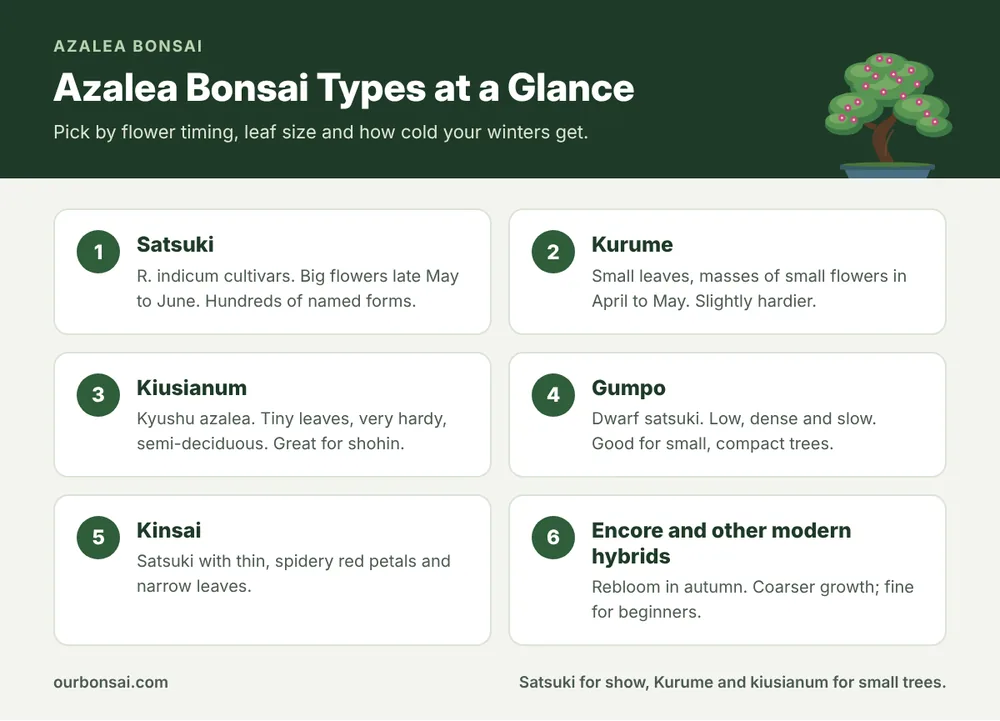
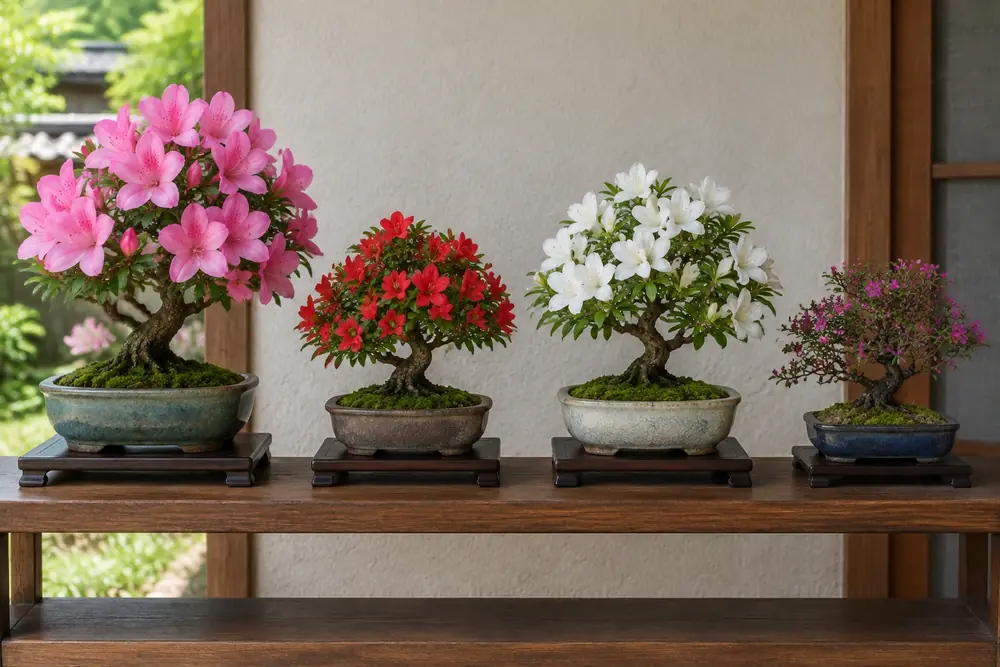
The main types of azalea bonsai are satsuki (cultivars of Rhododendron indicum), Kurume hybrids, the Kyushu azalea (Rhododendron kiusianum), and dwarf satsuki forms such as Gumpo. Satsuki is the classic choice, with large flowers from late May into June and hundreds of named cultivars. Kurume azaleas bloom earlier, in April to May, with smaller leaves and masses of small flowers. Kiusianum has the tiniest leaves and the best cold hardiness, making it ideal for small shohin trees. Choose based on your winter, the size of tree you want, and whether you care more about big flowers or fine twigs.
In this guide
- Satsuki azaleas: the show trees
- Kurume azaleas: small leaves, early color
- Kiusianum: the hardy miniature
- Gumpo and other dwarf satsuki
- Kinsai: the unusual one
- Types of azalea bonsai compared
- How to identify an unlabeled azalea
- Which type should a beginner choose?
- Care basics that apply to all azalea types
- Frequently asked questions
- Final thoughts
Satsuki azaleas: the show trees
“Satsuki” means the fifth month in the old Japanese calendar, which is roughly June. Satsuki azaleas bloom later than almost all other azaleas, after the spring rush. They come from Rhododendron indicum and its close relatives, native to southern Japan, and have been bred in Japan for centuries. Collectors have named well over a thousand cultivars.
What makes satsuki special for bonsai:
- Strong back-budding from old wood, so you can cut hard and rebuild.
- Flowers of 4 to 8 cm, often several colors on one tree (sports and streaks are common).
- A thick, flaring trunk develops fairly quickly.
Popular cultivars include ‘Chinzan’ (salmon pink, compact, small leaves), ‘Kaho’ (large pink flowers), ‘Hakurei’ (white), and ‘Kinsai’. Hardiness is roughly USDA zones 6b to 9, but roots in a pot need protection below about -5 C (23 F).
Kurume azaleas: small leaves, early color
Kurume azaleas were developed in Kurume on the island of Kyushu from crosses involving R. kiusianum and R. kaempferi. Compared to satsuki they have smaller, glossier leaves, a twiggier habit, and smaller flowers produced in huge numbers. They bloom in April to May.
‘Hinodegiri’ (bright red) and ‘Coral Bells’ (shell pink) are common nursery types that make good starter bonsai. Because Kurume azaleas are sold as garden shrubs, you can often find thick old plants at a garden center for a modest price.
Kiusianum: the hardy miniature
Rhododendron kiusianum, the Kyushu azalea, grows wild on mountain slopes in southern Japan. It has the smallest leaves of the group, often under 1.5 cm, and small purple, pink or white flowers in May. It is semi-deciduous: it drops many leaves in a cold winter, which can alarm new owners.
Kiusianum is the hardiest of the bonsai azaleas, roughly to USDA zone 6, and its fine twigs make it perfect for shohin and mame trees under 20 cm.
Gumpo and other dwarf satsuki
Gumpo azaleas are low, spreading satsuki forms with dense branches and very short internodes. ‘Gumpo White’ and ‘Gumpo Pink’ are the common ones. They grow slowly, which makes them easy to keep compact, but a thick trunk takes longer to develop.
Kinsai: the unusual one
‘Kinsai’ is a satsuki cultivar with narrow leaves and thin, spidery red petals that look almost like a small star. It is grown as much for curiosity as beauty. It is a little less vigorous than broad-leaved satsuki, so do not prune it as hard.
Types of azalea bonsai compared
| Type | Leaf size | Bloom time | Flower size | Cold tolerance in a pot | Best for |
|---|---|---|---|---|---|
| Satsuki | 2 to 4 cm | Late May to June | Large, 4 to 8 cm | Protect below about -5 C | Show trees, collectors |
| Kurume | 1.5 to 3 cm | April to May | Small, 2 to 4 cm | Protect below about -7 C | Beginners, mass color |
| Kiusianum | Under 1.5 cm | May | Small | Hardiest, to about -10 C | Shohin, mame |
| Gumpo | 1.5 to 3 cm | June | Medium to large | Like satsuki | Compact trees |
| Kinsai | Narrow | June | Thin petals | Like satsuki | Collectors |
| Encore and similar | 3 to 5 cm | Spring and again in autumn | Medium | Varies | Beginners, garden stock |
How to identify an unlabeled azalea
Many azaleas are sold with just “azalea bonsai” on the tag. A few clues help:
- Bloom time. Flowers in April point to Kurume or kiusianum. Flowers in late May or June point to satsuki.
- Leaf texture. Kurume leaves are small, glossy and quite stiff. Satsuki leaves are a little larger, often hairy, and thinner.
- Winter behavior. A tree that drops most of its leaves in a cold winter and has tiny leaves is likely kiusianum.
- Flower variation. Several colors or streaks on one plant is a strong sign of a satsuki.
Which type should a beginner choose?
If you can find one, a sturdy Kurume or a vigorous satsuki like ‘Chinzan’ is the best place to start. Both back-bud well, handle hard pruning, and are widely sold. If your winters are cold, kiusianum is the safest bet. Avoid large-leaved southern indica azaleas from landscape centers; their leaves and flowers are too big to look right on a small tree.
Whatever you buy, check that it has a thick base with several stems you can choose from, healthy green leaves and no dark, soft roots.
Care basics that apply to all azalea types
- Soil: kanuma, an acidic Japanese volcanic soil, alone or mixed with a little pumice. Our list of the best soil for azalea bonsai compares options.
- Water: evenly moist, never soggy. Use rainwater if your tap water is hard.
- Light: morning sun, afternoon shade in hot summers.
- Feeding: acid fertilizer from after flowering to late summer. See our azalea fertilizer guide.
- Winter: outdoors or in a cold frame; they need a cold rest to flower.
For indoor growers, read satsuki azalea bonsai indoor care before you buy, since azaleas struggle indoors long term.
Frequently asked questions
What is the difference between satsuki and Kurume azalea bonsai?
Satsuki bloom later (late May to June) with bigger flowers and are bred mainly for bonsai. Kurume bloom earlier (April to May) with smaller leaves and flowers and are mostly sold as garden shrubs.
Which azalea has the smallest leaves for bonsai?
Rhododendron kiusianum, the Kyushu azalea. Its leaves are often under 1.5 cm long.
Can I make a bonsai from a garden center azalea?
Yes. Kurume and satsuki types from garden centers often make excellent starter material. Choose a plant with a thick base and repot into kanuma in spring.
Are Encore azaleas good for bonsai?
They work, especially for beginners who want flowers twice a year, but their leaves are larger and growth coarser than satsuki.
Final thoughts
All azalea types share the same basic care: acidic soil, steady moisture, morning sun and a cold winter. Pick satsuki for big flowers and variety, Kurume for easy color, or kiusianum for small trees and cold climates. For a closer look at a nursery satsuki, see our Brussels satsuki azalea bonsai review, and for the botany, the Wikipedia article on azaleas is a solid reference.