Kurume Azalea Bonsai: Care, Styling and Growing Tips

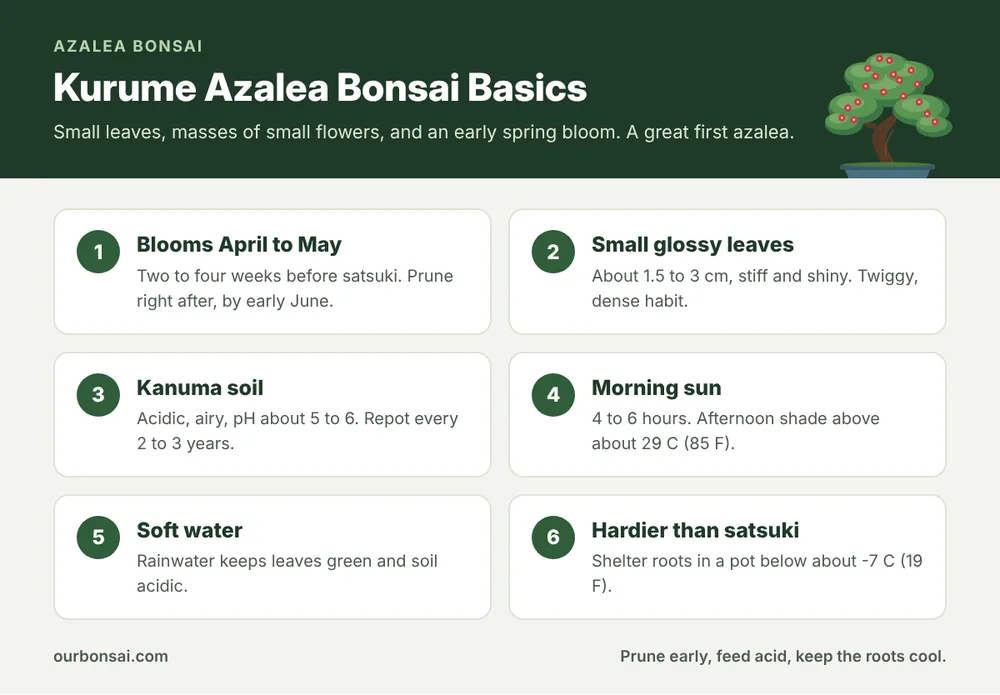
Kurume azalea bonsai are made from Kurume azaleas, a group of compact evergreen hybrids bred in the city of Kurume on Japan’s southern island of Kyushu. They have small, glossy leaves around 1.5 to 3 cm long, a twiggy habit, and masses of small flowers in April to May, two to four weeks before satsuki azaleas. Care is close to satsuki care: kanuma soil, rainwater or soft water, 4 to 6 hours of morning sun with afternoon shade in hot weather, and a cold winter outdoors. The key difference is timing: because they bloom earlier, prune and wire right after flowering and finish by early June.
In this guide
A short history
Kurume azaleas were selected in Japan from crosses involving Rhododendron kiusianum, a small mountain azalea, and Rhododendron kaempferi. Gardeners in the Kurume area refined them through the 1800s. In 1920, the plant collector Ernest Wilson brought a set of fifty named Kurume varieties to the United States, still remembered as “Wilson’s Fifty.” Since then they have become one of the most common landscape azaleas in the American Southeast and in Europe.
That popularity is good news for bonsai growers. Old Kurume shrubs pulled from gardens, and nursery plants in 3 to 5 gallon pots, can have thick, characterful trunks at a fraction of the price of an imported satsuki.
Kurume vs satsuki: what changes
| Trait | Kurume | Satsuki |
|---|---|---|
| Bloom time | April to May | Late May to June |
| Flower size | Small, 2 to 4 cm | Larger, 4 to 8 cm |
| Leaf | Small, glossy, stiff | Slightly larger, often hairy |
| Flower color per plant | Usually one color | Often several on one tree |
| Cold tolerance | Slightly better | Protect a little earlier |
| Pruning window | Right after bloom, by early June | Right after bloom, by early July |
Common Kurume cultivars you will see at nurseries include ‘Hinodegiri’ (bright red), ‘Coral Bells’ (shell pink), ‘Hershey’s Red’ and ‘Snow’ (white). Any of them can become a good bonsai.
Turning a Kurume shrub into a bonsai
Kurume azaleas back-bud strongly, so you can cut a large shrub down hard.
- Choose material. Look for a thick base, a good root spread and low branches. Old garden plants often have the best trunks.
- Time it. Right after flowering is ideal. Early spring before bloom also works if you remove the flower buds.
- Cut back the top. Remove stems that do not fit your design, and shorten the rest to short stubs with a few leaves where possible.
- Reduce the roots by about a third and plant into a large training pot or wooden box with kanuma or a kanuma and pumice mix.
- Let it grow for a season. Do not prune again until after next spring’s flowering. New shoots will appear along old wood within weeks.
- Select branches the next year, wire gently with aluminum wire, and begin refining the pads.
Informal upright, slanting, clump and broom-like dome shapes all suit Kurume’s dense habit. For more style ideas, see our page on types of bonsai.
Kurume azalea bonsai care through the year
Spring. Full morning sun. Keep the soil evenly moist as flowers open. Move the tree out of rain while it blooms. Remove spent flowers as they fade.
Early summer. This is the main work window: prune new shoots back to one or two leaves, thin whorls of shoots down to two, wire, and start acid feeding every 2 to 3 weeks. Our list of the best fertilizer for azalea bonsai covers good options.
Mid to late summer. Flower buds form at the shoot tips. Stop pruning by about early July. Give afternoon shade in heat and water daily.
Autumn. More sun, less water, and stop feeding by early autumn.
Winter. Outdoors or in a cold frame. Kurume is a little hardier than satsuki, but roots in a pot still need shelter below about -7 C (19 F). Read our guide to outdoor bonsai trees for general winter advice.
Soil and watering
Use kanuma, pure or with up to 30 percent pumice. Kurume roots are fine and shallow and do not like heavy, wet soil. Water when the kanuma surface turns pale, and use rainwater if your tap water is hard. Our guide to the best soil for azalea bonsai has more detail.
Collecting an old Kurume from a garden
Because Kurume azaleas have been planted around homes for a century, many old shrubs get dug out during garden makeovers. These can become excellent bonsai with thick, gnarled trunks. The best time to dig is early spring or right after flowering. Cut a circle around the plant about 30 cm out from the trunk, undercut the root ball with a sharp spade, and lift it with as much fine root as you can. Azalea roots are shallow, so most of the root mass sits in the top 20 cm.
Plant the collected shrub in a large box or pot of kanuma and pumice, cut the top back in proportion to the roots you lost, and keep it in shade and out of wind for a month. Leave it alone for a full year before styling. Collected azaleas usually recover well if the roots never dried out during the move.
Common problems
- Azalea lace bug: pale stippled leaves with dark spots underneath, especially on plants in full sun. Treat early with insecticidal soap.
- Leaf gall: swollen, fleshy pale leaves in cool wet springs. Remove them before they turn white.
- Chlorosis: yellow leaves with green veins from hard water or alkaline soil.
- Root rot: wilting in wet soil, usually from broken-down soil or standing water.
Frequently asked questions
Are Kurume azaleas good for bonsai beginners?
Yes. They are cheap, widely available, forgiving and quick to bud back after pruning. They are one of the best first flowering bonsai.
When should I prune a Kurume azalea bonsai?
Right after it finishes flowering, usually in May, and finish by early June or July at the latest so the tree can set flower buds for next year.
Can I keep a Kurume azalea bonsai indoors?
Not long term. Like all evergreen azaleas, it needs outdoor light and winter cold. See our satsuki azalea indoor care guide, which applies to Kurume as well.
How do I get more flowers on my Kurume azalea?
Give enough sun in summer, stop pruning by early July, avoid high-nitrogen feeds late in the season, and give a proper cold winter.
Final thoughts
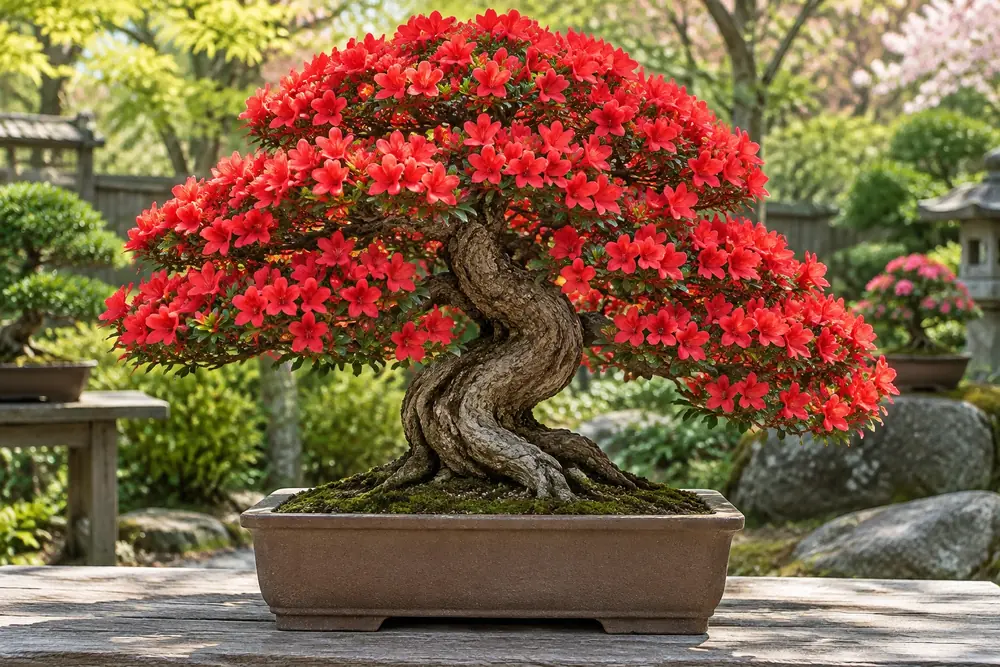
Kurume azaleas are the friendly, easy-going cousins of satsuki. Pick a thick garden-center plant, cut it back right after spring bloom, and in a few years you will have a tree that turns completely red, pink or white every April. For background on the group, see the Wikipedia article on azaleas.