Bald Cypress Bonsai Pests Diseases Guide: Spot and Treat Them


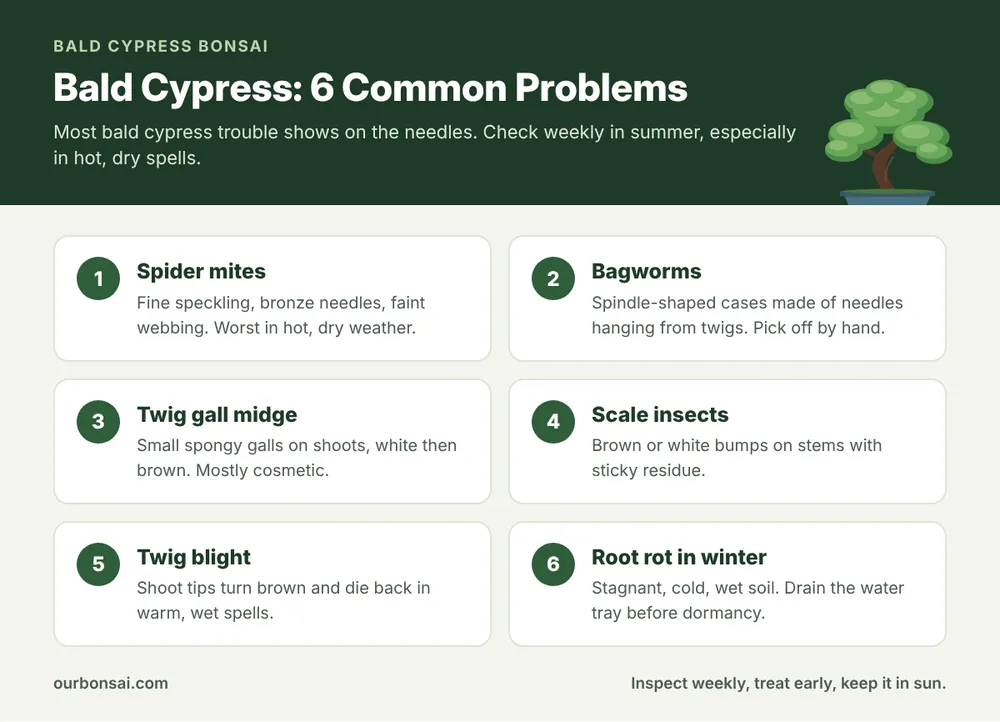
This bald cypress bonsai pests diseases guide covers the six problems that show up most often in pots: spider mites, bagworms, cypress twig gall midge, scale insects, twig blight and root rot. Spider mites cause the most damage, turning the feathery needles speckled and bronze in hot, dry spells. Bagworms and galls are easy to see and easy to remove. Root rot is the one most people do not expect, because bald cypress grows in swamps; it usually happens in winter, when a dormant tree sits in cold, stagnant water. Before treating anything, remember that bald cypress drops all its needles every autumn, so rusty brown foliage in October is normal.
In this guide
First, is it a problem at all?
Taxodium distichum is a deciduous conifer. In autumn the needles turn orange to rusty brown, and the small side shoots that carry them fall off as a unit. A tree that browns evenly all over in October or November is going dormant. A tree that browns in June, or only on one branch, has a problem.
Bald cypress bonsai pests
Spider mites
The most common pest. Mites are tiny and suck sap from the needles, leaving a fine pale speckling that turns the whole tree dull and bronze. Hold a sheet of white paper under a branch and tap it: moving specks the size of a dust grain are mites. Fine webbing between needles shows a heavy infestation.
Fix: blast the foliage with a strong spray of water every few days, especially the undersides. Mites hate humidity. If they keep coming back, use insecticidal soap or horticultural oil according to the label, on a cool evening. Our full guide to spider mites on bonsai trees covers the options.
Bagworms
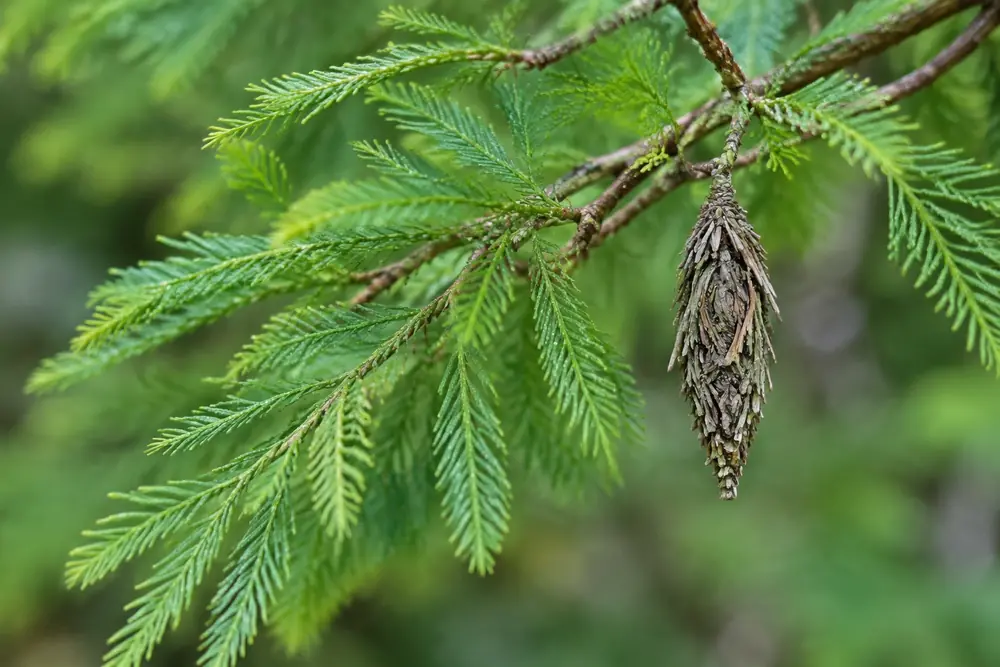
Bagworm caterpillars build spindle-shaped cases from bits of needle and silk, 2 to 5 cm long, which hang from twigs. Each case holds a caterpillar that eats needles. On a small bonsai, a few bagworms can strip a branch.
Fix: pick the cases off by hand and destroy them. On a bonsai this is easy and works better than any spray. Do it before late summer, when the females lay hundreds of eggs inside the cases.
Cypress twig gall midge
A tiny fly lays eggs in new shoots, and the plant forms small, spongy, rounded galls that look a little like miniature pineapples. They start white or green and turn brown. They are mostly cosmetic and rarely harm the tree.
Fix: cut off and bin galled shoots during your normal pruning.
Scale insects
Brown or white bumps along the stems, often with sticky honeydew and black sooty mold below. They are slow, but a heavy load weakens branches.
Fix: scrape them off with a fingernail or a cotton bud soaked in rubbing alcohol. Horticultural oil in late winter, while the tree is dormant, catches the overwintering stage. See our guide to scale on bonsai trees.
Bald cypress bonsai diseases
Twig blight
In warm, wet weather, fungi such as Phomopsis can infect young shoots. The tips turn brown and die back a few centimeters. It is most common on trees kept crowded and shaded, where foliage stays wet for long periods.
Fix: cut affected shoots back into healthy green wood and bin them. Improve air flow by thinning dense areas and spacing trees apart. Water the soil in the morning, not the foliage in the evening. A copper-based fungicide can help in persistent cases.
Root rot
Bald cypress tolerates flooding while it is growing, which is why many growers stand the pot in a water tray in summer. The risk comes in late autumn and winter. A dormant tree uses almost no water, and roots sitting in cold, stagnant water run out of oxygen. In spring, the tree buds weakly or not at all.
Fix: take the pot out of the water tray once growth slows in autumn and let it drain normally all winter. If a tree fails to leaf out, slide it from the pot and check the roots. Dark, soft, smelly roots need to be cut back and the tree repotted in fresh, free-draining soil. Our article on root rot in bonsai explains the rescue steps.
Needle browning in summer
Not a disease, but often mistaken for one. Patchy brown needles in hot weather usually mean the roots dried out, even for a few hours. Bald cypress uses a lot of water in sun, and a dry spell in a small pot browns the needles quickly.
Bald cypress bonsai pests diseases: quick problem finder
| Symptom | Likely cause | First step |
|---|---|---|
| Fine pale speckles, dull bronze color | Spider mites | Paper tap test, then water spray |
| Hanging cone-shaped cases | Bagworms | Pick off by hand |
| Small spongy round growths on shoots | Twig gall midge | Prune off |
| Bumps on stems, sticky leaves | Scale | Scrape off, oil in winter |
| Shoot tips brown and dead | Twig blight or drought | Check soil; prune into green wood |
| Poor or no spring bud break | Root rot or winter root damage | Check roots |
| All needles rusty in autumn | Normal dormancy | Nothing |
Prevention that works
- Full sun. Bald cypress in shade is weaker and more prone to blight and mites.
- Wet in summer, drained in winter. Use a water tray only while the tree is actively growing.
- Space trees apart for air flow.
- Inspect weekly in summer, especially the inside of the canopy.
- Feed regularly in the growing season. A strong tree shrugs off pests.
Our step-by-step pest treatment guide and the round-up of pest control sprays for bonsai help if you need something stronger than water and hands.
Frequently asked questions
Why is my bald cypress bonsai turning brown?
In autumn, it is normal leaf drop. In summer, the usual causes are dry roots or spider mites. Check the soil first, then tap a branch over white paper.
Are bald cypress bonsai prone to pests?
Not especially. They are tough trees. Spider mites in hot weather and bagworms are the two you will most likely meet.
Can I use neem oil on bald cypress?
Yes, neem and other horticultural oils are commonly used. Spray in the evening, never in strong sun or heat above about 30 C, and test on one branch first.
Will a bald cypress recover after losing all its needles to mites?
Often yes, if it happens in early summer. The tree can push new shoots. Fix the mites, keep it watered and fed, and it should regrow.
Final thoughts
Bald cypress is one of the toughest bonsai species, and most problems trace back to dry roots in summer or wet roots in winter. Keep it in sun, watch for mites and bagworms, and drain the water tray before dormancy. For more on the species, see Clemson Extension’s bald cypress factsheet, and browse our general bonsai pests and diseases guide for other trees in your collection.