Bald Cypress Bonsai Root Rot: Causes, Signs and Fix

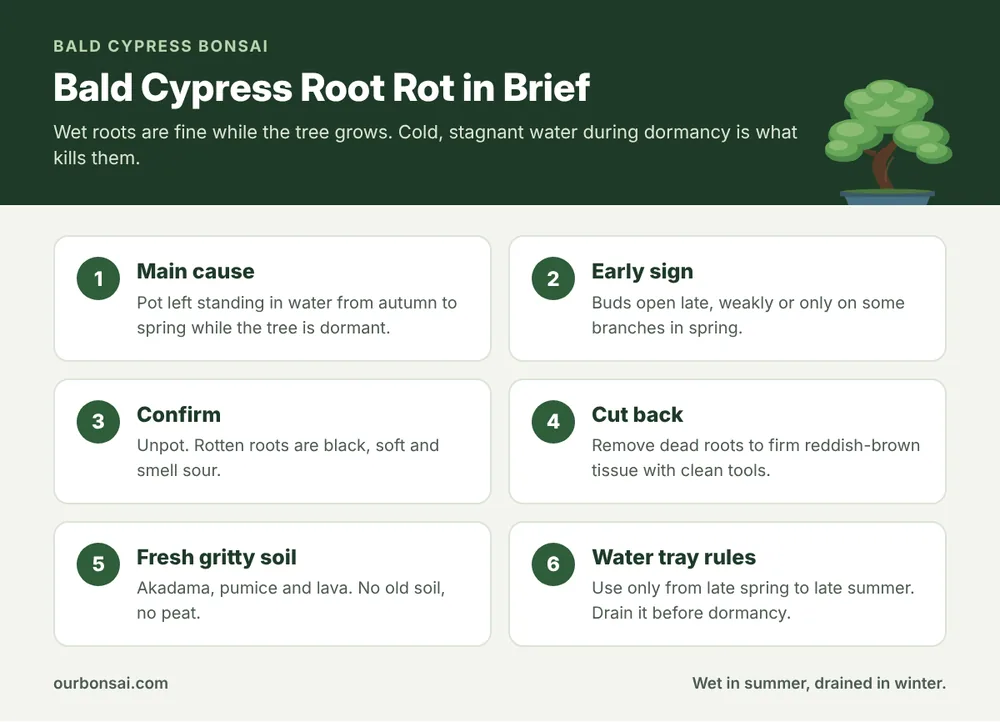
Bald cypress bonsai root rot sounds unlikely for a tree that grows in swamps, but it happens, and nearly always in the dormant season. From late autumn to early spring, a leafless bald cypress uses almost no water. If its pot sits in a tray of cold, stagnant water through those months, the roots run out of oxygen and rot. You usually notice in spring, when buds open late, weakly, or only on part of the tree. The fix is to repot as the buds swell, cut away black, soft roots back to firm reddish-brown tissue, and use fresh gritty soil. Then keep the water tray for the growing season only.
In this guide
Why a swamp tree gets root rot
In the wild, Taxodium distichum grows in floodplains and swamps of the southeastern United States. Its roots handle flooding because the water moves, warm summer growth is fast, and the tree develops specialized tissue and “knees” (raised woody root growths) that are thought to help with gas exchange. Even so, bald cypress seedlings in the wild often fail where water stands permanently, and mature trees in permanently flooded sites grow slowly.
A bonsai pot is a much harsher setting. The soil volume is small, the water in a tray is still and warms or chills quickly, and in winter the tree is not growing at all. Waterlogged, cold soil holds very little oxygen. Roots suffocate, and water molds and fungi move into the dead tissue. Once that starts, rot spreads to neighboring roots.
The other common cause is old, broken-down soil. Bald cypress grows fast and fills a pot with roots in 2 to 3 years. When akadama breaks down into mud and roots circle the pot, water stops draining even without a tray.
Signs by season
| When | What you see | What it means |
|---|---|---|
| Summer | Needles yellow or brown from the inside, despite wet soil | Possible rot; check if soil smells sour |
| Autumn | Early, patchy needle drop before color turns | Stress, possibly roots |
| Winter | Nothing visible | Rot can progress unseen |
| Spring | Buds open 2 to 4 weeks late, or only on some branches | Strong sign of root loss over winter |
| Spring | Some branches never leaf out; bark shrivels | Those branches lost their roots |
The spring signs are the most reliable. Healthy bald cypress breaks bud evenly once nights warm, with bright green feathery shoots across the tree.
How to check the roots
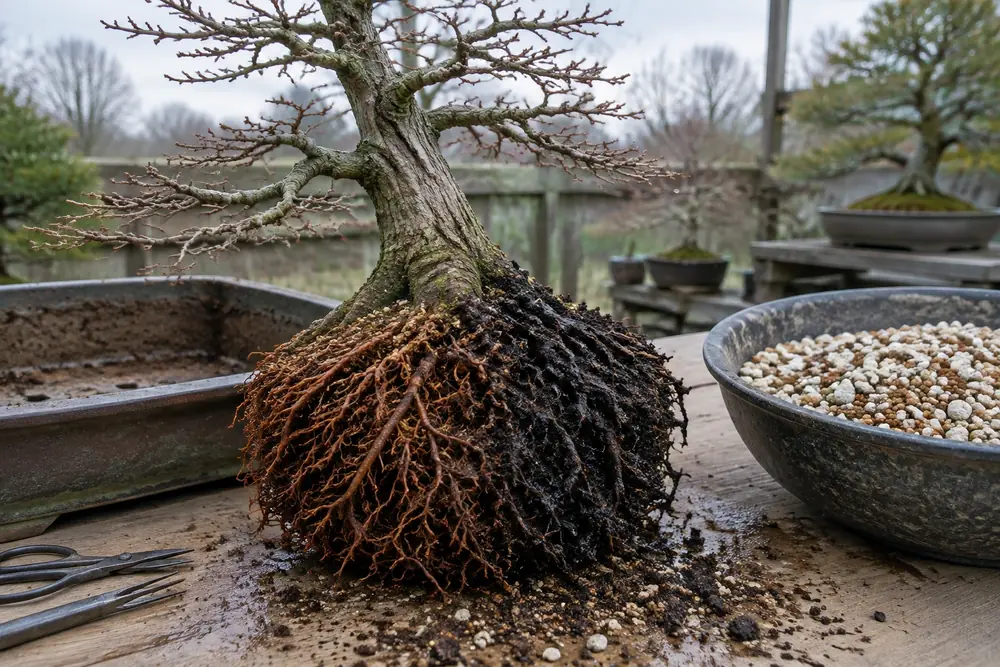
Wait until buds should be opening, or act at once if the tree is clearly struggling in summer. Slide the tree out of its pot.
- Healthy roots: firm, reddish brown to tan, with pale white tips during growth. They hold together when you tease the root ball.
- Rotten roots: black or dark brown, soft, slimy, and the outer skin slides off when pinched. The soil smells sour or musty.
- Dead but dry roots: brittle and hollow, often from winter freezing rather than rot. The fix is the same: remove them.
How to fix bald cypress bonsai root rot
- Time it. The best moment is as buds swell in spring. Bald cypress is vigorous and tolerates repotting into early summer, so do not wait a year if the tree is in trouble.
- Remove old soil. Hose or comb out the old, broken-down soil. Bald cypress tolerates heavy root work better than most conifers.
- Cut dead roots. Use clean, sharp scissors. Cut back to firm tissue. Sterilize tools with rubbing alcohol between trees.
- Balance the top. If you removed more than half the roots, reduce the top too. Shorten long branches and do not let the tree carry heavy growth this year.
- Repot into fresh, gritty soil. A mix of akadama, pumice and lava rock, roughly equal parts, drains well and still holds moisture. Avoid peat and regular potting soil. Our bonsai soil mix ratio guide explains the components.
- Water thoroughly once, then let it drain. No water tray yet.
- Bright shade for 2 to 3 weeks, then back to full sun.
- No fertilizer for 4 to 6 weeks, then resume normal feeding.
For the general method used on other species, see our guide to root rot in bonsai.
The water tray: when to use it and when not to
Many growers set bald cypress pots in a shallow tray of water through summer. It works because the tree is drinking heavily, the roots are actively growing, and the water is used up and replaced daily. Follow these rules:
- Start once the tree is in full leaf and growing strongly, usually late spring.
- Keep the water shallow, just covering the bottom third of the pot or less.
- Refresh it often, every 2 to 3 days, to keep it oxygenated and stop mosquito larvae.
- Stop in late summer or early autumn, when shoots slow down.
- Never leave the pot in water through autumn and winter.
Trees kept in a cold frame or garage in winter should drain fully after every watering. Our winter guide to types of outdoor bonsai trees has more on overwintering hardy species.
Can a bald cypress recover from root rot?
Usually, yes. Bald cypress is vigorous and grows new roots quickly in warm weather. If at least a third of the roots are healthy, most trees leaf out, recover over the summer, and are back to normal growth the year after. Trees that have lost almost all their roots are harder to save, but a careful repot is still worth trying.
Prevention checklist
- Repot every 2 to 3 years while young, 3 to 5 years once mature.
- Use gritty, free-draining soil.
- Water tray only during active growth.
- Keep the tree in full sun so it uses water steadily.
- Do not overwater in cool, cloudy spring weather before the tree is in full leaf.
Frequently asked questions
Can bald cypress bonsai sit in water all year?
No. Standing water is fine during summer growth, but cold, stagnant water in winter rots roots.
What soil is best to prevent root rot in bald cypress?
A gritty mix such as equal parts akadama, pumice and lava. It holds enough water for a thirsty tree but always lets air back in.
Why did my bald cypress not leaf out this spring?
Root loss over winter is the most common reason, either from rot in waterlogged soil or from roots freezing solid. Check the roots and look for green tissue under the bark of the twigs.
Should I use fungicide on bald cypress root rot?
Cleaning up the roots and changing the soil matter far more. A fungicide labeled for root rot can be used as an extra step, following the label exactly.
Final thoughts
Root rot in bald cypress is mostly a winter mistake. Keep the water tray for summer, drain the pot when the tree goes dormant, and repot before the soil breaks down. For more on the species, the Wikipedia article on Taxodium distichum covers its natural habitat, and our guide to bald cypress bonsai for sale helps you choose healthy stock.