Best Bonsai Books for Beginners: 8 Titles Worth Reading

As an Amazon Associate we earn from qualifying purchases. See our affiliate disclosure.
In this guide
- Our Top Picks at a Glance
- 1. The Little Book of Bonsai by Jonas Dupuich (Best First Book)
- 2. The Bonsai Beginner’s Bible by Peter Chan (Best All-Round Beginner Book)
- 3. The Essential Bonsai Book by Jonas Dupuich (Best for Learning Styling)
- 4. Bonsai by DK (Best Reference)
- 5. Bonsai: 101 Essential Tips by DK (Best Pocket Guide)
- 6. Indoor Bonsai for Beginners by Werner Busch (Best for Apartment Growers)
- 7. Bonsai Master Class by Kunio Kobayashi (Best Next Step)
- 8. The Practical Bonsai Bible for Beginners (Budget Paperback Option)
- Also Worth a Look
- How to Choose a Bonsai Book
- Frequently Asked Questions
- Final Verdict
Quick answer: if you have just bought your first tree, read The Little Book of Bonsai by Jonas Dupuich: it is short, modern and concentrates on keeping the tree alive. When you are ready to prune, wire and repot, The Bonsai Beginner’s Bible by Peter Chan is the best single beginner’s manual. And once you have a few trees, Bonsai Master Class by Kunio Kobayashi shows how a Japanese professional works on the species you are most likely to own.
Bonsai is one of the few hobbies where a book still beats a video, because the important ideas (when to prune, how a trunk develops, what a tree needs in each season) are easier to absorb on a page you can go back to. The problem is choosing: there are dozens of bonsai books, many of them photo albums with thin instructions. We compared eight that are in print and available on Amazon as of November 1, 2026, by what each one actually teaches and who it suits. Publication details are from the listings and publishers; we have described each book’s approach rather than claiming to have tested its advice on trees.
Our Top Picks at a Glance
| Book | Focus | Best for |
|---|---|---|
| The Little Book of Bonsai (Jonas Dupuich) | Care basics | Best first book |
| The Bonsai Beginner’s Bible (Peter Chan) | Techniques | Best all-round beginner book |
| The Essential Bonsai Book (Jonas Dupuich) | Techniques, case studies | Best for learning styling |
| Bonsai (DK) | Species reference | Best reference |
| Bonsai: 101 Essential Tips (DK) | Quick tips | Best pocket guide |
| Indoor Bonsai for Beginners (Werner Busch) | Indoor species | Best for apartment growers |
| Bonsai Master Class (Kunio Kobayashi) | Advanced technique | Best next step |
| The Practical Bonsai Bible for Beginners | Beginner overview | Budget paperback option |
1. The Little Book of Bonsai by Jonas Dupuich (Best First Book)

| Author | Jonas Dupuich (Bonsai Tonight, Pacific Bonsai Expo co-founder) |
|---|---|
| Publisher | Ten Speed Press, 2020 |
| Format | Compact hardcover |
| Level | Complete beginner |
Dupuich runs a bonsai nursery in Northern California and has written the Bonsai Tonight blog for years, and this small book distils that experience into the questions a new owner actually has: where to put the tree, how to water, when to repot, how to spot trouble. It is short enough to read in an evening and organised so you can look things up later.
What it is not is a styling manual. There is enough on pruning and wiring to get started, but its real value is that it stops you killing the tree in the first year. For the styling side, pair it with one of the technique books below.
Pros
- Modern, clear and short
- Written by a working professional
- Focuses on the first-year problems
Cons
- Light on styling and advanced technique
- Few species-specific details
Best for: anyone who has just bought or been given a tree.
2. The Bonsai Beginner’s Bible by Peter Chan (Best All-Round Beginner Book)

| Author | Peter Chan (Herons Bonsai, UK) |
|---|---|
| Publisher | Mitchell Beazley |
| Format | Paperback |
| Level | Beginner to intermediate |
Peter Chan has taught bonsai for decades from his nursery in England, and this is the book most often recommended as a first proper manual. It covers choosing a tree, the main styles, pruning, wiring, repotting, soil and seasonal care, with step-by-step photographs, and it includes a species directory for the trees beginners actually buy.
It is a UK book, so a few references to climate and suppliers are British, but the technique is universal. If you own one bonsai book, this is a sensible choice. Our own guide to bonsai pruning covers the same ground in less depth if you want a preview.
Pros
- Covers every basic technique with photos
- Species directory included
- Experienced teacher
Cons
- Some UK-specific references
- Dense for a complete beginner
Best for: beginners who want one book that covers everything.
3. The Essential Bonsai Book by Jonas Dupuich (Best for Learning Styling)

| Author | Jonas Dupuich |
|---|---|
| Publisher | Ten Speed Press, 2025 |
| Format | Paperback, 224 pages |
| Level | Beginner to intermediate |
Dupuich’s second book is the technique companion to his first. It works through fundamental skills (pruning, wiring, repotting, developing trunks and branches) and then applies them in case studies, so you see a tree go from raw material to something with a design. The photography is clear and the explanations are the kind a teacher gives standing next to you.
Choose this over the Beginner’s Bible if you learn best by following a tree’s progress rather than reading a reference. Choose the Bible if you want a species directory as well.
Pros
- Case studies show technique applied to real trees
- Modern American perspective
- Clear photographs
Cons
- No species directory
- Newer, so fewer second-hand copies
Best for: readers who want to understand why a cut is made, not only where.
4. Bonsai by DK (Best Reference)

| Publisher | DK |
|---|---|
| Format | Hardcover, heavily illustrated |
| Level | Beginner reference |
DK’s house style, with large photographs, labelled diagrams and a page or two per species, suits bonsai well. The book is organised around a species directory with care requirements, styling suggestions and seasonal tasks for each tree, which makes it the one you reach for when a specific tree does something unexpected.
It is less of a cover-to-cover read than the books above and lighter on the reasoning behind techniques. As a second book, sitting next to a technique manual, it earns its place.
Pros
- Species-by-species care
- Excellent diagrams and photos
- Easy to dip into
Cons
- Less depth on technique
- Large format, not a pocket book
Best for: growers who want a reference for the species they own.
5. Bonsai: 101 Essential Tips by DK (Best Pocket Guide)

| Publisher | DK |
|---|---|
| Format | Small paperback |
| Level | Complete beginner |
A hundred and one short, numbered tips with a photo each: choosing a tree, light, water, basic pruning and wiring, repotting. It is the cheapest book on the list and the quickest to read. It cannot replace a full manual, but it is a good thing to tuck into a gift bonsai.
If you prefer the same brevity with more current thinking, the Little Book of Bonsai (#1) covers similar ground at slightly more length. Both pair well with our indoor bonsai care guide.
Pros
- Very cheap
- Quick to read
- Good gift add-on
Cons
- Too brief to learn styling from
- Older photographs
Best for: gift-givers and readers who want the essentials in an hour.
6. Indoor Bonsai for Beginners by Werner Busch (Best for Apartment Growers)

| Author | Werner Busch |
|---|---|
| Publisher | Cassell |
| Format | Paperback |
| Level | Beginner, indoor focus |
Most bonsai books assume you have a garden. This one does not. Busch concentrates on the tropical and subtropical species that can live indoors (ficus, schefflera, serissa, Fukien tea, jade and others), with practical advice on light, humidity and winter care in a heated room, and on which species to avoid.
Some of the species recommendations date from before cheap LED grow lights changed what is possible indoors, so read it alongside a modern guide to indoor grow lights for bonsai. The core advice on light and humidity still holds.
Pros
- Written for people without a garden
- Honest about which species fail indoors
- Species-by-species care
Cons
- Older edition, limited stock when we checked
- Pre-dates modern LED lighting
Best for: flat and apartment growers.
7. Bonsai Master Class by Kunio Kobayashi (Best Next Step)

| Author | Kunio Kobayashi (Shunka-en Bonsai Museum, Tokyo) |
|---|---|
| Publisher | Tuttle |
| Format | Hardcover, 600+ photos and diagrams |
| Level | Intermediate |
Kobayashi is one of Japan’s most decorated bonsai artists, and this book shows how he works on the popular species: pines, junipers, maples, azaleas and others, with hundreds of step-by-step photographs. It is the book to buy once you have kept a few trees alive for a year and want to understand what a professional does differently. The principles of bonsai aesthetics that underlie his choices are worth reading about alongside it.
It is not a first book. The assumed knowledge is real, and the trees being worked on are far better than anything a beginner owns. Read it when you are ready, and it will change how you look at your own trees.
Pros
- A Japanese master’s methods, photographed in detail
- Covers the species most hobbyists own
- Inspiring to look at
Cons
- Assumes basic skills
- Techniques shown on advanced trees
Best for: growers with a year or two of experience.
8. The Practical Bonsai Bible for Beginners (Budget Paperback Option)

| Format | Paperback |
|---|---|
| Level | Complete beginner |
One of several independently published beginner guides on Amazon. It covers the usual ground (choosing, watering, light, basic pruning and wiring) in plain language at a low price. The illustrations and depth do not match the publisher-backed books above, so we list it as a budget option rather than a first choice.
If the price difference matters, buy this and read our free guide to beginner mistakes alongside it. If it does not, the Little Book of Bonsai is better value.
Pros
- Low price
- Plain language
Cons
- Thinner illustration and depth
- Independently published, less editing
Best for: readers on the tightest budget.
Also Worth a Look
- Keep Your Bonsai Alive: another independent beginner guide focused, as the title says, on survival first.
- Bonsai for Beginners: A Step-by-Step Guide: a budget paperback alternative to #8.
How to Choose a Bonsai Book
Match it to your stage
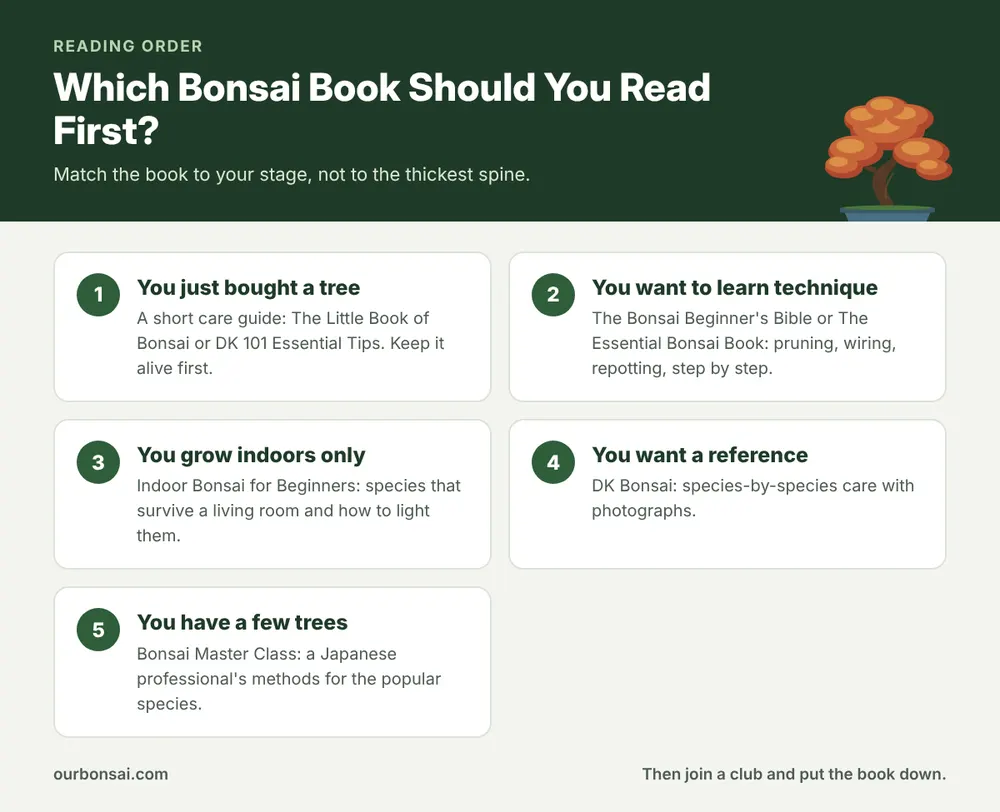
New owners need care, not styling: a short book that explains watering and light. Second-year growers need technique: pruning, wiring, repotting. Only after that does a master class make sense. Buying the advanced book first is the most common mistake, and it sits unread.
Check the species it covers
If you grow a ficus on a windowsill, a book organised around pines and junipers will frustrate you. Look for a species directory, or for an indoor-specific title, and cross-check with our guide to indoor species.
Prefer authors who grow trees
Dupuich, Chan and Kobayashi all run nurseries or studios and teach regularly. That shows in the advice. Photo-heavy coffee-table books by general gardening writers are pleasant but rarely teach you anything you can use on Saturday morning.
Then stop reading and do
Bonsai is a craft. One book, one tree and a local club will teach you more in a season than a shelf of books. Our guides to when to start pruning and wiring branches are good first exercises.
Frequently Asked Questions
What is the best bonsai book for a complete beginner?
The Little Book of Bonsai by Jonas Dupuich for keeping a first tree alive, then The Bonsai Beginner’s Bible by Peter Chan for learning technique.
Is Bonsai Master Class good for beginners?
No. It is an excellent intermediate book by a Japanese master, but it assumes you already know the basics and shows techniques on advanced trees. Read it in your second or third year.
Are there good bonsai books for indoor growers?
Indoor Bonsai for Beginners by Werner Busch is the standard title. It is older, so pair it with current advice on LED grow lights.
Do I need a book, or are videos enough?
Videos are good for seeing a technique once. A book is better for the seasonal reasoning you need to come back to. Most experienced growers use both and a club.
What should I read after the beginner books?
Bonsai Master Class, then species-specific books on the trees you own, such as the pine and juniper titles from Stone Lantern.
Is The Essential Bonsai Book the same as The Little Book of Bonsai?
No. Both are by Jonas Dupuich, but the Little Book is a short care guide and the Essential Bonsai Book is a longer technique manual with case studies.
Final Verdict
Start with The Little Book of Bonsai, move on to The Bonsai Beginner’s Bible or The Essential Bonsai Book when you want to style, and save Bonsai Master Class for when your trees deserve it. If you grow indoors, add Indoor Bonsai for Beginners. Then put the book down and go and look at your tree.