When and How to Repot Cherry Blossom Bonsai

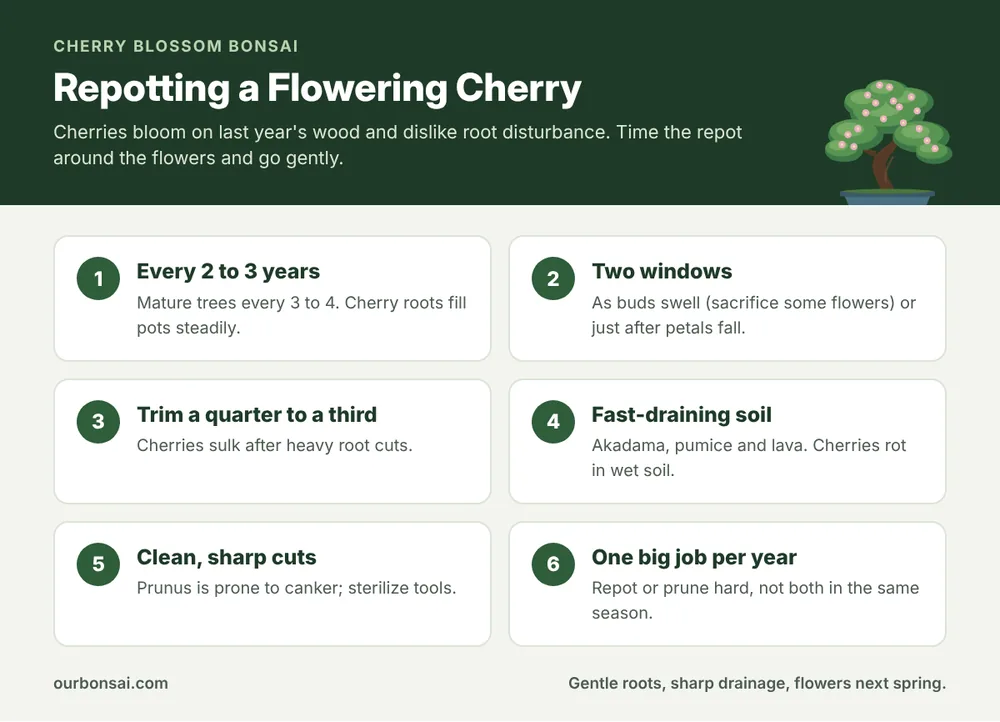
Here is how to repot cherry blossom bonsai without losing next year’s flowers: repot every 2 to 3 years, either in early spring as the buds swell or right after the petals fall; remove no more than a quarter to a third of the roots; and use a fast-draining mix of akadama, pumice and lava. Flowering cherries such as Fuji cherry (Prunus incisa) and Japanese flowering cherry (Prunus serrulata) dislike heavy root disturbance and are prone to root rot and bacterial canker, so clean tools, sharp drainage and a light hand matter more here than with tougher species like elm.
In this guide
Why cherries need a gentler repot
Cherries belong to the genus Prunus, along with plums, apricots and peaches. They share a few traits that affect repotting:
- Roots sulk. Heavy root pruning often leads to weak growth and fewer flowers for a season or two.
- Rot-prone. Cherry roots suffer quickly in waterlogged soil.
- Wound infections. Bacterial canker and fungal problems enter through cuts. Clean, sharp tools reduce the risk.
- Flowers form on last year’s growth. A stressed tree that does not grow well this summer will flower poorly next spring.
Weeping and ornamental cherries bought from garden centers follow the same rules. Of the cherries grown as bonsai, Fuji cherry is the most popular because it has small leaves and small flowers that stay in proportion, and it flowers young. Japanese flowering cherry cultivars have larger flowers and leaves and are best suited to larger bonsai.
Choosing the timing
| Option | Pros | Cons |
|---|---|---|
| As buds swell (late winter to early spring) | Roots grow strongly right away | You disturb the tree just before it flowers; many growers remove some buds |
| Right after flowering | You enjoy the bloom first; leaves are about to push | Slightly later start for root growth |
| Autumn | Not recommended | Roots have little time to recover before winter |
Either spring option works. If you value this year’s flowers, wait until the petals drop. If the tree is struggling in old, compacted soil, repot as the buds swell and pinch off most flower buds so its energy goes into roots.
Soil for cherry bonsai
A mix of roughly 40 percent akadama, 30 percent pumice and 30 percent lava, sieved to 2 to 6 mm, drains well while holding enough water for a thirsty flowering tree. Cherries prefer slightly acidic to neutral soil. Avoid potting compost and anything that stays wet. Our bonsai soil mix ratio guide explains how to adjust each part, and bonsai soil vs regular soil explains why garden soil fails in a pot.
How to repot cherry blossom bonsai, step by step
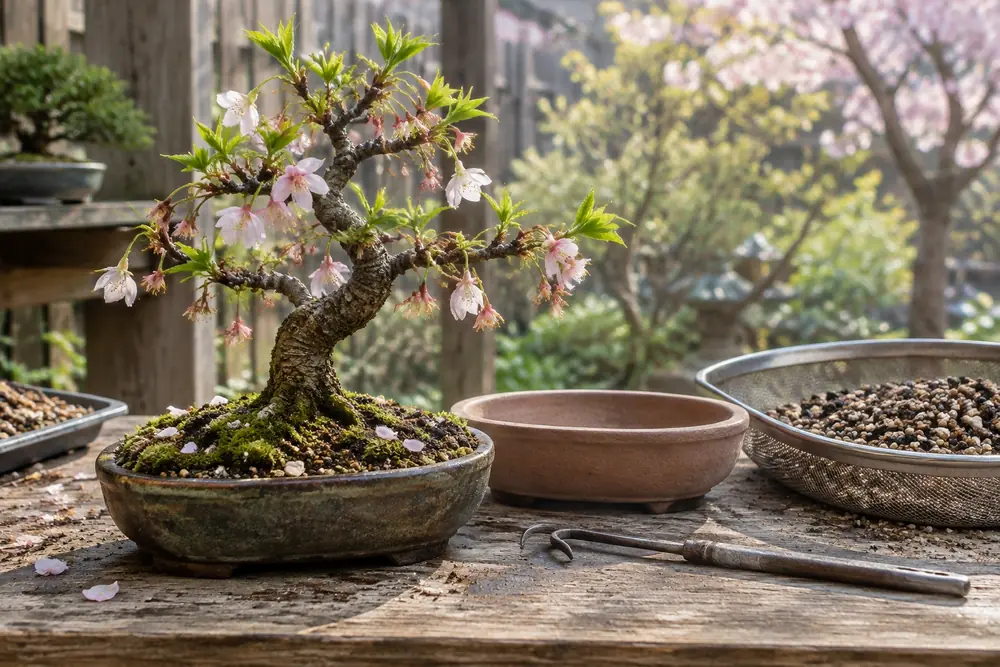
- Sterilize your tools. Wipe scissors, knife and root hook with rubbing alcohol. Repeat between trees.
- Prepare the pot, with mesh and tie-in wires, and sieve your soil.
- Remove the tree by cutting old wires and running a knife around the pot edge.
- Loosen the outer roots. Comb out old soil from the sides and bottom with a root hook. Leave the central core intact.
- Trim. Remove about a quarter to a third of the root mass at most. Cut thick roots cleanly, never tear them.
- Inspect for rot. Healthy cherry roots are firm and light brown inside. Remove any dark, soft or smelly roots.
- Pot up and tie in firmly. Work soil around the roots with a chopstick.
- Water thoroughly until it runs clear.
Our list of the best bonsai repotting tools shows good root hooks and cutters.
Aftercare
- Shade and shelter for about 2 weeks. Out of wind and strong sun, and protected from late frost.
- Water carefully. Keep the soil evenly moist but never soggy.
- No fertilizer for about 4 weeks. Then feed regularly through the growing season, using a feed lower in nitrogen from midsummer onward to support flower bud formation.
- Light pruning only. Remove spent flowers and their stalks. Leave structural pruning for next year, after the following spring’s flowers.
- Full sun once recovered. Cherries need plenty of sun to set flower buds.
Cherries are outdoor trees and need a cold winter rest to flower. See our list of types of outdoor bonsai trees for winter protection basics.
Signs the repot went well, and when to worry
Within 3 to 4 weeks of a spring repot, a healthy cherry pushes new leaves of normal size and color, and the shoot tips keep extending. Slightly smaller leaves in the first flush are common and nothing to worry about. Warning signs are leaves that stay small and pale for more than a month, shoots that wilt on warm afternoons while the soil is damp, or dark, sunken patches on the bark near the soil. These point to root damage or infection. Check that the soil drains well, keep the tree out of hot afternoon sun, and avoid feeding until it starts growing again. Sunken, weeping patches on the bark should be cut back to clean tissue with sterilized tools.
Mistakes to avoid
- Bare-rooting a cherry. It is likely to sulk for a full season or more.
- Repotting and pruning hard in the same year. Do one big job per season.
- Dirty tools. Infections like bacterial canker enter through cuts.
- Repotting into wet, heavy soil. The main cause of root rot in bonsai cherries.
- Bringing the tree indoors to “recover.” It needs outdoor light and seasons.
Frequently asked questions
Should I repot a cherry blossom bonsai while it is flowering?
Better not. Wait until the petals drop, or repot before the flowers open and accept fewer flowers that year.
How much root can I cut from a cherry bonsai?
About a quarter to a third. Cherries react badly to heavy root pruning.
Why did my cherry not flower after repotting?
Heavy root work, a summer of weak growth, too much shade or high-nitrogen feeding late in the season. Flower buds form in summer for the following spring.
What pot suits a cherry blossom bonsai?
A medium-depth glazed or unglazed pot with good drainage. Soft colors like cream, light blue or pale green show off pink and white flowers.
Final thoughts
Cherry bonsai reward restraint: repot only when needed, cut the roots modestly and cleanly, and keep drainage sharp. For more on the species, see the Wikipedia article on Prunus incisa, and our overview of deciduous bonsai tree types compares cherry with other seasonal trees.