
Why Are My Bonsai Leaves Turning White? Causes, Solutions, and Prevention Guide

Seeing white patches, a dusty coating, or pale areas on your bonsai leaves can be worrying. Many bonsai owners immediately think their tree is dying, but white leaves do not always mean the same thing. The cause may be a fungal problem, pest infestation, mineral buildup, environmental stress, or an issue with watering and sunlight.
If you are wondering why are my bonsai leaves turning white?, the most important step is identifying what type of white discoloration you see. A powdery coating is different from bleached leaves caused by too much sunlight, and tiny white spots may point to pests rather than disease.
This guide explains the most common reasons bonsai leaves turn white, how to diagnose the problem, what treatments are safe for beginners, and how to prevent the issue from returning. With careful observation and proper care, most affected bonsai trees can recover and continue growing beautifully.
Quick Answer
Why are my bonsai leaves turning white? Bonsai leaves usually turn white because of powdery mildew, pests such as spider mites or scale insects, excessive sunlight exposure, mineral deposits from water, or stress caused by poor watering and growing conditions. The correct solution depends on whether the white color is a coating, spots, or actual leaf damage.
What Does White Color on Bonsai Leaves Mean?
Before treating your bonsai, examine the leaves carefully. The appearance of the white marks often tells you what type of problem your tree has.
- White powder or dust-like coating: Often caused by powdery mildew, a fungal issue that spreads across leaf surfaces.
- Small white dots or tiny insects: May indicate pests such as spider mites, scale insects, or mealybugs.
- Large pale or faded areas: Often related to sun damage, nutrient imbalance, or leaf stress.
- White crust around leaves or soil: Usually caused by mineral buildup from hard water or excess fertilizer.
Do not immediately spray chemicals without identifying the cause. Incorrect treatment can stress your bonsai further, especially if the tree is already weak.
Common Reasons Bonsai Leaves Turn White
1. Powdery Mildew on Bonsai Leaves
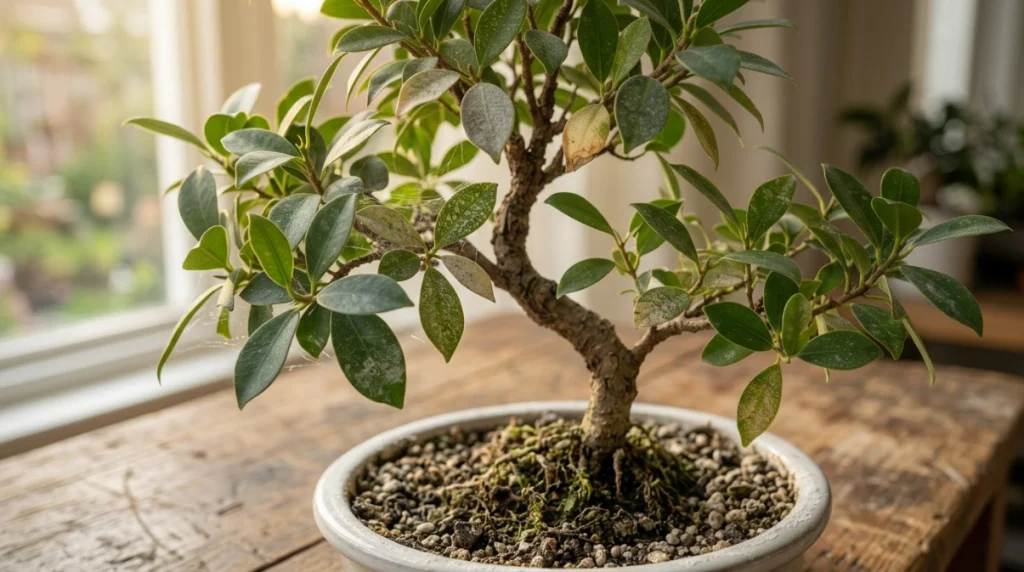
Powdery mildew is one of the most common causes of white-looking bonsai leaves. It appears as a thin, powdery layer that looks like flour or dust spread across the leaf surface.
This fungal problem usually develops when conditions are humid but air movement is poor. Indoor bonsai trees are especially vulnerable because rooms often have limited ventilation.
Common signs of powdery mildew include:
- White powder covering leaves
- Leaves becoming weak or distorted
- Slow growth
- Premature leaf drop in severe cases
Improving airflow is often the first step. Move the tree away from crowded areas, remove heavily affected leaves, and avoid keeping foliage constantly wet.
For general information about plant diseases and fungal problems, growers can also review guidance from agricultural experts such as the [University of California Integrated Pest Management plant disease resources](https://ipm.ucanr.edu/).
2. Spider Mites and Other Bonsai Pests
Pests are another major reason bonsai leaves develop white marks. Some insects damage leaves by feeding on plant fluids, leaving behind pale spots and a weakened appearance.
Spider mites are especially common on indoor bonsai because dry air allows their populations to increase quickly.
Signs of spider mites include:
- Small white or yellow speckles on leaves
- Fine webbing between branches
- Leaves losing their healthy green color
- Slow growth and leaf drop
Scale insects and mealybugs may also appear as white objects attached to stems or leaves. These pests can look like small cotton pieces or hard bumps.
A simple inspection method is to hold your bonsai under bright light and check the underside of leaves and branch joints. Many pests hide in these areas.
3. Too Much Direct Sunlight and Leaf Bleaching
Although bonsai trees need proper light, too much intense sunlight can damage leaves. When leaves receive more light and heat than they can handle, their green pigment may break down, causing pale or white patches.
This problem is common when an indoor bonsai is suddenly moved outdoors or when a shade-loving species receives strong afternoon sun.
Signs of sun stress include:
- White or faded patches on the side facing the sun
- Dry leaf edges
- Leaves becoming crispy
- Sudden damage after relocation
Move affected trees gradually into brighter conditions. Bonsai trees often need time to adjust to environmental changes.
4. Mineral Deposits From Hard Water
Sometimes the bonsai leaves are not actually turning white. Instead, white marks are left behind when water evaporates and minerals remain on the foliage.
This commonly happens when tap water contains high levels of calcium and other minerals.
Mineral buildup can appear as:
- White spots on leaves
- White crust around pot edges
- Residue on soil surfaces
Cleaning leaves gently with filtered water can remove surface deposits. If your local water supply is very hard, consider using collected rainwater, filtered water, or another suitable water source.
5. Fertilizer Burn or Nutrient Problems
Bonsai trees require nutrients, but too much fertilizer can damage delicate roots and leaves. Excess fertilizer salts may create white residue on soil and cause leaf stress.
Common signs of fertilizer problems include:
- White crust on soil
- Brown leaf edges
- Weak growth
- Leaf discoloration
More fertilizer does not always mean healthier growth. Bonsai trees grow slowly and usually need balanced feeding rather than heavy applications.
How to Diagnose White Leaves on Your Bonsai
Use this simple checklist before choosing a treatment:
| What You See | Possible Cause | First Action |
|---|---|---|
| White powder covering leaves | Powdery mildew | Improve airflow and remove infected growth |
| Tiny white dots with webbing | Spider mites | Inspect closely and treat pests safely |
| White crust on soil | Fertilizer salts or minerals | Flush soil and adjust water source |
| Large pale patches | Sun stress or leaf damage | Adjust light exposure |
| White insects on branches | Scale or mealybugs | Remove pests and monitor regularly |
How to Treat Bonsai Leaves Turning White
Step 1: Isolate the Bonsai if Pests Are Suspected
If you believe insects are causing the problem, move the bonsai away from other plants. Many pests spread quickly between indoor plants.
Inspect nearby plants because pest problems often affect multiple plants in the same environment.
Step 2: Remove Severely Damaged Leaves
Damaged leaves cannot always recover. Removing heavily affected foliage allows the tree to focus energy on healthy growth.
However, avoid excessive pruning when your bonsai is already stressed. Removing too much foliage can reduce the tree’s ability to produce energy.
Step 3: Improve Airflow and Growing Conditions
Poor airflow creates conditions where fungal problems become more likely.
Improve your bonsai environment by:
- Keeping enough space between plants
- Avoiding constantly wet leaves
- Providing suitable light for the species
- Maintaining proper humidity without creating stagnant air
Step 4: Use Safe Pest or Disease Treatments
For mild problems, gentle treatments may be enough. Insecticidal soap or horticultural oils can help control certain pests when used correctly.
Always follow product instructions carefully. Some treatments may damage sensitive bonsai species if applied incorrectly or during extreme temperatures.
The [EPA guidance on pesticide safety and responsible use](https://www.epa.gov/safepestcontrol) explains why proper application and label instructions are important when using plant treatments.
Indoor vs Outdoor Bonsai: White Leaf Problems
| Environment | Common White Leaf Causes | Prevention Tips |
|---|---|---|
| Indoor Bonsai | Spider mites, low airflow, dry air | Improve humidity balance and ventilation |
| Outdoor Bonsai | Sun stress, weather damage, fungal issues | Provide species-appropriate placement |
| Greenhouse Bonsai | High humidity and poor circulation | Increase airflow and monitor moisture |
Species That May Be More Sensitive
Different bonsai species respond differently to environmental stress.
- Japanese maple bonsai: Can suffer from leaf scorch under intense heat.
- Ficus bonsai: Often reacts to sudden changes in light and humidity.
- Juniper bonsai: Needs proper outdoor conditions and may decline indoors.
- Chinese elm bonsai: Can experience pest problems when stressed.
Knowing your species is essential. A treatment suitable for one bonsai may not be ideal for another.
Expert Tip
Expert Tip: Before treating white bonsai leaves, look closely with a magnifying glass. Identifying whether the problem is fungus, pests, or environmental stress prevents unnecessary treatments and helps your tree recover faster.
When to Ask an Experienced Bonsai Grower or Arborist
Many minor bonsai problems can be handled at home, but some situations require professional guidance.
Consider asking an experienced bonsai grower or arborist when:
- The tree continues declining after treatment
- Large branches are dying
- The roots appear damaged
- You suspect serious disease
- The bonsai is rare, old, or highly valuable
Major root work, structural pruning, or aggressive treatments can permanently damage a weak bonsai. When the tree’s health is uncertain, expert advice can save years of growth.
Common Mistakes Bonsai Owners Should Avoid
- Ignoring early symptoms: Small white spots can become larger problems if untreated.
- Overwatering: Constantly wet soil weakens roots and increases disease risk.
- Using random chemicals: Incorrect products can burn leaves or harm beneficial organisms.
- Moving the bonsai suddenly: Rapid changes in light and temperature can stress the tree.
- Overfeeding: Extra fertilizer cannot fix unhealthy roots or poor growing conditions.
- Removing too many leaves: Severe pruning can reduce recovery ability.
FAQs
Why are my bonsai leaves turning white and falling off?
White leaves that fall off may be caused by fungal disease, pests, watering problems, or environmental stress. Check whether the white color is powder, spots, or damaged tissue.
Can a bonsai recover from white leaves?
Yes, many bonsai trees recover when the cause is identified early and corrected. Healthy roots and proper care greatly improve recovery chances.
Are white spots on bonsai leaves always a disease?
No. White spots may come from mineral deposits, pests, sun damage, or fungal problems. Careful inspection is needed before treatment.
Should I cut off white bonsai leaves?
Remove badly damaged leaves if they are infected or dead, but avoid removing too much healthy foliage because bonsai trees need leaves to produce energy.
How often should I check my bonsai for pests?
Inspect your bonsai at least once a week. Regular checks help detect pests before they become a serious infestation.
Can overwatering cause white bonsai leaves?
Overwatering does not usually create white leaves directly, but it weakens roots and can contribute to fungal problems and poor plant health.
Conclusion
If you are asking why are my bonsai leaves turning white?, the answer depends on what the white marks look like and what conditions your tree is experiencing. Powdery mildew, pests, mineral buildup, sunlight stress, and fertilizer problems are among the most common causes.
The best approach is careful observation before treatment. Check the leaves, inspect for pests, review watering habits, and make gradual improvements to your bonsai’s environment.
A healthy bonsai is built through consistent care, patience, and understanding your tree’s needs. By identifying problems early and avoiding common mistakes, you can protect your bonsai’s beauty and encourage strong future growth.
Take time to inspect your bonsai today and make the small care adjustments that help it thrive.
