Bonsai Temperature Guide: Ideal Range for Indoor Trees

The right bonsai temperature depends on what kind of tree you have. Most tropical indoor bonsai (ficus, schefflera, Fukien tea, Brazilian rain tree) grow best at about 18 to 27 C (65 to 80 F) during the day and should not drop below roughly 10 to 13 C (50 to 55 F) at night, with Fukien tea and rain tree preferring 15 C (59 F) or more. Subtropical species such as jade, olive, pomegranate and bougainvillea like a cooler winter rest around 5 to 15 C (41 to 59 F). Temperate trees like junipers, pines and maples need several weeks below about 5 C (41 F) every winter and should not live indoors at all. In practice, steady temperatures matter as much as the exact number: sudden swings near windows, heaters and air conditioners cause more leaf drop than a room that is simply a little cool.
In this guide
Three groups, three temperature needs
Tropical bonsai
These come from places where it is warm all year. They do not go dormant and slow down sharply when cold. Below about 10 C, ficus and schefflera often drop leaves; Fukien tea and Brazilian rain tree react sooner, at around 13 to 15 C. A single night near freezing can kill them. Our overview of tropical bonsai species lists which trees fall in this group.
Subtropical bonsai
Jade, olive, pomegranate, bougainvillea, sago palm and similar trees come from warm-temperate or Mediterranean climates with mild winters. They tolerate warm rooms but are healthier with a cool, bright winter: an unheated spare room, a cool conservatory or a frost-free greenhouse at 5 to 15 C. A cool winter often improves flowering the next year, especially for pomegranate and bougainvillea.
Temperate bonsai
Juniper, pine, maple, elm, beech, larch and most classic outdoor bonsai need cold. They have a chilling requirement: a period of low temperatures, often several weeks below about 5 C, before they will grow normally in spring. Kept in a warm house, they stay active through winter, weaken, and often die within one or two years. Our guide to indoor deciduous bonsai trees explains why “indoor maple” is usually a misunderstanding.
Bonsai temperature ranges at a glance
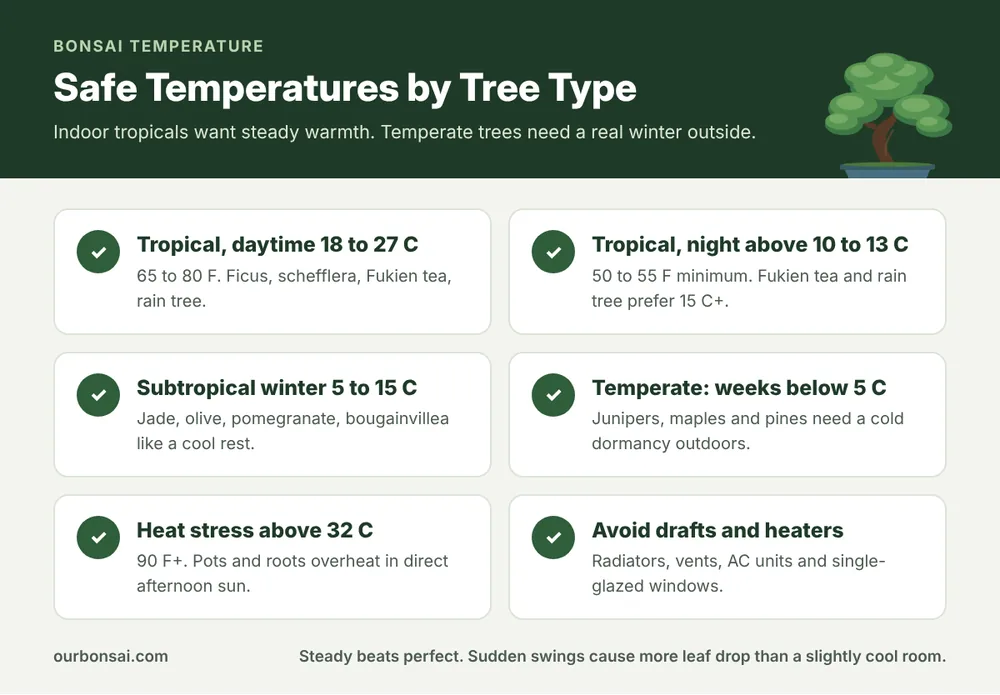
| Tree group | Day | Night minimum | Winter | Heat stress |
|---|---|---|---|---|
| Tropical (ficus, schefflera) | 18 to 27 C / 65 to 80 F | 10 to 13 C / 50 to 55 F | Stay warm, bright | Above 32 to 35 C |
| Sensitive tropical (Fukien tea, rain tree) | 20 to 27 C / 68 to 80 F | 15 C / 59 F | Stay warm, humid | Above 32 C |
| Subtropical (jade, olive, bougainvillea) | 15 to 30 C / 59 to 86 F | 5 C / 41 F | Cool rest at 5 to 15 C | Above 35 C |
| Temperate (juniper, maple, pine) | Outdoor | Outdoor | Several weeks below 5 C | Above 32 C in pots |
Hot and cold spots in a home
Thermostats measure air in the middle of a room. Your bonsai lives somewhere specific, and that spot can be 5 to 10 degrees different.
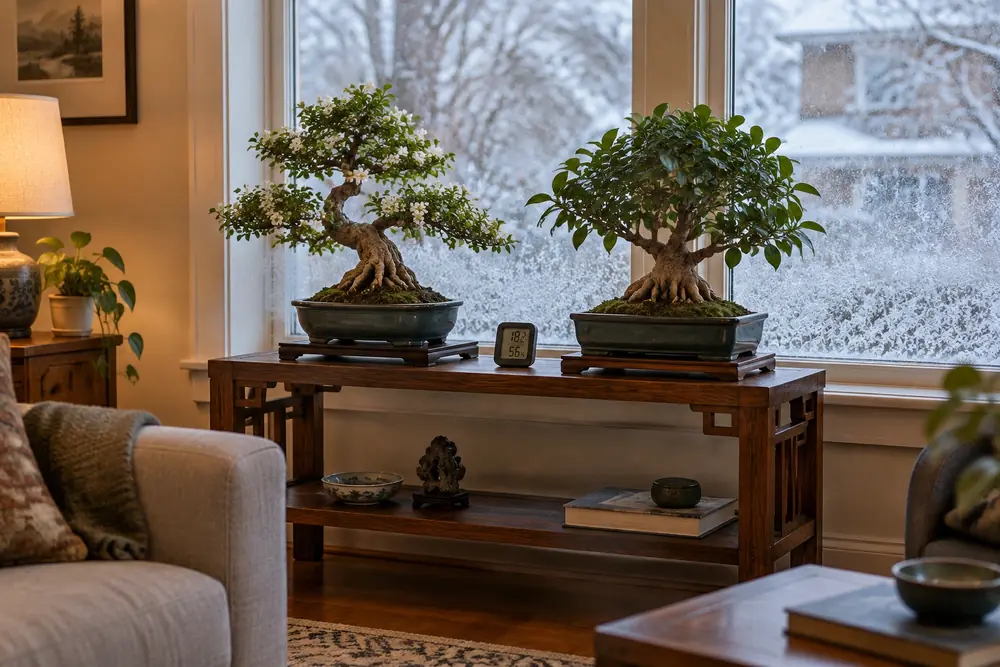
- Windowsills in winter. Great light, but the glass gets very cold at night, especially single glazing. A tree touching the glass can see temperatures several degrees below the room. Pull it back 30 cm to a meter on freezing nights, or slip a sheet of bubble wrap between tree and glass.
- Windowsills in summer. South and west windows can heat a pot to well over 40 C (104 F) in the afternoon. Roots cook faster than leaves.
- Above radiators and near vents. Hot, dry, moving air. Leaf drop and spider mites follow.
- Next to doors. Cold drafts every time the door opens in winter.
- Under air conditioning. Cold, dry blasts in summer.
If you are not sure where to put a tree, our article on the best place for a bonsai tree walks through the options room by room. A cheap digital min-max thermometer next to the tree tells you the truth about a spot within a couple of days.
Temperature, light and water work together
Temperature changes how fast a tree uses water and how much light it can use. A warm, dim room is a bad combination: the tree is pushed to grow but cannot make enough energy, so it produces long, weak shoots. A cool, bright room is often better than a warm, dim one.
- Warm room in winter: add light. A grow light for 12 to 14 hours keeps tropical trees growing evenly; see our guide to indoor grow lights for bonsai.
- Cool room in winter: water less often. Cold soil dries slowly, and wet, cold roots rot.
- Hot summer spells: water more often and shade the pot, not necessarily the leaves. Our tips on watering bonsai in summer cover heat waves.
Signs your bonsai is too cold or too hot
Too cold: sudden yellowing and leaf drop, dark or translucent patches on leaves the morning after a cold night, wilting with wet soil, no new growth for weeks in a room under about 15 C.
Too hot: leaves curling and crisping at the edges, soil drying within hours, wilting in the afternoon that recovers at night, pale bleached patches on leaves facing the window.
Rapid leaf loss after a move or a cold snap is usually temperature shock. It often looks worse than it is. Read our guide to bonsai losing leaves suddenly before changing anything else.
Frequently asked questions
What is the lowest temperature a ficus bonsai can take?
Brief dips to about 5 C (41 F) are survivable for a healthy ficus, but expect leaf drop. Keep it above 10 C (50 F) to be safe, and never let it freeze.
Can I put my indoor bonsai outside in summer?
Yes, and most tropical trees grow better for it, once nights stay above about 12 to 15 C (54 to 59 F). Move it into sun gradually over a week to avoid leaf scorch.
Does a bonsai need a temperature drop at night?
Tropical trees do fine with a small drop of 3 to 5 degrees, which happens naturally in most homes. They do not need a cold period.
Is a heated greenhouse good for winter?
For subtropical and tropical trees, yes, if you can hold the minimums above. For temperate trees, an unheated greenhouse or cold frame is better because it lets them stay dormant.
Final thoughts
Know which group your tree belongs to, keep tropical trees warm and steady, give subtropical trees a cool bright winter, and keep temperate trees outside where they get the cold they need. For the science behind winter dormancy, see the Wikipedia article on chilling requirement, and for day-to-day indoor care, our guide on how to take care of a bonsai tree inside.