
Brussel’s Dwarf Pomegranate Bonsai Review (2026)

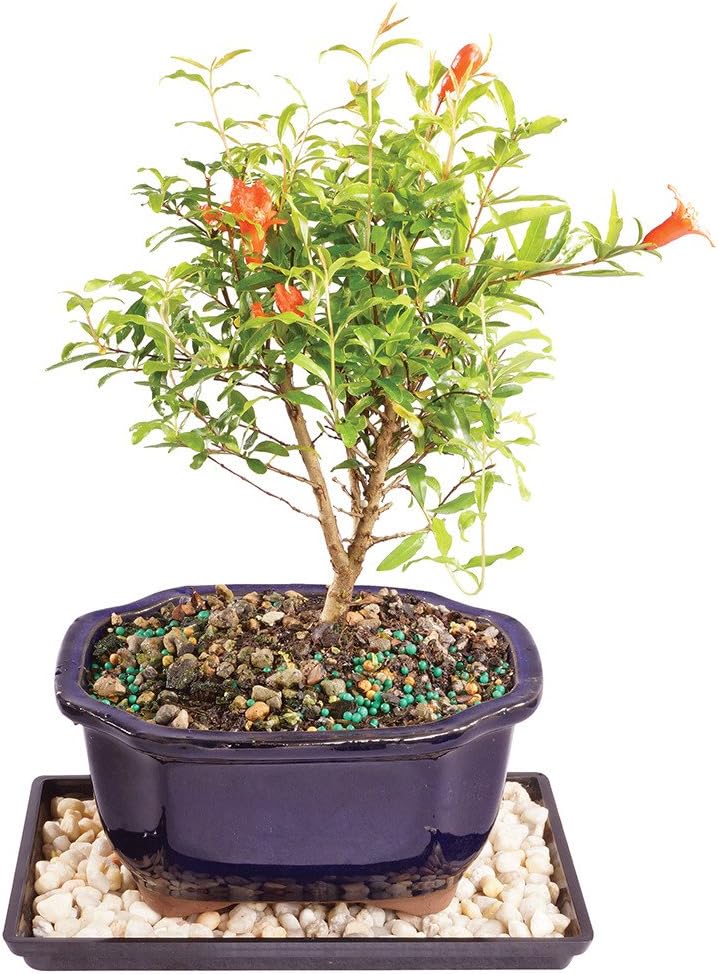
Brussel’s Live Dwarf Pomegranate Bonsai is more interesting than the typical green starter tree because it can produce vivid flowers and tiny ornamental pomegranates. The Amazon version is sold as a five-year-old tree roughly 8 to 12 inches tall and arrives already planted with a decorative container, humidity tray, and deco rock. That makes it attractive for someone who wants an established bonsai instead of starting with seeds. There is one important catch, though: despite being marketed in some listings as an indoor bonsai, pomegranate is a sun-loving, seasonal species, and Brussel’s own care information treats it primarily as an outdoor bonsai. That distinction matters before buying.
Quick Overview and Specifications
| Feature | Details |
|---|---|
| Species | Dwarf Pomegranate (Punica granatum) |
| Advertised age | Approximately 5 years |
| Advertised height | Approximately 8–12 inches |
| Container | Decorative bonsai container; color/style may vary |
| Included | Live tree, soil, humidity tray, deco rock and care information |
| Flowers | Bright coral/red-orange flowers, typically during the warmer growing season |
| Fruit | Can produce small ornamental pomegranates under suitable conditions |
| Placement | Strong sun and outdoor growing-season conditions are preferable |
First Impressions
The appeal is immediate. Unlike a seed kit, this arrives as an established miniature tree with years of nursery growth already behind it. Buyer photos and feedback show considerable natural variation: some specimens arrive leafy and carrying buds, while others are more sparsely branched or lose leaves after shipping. The ceramic-style bonsai pot gives it a finished appearance without requiring an immediate repot.
The most important expectation to set is that you are buying a living tree, not an identical manufactured decoration. Trunk shape, canopy density, flower count and container color can differ from the listing photography. That variability is normal, although severely damaged or unhealthy arrivals are a different matter.
Performance & Feel
As a bonsai, the dwarf pomegranate rewards a more involved owner than a very forgiving ficus or succulent. It prefers a warm, sunny and airy growing position. Soil should be watered thoroughly when it begins to dry rather than kept permanently wet. Flowering and hot summer weather can increase water demand.
The compact leaves, fine branching and ability to respond to pruning make it satisfying to shape over time. If you are still learning watering technique, our guide to taking care of a bonsai tree indoors explains why checking soil moisture is more useful than watering on a rigid calendar.
One caveat is placement. A bright window or grow light may keep a pomegranate looking healthy for periods indoors, but the species naturally benefits from stronger sun, airflow and seasonal changes. Buyers specifically wanting an easy permanent houseplant should compare other popular indoor bonsai species before deciding.
Flowering, Fruiting & Seasonal Behavior
This is where the pomegranate separates itself from ordinary foliage bonsai. Brussel’s describes coral-colored flowers developing from spring through summer, with fruit later in the season. Experienced pomegranate-bonsai guidance likewise recommends plenty of sun for vigorous flowering and fruit development.
Do not assume your tree will arrive covered in blooms or fruit. Flowering varies with season, light, health and shipping stress. Buyer reports include examples of flowers dropping shortly after delivery and then new buds appearing after the tree recovered in bright conditions. Leaf loss can also be seasonal because pomegranate is deciduous or semi-deciduous rather than permanently evergreen.
Durability and Long-Term Ownership
For a live plant, “durability” is mostly about shipping survival and how well the tree rebounds once acclimated. Feedback is mixed but encouraging overall. Numerous owners describe secure packaging and healthy arrivals, while others report broken branches, leaf loss or severely stressed specimens. Brussel’s offers a 30-day satisfaction policy, which is useful because shipping condition is one of the largest variables with live bonsai.
Long-term survival can be very good when its needs are met. One buyer reported a tree still doing well after four years. Protection from hard frost remains important, and mature trees eventually need routine bonsai work such as pruning, fertilizing and repotting.
Value for Money
The value comes from receiving a five-year nursery-grown tree already presented in a bonsai container rather than paying only for raw plant material. You also get the tray and decorative finishing materials. The downside is that you pay for convenience while accepting the uncertainty inherent in shipping a live tree.
For someone who specifically wants flowers and miniature fruit, the package is attractive. If the goal is simply the easiest possible first bonsai, a more forgiving species may offer better practical value.
How It Compares With Similar Bonsai
A direct alternative is Bonsai Boy’s five-year Dwarf Pomegranate, which is also around 10 inches tall and emphasizes the same flowering and fruiting characteristics. That option is often sold without the complete tray-style presentation, while Brussel’s Amazon package is positioned as a more immediately display-ready set.
Within Brussel’s lineup, the five-year Chinese Elm is a different proposition. It is prized for small leaves, predictable branching and beginner-friendly training rather than showy flowers. Our Brussel’s Chinese Elm review is useful if shaping and traditional bonsai structure matter more to you than fruit.
Another alternative is Dwarf Jade. Its water-storing leaves make missed watering less punishing, so the Brussel’s Dwarf Jade bonsai generally makes more sense for busy indoor growers. The Pomegranate wins on seasonal flower-and-fruit interest, while Jade wins on forgiving ownership.
Pros & Cons
Pros
- Established five-year tree rather than seeds or a tiny cutting.
- Can produce attractive coral-red flowers and miniature fruit.
- Compact 8–12-inch advertised size suits small displays.
- Decorative container, humidity tray and deco rock are included.
- Good potential for pruning and long-term bonsai development.
Cons
- Not a true low-light, indoor-only bonsai despite some retail wording.
- Individual trees can look noticeably different from listing photos.
- Live-plant shipping can cause damaged branches or leaf drop.
- Flowers and fruit are seasonal, not guaranteed on arrival.
Who Should Buy This?
Buy it if you want your first bonsai to offer more visual change than an evergreen foliage tree and you have a sunny patio, balcony or similarly bright growing position. It also makes an interesting gift for an owner who already enjoys plants and understands that a bonsai needs ongoing care.
Skip it if your only placement option is a dark office shelf, if you expect the delivered specimen to look exactly like a stock photo, or if you want an almost forget-it-and-water-it-occasionally houseplant.
Extended FAQ
Is Brussel’s Dwarf Pomegranate really an indoor bonsai?
It is marketed as indoor in some retail listings, but Brussel’s current species guidance treats pomegranate as an outdoor bonsai. It can be displayed indoors temporarily, but strong sun, fresh air and seasonal conditions are better for long-term health.
Does it produce real pomegranates?
Yes, a healthy dwarf pomegranate can develop small ornamental fruit after flowering. Fruit production depends on plant health, light, pollination and growing conditions, so it should not be treated as guaranteed.
How often should I water it?
Water according to soil condition rather than a fixed schedule. When the soil begins drying, soak it thoroughly until water drains from the pot. Flowering trees and hot summer conditions may need water more frequently.
Will my bonsai look exactly like the Amazon photo?
No. Every live bonsai has a different trunk, branch structure and canopy. Pot color and style may also vary. Natural variation is part of buying a living tree.
Can a beginner grow this bonsai?
Yes, provided the beginner can supply strong light and learns proper watering. It is somewhat less forgiving of indoor placement mistakes than ficus or Dwarf Jade.
Is leaf loss after delivery always a sign the tree is dying?
No. Shipping stress, seasonal changes and acclimation can cause temporary leaf drop. However, extensive browning, damaged branches or continued decline should be addressed quickly, particularly during the seller’s satisfaction period.
Final Verdict
Brussel’s Live Dwarf Pomegranate Bonsai earns its appeal through features that are genuinely unusual at this price and size: an established miniature tree, warm-colored flowers, possible ornamental fruit and a display-ready container set. It is considerably more engaging than buying a generic green desk plant.
The main reason not to buy it is equally specific. Calling it an indoor bonsai can create the wrong expectations. This species performs best when treated as a sun-loving seasonal bonsai rather than permanent low-light décor. If you can provide that environment and are comfortable with the natural variability of shipped live plants, it is a rewarding and distinctive starter tree.
As an Amazon Associate, we earn from qualifying purchases…