How to Get Rid of Aphids on Bonsai

Quick Answer
To get rid of aphids on bonsai, isolate the affected tree, rinse visible aphids away with water, then inspect tender shoots and leaf undersides. If aphids remain, use a labeled insecticidal soap or horticultural oil according to the product directions and the guidance from UC Integrated Pest Management.
Quick aphid removal steps
- Isolate the bonsai: Move it away from other trees so crawling or winged aphids cannot spread.
- Inspect new growth: Check shoot tips, buds, stems, and both sides of every affected leaf.
- Rinse the insects: Use a controlled stream of water that removes aphids without damaging fine branches.
- Treat survivors: Apply a labeled insecticidal soap or horticultural oil if physical removal is not enough.
- Check again: Reinspect the tree every few days because missed aphids can rebuild the population quickly.
One important caution
- Avoid homemade dish-detergent sprays. Commercial insecticidal soaps are formulated for plants and are easier to use safely.
Aphids can turn healthy bonsai growth into curled, sticky foliage surprisingly fast. I usually notice them first on tender spring shoots, where the leaves are soft and crowded.
The good news is that most aphid problems are manageable without aggressive treatment. This guide shows you how to identify them, remove them safely, choose treatments, and prevent another outbreak.
In This Guide
- What Do Aphids Look Like on Bonsai?
- How Do You Get Rid of Aphids on Bonsai Quickly?
- Which Aphid Treatment Is Safest for Bonsai?
- Can Neem Oil or Horticultural Oil Kill Aphids?
- How Do You Keep Aphids From Coming Back?
- Frequently Asked Questions About Aphids on Bonsai
- Final Takeaway: Clear Aphids Without Over-Treating
What Do Aphids Look Like on Bonsai?
Aphids are small, soft-bodied insects that feed by drawing sap from plant tissue. On bonsai, they commonly cluster around new shoots, buds, young leaves, and leaf undersides.
They can be green, black, brown, yellow, gray, or reddish. Color alone is therefore a poor way to identify them.
- Clusters on fresh growth: Aphids favor soft tissue that is easy to feed from.
- Curled leaves: Heavy feeding can distort expanding foliage.
- Sticky leaves: Aphids produce sugary waste called honeydew.
- Black surface coating: Sooty mold may grow on accumulated honeydew.
- Ant activity: Ants may visit aphid colonies to collect honeydew.
- White skins: Pale shed skins can remain around an active colony.
I like using a 10× hand lens when the insects are difficult to confirm. It also helps distinguish aphids from spider mites, scale crawlers, or tiny beneficial insects.
Bonsai Empire’s pest and disease guide also lists aphids among the common insects growers may encounter.
Why aphids can be harder on bonsai
A mature landscape shrub can often tolerate moderate aphid feeding. A bonsai has a smaller canopy, limited root volume, and carefully maintained new growth.
That makes distorted shoots more noticeable. Heavy infestations can also interfere with the fine branching you are trying to develop.
Aphids are especially frustrating after structural pruning. The fresh shoots you want to keep are often the same shoots aphids prefer.
How Do You Get Rid of Aphids on Bonsai Quickly?
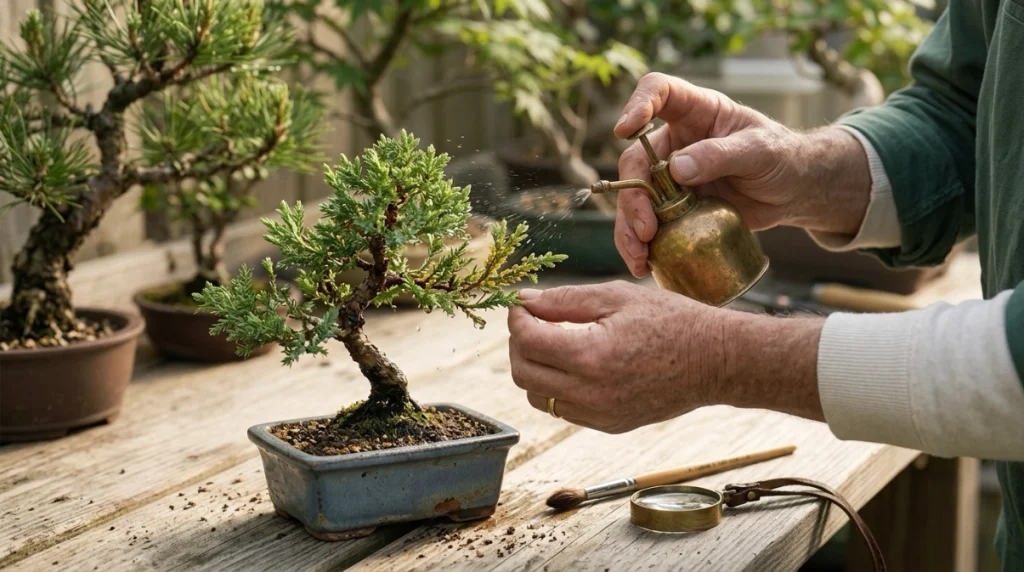
The fastest safe approach is usually isolation, physical removal, and repeated inspection. Do not reach for the strongest pesticide before checking how serious the infestation is.
Step 1: Move the affected bonsai
Place the tree away from the rest of your collection. Keep its normal light, airflow, and temperature needs in mind while choosing the temporary location.
Inspect neighboring plants at the same time. Look closely at branches that were touching the affected bonsai.
Step 2: Remove visible aphids
For a small colony, I often start with fingers, a soft brush, or water. This immediately reduces the number of insects feeding on the tree.
- Support delicate branches before rinsing.
- Aim water at leaf undersides and shoot tips.
- Avoid blasting loose bonsai soil from the pot.
- Remove badly curled leaves if they hide large colonies.
A forceful water spray is a recognized nonchemical aphid-control method. The University of Maryland Extension also recommends starting with low-impact management when practical.
Step 3: Clean sticky honeydew
Honeydew does not mean the aphids are still alive. However, removing the sticky residue makes follow-up inspections much easier.
Use clean water and a soft cloth on sturdy leaves. Work gently around delicate foliage and fresh shoots.
Step 4: Reinspect instead of assuming they are gone
I check a treated tree every two or three days for about two weeks. That is my practical monitoring routine, not a fixed biological rule.
Look for newly appearing clusters, fresh honeydew, distorted growth, and winged aphids. Finding one survivor early is easier than treating another large outbreak.
Section Takeaway: Remove as many aphids as possible before spraying. A small bonsai often needs less pesticide when physical removal does most of the work first.
Which Aphid Treatment Is Safest for Bonsai?
Commercial insecticidal soap is usually one of the first treatment options worth considering. It works best when the spray directly contacts soft-bodied pests such as aphids.
Use a product labeled for the plant and growing environment. Never assume a stronger mixture will work better.
| Method | Best Use | Residual Control | Main Bonsai Caution |
|---|---|---|---|
| Water rinse | Light infestations | None | Protect fine branches and soil |
| Insecticidal soap | Exposed aphids | Little to none after drying | Full contact is needed |
| Horticultural oil | Persistent exposed colonies | Limited | Heat and species sensitivity |
| Neem/azadirachtin product | Selected labeled situations | Product-dependent | Follow the exact formulation label |
Why insecticidal soap works
Insecticidal soaps contain potassium salts of fatty acids. They damage susceptible soft-bodied insects when the spray contacts them directly.
Once dry, these soaps provide little or no continuing insecticidal activity. That is why complete coverage matters more than soaking the tree repeatedly.
Colorado State University Extension notes that insecticidal soap must wet the target pest and may damage sensitive plants.
Why I avoid homemade dish-soap recipes
Household detergents are not the same as commercial insecticidal soap. Their surfactants, fragrances, degreasers, and other ingredients can injure foliage.
Bonsai leaves may be especially valuable after months of careful development. I would rather use a labeled product than gamble on an improvised concentration.
Test any treatment on a small area when the label permits it. Give the foliage time to show any adverse reaction before treating the entire canopy.
Can Neem Oil or Horticultural Oil Kill Aphids on Bonsai?
Yes, labeled horticultural oils and some neem-derived products can help control aphids. Their effectiveness depends on the formulation, coverage, temperature, and bonsai species.
Horticultural oil
Horticultural oils mainly work by coating exposed pests. Thorough coverage is therefore important.
Do not treat a drought-stressed bonsai. Extension guidance also warns against applying soaps or oils during extreme heat.
UC IPM advises avoiding these materials when temperatures exceed about 90°F (32°C). Always follow the product label if it sets a lower temperature limit.
Neem oil and azadirachtin are not identical
The word “neem” appears on several different products. Some contain clarified neem oil, while others use the neem-derived active ingredient azadirachtin.
Read the active ingredient and directions instead of treating every neem product as interchangeable. Application intervals and plant restrictions can differ.
Spraying technique matters
- Spray the insects: Contact products cannot kill aphids they never reach.
- Check leaf undersides: Colonies often hide there.
- Avoid midday heat: Choose conditions allowed by the product label.
- Protect flowers: Avoid unnecessary exposure of pollinators and beneficial insects.
- Repeat only as directed: More frequent spraying can increase foliage injury.
For delicate Japanese maple foliage, I am particularly cautious with oils during hot weather. A treatment that kills aphids but scorches the canopy is not a successful treatment.
How Do You Keep Aphids From Coming Back?
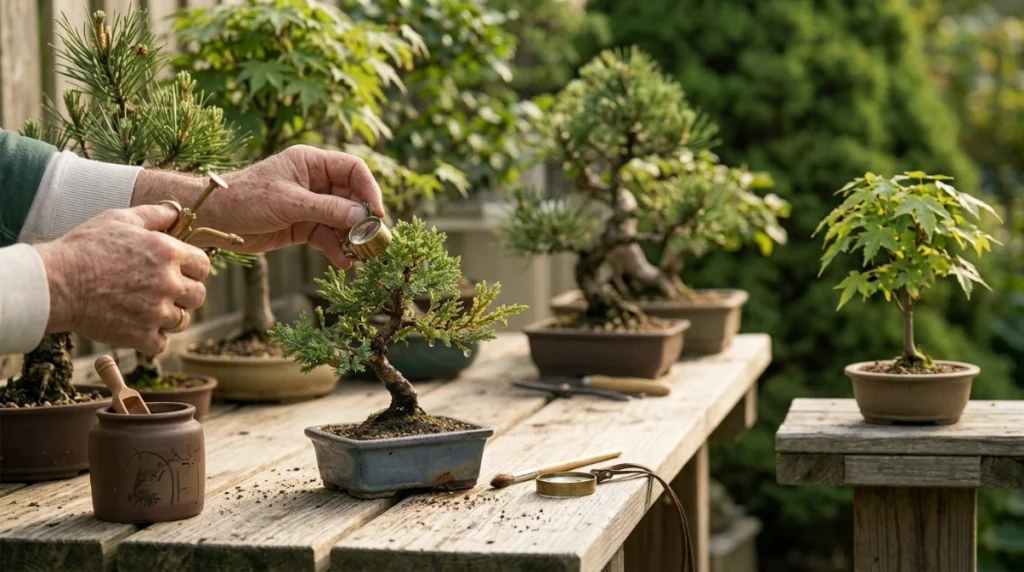
Preventing aphids is mostly about early detection and balanced bonsai care. You cannot guarantee that an outdoor tree will never receive another flying aphid.
Inspect new growth regularly
During active growth, look at shoot tips whenever you water. This habit takes seconds and often catches a colony before leaves become badly distorted.
- Check the newest leaves first.
- Turn leaves over to inspect their undersides.
- Look inside dense branch junctions.
- Watch for sticky honeydew before insects become obvious.
Avoid excessive nitrogen growth
Too much nitrogen can produce lush, soft growth that aphids readily colonize. Feed according to the species, season, development stage, and fertilizer label.
Do not stop fertilizing a healthy tree simply because aphids appeared. The goal is balanced growth, not nutrient starvation.
Protect beneficial insects
Lady beetles, lacewing larvae, hoverfly larvae, and parasitoid wasps naturally attack aphids. Broad-spectrum insecticides can remove these helpers along with the pest.
That is one reason I prefer the least disruptive control that solves the problem. integrated pest management uses that same principle: identify the pest, monitor it, and escalate only when needed.
Quarantine incoming bonsai
Keep newly purchased or recently acquired trees separate from your established collection at first. Inspect foliage, stems, bark crevices, and the soil surface during that period.
If aphids appear, treatment is easier while only one tree is affected. Clean tools and work surfaces before moving back to healthy bonsai.
As of 2026, this low-impact approach remains consistent with current extension guidance. Start physically, use targeted products when necessary, and continue monitoring afterward.
Section Takeaway: Prevention is not about spraying on a schedule. Frequent inspection, balanced feeding, quarantine, and beneficial insects usually provide better long-term control.
Frequently Asked Questions About Aphids on Bonsai
Can aphids kill a bonsai tree?
A light aphid infestation rarely kills an otherwise healthy bonsai. A large or prolonged infestation can weaken growth, distort new leaves, and increase stress, especially on a small or already struggling tree.
Should I repot a bonsai because it has aphids?
Usually not. Aphids normally feed above ground, so repotting adds unnecessary stress unless you have a separate root or soil problem that justifies it.
*Pro tip: Repotting and root pruning are irreversible procedures. If the tree is already weak, consult an experienced grower or local bonsai club before disturbing its roots.*
Does plain water remove aphids from bonsai?
Yes. A controlled stream of water can knock many aphids from leaves and shoots, making it an excellent first treatment for a manageable infestation.
Support fragile branches and prevent the water stream from washing bonsai soil out of the container.
How often should I spray insecticidal soap?
Follow the interval printed on the product label. Contact treatments may require another application because hidden aphids or later generations can survive the first spray.
Do not shorten the interval simply because you still see damaged leaves. Old leaf distortion will not disappear immediately after the aphids die.
Will aphids spread from one bonsai to another?
Yes. Winged aphids can move between plants, while close contact can make short-distance spread easier.
Separate the affected tree and inspect neighboring bonsai until you are confident the infestation is controlled.
Are ants a sign of aphids on bonsai?
Ant activity can be a useful clue because ants are attracted to sugary honeydew. However, ants alone do not confirm an aphid infestation.
Look closely for aphids, scale insects, mealybugs, or other honeydew-producing pests before choosing a treatment.
Can I use dish soap to kill aphids on bonsai?
I do not recommend it. Household dish detergents are not formulated or labeled as plant pesticides and can damage foliage.
A commercial insecticidal soap gives you a known formulation and clear application directions. That matters when treating a valuable bonsai canopy.
Final Takeaway: Clear Aphids Without Over-Treating
When you find aphids on bonsai, start simple. Isolate the tree, inspect every growing tip, remove visible insects, and rinse the foliage when the branches can tolerate it.
If aphids persist, move to a labeled insecticidal soap, horticultural oil, or other product approved for that plant and setting. Cover the insects thoroughly while respecting temperature and species-sensitivity warnings.
The biggest mistake is treating the tree harder than the infestation requires. A bonsai needs its foliage protected as much as it needs the aphids removed.
Keep checking new growth for the next couple of weeks. Catching five aphids early is much easier than dealing with hundreds later.
