
How to Quarantine a Bonsai With Pests

Finding insects, webbing, sticky residue, or suspicious bumps on a bonsai can be worrying—especially when other trees are growing nearby. Many common pests can move from one plant to another, and a small infestation can become much harder to control if it reaches an entire collection.
Learning how to quarantine a bonsai with pests gives you time to identify the problem, treat it carefully, and monitor the tree without exposing healthy plants. The goal is not simply to move the bonsai somewhere else. A proper quarantine combines physical separation, good growing conditions, pest identification, targeted treatment, sanitation, and repeated inspection.
This guide explains exactly how to set up a quarantine area, what to check, how long to keep the tree isolated, and how to decide when it is safe to return the bonsai to your collection.
Quick Answer
To quarantine a bonsai with pests, immediately separate it from all healthy plants, inspect the foliage, branches, trunk, and soil, identify the pest, and use the least aggressive effective treatment. Keep the bonsai isolated for at least two to three weeks after the last pest activity, inspecting it regularly before returning it to your collection.
Why Pest Quarantine Matters for Bonsai
Bonsai trees are grown close together surprisingly often. A shelf, windowsill, greenhouse bench, or outdoor display may hold several trees within a few feet of one another.
That makes pest movement easier.
Spider mites can spread between nearby foliage. Aphids and whiteflies may move or fly from plant to plant. Mealybugs and scale insects can hitchhike on tools, hands, pots, or plant material.
Penn State Extension recommends isolating affected plants to reduce the chance of pests spreading to neighboring plants and notes that newly introduced plants are ideally kept separate for about three weeks. Penn State Extension guidance on indoor plant pests
Quarantine also gives you a controlled environment where you can monitor whether treatment is actually working.
Moving the tree away from other bonsai is only the first step.
Step-by-Step: How to Quarantine a Bonsai With Pests
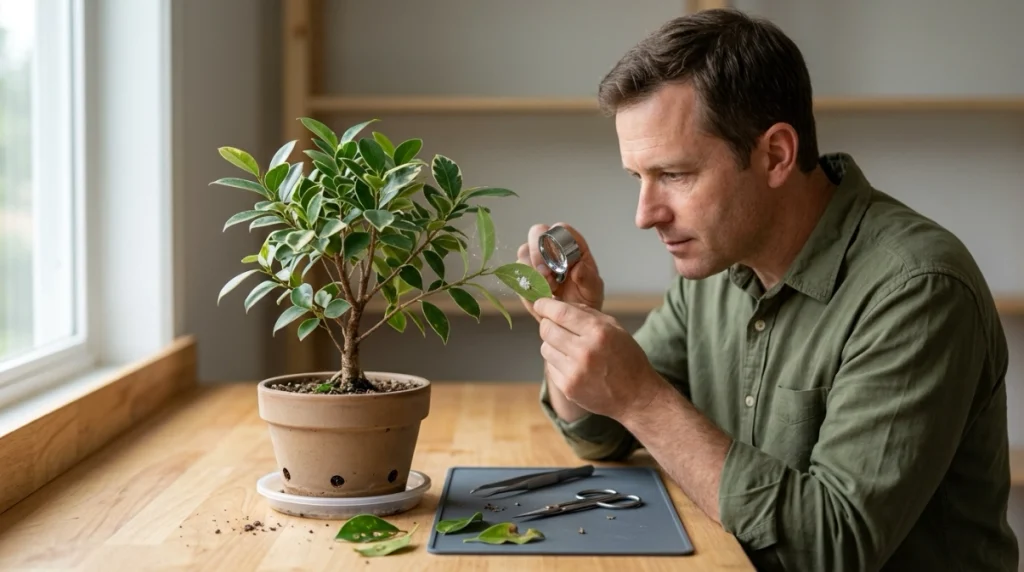
1. Move the Bonsai Away From Healthy Plants Immediately
As soon as you confirm or strongly suspect pests, relocate the tree.
Ideally, use:
- A separate room for indoor bonsai
- A separate greenhouse section
- A sheltered outdoor bench away from other trees
- A balcony or patio area appropriate for the species
- A dedicated plant-care area with washable surfaces
Try to maintain several feet of distance at minimum, but a separate room or isolated growing zone is better when practical.
Do not sacrifice the bonsai’s environmental needs just to achieve isolation.
A tropical ficus that needs warm temperatures should not be moved into a freezing garage. Likewise, a temperate outdoor bonsai should not be kept indoors for weeks simply because the room is convenient.
The quarantine area should still provide appropriate light, airflow, temperature, and watering conditions for that species.
2. Inspect the Entire Tree Carefully
Do not treat the bonsai based only on the first insect you notice.
Use a bright light and, if available, a small magnifying lens. Examine:
- Tops and undersides of leaves
- New shoots
- Leaf joints and branch crotches
- Twigs and branches
- Cracks in rough bark
- The trunk
- Soil surface
- Drainage holes
- Pot rim and underside
- Nearby fallen leaves or debris
Different pests hide in different places.
Spider mites often collect on leaf undersides and may create extremely fine webbing. Mealybugs frequently look like small pieces of white cotton. Scale insects may resemble brown, tan, or gray bumps attached tightly to stems or leaves.
Aphids often cluster around soft new shoots.
Sticky residue called honeydew is another clue. Sap-feeding insects such as aphids, scale, and mealybugs can produce this sugary material.
3. Identify the Pest Before Choosing a Treatment
Pest identification matters because different problems require different approaches.
| What You Notice | Possible Pest | Useful First Response |
|---|---|---|
| Fine webbing and stippled leaves | Spider mites | Rinse foliage and begin targeted mite control |
| White cotton-like clusters | Mealybugs | Remove visible pests and monitor hidden areas |
| Brown or tan fixed bumps | Scale insects | Physically remove manageable populations and treat appropriately |
| Soft insects clustered on shoots | Aphids | Wash off small populations and monitor new growth |
| Tiny flying insects around wet soil | Fungus gnats | Reduce excessive moisture and monitor adults |
| Tiny insects that move quickly on foliage | Thrips | Isolate carefully and use sticky traps for monitoring |
Do not assume that every yellow leaf means pests.
Yellowing can also result from:
- Overwatering
- Underwatering
- Root damage
- Poor light
- Seasonal leaf drop
- Nutrient problems
- Recent repotting stress
Similarly, black or mushy roots may indicate root rot, which requires different management from an insect infestation.
4. Start With the Least Aggressive Effective Control
A bonsai already weakened by pests may be more sensitive to additional stress.
For a light infestation, physical control may be enough to reduce the population while you continue monitoring.
Depending on the pest, this can include:
- Removing clearly infested fallen leaves.
- Washing suitable foliage with a controlled stream of water.
- Manually removing visible insects.
- Cleaning the pot rim and work surface.
- Pruning a small number of severely infested shoots when necessary.
Avoid removing large amounts of foliage from a weak tree.
Heavy pruning, complete defoliation, aggressive root work, and pest treatment at the same time can overwhelm an already stressed bonsai.
Colorado State University Extension notes that horticultural oils and insecticidal soaps can be useful against several common plant pests, but their effectiveness varies depending on the pest. Colorado State University guidance on managing plant pests
Expert Tip
Expert Tip: Treat the pest population, but protect the tree’s strength. If a bonsai is weak, start with careful isolation, manual pest reduction, and the mildest suitable treatment rather than combining aggressive spraying, pruning, repotting, and fertilizing in one day.
5. Use Pest-Control Products Carefully
Sometimes physical removal is not enough.
Depending on the pest, growers may consider products such as insecticidal soap, horticultural oil, or another pesticide specifically labeled for the target pest and intended use.
Never assume that a product is safe for every bonsai species.
Thin or tender foliage may react differently from tough evergreen foliage. Certain oils and sprays may cause leaf damage under strong sunlight or high temperatures.
Before treating the entire bonsai:
- Identify the pest as accurately as possible.
- Read the complete product label.
- Confirm the plant/site and pest are covered by the directions.
- Follow the stated concentration.
- Observe temperature and sunlight restrictions.
- Use required protective equipment.
- Keep children and pets away as directed.
- Consider testing a small area when appropriate.
The U.S. Environmental Protection Agency explains that pesticide labels specify where a product may be used, which pests it controls, the permitted application methods, application rates, and required restrictions. EPA pesticide label guidance
More pesticide is not better. Excessive concentration can injure foliage without improving control.
6. Keep Quarantine Tools Separate
Pests can spread without crawling directly from one tree to another.
During quarantine, consider keeping a separate set of basic supplies nearby:
- Small pruning scissors
- Tweezers
- Watering container
- Cleaning cloth
- Inspection magnifier
- Sticky monitoring cards
- Disposable gloves when appropriate
If you use the same tools throughout your collection, clean them before moving from the quarantined tree to a healthy tree.
Remove fallen leaves and dead plant material promptly.
Avoid carrying the quarantine tree around the rest of your collection during treatment.
7. Maintain Normal Bonsai Care During Quarantine
Quarantine does not mean neglect.
Continue caring for the tree according to its species and season.
Water Normally
Check the soil rather than watering according to a fixed quarantine schedule.
A common mistake is giving an infested bonsai extra water because it appears stressed. If the root zone stays constantly wet, this can create additional problems.
Fungus gnats, for example, are commonly associated with moist growing media, while overwatering can also contribute to poor root health.
Provide Suitable Light
Keep the bonsai in appropriate light unless the treatment label temporarily requires reduced sunlight.
Do not move a sun-loving outdoor tree into a dark indoor corner for several weeks.
Be Conservative With Fertilizer
A pest-infested tree does not automatically need extra fertilizer.
Fertilizer cannot directly cure an infestation.
If the tree is severely stressed, recently repotted, losing large amounts of foliage, or suffering root problems, heavy feeding may add unnecessary stress. Resume or continue feeding according to the species, season, and actual condition of the tree.
How Often Should You Inspect a Quarantined Bonsai?
Inspect an actively infested bonsai every few days during the early stages of treatment.
You are looking for trends rather than expecting immediate perfection.
Record whether you see:
- Live adults
- Crawling immature pests
- New webbing
- New cotton-like material
- New scale insects
- Fresh leaf damage
- Sticky residue
- Yellowing or dropping foliage
Sticky monitoring cards can help detect flying insects such as fungus gnats, whiteflies, and some thrips, although they do not eliminate every stage of an infestation.
If pest numbers continue increasing, reassess your identification and treatment.
How Long Should a Bonsai With Pests Stay in Quarantine?
There is no single quarantine duration that works for every pest.
As a practical rule, keep the bonsai isolated for at least two to three weeks after you stop seeing active pests, and longer for persistent infestations.
Why wait after the visible pests disappear?
Many pests have life stages that are difficult to see. Eggs or immature insects may survive the first treatment and become noticeable later.
Do not end quarantine simply because the tree looks clean the morning after spraying it.
A Bonsai Is Closer to Leaving Quarantine When:
- No live pests are found during repeated inspections.
- No new webbing or sticky residue appears.
- New growth looks healthy.
- Pest numbers on monitoring traps stop increasing.
- Required repeat treatments have been completed.
- The tree is showing stable or improving vigor.
For a severe scale, mealybug, mite, or thrips problem, extending quarantine is usually safer than rushing the tree back into the collection.
Should You Repot a Bonsai During Pest Quarantine?
Usually, not unless there is a clear reason involving the root zone or soil.
Repotting is stressful because roots are disturbed. Combining root pruning with severe pest stress can weaken the tree unnecessarily.
Repotting may make sense when:
- The pest is strongly associated with the growing medium.
- The soil is badly degraded.
- Root rot is also present.
- The root system requires urgent attention.
- A knowledgeable grower recommends it.
For purely foliage-feeding pests such as many aphids or spider mites, repotting may offer little benefit.
Species and season matter as well. A vigorous tropical bonsai may tolerate root work differently from a dormant or weakened temperate tree.
Do not perform emergency root pruning simply because insects are present on the leaves.
Cost and Supply Considerations
You do not need an expensive quarantine system.
A basic setup can be inexpensive:
| Item | Budget Approach | When Higher Quality Helps |
|---|---|---|
| Magnifier | Simple handheld lens | Frequent pest identification |
| Sticky traps | Low-cost multipack | Large plant collection |
| Pruning tool | Existing clean scissors | Precision bonsai work |
| Treatment product | Small ready-to-use bottle | Multiple affected plants |
| Quarantine space | Separate shelf or area | Dedicated greenhouse collection |
| Gloves/cleaning supplies | Basic household supply | Frequent treatment work |
A durable magnifying lens and quality bonsai scissors can be worthwhile because they remain useful after quarantine ends.
However, buying several pesticides before identifying the pest is usually poor value.
Accurate diagnosis saves both money and unnecessary chemical exposure.
Common Mistakes Bonsai Owners Should Avoid
- Putting the tree only a few inches away from healthy bonsai. Nearby foliage may still allow pests to spread.
- Treating once and ending quarantine immediately. Eggs or hidden pest stages may survive.
- Overwatering a stressed tree. Pest damage does not mean the roots need permanently wet soil.
- Using a stronger pesticide concentration than the label allows. This can burn or weaken foliage.
- Treating without identifying the pest. A product effective against aphids may not solve a mite or scale problem.
- Aggressively pruning and repotting simultaneously. Multiple stressors can reduce recovery.
- Ignoring the pot and soil surface. Some pests or life stages may occur outside the visible canopy.
- Returning the bonsai to the collection as soon as adult insects disappear. Continue monitoring through the expected treatment cycle.
- Using contaminated tools on healthy trees. Clean equipment after working with an infested plant.
Preventing Pests From Spreading to Other Bonsai
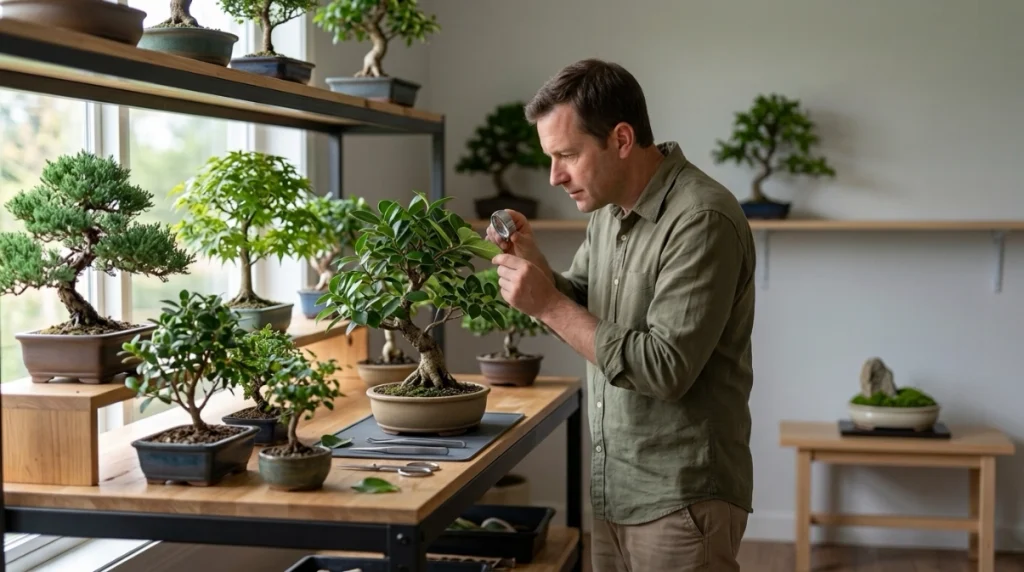
While one tree is quarantined, inspect the rest of your collection.
Pay particular attention to plants that were closest to the affected bonsai.
Look underneath leaves and around branch joints rather than simply viewing the trees from a distance.
For future purchases, consider isolating new bonsai before placing them directly into an established collection. University of Minnesota Extension also recommends quarantining new plant additions until you are confident that unwanted pests are not present. University of Minnesota Extension houseplant pest advice
Early detection is much easier than controlling an infestation across ten or twenty trees.
When to Ask an Experienced Bonsai Grower or Arborist
Many mild pest problems can be handled successfully at home, but professional or experienced help is worthwhile when the diagnosis is uncertain or the tree is deteriorating quickly.
Seek additional guidance when:
- A valuable or old specimen is involved.
- The bonsai is losing foliage rapidly.
- Major branches are dying.
- Roots are black, soft, or foul-smelling.
- You cannot identify the pest.
- Repeated treatments have failed.
- Pest damage is combined with suspected fungal or bacterial disease.
- You are considering major root work on a weak tree.
- The correct pesticide treatment is unclear.
- The tree has sentimental or significant financial value.
An experienced bonsai grower can also help distinguish normal seasonal behavior from genuine pest damage.
For difficult diagnoses, a university plant diagnostic laboratory, extension service, qualified arborist, or experienced bonsai professional may be more useful than repeatedly trying different treatments.
FAQs
Can I keep a quarantined bonsai in the same room as other plants?
A separate room is preferable when dealing with an active infestation. If that is impossible, create as much physical separation as practical and prevent foliage from touching. Flying pests can still move across a room, so monitor nearby plants closely.
How long should I quarantine a bonsai after treating pests?
Keep it isolated for at least two to three weeks after the last visible pest activity as a practical baseline. Persistent pests may require a longer period and several treatment cycles before the tree is safe to return.
Should I spray a bonsai before putting it into quarantine?
Isolation should come first. Then identify the pest and decide whether spraying is necessary. Some minor infestations can initially be reduced mechanically, while others need targeted treatment. Always follow the treatment label.
Can spider mites spread from one bonsai to another?
Yes. Spider mites can spread through a closely grouped plant collection, particularly when foliage is near or touching. An affected bonsai should be separated and nearby plants inspected carefully.
Should I change the bonsai soil when pests are found?
Not automatically. Many pests live primarily on foliage or stems, so replacing the soil may create unnecessary root stress. Consider repotting only when soil conditions, root problems, or soil-associated pests justify it.
Can I fertilize a bonsai while it is quarantined?
Possibly, but fertilize according to the tree’s species, season, and health rather than because it has pests. Severely weakened or recently repotted bonsai may benefit from a conservative approach until their condition stabilizes.
When is a quarantined bonsai safe to return to my collection?
Return it only after repeated inspections show no active pests, fresh damage, webbing, or other infestation signs and any required treatment cycle has been completed. Waiting a little longer is safer than reintroducing pests to an entire collection.
Conclusion
Knowing how to quarantine a bonsai with pests can prevent one manageable infestation from becoming a collection-wide problem. Separate the affected tree quickly, identify the pest carefully, maintain proper bonsai care, use the least aggressive effective treatment, and inspect the tree repeatedly.
Do not rush the process. A bonsai that looks pest-free immediately after treatment may still contain eggs or hidden immature pests.
Keep the tree isolated until it has remained free of new pest activity for at least two to three weeks, extending that period when the infestation is persistent or uncertain.
Most importantly, protect the health of the tree while treating the pest. Avoid unnecessary combinations of heavy pruning, repotting, overwatering, and aggressive chemical treatment.
Once your bonsai has completed quarantine, give it one final careful inspection before returning it to the collection—and continue checking all your trees regularly so the next pest problem is caught while it is still small.
