
How Long Should You Quarantine a New Bonsai?

Bringing home a new bonsai is exciting, but putting it immediately beside your established trees can create an unnecessary risk. A new tree may carry scale insects, spider mites, aphids, mealybugs, fungus gnats, or disease symptoms that were difficult to notice at the nursery or during shipping.
So, how long should you quarantine a new bonsai? For most trees, a quarantine period of about 3–4 weeks is a sensible target. During that time, keep the bonsai physically separated from your collection and inspect it regularly.
Quarantine is not about assuming every new tree is unhealthy. It is a simple preventive habit that gives hidden problems time to become visible before they can spread.
This guide explains how long to isolate a new bonsai, where to keep it, what to inspect, what warning signs matter, and when it is safe to introduce the tree to the rest of your collection.
Quick Answer
Quarantine a new bonsai for about 3–4 weeks before placing it with your existing trees. Keep it in a separate growing area, inspect the leaves, branches, trunk, soil, and drainage holes weekly, and extend quarantine if you notice pests, suspicious spots, webbing, sticky residue, or declining tree health.
Why Should You Quarantine a New Bonsai?
Quarantine creates a temporary barrier between an unknown tree and your established collection.
A bonsai can look perfectly healthy while carrying a small pest population. Eggs, immature scale insects, mites, or insects hiding underneath foliage may be almost impossible to notice during a quick inspection.
Colorado State University Extension recommends keeping newly acquired plants separated for at least several weeks because many indoor plant pest problems begin when an infested plant is introduced into a collection. Their guidance on managing plant pests specifically recommends careful inspection and quarantine of new plants.
For a bonsai owner with only one tree, an unnoticed pest may be frustrating. For someone with ten, twenty, or fifty bonsai, the same pest can become a much larger problem.
Quarantine can help you detect:
- Spider mites
- Aphids
- Scale insects
- Mealybugs
- Thrips
- Whiteflies
- Fungus gnats
- Unusual leaf spots
- Stem or branch discoloration
- Root or soil problems
- Mold or fungal growth
- General stress caused by poor previous care
It also gives you time to understand how quickly the new tree’s soil dries and whether its current growing conditions are appropriate.
How Long Should You Quarantine a New Bonsai?
For most hobby growers, 21–30 days is a practical quarantine period.
Three weeks is generally enough to provide several opportunities for careful inspection, while a full month gives you an additional margin of safety.
Penn State Extension advises isolating newly purchased plants from established plants for approximately three weeks, while University of Kentucky guidance recommends keeping new plants isolated for 30 days. These recommendations provide a useful framework for bonsai collections as well.
Your exact quarantine period should depend on the condition and source of the tree.
| Situation | Practical Quarantine Approach | Risk Level |
|---|---|---|
| Healthy tree from a trusted specialist | About 3 weeks with careful inspections | Lower |
| New bonsai from a garden center | 3–4 weeks | Moderate |
| Recently shipped bonsai | About 4 weeks if practical | Moderate |
| Tree with suspicious leaves or insects | Continue isolation until the problem is identified and controlled | High |
| Bonsai already showing active pests | Full isolation throughout treatment and follow-up monitoring | Very high |
| Tree collected from the landscape | Keep separate while monitoring pests, health, and establishment | High |
Do not end quarantine simply because the calendar says the quarantine period is over. The tree should also pass your final inspection.
If you see live pests or unexplained symptoms on day 25, keeping the bonsai isolated is more important than meeting a 30-day deadline.
Where Should You Keep a Bonsai During Quarantine?
The best quarantine location is physically separated from your main bonsai collection while still providing the new tree with the conditions its species needs.
Simply placing the new bonsai at the opposite end of the same crowded bench is not ideal.
Some tiny pests can move between nearby plants, and pests can also be transferred on your hands, watering equipment, tools, or fallen plant material.
Virginia Tech recommends placing quarantined plants away from existing plants and being careful not to transfer pests while handling them. Its indoor plant quarantine guidance also emphasizes isolating plants that may carry difficult-to-control pests.
Outdoor Bonsai
Outdoor species such as juniper, pine, maple, elm, and many deciduous bonsai should generally remain outdoors during quarantine.
Do not bring an outdoor tree into a heated living room merely because you want to isolate it.
Instead, use:
- A separate bench
- A detached section of a patio
- A different side of the garden
- A sheltered outdoor quarantine table
- Another suitable growing area away from the collection
The location should still provide appropriate sunlight, temperature, air circulation, and seasonal conditions.
Indoor or Tropical Bonsai
Tropical and subtropical bonsai such as many ficus species can be quarantined indoors if indoor conditions suit the tree.
A separate bright room is often useful.
Avoid placing the tree directly beside established houseplants because those plants can become hosts if pests escape from the bonsai.
How to Quarantine a New Bonsai Step by Step
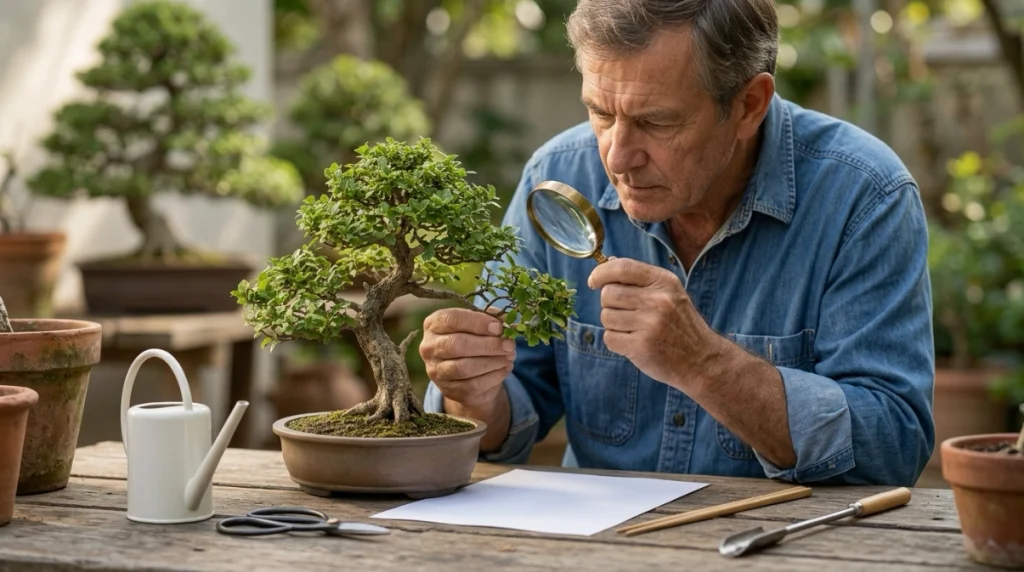
A good quarantine process does not need expensive equipment.
1. Inspect the Tree Before Mixing It With Anything Else
Ideally, inspect the bonsai as soon as it arrives.
Look closely at:
- Upper and lower leaf surfaces
- Leaf joints
- Buds and growing tips
- Branch forks
- Cracks in the bark
- Trunk surface
- Soil surface
- Pot rim
- Drainage holes
A small flashlight and inexpensive magnifying lens can make inspection easier.
2. Place It in the Quarantine Area
Move the bonsai to the separate location you prepared.
Try to provide conditions appropriate for its species rather than making quarantine unnecessarily stressful.
Quarantine should protect the collection without weakening the new tree.
A sun-loving juniper should not spend four weeks in a dark garage. Likewise, a tropical bonsai should not be placed outdoors in damaging cold temperatures merely for better separation.
3. Keep Tools and Equipment Separate When Possible
A basic quarantine setup may include:
- Small watering can
- Chopstick or soil probe
- Scissors for removing damaged foliage
- Magnifying lens
- Yellow sticky trap if flying insects are suspected
- Disposable gloves when handling a known infestation
You do not need a premium tool kit.
For beginners, a low-cost quarantine setup is usually adequate. Cleanliness and consistent inspection matter more than expensive equipment or brands.
If you use the same bonsai tools on several trees, clean them appropriately before moving from a suspicious tree to healthy trees.
4. Check the Bonsai at Least Weekly
Inspect the tree several times during quarantine rather than waiting until the final day.
Look for changes in:
- Leaf color
- New growth
- Leaf drop
- Bark condition
- Pest numbers
- Webbing
- Sticky deposits
- Soil moisture
- Odor from the pot
- Overall vigor
UC Integrated Pest Management emphasizes prevention, plant inspection, sanitation, and early identification when managing indoor plant problems. Its houseplant pest management guidance is useful for identifying many common pests that may also appear on bonsai.
5. Inspect Again Before Ending Quarantine
At the end of the quarantine period, perform your most detailed inspection.
Do not move the tree into your collection if you find unexplained insects or symptoms.
If everything appears normal and the bonsai is growing or behaving appropriately for its species and season, you can usually introduce it to its permanent growing position.
What Pest Signs Should You Look For?
Many early infestations produce small clues before serious damage occurs.
| Warning Sign | Possible Cause | What to Do |
|---|---|---|
| Fine webbing around leaves or shoots | Spider mites | Keep isolated and inspect leaf undersides |
| Sticky leaves or branches | Aphids, scale, or mealybugs | Search carefully for sap-feeding pests |
| White cotton-like material | Mealybugs | Continue quarantine and identify infestation |
| Small bumps attached to stems | Scale insects | Examine closely before attempting removal |
| Tiny insects flying from soil | Fungus gnats | Review watering and inspect growing medium |
| Curling or distorted new leaves | Aphids, mites, thrips, or stress | Inspect new growth closely |
| Yellow stippling or speckling | Mites or other feeding damage | Check both sides of leaves |
| Dark, mushy roots or sour smell | Possible root deterioration | Reduce stress and investigate drainage/root health |
| Expanding leaf spots | Possible disease or environmental stress | Keep isolated and identify cause |
Remember that not every yellow leaf means pests.
Bonsai can lose or discolor foliage because of:
- Seasonal changes
- Shipping stress
- Sudden light changes
- Overwatering
- Underwatering
- Cold or heat exposure
- Root problems
- Normal acclimation
Diagnosis matters because treating a watering problem with pesticide will not solve it.
Should You Repot a New Bonsai During Quarantine?
Usually, do not automatically repot a newly purchased bonsai just because it has entered quarantine.
Shipping, relocation, changes in light, and changes in humidity can already stress the tree. Repotting immediately adds root disturbance.
Repot only when there is a good horticultural reason and the timing is appropriate for that species.
Possible reasons to investigate further include:
- Severely compacted or waterlogged soil
- Potting medium that will not drain
- Obvious root decay
- Serious soil contamination
- A broken container
- A tree dangerously loose in its pot
Major root work on a weak or recently stressed tree can cause additional decline.
For beginners, it is often safer to stabilize the tree first and schedule routine repotting during the correct seasonal window.
What If You Find Pests During Quarantine?
Finding a pest means the quarantine system worked.
Do not immediately move the tree near healthy bonsai just because you begin treatment.
First, identify the pest as accurately as possible.
Depending on the problem, management may involve:
- Physically removing visible pests.
- Washing appropriate foliage with water.
- Removing heavily affected material when horticulturally safe.
- Correcting overly wet or unhealthy growing conditions.
- Using insecticidal soap, horticultural oil, or another properly labeled treatment when appropriate.
- Continuing isolation and follow-up inspections.
Avoid spraying random products without identifying the problem first.
If pesticide treatment becomes necessary, read the complete label and confirm that the product is labeled for the pest, plant, and intended setting. The U.S. Environmental Protection Agency’s pesticide label guidance explains that pesticide labels provide legally enforceable directions for safe and proper use.
Never assume that using twice as much pesticide will work twice as well.
More product can damage foliage, harm people or pets, increase environmental exposure, and still fail to solve the underlying problem.
Expert Tip
Expert Tip: Put a white sheet of paper under the foliage and gently tap a branch. Tiny moving dots that fall onto the paper can help reveal mites or other small pests that were difficult to see on the tree.
Should You Quarantine Bonsai From Trusted Sellers?
Yes.
Buying from a reputable bonsai nursery can reduce risk, but it cannot make the risk zero.
Professional growers generally maintain high plant-health standards, yet live plants move through changing environments, shipping boxes, greenhouses, vehicles, and holding areas.
Quarantine is therefore best treated as a routine rather than a judgment about the seller.
You might use a shorter end of your normal quarantine range for a vigorous, clean tree from a reliable source, but still inspect it carefully before introducing it to your collection.
Do Different Bonsai Species Need Different Quarantine Conditions?
The basic purpose is the same for every bonsai, but environmental requirements vary greatly.
Junipers and Pines
Most should remain outdoors with appropriate sunlight and seasonal temperatures.
Keeping them indoors for quarantine can cause more harm than good.
Deciduous Bonsai
Maples, elms, hornbeams, and other deciduous species should receive conditions appropriate to their natural seasonal cycle.
Some leaf yellowing or leaf drop may be normal during autumn, so consider the season before diagnosing disease.
Tropical Bonsai
Ficus and other tropical species generally require warmer conditions.
Indoor quarantine may work well if there is sufficient light and the tree is protected from cold drafts.
Recently Collected Trees
A recently collected tree may require particularly careful observation because transplant stress can resemble pest or disease damage.
Avoid unnecessary pesticide treatments, heavy pruning, or root disturbance unless you know what problem you are addressing.
Quarantine Cost and Equipment: How Much Do You Really Need?
Quarantining a bonsai does not need to be expensive.
A beginner may already own most of the necessary supplies.
Basic equipment may include:
- Separate table or bench
- Magnifying lens
- Clean watering equipment
- Disposable gloves
- White paper for mite checks
- Sticky traps when appropriate
- Basic cleaning supplies
You might spend very little if you already have a suitable separate growing location.
More expensive quarantine equipment, such as dedicated shelving, grow lights, enclosed growing spaces, or professional magnification, can be useful for large collections but is rarely essential for the average beginner.
Spend money on appropriate growing conditions before specialized gadgets.
A high-quality grow light may be worthwhile for a tropical bonsai quarantined indoors during winter, while the same purchase would be unnecessary for a hardy outdoor juniper.
Common Mistakes Bonsai Owners Should Avoid
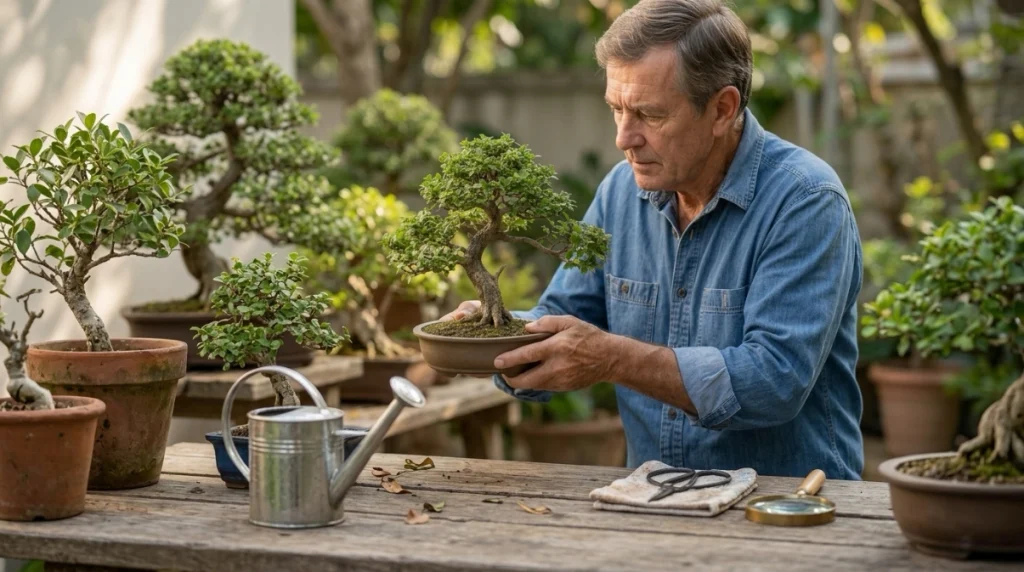
- Skipping quarantine because the tree looks clean. Many early infestations are difficult to see.
- Putting the new tree only a few inches from established bonsai. That provides little meaningful separation.
- Ignoring leaf undersides. Mites, aphids, scale crawlers, and other small pests can hide there.
- Repotting immediately without a horticultural reason. The combined stress of transport and root work can weaken a tree.
- Keeping outdoor bonsai indoors during quarantine. Separation should never override the basic environmental requirements of the species.
- Overwatering while watching the tree closely. Extra attention often leads beginners to water too frequently. Water according to soil condition, not anxiety.
- Spraying pesticide “just in case.” Identify the pest first and follow the product label.
- Using the same dirty scissors on every bonsai. Clean tools and sensible hygiene reduce the chance of moving problems between trees.
- Ending quarantine on a fixed date despite warning signs. Extend isolation whenever something suspicious remains unresolved.
When to Ask an Experienced Bonsai Grower or Arborist
Most quarantine situations can be handled by an attentive hobbyist, but some problems deserve experienced help.
Ask an experienced bonsai grower, local horticultural expert, extension specialist, plant diagnostician, or qualified arborist when:
- A valuable bonsai is declining rapidly.
- Large sections of foliage suddenly die.
- The trunk or major branches develop unusual lesions.
- You cannot identify a pest after careful inspection.
- A pest repeatedly returns after treatment.
- Roots appear severely decayed.
- You suspect a serious disease.
- Treatment would require major root work or structural pruning.
- You are unsure whether symptoms are normal for the species or season.
- Several bonsai begin showing the same symptoms.
Avoid major structural pruning or aggressive root work on a severely stressed tree unless you understand why it is necessary.
Saving a valuable bonsai sometimes depends more on correct diagnosis than on acting quickly.
FAQs
Can I quarantine a new bonsai for only one week?
One week may not give you enough time to notice a small or hidden infestation. A quarantine period of around 3–4 weeks provides more opportunities to inspect the tree and notice developing problems.
Is two weeks enough to quarantine a bonsai?
Two weeks is better than no quarantine, but about three to four weeks provides a more cautious observation period. If the tree has an uncertain history or shows suspicious symptoms, keep it isolated longer.
Can I quarantine two new bonsai together?
You can, especially if they arrived from the same source, but there is a disadvantage: if one is infested, the other may become exposed. Keeping particularly valuable or questionable trees individually separated provides better protection.
Should I spray a new bonsai before quarantine?
Routine preventive spraying is not always necessary. Inspect the tree first and identify any pest before choosing treatment. Unnecessary pesticide use can cause plant injury and creates avoidable exposure risks.
Can a bonsai stay in its original soil during quarantine?
Usually, yes. Quarantine does not automatically require repotting. Keep the original soil unless drainage, root condition, contamination, or another genuine horticultural concern makes intervention necessary.
How far should a quarantined bonsai be from other trees?
Use as much meaningful physical separation as your growing setup permits. A separate room, bench, patio area, or garden zone is better than simply placing the bonsai at the opposite end of the same crowded shelf.
When can I move a bonsai out of quarantine?
Move it only after completing roughly 3–4 weeks of observation and performing a final inspection showing no active pests or unexplained disease symptoms. If you find a problem, continue isolation until the issue has been identified and appropriately managed.
Conclusion
So, how long should you quarantine a new bonsai? For most new trees, approximately 3–4 weeks is a practical and cautious starting point.
During that period, keep the bonsai physically separated, give it conditions appropriate for its species, inspect it regularly, and watch for webbing, sticky residue, scale, unusual insects, leaf damage, declining vigor, or root problems.
Quarantine does not have to involve expensive equipment or complicated treatments. A separate location, careful observation, clean handling practices, and patience can protect an entire bonsai collection.
Most importantly, do not rush a suspicious tree out of quarantine simply because a certain number of days has passed. Let the condition of the bonsai guide your decision.
Make quarantine a standard part of bringing home every new bonsai, and you will greatly reduce the chance that one exciting new addition becomes a pest problem for the rest of your collection.
