What Do Aphids Look Like on Bonsai Trees?

Quick Answer
Aphids on bonsai trees look like tiny, soft-bodied, pear-shaped insects, usually about 2–4 mm long. They may be green, yellow, black, brown, gray, or red, and they often gather in groups on tender shoots or leaf undersides. The University of Minnesota Extension aphid guide notes that the pair of small tubes at the rear of the body, called cornicles, is a key identification feature.
What to look for
- Tiny pear-shaped bodies: Adults are commonly around 1/16–1/8 inch, or 2–4 mm, long.
- Several possible colors: Aphids may appear green, black, yellow, brown, gray, red, or occasionally waxy-looking.
- Dense clusters: Colonies often crowd around fresh shoots, buds, young stems, and leaf undersides.
- Two rear tubes: Cornicles project from the back of the abdomen, although they can be difficult to see without magnification.
- White cast skins: Empty, pale skins may remain around a colony after young aphids molt.
- Sticky residue: Honeydew on foliage or the pot often accompanies an active infestation.
Best confirmation method
- Use a 10× hand lens and check a suspected insect for its pear-shaped body, long antennae, six legs, and paired cornicles.
Aphids are among the easier bonsai pests to recognize once you know their shape. The trouble is that a small colony can hide surprisingly well among fresh leaves.
When I inspect a tree for aphids, I start with the softest growth rather than the trunk. This guide shows you exactly what to look for and how to separate aphids from similar bonsai pests.
In This Guide
What Do Aphids Look Like on Bonsai Trees Up Close?
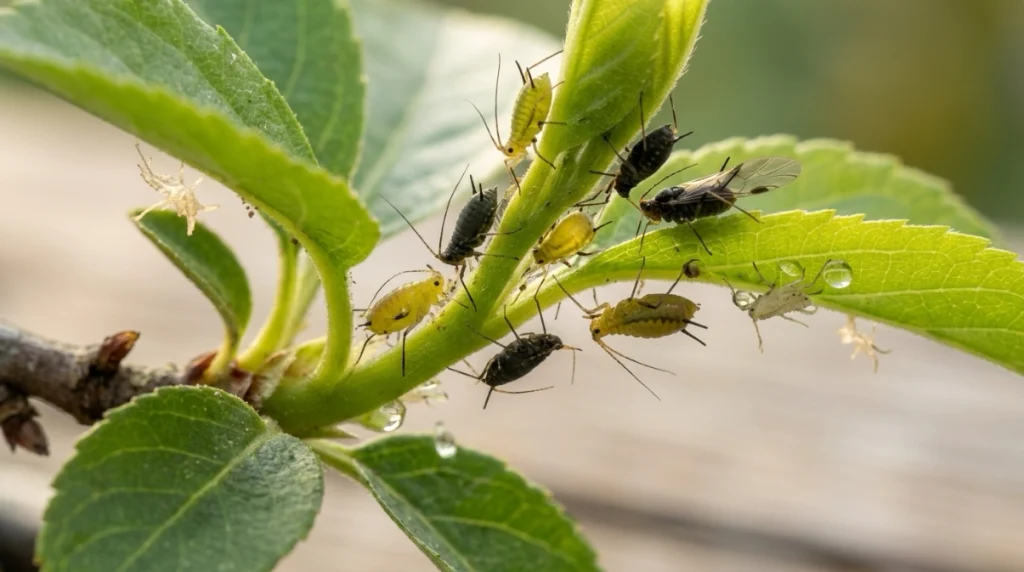
Aphids are tiny, soft-bodied insects with a broad abdomen that narrows toward the head, creating a pear-like shape. Most adults measure about 2–4 mm long.
Their color isn’t reliable by itself. Depending on the species, host plant, and life stage, you may see several different colors.
- Green aphids: Common and easy to overlook against young leaves.
- Black aphids: Often stand out clearly against pale new shoots.
- Yellow aphids: Can resemble tiny yellow beads from a distance.
- Brown or gray aphids: May blend into woody stems or dull foliage.
- Red or pinkish aphids: Less expected, but still possible.
- Waxy aphids: Certain species may have a whitish or gray waxy coating.
Aphid definition: An aphid is a small sap-feeding insect with piercing mouthparts, long antennae, and usually a pair of tube-like structures called cornicles near the rear of its abdomen.
What are the two little tubes on an aphid?
The rear tubes are called cornicles. They are one of the best features for confirming that a tiny insect is an aphid.
Some cornicles are obvious under magnification, while others look short and subtle. A 10× hand lens makes identification much easier.
Do all aphids have wings?
No. Most aphids you find packed together on a bonsai are likely to be wingless, but winged adults can also appear.
Winged forms help a population disperse to new plants. Their darker thorax and visible wings can make them look surprisingly different from colony members beside them.
What do baby aphids look like?
Young aphids are called nymphs. They resemble miniature wingless adults rather than caterpillars or grubs.
As nymphs grow, they molt several times. Their discarded skins may remain on the leaf as tiny white or translucent shells.
Where Do Aphids Hide on a Bonsai Tree?
Aphids usually gather where plant tissue is tender and actively growing. Start your inspection at new shoots, buds, young leaves, and sheltered leaf undersides.
This feeding pattern matters on bonsai because vigorous spring growth can contain many soft shoots within a small canopy.
- Growing tips: Inspect the newest extension growth first.
- Leaf undersides: Turn young leaves over instead of viewing only their upper surfaces.
- Leaf stems: Check petioles and the points where leaves meet shoots.
- Flower buds: Aphids may cluster around developing buds on flowering species.
- Young stems: Look along soft green shoots before they harden.
- Protected crevices: Dense foliage can hide small colonies from casual inspection.
The UC Statewide IPM Program notes that aphids often feed in dense groups and commonly favor tender plant parts. That clustering habit is especially useful for identification.
How should you inspect a bonsai for aphids?
Move methodically instead of shaking the tree and hoping to spot movement. Aphids often remain relatively still while feeding.
- Place the bonsai in bright, indirect light.
- Inspect the newest shoot tips first.
- Turn over several young leaves.
- Look along petioles, buds, and soft stems.
- Use a 10× hand lens on suspicious insects.
- Check the pot rim and nearby surface for sticky honeydew.
- Inspect nearby bonsai if you confirm an infestation.
As of 2026, this simple visual inspection is still one of the most useful first steps. Identification should come before spraying.
What Signs Do Aphids Leave on Bonsai Trees?
You may notice the evidence of aphids before you notice the insects themselves. Sticky leaves, pale shed skins, distorted growth, and ants are especially useful clues.
Aphids insert slender mouthparts into plant tissue and feed on sap. Large colonies can interfere with tender growth.
- Sticky honeydew: Leaves, branches, pots, shelves, or windowsills may feel tacky.
- White cast skins: Tiny pale shells can collect near active colonies.
- Curled leaves: Young leaves may twist or curl as they develop.
- Distorted shoots: Tender growing tips can become misshapen.
- Yellowing: Heavier feeding may contribute to yellow or weakened foliage.
- Slowed growth: Strong infestations can reduce the vigor of young shoots.
- Ant activity: Ants may visit aphid colonies to feed on honeydew.
- Black coating: Sooty mold can grow on accumulated honeydew.
What is the sticky liquid around aphids?
The sticky substance is called honeydew. It is a sugar-rich waste product produced by aphids and several other sap-feeding insects.
Honeydew itself does not prove that aphids are present. Soft scale, mealybugs, and whiteflies can produce it too.
Does black mold mean the aphids infected my bonsai?
Not necessarily. Black sooty mold often grows on honeydew deposited across leaves and branches.
It develops on the sugary surface rather than behaving like a typical infection of internal plant tissue. Finding it should prompt you to search for honeydew-producing pests.
The Bonsai Empire pest and disease guide includes aphids among the common insects growers may encounter on bonsai. Learning the accompanying clues makes visual diagnosis much quicker.
How Can You Tell Aphids From Other Bonsai Pests?
Look at body shape and behavior rather than relying on leaf damage alone. Several bonsai pests cause yellowing or weak growth, but they do not look alike.
The following comparison is the shortcut I use when a tiny pest is difficult to identify.
| Pest | What It Looks Like | Typical Clue | Best Distinguishing Feature |
|---|---|---|---|
| Aphids | Soft, pear-shaped insects, often 2–4 mm long | Clusters, honeydew, curled growth | Paired cornicles near the rear |
| Spider mites | Extremely small moving specks | Fine stippling, bronzing, webbing | Fine silk webbing; no honeydew |
| Scale insects | Small brown, tan, gray, or pale bumps | Attached bumps, yellowing, sometimes honeydew | Adults often look fixed to the plant |
| Mealybugs | White insects covered in cottony wax | White fluff in joints and protected areas | Distinct cotton-like coating |
| Whiteflies | Tiny pale, winged insects beneath leaves | Honeydew and insects flying when disturbed | Adults readily fly from the foliage |
Are aphids the tiny insects making webs?
Usually not. Fine webbing combined with pale stippling points much more strongly toward spider mites.
Aphids may crowd tightly together, but they do not create the characteristic silk webbing associated with spider mites.
Are the brown bumps on my bonsai aphids?
Stationary brown or tan bumps are more suggestive of scale insects. Aphids retain a recognizable insect body with legs, antennae, and a softer outline.
If you’re still unsure, photograph the pest through a hand lens. The American Bonsai Society also provides access to bonsai educational resources and local club connections that can help growers find experienced guidance.
What Should You Do if You Find Aphids on a Bonsai?
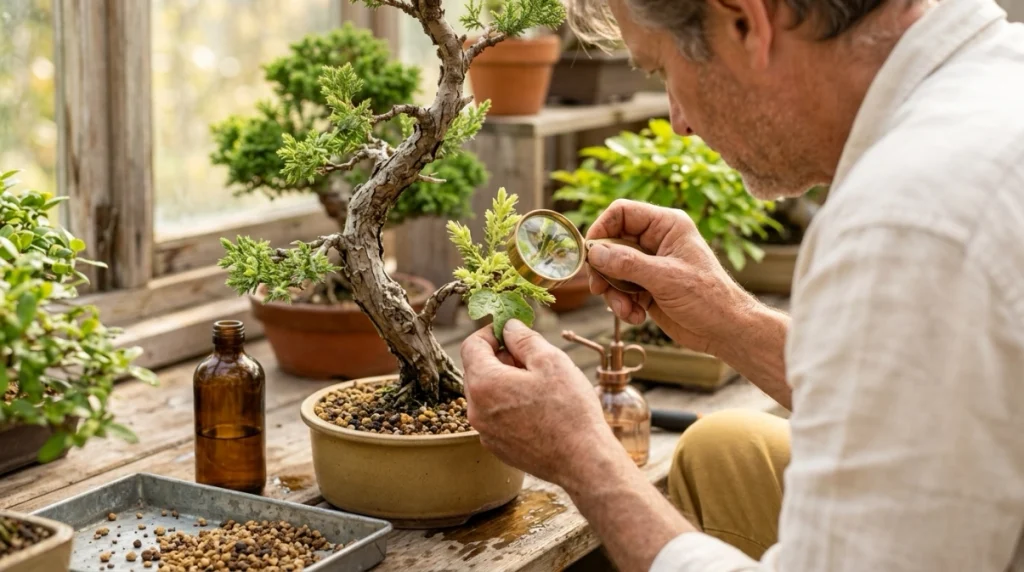
Separate the affected bonsai, confirm the pest, and begin with the least disruptive control that fits the tree. A few aphids do not automatically justify aggressive chemical treatment.
Bonsai need extra care during pest control because small pots, exposed soil, tender foliage, and recently stressed roots can make careless treatment more damaging.
- Isolate the tree: Move it away from neighboring bonsai and houseplants.
- Inspect the colony: Confirm that the insects are aphids rather than mites, scale, or another pest.
- Remove small populations: Aphids can often be knocked from sturdy foliage with water.
- Protect the soil: Avoid blasting loose bonsai substrate from a shallow pot.
- Recheck the tree: Examine new growth and leaf undersides again over the following days.
- Use labeled products if needed: Insecticidal soaps or horticultural oils may be options when the product label includes the plant and intended use.
Do not assume that stronger treatment means better control. Contact products need to reach the pest, and curled foliage can shelter aphids from spray.
Always follow the pesticide label and test sensitive foliage when appropriate. Avoid spraying a drought-stressed or heat-stressed bonsai unless the product directions clearly permit it.
Should you use dish soap on bonsai aphids?
I prefer a product formulated and labeled as an insecticidal soap rather than improvised household detergent. Household cleaning products can contain ingredients that were never designed for plant foliage.
Also avoid treating every insect as an enemy. Lady beetles, lacewing larvae, syrphid fly larvae, and tiny parasitic wasps are important aphid predators or parasites.
How often should you check after finding aphids?
Check frequently while the infestation is active, especially around new growth. Once the colony appears gone, continue routine inspections so a small rebound does not become another dense cluster.
I also inspect nearby plants whenever I find winged aphids. That takes only a few minutes and can reveal a second colony early.
Frequently Asked Questions About Bonsai Aphids
Can you see aphids on a bonsai without a magnifying glass?
Yes. Adult aphids are often visible to the naked eye, especially when several gather together. A 10× hand lens is still useful for seeing cornicles, distinguishing young aphids from other insects, and checking tiny colonies hidden under leaves.
What color are aphids on bonsai trees?
Aphids can be green, yellow, black, brown, gray, red, or other shades depending on the species and host. Color alone is not enough for identification, so also check body shape, clustering, cornicles, honeydew, and shed skins.
What are the tiny white things around aphids?
Small white or translucent objects near an aphid colony are often discarded skins left behind during molting. They can remain stuck around leaves and shoots and are a useful clue that aphids have been reproducing nearby.
Why are ants crawling on my bonsai with aphids?
Ants are often attracted to honeydew produced by aphids and other sap-feeding pests. Heavy ant traffic on a bonsai can therefore be an indirect warning that honeydew-producing insects are feeding somewhere in the canopy.
Can aphids be black instead of green?
Yes. Aphids occur in several colors, including black. A black aphid can still have the same soft, pear-shaped body, long antennae, and paired cornicles that distinguish aphids from many other small insects.
Do aphids cause sticky bonsai leaves?
Yes. Aphids commonly produce sticky honeydew while feeding. However, honeydew can also come from soft scale, mealybugs, and whiteflies, so inspect the insects themselves before deciding which pest is responsible.
Will aphids kill a bonsai tree?
A small aphid population is unlikely to kill an otherwise healthy established tree. Heavy or persistent infestations can weaken tender growth, distort leaves, reduce vigor, and add stress to a bonsai that already has watering, root, or environmental problems.
The key takeaway is simple: look for a tiny pear-shaped insect, dense colonies on tender growth, paired cornicles, white shed skins, and sticky honeydew.
Once you’ve confirmed aphids, isolate the affected bonsai and respond early. Careful identification usually makes pest control much easier than treating an unknown problem.