
Why Are My Bonsai Leaves Chewed? Causes and Fixes

Quick Answer
Chewed bonsai leaves usually mean a chewing pest has been feeding on the foliage. Caterpillars, beetles, weevils, slugs, snails, earwigs, and similar garden pests can leave holes or missing leaf edges. Before treating the tree, inspect the damage closely and use a reliable bonsai troubleshooting guide to rule out unrelated stress.
Clues to check first
- Ragged holes: Caterpillars, beetles, grasshoppers, or other chewing insects may be responsible.
- Slimy trails: Slugs or snails are strong suspects, especially after wet weather.
- Nighttime damage: Slugs, snails, earwigs, and some caterpillars often feed after dark.
- Skeletonized leaves: Beetles or larvae may eat the soft tissue while leaving larger veins.
- Fresh droppings: Small dark pellets near damaged foliage can point toward caterpillar feeding.
How to confirm the cause
- Check both sides of every damaged leaf, inspect branches and the pot surface, then repeat the inspection after dark with a flashlight.
When bonsai leaves suddenly look chewed, it can feel alarming because even a few damaged leaves stand out on a small tree. The good news is that the shape of the damage often gives you useful clues.
I start by looking at what is missing rather than immediately reaching for a pesticide. Hole shape, leaf edges, droppings, slime, and the time of day often reveal much more than the leaf color alone.
In This Guide
What Causes Bonsai Leaves to Look Chewed?
Chewed bonsai leaves usually result from an animal physically removing leaf tissue. This differs from sap-feeding pests, which more often cause stippling, curling, yellowing, sticky residue, or distorted growth.
Definition: Chewing damage is visible loss of leaf tissue caused when an insect, mollusk, or other animal bites through the leaf. Common patterns include holes, scalloped margins, missing tips, and skeletonized foliage.
Caterpillars
Caterpillars can remove surprisingly large pieces of foliage relative to their size. Look for ragged holes, missing leaf margins, silk, rolled foliage, or small dark droppings known as frass.
Some larvae blend into leaves and twigs almost perfectly. Examine stems slowly instead of expecting the pest to move.
Beetles and weevils
Adult beetles can chew holes through leaves or eat tissue between the veins. Some species create a lace-like or skeletonized appearance.
Weevils may leave repeated notches along leaf margins. The exact pest varies with the bonsai species and local environment.
Slugs and snails
Slugs and snails create irregular holes that may cross leaf veins. Penn State Extension notes that shiny mucus trails are an especially useful clue when identifying their feeding damage.
They favor moist, protected conditions and frequently hide during daylight. Check beneath pots, benches, boards, stones, and nearby damp debris.
Earwigs and other nighttime feeders
Earwigs can feed on foliage after dark and then disappear into narrow, shaded hiding places. Grasshoppers and several other garden insects can also remove chunks from bonsai leaves.
Don’t assume every insect near the pot is guilty. Many insects are harmless or beneficial predators.
How Can You Identify the Pest by the Leaf Damage?
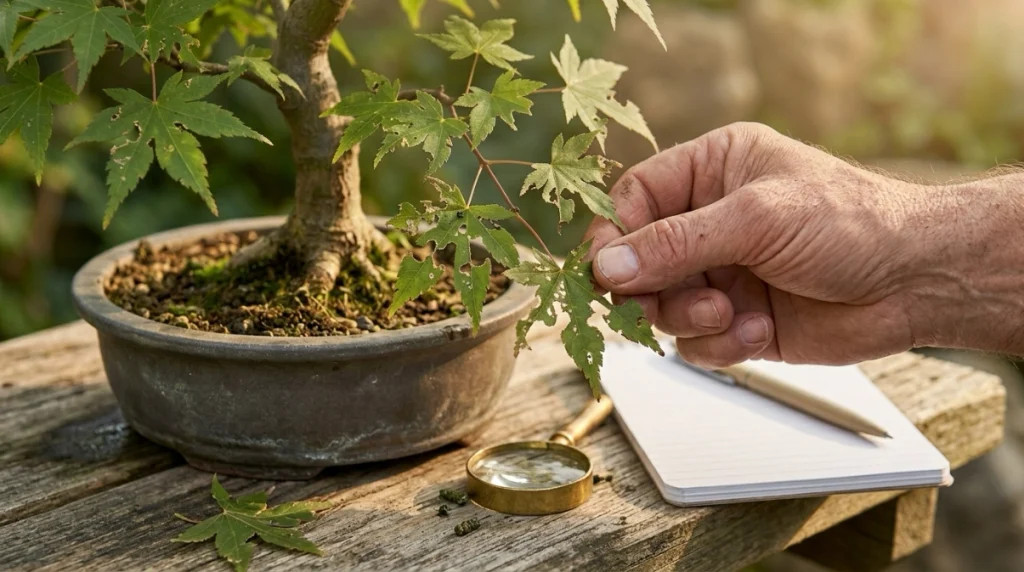
The fastest way to narrow the suspects is to compare the shape of the damage with other evidence around the tree. One clue alone is rarely enough.
| Damage pattern | Likely suspect | Extra clue | Best inspection time |
|---|---|---|---|
| Large ragged holes | Caterpillars or other chewing insects | Frass, silk, rolled leaves | Morning and evening |
| Irregular holes across veins | Slugs or snails | Shiny slime trail | After dark |
| Repeated notches on leaf edges | Weevils or beetles | Adults hiding nearby | Evening or night |
| Leaf tissue removed between veins | Beetles or larvae | Lace-like foliage | Daytime inspection |
| Smooth, nearly circular cuts | Leafcutter bees | Clean sections removed from edges | Daytime |
The University of Minnesota Extension describes slugs as producing ragged, irregular holes and caterpillars as leaving larger chewed sections. Those patterns are useful starting points, even though your bonsai species may host different pests.
Take a clear photo when the damage is fresh. Compare new leaves every 24 to 48 hours so you can tell whether feeding is still active.
I also mark one damaged branch mentally and return to it the next morning. Fresh missing tissue tells me the culprit is still nearby.
How Do You Find a Pest That Is Hiding?
If you see fresh chewing but no pest, change when and where you inspect. Many chewing pests hide while the tree is being watched during daylight.
Inspect the entire bonsai, not only the damaged leaf
- Look under every damaged leaf.
- Check leaf joints and branch forks.
- Examine rough bark and trunk crevices.
- Inspect the soil surface and drainage holes.
- Look underneath the bonsai pot.
- Check the bench, shelf, or ground below it.
Caterpillars may rest along twigs where their color hides them. Slugs can stay beneath the pot until humidity rises at night.
Do a flashlight inspection after dark
Return one or two hours after sunset with a flashlight. Move slowly and inspect the upper and lower leaf surfaces before disturbing the pot.
Penn State Extension recommends looking for pest-specific evidence such as slime trails, droppings, webbing, or the pest itself. Identifying the organism first helps avoid unnecessary treatment.
Check neighboring plants
A nearby shrub, houseplant, or weed may be the real source. A pest can feed on several plants and only visit your bonsai temporarily.
Inspect plants touching or overhanging the bonsai. Remove fallen leaves and debris where nighttime pests may shelter.
How Do You Stop More Bonsai Leaves From Being Chewed?
Start with the least disruptive control method that fits the confirmed pest. A stressed bonsai does not benefit from repeated treatments aimed at an unidentified insect.
Remove visible pests by hand
For a small bonsai, hand removal is often practical. Caterpillars, beetles, snails, and slugs can sometimes be removed before they cause substantial additional damage.
Wear gloves when you cannot identify the organism. Avoid handling hairy, spiny, or unfamiliar caterpillars directly.
Reduce hiding places
- Clear dead leaves beneath the bench.
- Remove boards or dense debris nearby.
- Avoid leaving the surrounding area constantly wet.
- Keep pots spaced enough for regular inspection.
- Check newly acquired plants before placing them beside the collection.
If slugs or snails are involved, watering the growing area earlier in the day can leave surfaces less inviting overnight. Never withhold needed water from the bonsai itself just to discourage pests.
Isolate a badly affected tree
Move the bonsai away from other plants when you find an active infestation. Keep its normal light, temperature, and watering requirements in mind during isolation.
Isolation also makes monitoring easier. You can see whether new chewing continues without confusing damage from nearby plants.
Use pesticides only after identification
A pesticide should match both the pest and the plant listed on its label. Bonsai are not a separate botanical group, so sensitivity depends on the actual tree species.
Never assume that a treatment safe for one bonsai is automatically safe for another. Follow label directions, avoid unnecessary mixtures, and test cautiously when species sensitivity is uncertain.
If you cannot identify the pest, the American Bonsai Society, a local bonsai club, or your regional extension service can help you find experienced guidance.
Will a Bonsai Recover From Chewed Leaves?
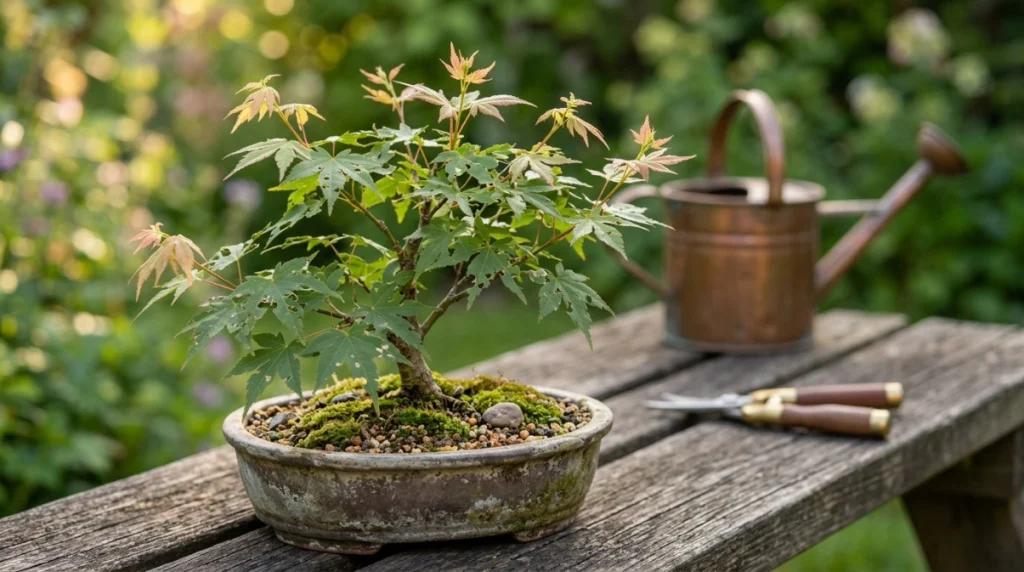
Most healthy bonsai can tolerate limited leaf chewing and continue growing. The seriousness depends on how much foliage is lost, the tree’s health, its species, and whether feeding continues.
A few holes are usually more cosmetic than dangerous. Repeated or heavy defoliation deserves faster attention because leaves supply energy through photosynthesis.
Don’t remove every damaged leaf
A partly chewed leaf can still contain useful green tissue. Removing all imperfect leaves may reduce the tree’s remaining photosynthetic area even further.
Remove foliage only when there is another reason, such as severe tissue death or sanitation needs. Avoid cosmetic defoliation while the bonsai is recovering.
Keep normal care stable
- Give the species its appropriate light.
- Water according to soil moisture rather than a rigid schedule.
- Keep drainage working properly.
- Avoid heavy fertilizer applications to force rapid replacement growth.
- Delay unnecessary pruning, wiring, or repotting while the tree is stressed.
Chewing insects do not usually mean the bonsai needs extra water. Check the soil before changing your watering routine.
Likewise, don’t repot simply because leaves are damaged. Repotting disturbs roots and may create another stress at exactly the wrong time.
Pro tip: If pest damage is severe and you are considering major pruning, root work, or another irreversible intervention, ask an experienced grower or local bonsai club to assess the tree first.
As of 2026, the basic diagnostic rule remains simple: confirm active feeding before treating. Old holes will not heal, so judge recovery by healthy new growth and the absence of fresh damage.
Frequently Asked Questions
What is eating holes in my bonsai leaves?
Caterpillars, beetles, weevils, slugs, snails, earwigs, grasshoppers, and other chewing pests can create holes in bonsai leaves. The best clue is the damage pattern. Inspect leaf undersides, branches, the soil surface, and the pot after dark before choosing a treatment.
Why are my bonsai leaves being eaten overnight?
Fresh overnight damage often points toward nocturnal feeders such as slugs, snails, earwigs, or certain caterpillars and beetles. Use a flashlight after dark and look beneath the pot. Slime trails strongly increase the likelihood of slugs or snails.
Should I cut off chewed bonsai leaves?
Not automatically. A partly damaged leaf can still photosynthesize and support the tree. Keep healthy green tissue whenever practical, especially after heavier pest damage. Remove a leaf only when it is mostly dead, diseased, or creating another clear problem.
Can caterpillars kill a bonsai?
A single caterpillar rarely kills a healthy tree, but repeated defoliation can weaken a small bonsai quickly. Check for fresh droppings, silk, rolled leaves, and camouflaged larvae. Remove confirmed pests and continue monitoring new foliage.
How do I know if slugs are eating my bonsai?
Look for irregular holes, missing leaf sections, and shiny mucus trails. Slugs often hide in cool, damp places during daylight, so inspect under the pot and surrounding objects after sunset. Penn State Extension provides a useful guide to identifying holes caused by slugs and snails.
Why can’t I find the insect eating my bonsai?
The pest may feed at night, hide beneath leaves, rest in bark crevices, or leave the tree during daylight. Inspect repeatedly at different times. A nighttime flashlight check often reveals pests that remain completely hidden during a normal daytime inspection.
Can I spray insecticide on a bonsai with chewed leaves?
Only after identifying a likely pest and confirming that the product label permits use on the tree species and target pest. Random spraying can harm beneficial insects and may stress sensitive foliage without solving the problem. Identification should come first.
Chewed bonsai leaves are a symptom, not a diagnosis. Examine the shape of the missing tissue, search for slime or droppings, inspect after dark, and confirm the culprit before treating.
Catch active feeding early, keep the tree’s normal care stable, and monitor the next flush of growth. In many cases, the bonsai will recover well once the source of the chewing is removed.
