
Why Are There Holes in My Bonsai Leaves?

Quick Answer
Holes in bonsai leaves usually come from chewing pests such as caterpillars, beetles, weevils, slugs, snails, or leafcutting bees. The shape of the damage, when it appears, and what you find around the foliage are often enough to narrow the cause; this bonsai pest and disease overview is also useful when several symptoms appear together.
Clues to check first
- Ragged holes: Caterpillars, beetles, weevils, earwigs, or slugs are common suspects.
- Tiny round holes: Small chewing beetles can produce a scattered “shot-hole” pattern.
- Smooth semicircles: Leafcutting bees may remove neat pieces from leaf edges.
- Skeletonized leaves: Beetles or larvae may eat tissue while leaving larger veins intact.
- Slime nearby: Ragged holes plus shiny trails strongly suggest slugs or snails.
- Sudden widespread damage: Wind, hail, pets, or other physical injury can sometimes mimic insect feeding.
Best first move
- Inspect both sides of damaged leaves, nearby shoots, the soil surface, pot rim, and tray before applying any pesticide.
Finding holes in bonsai leaves can be alarming because a small tree has limited foliage. Fortunately, the damage pattern usually gives you useful clues before the tree suffers serious harm.
When I troubleshoot this symptom, I start with the shape of the missing tissue rather than reaching for a spray. That simple habit prevents a lot of unnecessary treatment.
In This Guide
- What Do Holes in Bonsai Leaves Usually Mean?
- What Causes Holes in Bonsai Leaves?
- Can the Hole Pattern Tell You What Is Eating Your Bonsai?
- How Should You Inspect a Bonsai With Damaged Leaves?
- How Do You Stop Pests From Making More Holes?
- How Can You Prevent Future Leaf Damage?
- Frequently Asked Questions
What Do Holes in Bonsai Leaves Usually Mean?
True holes usually mean leaf tissue has been eaten, cut away, or physically damaged. Chewing insects and mollusks are more likely than sap-feeding pests when pieces of the leaf are genuinely missing.
Definition: Chewing damage is plant injury caused when an animal or insect removes leaf tissue with biting or rasping mouthparts. It differs from stippling, discoloration, curling, or sticky residue caused by many sap-feeding pests.
- Chewing: Tissue is visibly missing from the leaf.
- Skeletonization: Soft tissue disappears while larger veins remain.
- Leaf mining: Damage develops inside the leaf as pale tunnels or patches.
- Stippling: Tiny pale dots appear, but the leaf surface initially remains intact.
This distinction matters because spider mites, aphids, scale, and similar pests can weaken bonsai without usually chewing clean holes. UC IPM recommends looking at the type and pattern of damage before deciding which organism caused it.
You can use its plant problem diagnosis guidance as a useful model: examine the whole plant, the damage pattern, and recent growing conditions together.
Don’t assume every hole means your bonsai is in immediate danger. A healthy deciduous bonsai can often tolerate a few damaged leaves during active growth.
What Causes Holes in Bonsai Leaves?
The most common causes are caterpillars, beetles, weevils, slugs, snails, and other chewing pests. Which one is responsible depends heavily on the bonsai species, season, and growing location.
Caterpillars and other larvae
Caterpillars can remove surprisingly large amounts of foliage. They often produce irregular holes, chewed edges, rolled leaves, webbing, or small dark droppings called frass.
Some larvae hide during daylight, so you may see fresh damage without seeing the pest. UC IPM notes that leaf-feeding caterpillars commonly create feeding holes and may hide in rolled or protected foliage.
Beetles and weevils
Beetle damage ranges from tiny holes to large ragged sections. Some species feed mostly along leaf edges, while others chew through the center.
- Small scattered holes: Often associated with small leaf-feeding beetles.
- Notched margins: Can suggest weevil-type feeding.
- Lace-like leaves: May result from skeletonizing beetles.
- Dark droppings: Sometimes appear near actively feeding beetles or larvae.
UC IPM describes leaf beetle and flea beetle damage as pits, small holes, ragged foliage, or windowpane-like injury depending on the insect.
Slugs and snails
Slugs and snails usually leave uneven holes with soft or ragged edges. They often feed at night and hide beneath pots, benches, debris, or damp surfaces during daylight.
A shiny slime trail is one of the strongest clues. The University of Maryland Extension also associates slug and snail feeding with ragged holes and nighttime activity.
Leafcutting bees
Leafcutting bees create a completely different pattern. They cut smooth, almost geometric circles or semicircles from leaf margins for nest material.
The damage is usually cosmetic rather than a serious threat to an established tree. Avoid treating beneficial pollinators simply because a few leaves look imperfect.
Leaf miners and physical injury
Leaf miners feed inside the leaf rather than openly chewing its surface. Their tunnels may later dry, split, or fall away, leaving holes that look older than typical fresh feeding damage.
Hail, strong wind, rubbing branches, animals, or accidental handling can also tear leaves. Physical damage usually appears suddenly and often affects several exposed leaves at once.
Section Takeaway: Most true holes point toward a chewing pest, but the edge shape, surrounding clues, and time of day help identify which one.
Can the Hole Pattern Tell You What Is Eating Your Bonsai?
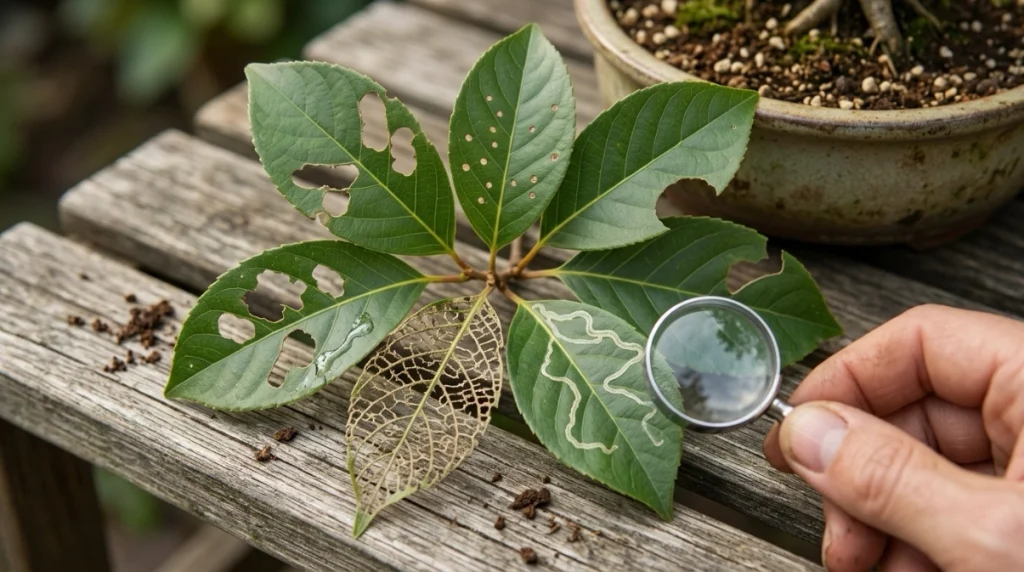
Yes. The pattern alone won’t always identify a species, but it can narrow the possibilities quickly.
| Damage pattern | Likely cause | Extra clues | Where to check |
|---|---|---|---|
| Large irregular holes | Caterpillars, beetles | Frass, rolled leaves, visible insects | Leaf undersides and branch junctions |
| Small scattered round holes | Small chewing beetles | Tiny jumping or dropping insects | Young foliage |
| Smooth semicircular edge cuts | Leafcutting bees | Clean edges, limited overall damage | Outer leaf margins |
| Ragged holes plus slime | Slugs or snails | Night feeding, damp hiding places | Pot, tray, bench, soil surface |
| Tissue missing between veins | Skeletonizing insects | Lace-like foliage | Whole leaf canopy |
| Pale tunnels that become holes | Leaf miners | Winding trails inside leaf tissue | Thin broad leaves |
| Sudden tears across many leaves | Hail, wind, physical injury | No insects or ongoing new damage | Exposed side of tree |
Species matters too. A broad-leaved Japanese maple, Chinese elm, ficus, or azalea can display damage differently from a juniper or pine.
With needle bonsai, look for clipped needles, webbing, mining, or missing growing tips rather than classic round holes.
How Should You Inspect a Bonsai With Damaged Leaves?
Inspect the tree before changing its watering, fertilizer, or pesticide routine. You want evidence that connects the damage to a likely cause.
- Start with fresh damage. Old holes tell you what happened earlier, while fresh green-edged damage shows whether feeding is still active.
- Turn every affected leaf over. Caterpillars, eggs, larvae, and small beetles often hide underneath.
- Check new shoots. Tender foliage is attractive to many insects.
- Inspect branch forks. Webbing, rolled leaves, frass, or resting larvae can collect there.
- Examine the soil and pot. Look around the rim, drainage holes, tray, moss, and underside of the container.
- Inspect after dark. A flashlight check can reveal slugs, snails, earwigs, and night-feeding caterpillars.
- Take clear photos. Photograph both the pest and the damage before treatment.
I also place a white sheet of paper beneath suspicious foliage and tap the branch gently. Falling insects, larvae, frass, or plant debris are much easier to spot against white.
A 10× hand lens helps with tiny eggs and insects, though mites usually cause stippling rather than true chewing holes. Don’t let the presence of one harmless insect distract you from the actual damage pattern.
Section Takeaway: Inspect fresh damage, leaf undersides, new growth, and the pot area before deciding what treatment the bonsai needs.
How Do You Stop Pests From Making More Holes?
The safest approach is to identify the culprit first and use the least disruptive control that works. A bonsai has limited foliage, so unnecessary chemical treatment can create more stress than a few damaged leaves.
Remove visible pests by hand
For a small tree, hand removal is often practical. Pick off caterpillars, beetles, slugs, snails, or egg masses when you can identify them confidently.
Check again over several days. Removing one visible insect doesn’t mean you found every egg or larva.
Isolate an actively infested bonsai
Move the tree away from nearby bonsai and houseplants if you find an active infestation. This is especially useful when the exact pest hasn’t been confirmed yet.
- Keep the tree in appropriate light.
- Maintain its normal watering needs.
- Avoid placing it in a dark indoor room just for quarantine.
- Clean fallen leaves and debris around the pot.
- Inspect nearby plants for similar damage.
Use pesticides only when the pest justifies them
Don’t spray a broad-spectrum product simply because you see holes. Different chewing pests respond to different controls, and some beneficial insects can be harmed unnecessarily.
If treatment becomes necessary, choose a product specifically labeled for the identified pest and plant type. Follow the label’s concentration, temperature, timing, and repeat-application instructions exactly.
Don’t overreact to damaged leaves
Existing holes won’t heal. The important question is whether new foliage continues to be damaged.
Avoid removing every imperfect leaf from a weak bonsai. Remaining green tissue still contributes to photosynthesis and recovery.
Also resist heavy fertilizing after an attack. Correct the pest problem, maintain appropriate care, and let the tree regain steady growth.
Section Takeaway: Stop active feeding rather than trying to make damaged leaves look perfect. Identification comes before treatment.
How Can You Prevent Future Leaf Damage?
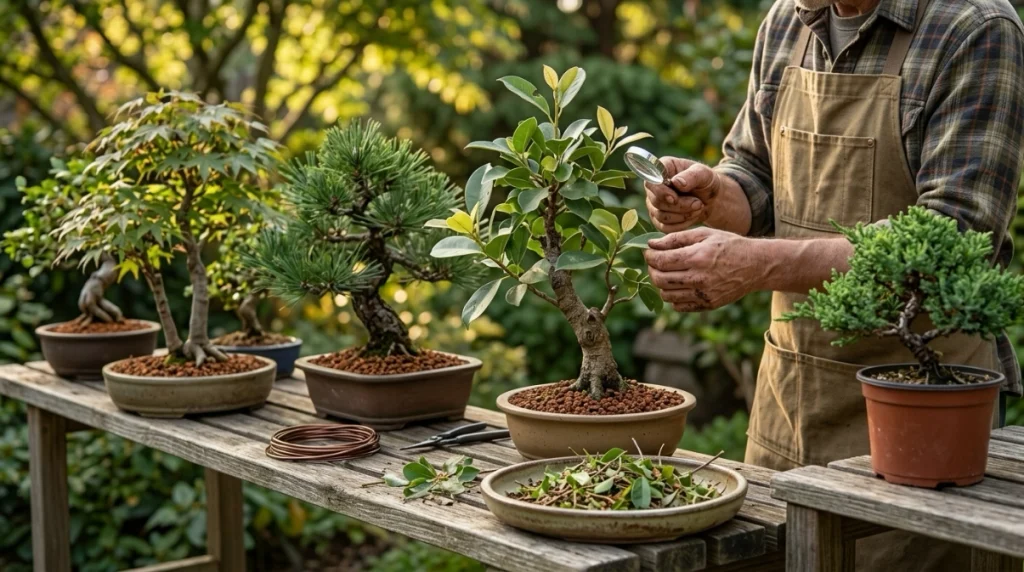
Prevention is mostly about early detection and good growing conditions. Healthy trees aren’t immune to pests, but regular inspection makes infestations easier to manage.
As of 2026, I still consider a simple visual inspection one of the most useful bonsai pest-control habits. It costs nothing and often catches problems before a spray is needed.
- Inspect weekly: Check leaves, shoots, branches, and the pot during the growing season.
- Check more often in warm weather: Many insects develop faster when conditions favor them.
- Quarantine new trees: Keep recent purchases away from the main collection while you inspect them.
- Remove debris: Dead leaves and damp material create hiding places for some pests.
- Improve airflow: Avoid packing bonsai so tightly that branches remain crowded and hard to inspect.
- Match care to the species: Proper light, watering, drainage, and seasonal care help maintain vigor.
- Watch nearby plants: Garden plants can act as alternate hosts for insects that later reach bonsai.
Pay special attention after moving a tree between indoor and outdoor locations. A bonsai that spent summer outside can carry pests into a protected indoor environment.
The goal isn’t perfect foliage every day. It’s catching a changing pattern early enough to protect the tree’s health.
Frequently Asked Questions
Why are there tiny holes all over my bonsai leaves?
Tiny scattered holes often point toward small chewing beetles or other small leaf-feeding insects. Inspect the newest damaged leaves closely, especially underneath them, and watch for tiny insects that jump, drop, or hide when the foliage is disturbed.
What is eating my bonsai leaves at night?
Slugs, snails, caterpillars, earwigs, and some beetles can feed after dark. Inspect your bonsai with a flashlight several hours after sunset and check the pot rim, tray, bench, moss, and nearby hiding places.
Should I remove bonsai leaves that have holes?
Not automatically. A partially damaged green leaf can still photosynthesize, so removing many leaves may weaken an already stressed bonsai. Remove foliage when it is dead, badly damaged, diseased, or sheltering a confirmed pest.
Will holes in bonsai leaves grow back?
No. Once leaf tissue has been removed, the hole itself won’t close. Your goal is to prevent new damage and support healthy new foliage; deciduous trees will eventually replace damaged leaves through normal growth and seasonal leaf turnover.
Can overwatering cause holes in bonsai leaves?
Overwatering does not normally chew physical holes into leaves. It can stress roots and contribute to yellowing, leaf drop, or disease problems, so check soil moisture separately rather than assuming watering caused missing tissue.
Can spider mites make holes in bonsai leaves?
Spider mites usually cause pale stippling, bronzing, webbing, and eventual leaf decline rather than obvious freshly chewed holes. If tissue is clearly missing, look for a chewing pest or physical injury as well.
When should I worry about holes in bonsai leaves?
Take action when new damage appears daily, much of the canopy is affected, growing tips are being destroyed, or the tree is already weak. A few isolated holes on an otherwise vigorous bonsai are usually less urgent.
Final Takeaway
Holes in bonsai leaves are usually a symptom, not a diagnosis. Caterpillars, beetles, weevils, slugs, snails, leafcutting bees, leaf miners, and physical injury can all produce different-looking damage.
Start with the hole shape, inspect fresh foliage carefully, and look for supporting evidence before treating. Catch the cause early, protect the remaining healthy foliage, and your bonsai has a much better chance of returning to clean, vigorous growth.
