
Why Do My Bonsai Leaves Have Brown Spots?

Quick Answer
Brown spots on bonsai leaves usually come from fungal or bacterial leaf disease, watering and root stress, sunburn, fertilizer or chemical injury, or pests. Before treating the tree, compare the spot pattern with the soil moisture, recent weather, leaf undersides, and any changes in care; the UC IPM houseplant problem guide shows why several unrelated problems can produce similar leaf damage.
Common causes to check first
- Fungal leaf spot: Brown, tan, or black lesions may enlarge, merge, and appear after foliage stays wet.
- Bacterial disease: Water-soaked spots can darken and sometimes develop yellow margins.
- Watering stress: Poor drainage or repeated drought can damage roots and foliage.
- Sun or heat: Sudden exposure to stronger sunlight can scorch vulnerable leaves.
- Pests: Mites, scale, aphids, and other pests may create speckling, discoloration, or damaged patches.
- Chemical injury: Strong fertilizer, pesticides, or sprays can burn leaf tissue.
What to do now
- Do not spray or repot automatically. Inspect the whole tree first and watch whether new spots continue appearing.
Brown spots can be frustrating because the color alone rarely identifies the cause. I diagnose the pattern first, then look at watering, roots, pests, light, and recent changes before reaching for a treatment.
This guide explains why bonsai leaves develop brown spots, how to distinguish the main causes, and what you can safely do next.
In This Guide
What Do Brown Spots on Bonsai Leaves Mean?
Brown leaf spots are localized areas of injured or dead leaf tissue. They are a symptom rather than a diagnosis.
The useful clues are the spots’ shape, location, texture, speed of spread, and what else is happening to the tree.
- Dry, crisp patches suggest scorch, drought stress, fertilizer injury, or old physical damage.
- Round or irregular expanding lesions make fungal leaf spot more suspicious.
- Water-soaked areas that darken can occur with bacterial problems.
- Tiny pale or brown speckles may indicate mites or another sap-feeding pest.
- Brown spots with yellowing can accompany disease, root stress, or overwatering.
- Stationary brown bumps may be scale insects rather than damaged leaf tissue.
The distinction matters. A fungal problem, sunburn, and spider mite infestation can all produce brown foliage, yet each requires a different response.
As of 2026, my preferred approach remains simple: diagnose before treating. Random spraying can hide symptoms or add chemical damage to an already stressed bonsai.
What Causes Brown Spots on Bonsai Leaves?
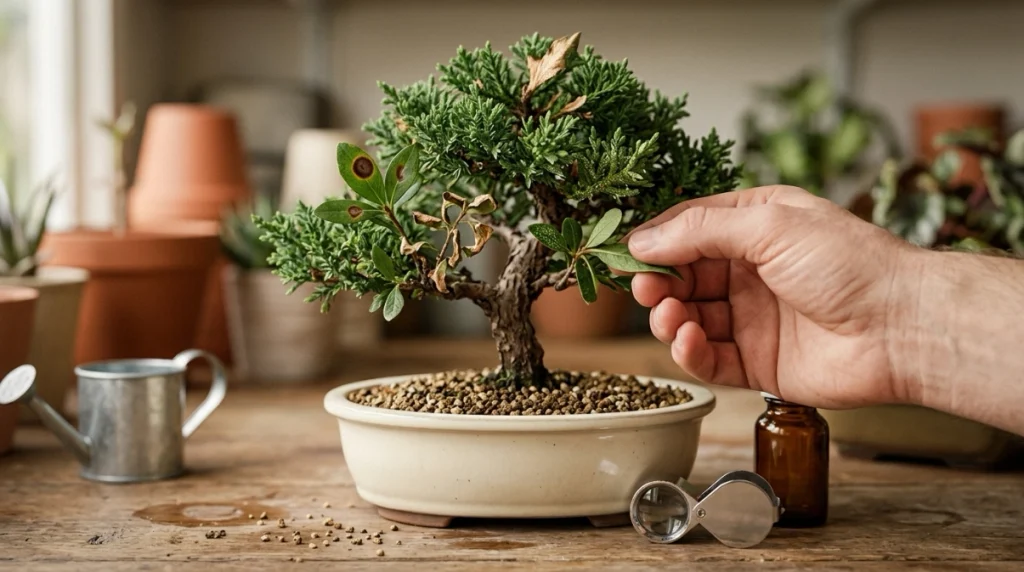
There is no single cause. The most common possibilities fall into disease, watering and root problems, environmental injury, pests, and chemical damage.
1. Fungal leaf spot
Fungal leaf spots often appear as tan, reddish-brown, dark brown, or black lesions. Individual spots can enlarge and merge until a larger section of the leaf dies.
The UC IPM guidance on fungal leaf spots notes that symptoms vary with both the pathogen and host plant. Moisture on foliage often plays an important role in disease development and spread.
Be more suspicious of fungal disease when several leaves develop similar spots and the damage continues spreading.
- Foliage remains wet for long periods.
- Plants are crowded closely together.
- Air movement is limited.
- Spots appear on multiple leaves.
- Old affected foliage remains around the pot.
2. Bacterial leaf spot
Bacterial leaf spots can begin as small water-soaked areas. They may later become brown or black and sometimes develop yellow borders.
Wet foliage, splashing water, contaminated tools, and infected plant material can help some bacterial pathogens move between plants.
Do not diagnose bacteria from color alone. Fungal infection and environmental damage can look remarkably similar without laboratory testing.
3. Overwatering and poor drainage
Too much water does not always create a neat circular brown spot. However, persistently wet soil can weaken roots and produce discoloration, leaf decline, and secondary disease problems.
Look beyond the surface. Bonsai soil can appear dry on top while staying wet deeper in the container.
Check for these signs:
- Soil remains wet unusually long after watering.
- Drainage is slow.
- Leaves yellow before developing brown areas.
- The tree wilts despite moist soil.
- Roots smell unpleasant or appear dark and soft.
4. Underwatering and heat stress
A small bonsai pot can lose moisture quickly during hot, windy weather. Repeated drying can create crispy edges, dead patches, leaf drop, and weakened growth.
Do not respond by keeping the soil permanently saturated. Instead, check moisture frequently and water thoroughly when the species and growing medium need it.
5. Sunburn or sudden light changes
Leaves adapted to indoor or shaded conditions can scorch after sudden exposure to intense direct sunlight. Damaged areas often look dry, bleached, tan, or brown.
Suspect sun injury when spotting starts soon after moving the bonsai to a brighter position. Damage may be strongest on foliage facing the afternoon sun.
6. Fertilizer, salt, or spray injury
Excess fertilizer salts can damage roots and contribute to brown leaf margins or patches. Pesticides and homemade sprays can also burn sensitive foliage.
I always ask what changed shortly before spotting began. A new fertilizer, pest spray, window position, or watering routine can be a stronger clue than the spot color itself.
7. Pests feeding on the foliage
Pest damage is often mistaken for disease. Bonsai Empire’s pest and disease guide highlights common bonsai pests including aphids, spider mites, mealybugs, and scale insects.
- Spider mites: Fine stippling, bronzing, webbing, and drying leaves.
- Scale: Brown, gray, or pale bumps attached to leaves and branches.
- Aphids: Distorted new growth and sticky honeydew.
- Mealybugs: White cotton-like clusters around protected areas.
A 10× hand lens is useful when insects or mites are difficult to see.
Section Takeaway: Brown spots are not a disease name. Match the spot pattern with watering, light, roots, pests, recent treatments, and how quickly the damage spreads.
How Can You Diagnose Brown Leaf Spots?
Start with the pattern before choosing a treatment. The table below gives practical clues, but it cannot replace species-specific diagnosis.
| What You See | Possible Cause | Check First |
|---|---|---|
| Circular brown or black spots that enlarge | Fungal leaf spot | Leaf wetness, airflow, spread to new leaves |
| Water-soaked spots becoming dark | Possible bacterial disease | Yellow borders, wet foliage, spreading lesions |
| Crispy edges or irregular dry patches | Drought, heat, sun, salts | Soil moisture, recent sun exposure, fertilizer |
| Tiny speckles with fine webbing | Spider mites | Leaf undersides using a hand lens |
| Brown bumps that can be scraped away | Scale insects | Branches, veins, leaf undersides |
| Brown areas after moving into stronger sunlight | Sunburn | Timing and side of tree receiving strongest light |
| Brown spots after spraying or feeding | Chemical injury | Product, concentration, application conditions |
The UC IPM overview of leaf-spot causes also includes insects, mineral problems, pesticide injury, rusts, and environmental disorders. That is why one photograph rarely tells the whole story.
Inspect the whole bonsai
Do not study only the worst leaf. Compare damaged leaves with healthy new growth and inspect the rest of the tree.
- Check upper and lower leaf surfaces.
- Inspect new shoots and branch junctions.
- Look for webbing, sticky residue, insects, or eggs.
- Check soil moisture deeper in the pot.
- Confirm that drainage holes are open.
- Review recent changes in light, fertilizer, watering, and spraying.
- Photograph several affected leaves for comparison over the next few days.
If new leaves stay clean while old damaged leaves remain unchanged, the original stress may already have passed.
What Should You Do When Brown Spots Appear?
Do not treat every brown spot with fungicide. The safest first response is to stabilize care and gather better evidence.
1. Isolate the bonsai when pests or disease are possible
Move the affected bonsai away from nearby plants when practical. Separation is especially useful when several trees share a bench or indoor growing area.
2. Correct obvious watering problems
If the root zone is still wet, do not water simply because the leaf looks dry. If the soil is genuinely drying too far between waterings, adjust your checking routine instead.
Water according to the tree, soil, weather, and pot size rather than a fixed calendar.
3. Keep diseased-looking foliage dry
Avoid unnecessary overhead misting when expanding leaf spots are present. Water the root zone and improve gentle airflow around crowded foliage.
4. Remove badly affected leaves only when useful
A few heavily spotted leaves can sometimes be removed to reduce infected material. Do not strip a weak bonsai of healthy working foliage.
Clean cutting tools after working on suspicious plant material. A 70% alcohol solution is commonly used for tool sanitation in plant-disease management.
Pro tip: If diagnosis would require major pruning, repotting, or cutting damaged roots, consult an experienced grower or local bonsai club before making irreversible changes to a stressed tree.
5. Treat only an identified problem
If you confirm a pest, choose a product labeled for that pest and suitable for the plant. Follow the label rather than increasing the concentration.
For suspected disease, species identification matters. A treatment that makes sense for one pathogen may do nothing for an environmental injury.
Section Takeaway: Stabilize the tree before escalating treatment. Isolation, inspection, correct watering, dry foliage, and careful monitoring are safer than guessing with chemicals.
How Can You Prevent Brown Spots From Returning?
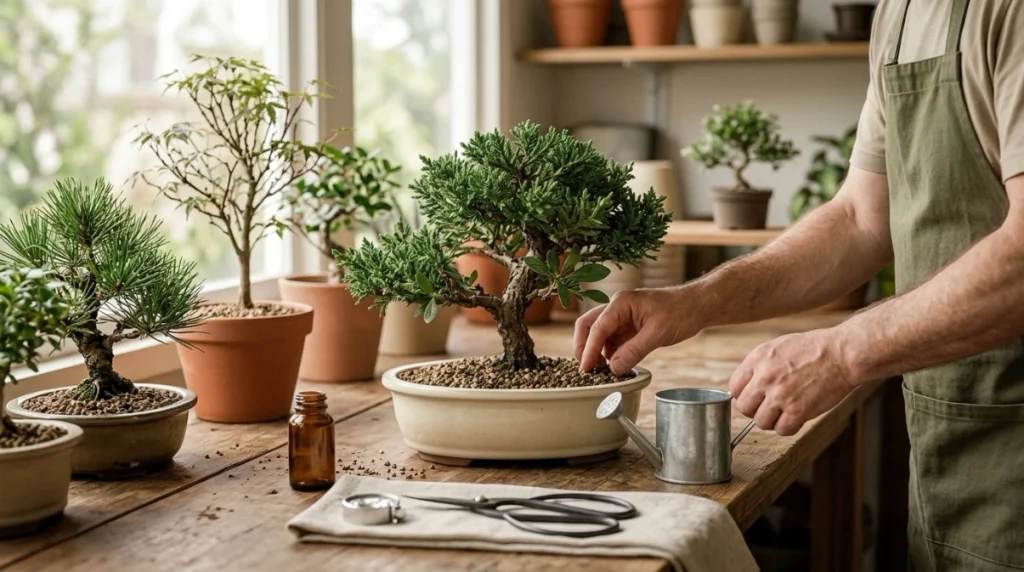
Prevention starts with consistent bonsai care. Healthy roots and appropriate growing conditions make diagnosis easier and help the tree tolerate minor damage.
- Check moisture before watering: Avoid both prolonged saturation and severe drying.
- Use free-draining soil: Bonsai roots need both moisture and oxygen.
- Give the species suitable light: Acclimate foliage when moving into stronger sun.
- Improve airflow: Avoid packing many trees tightly together.
- Limit unnecessary leaf wetness: Especially when disease symptoms are active.
- Inspect weekly: Look beneath leaves, around new shoots, and along branches.
- Quarantine new plants: Hidden pests can spread to an established collection.
- Clean tools: Sanitize equipment after working on a suspicious tree.
- Feed conservatively: More fertilizer does not correct disease or root stress.
Regular inspection is one of the best habits you can build. It lets you notice a few new spots before half the canopy becomes affected.
I also compare new growth with older leaves. Fresh, clean foliage often tells me more about recovery than waiting for damaged leaves to become green again, because dead tissue will not repair itself.
Frequently Asked Questions
Should I remove leaves with brown spots from my bonsai?
Remove a few heavily damaged or clearly diseased leaves when doing so helps sanitation, but avoid aggressive defoliation. A stressed bonsai still needs healthy foliage for photosynthesis, so the amount removed should depend on the species, season, and severity of the problem.
Are brown spots always caused by fungus?
No. Brown spots can result from fungal or bacterial disease, sunburn, watering stress, fertilizer salts, chemical injury, physical damage, or pests. Inspect the pattern and recent care changes before applying a fungicide.
Can overwatering cause brown spots on bonsai leaves?
Yes, although the damage may not appear as perfectly defined spots. Persistently wet soil can damage roots, reduce vigor, cause yellowing or browning, and create conditions that make some disease problems more likely.
Why do my bonsai leaves have brown spots and yellow edges?
Brown lesions surrounded by yellow tissue can occur with certain bacterial or fungal leaf diseases, but they are not diagnostic by themselves. Check whether the spots are expanding, whether foliage stays wet, and whether similar damage is appearing on additional leaves.
Can spider mites cause brown spots?
Spider mites usually cause fine pale stippling that can progress to bronzed or brown foliage. Check leaf undersides with a 10× hand lens and look for tiny moving mites or fine webbing around leaves and growing tips.
Will brown spots disappear after I fix the problem?
No. Dead leaf tissue normally remains brown until the leaf drops or is removed. The better sign of recovery is that existing damage stops spreading and healthy new leaves develop without fresh spots.
Final Takeaway
If you’re asking, “Why do my bonsai leaves have brown spots?”, resist the urge to diagnose from color alone. Disease, watering problems, root stress, pests, sunlight, fertilizer, and chemical injury can create surprisingly similar symptoms.
Start with the pattern, inspect both sides of the foliage, check soil moisture and drainage, and review what changed recently. Then monitor whether fresh damage continues.
The goal is not to make every damaged leaf look perfect again. It is to identify the cause early, protect healthy growth, and give your bonsai the stable conditions it needs to recover.
