
Why Does My Bonsai Have Aphids?

Quick Answer
Your bonsai has aphids because these sap-feeding insects are attracted to soft new shoots, young leaves, and other tender growth. Warm conditions, lush nitrogen-rich growth, nearby infested plants, and ants protecting aphid colonies can make an outbreak worse. Confirm the pest before treating it using this University of Minnesota Extension aphid guide.
Signs to Check
- Tiny insects: Aphids often gather on shoot tips, buds, stems, and leaf undersides.
- Sticky leaves: Feeding aphids produce sugary honeydew that coats foliage and nearby surfaces.
- Curled growth: New leaves may become distorted, puckered, yellow, or stunted.
- White skins: Pale shed aphid skins may remain stuck around an active colony.
- Ant activity: Ants often visit aphids for honeydew and may defend them from predators.
What to Do First
- Isolate the bonsai, inspect the entire canopy, and rinse a light infestation away before reaching for a pesticide.
If you’ve found clusters of tiny bugs on fresh bonsai growth, aphids are one of the first pests I’d check for. They can appear surprisingly fast, especially during an active spring or summer growth flush.
The encouraging part is that a small aphid infestation is usually manageable. The key is identifying it correctly, removing the insects early, and fixing anything that encourages them to return.
In This Guide
Why Do Bonsai Trees Get Aphids?
Aphids appear when they find suitable host tissue and conditions that allow them to reproduce. Tender new bonsai growth is particularly attractive because the insects can access plant sap easily.
Aphids are small, soft-bodied insects that feed by inserting specialized mouthparts into plant tissue and drawing out sap. Many species cluster around young leaves, petioles, buds, and fresh stems.
Soft new growth attracts aphids
Spring flushes are often the first places I inspect. Maples, elms, flowering quince, crabapple, and other deciduous trees can produce masses of tender growth within a short period.
Aphids take advantage of that opportunity. A handful can become a noticeable colony while the tree is extending strongly.
- Young shoots: Soft stems provide accessible feeding sites.
- Expanding leaves: Aphids often hide around folds and leaf undersides.
- Developing buds: Tight growth offers protection from weather and predators.
- Dense foliage: Crowded canopies create sheltered areas that are harder to inspect.
Heavy nitrogen feeding can contribute
Fertilizer does not magically create aphids. However, excessive nitrogen can encourage unusually lush, tender growth that sap-feeding pests may exploit.
I prefer steady, balanced growth rather than pushing a stressed tree with extra fertilizer. More growth isn’t always better growth.
Aphids may arrive from other plants
Winged adult aphids can move between suitable host plants. A newly purchased bonsai or nearby infested plant can also introduce a colony.
This is why I keep new trees separate before mixing them into an established collection. A small quarantine space is easier to manage than six infested bonsai.
Ants can help colonies persist
Aphids excrete a sugar-rich liquid called honeydew. Ants feed on this material and sometimes defend aphids from natural predators.
If I see ants repeatedly traveling along a bonsai trunk, I inspect the youngest growth immediately. Ant traffic can be an early clue.
Section Takeaway: Aphids are usually attracted by suitable tender growth rather than by the bonsai pot itself. New shoots, nearby infestations, vigorous soft growth, and ant activity can all contribute.
How Do I Know My Bonsai Has Aphids?
Look for clusters of soft-bodied insects around new growth, along with honeydew, distorted leaves, and pale shed skins. A 10× hand lens makes identification much easier.
Aphids commonly measure only a few millimeters long. Depending on species, they may appear green, black, brown, gray, yellow, or reddish.
Check these areas first
- Fresh shoot tips
- Leaf undersides
- Leaf stems and petioles
- Developing buds
- Young branch junctions
- Folded or curled leaves
Don’t stop after finding one insect. Inspect several parts of the canopy to determine how widespread the colony has become.
Aphids vs. other common bonsai pests
| Pest | Typical Appearance | Common Clue |
|---|---|---|
| Aphids | Soft, pear-shaped insects, often clustered | Honeydew and distorted young growth |
| Spider mites | Extremely small mite-like pests | Fine webbing and stippled foliage |
| Scale | Fixed shell-like or dome-shaped bumps | Firm insects attached to stems or leaves |
| Mealybugs | White, cottony clusters | Wax-like material around protected joints |
| Whiteflies | Small white winged insects | Adults fly when foliage is disturbed |
Correct identification matters because treatment varies by pest. Bonsai Empire also lists aphids among several common bonsai pests and diseases that growers may encounter.
Can Aphids Damage a Bonsai Tree?
Yes, a large aphid colony can weaken and distort active bonsai growth. A few aphids, however, don’t usually mean the tree is about to die.
The severity depends on the colony size, tree vigor, species, season, and how long feeding continues.
Common aphid damage
- Curled leaves: Feeding on developing tissue can distort new foliage.
- Stunted shoots: Heavy infestations can reduce normal extension growth.
- Yellow foliage: Persistent feeding may contribute to chlorosis and decline.
- Sticky surfaces: Honeydew can cover leaves, branches, benches, or windowsills.
- Sooty growth: Fungi may grow on accumulated honeydew and create a dark coating.
Bonsai deserve closer monitoring than many landscape plants because their canopies are deliberately compact. One heavily infested shoot can represent a significant part of the tree’s current growth.
I still avoid treating purely because I spotted one aphid. I first check whether natural predators are present and whether the population is expanding.
Are aphids likely to kill a bonsai?
Aphids alone rarely destroy a healthy, established bonsai when detected early. Problems become more serious when the tree is already stressed or the infestation is ignored.
A recently repotted, dehydrated, root-damaged, or weak bonsai has fewer reserves. Pest pressure becomes more important on those trees.
How Do I Get Rid of Aphids on My Bonsai?
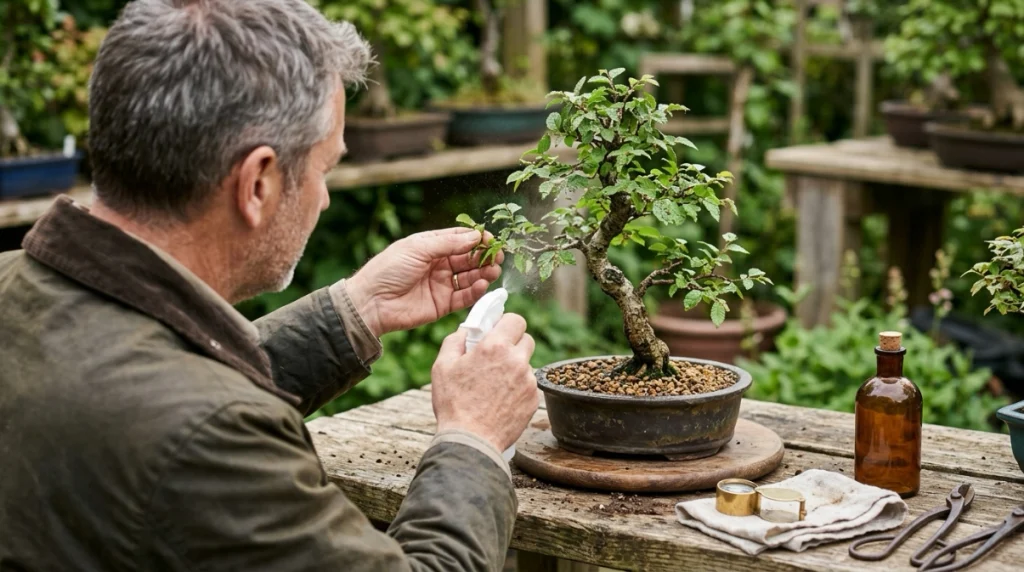
Start with the least disruptive method that fits the infestation. Isolate the tree, remove visible aphids, and escalate treatment only when the population persists.
- Isolate the bonsai. Move it away from healthy trees and houseplants.
- Inspect every growing tip. Pay particular attention to curled leaves and undersides.
- Remove small colonies manually. Wipe or gently crush isolated clusters where practical.
- Rinse with water. Use enough pressure to dislodge insects without damaging fine branches.
- Reinspect after several days. Check for survivors and newly emerging colonies.
- Use a labeled treatment if needed. Insecticidal soap or horticultural oil can be appropriate for many aphid infestations.
Use water carefully
A controlled stream of water is one of my favorite first responses on sturdy foliage. It removes many aphids immediately without adding pesticide residue.
Support delicate branches while rinsing them. Don’t blast a recently wired twig or fragile new shoot with full hose pressure.
When should you use insecticidal soap?
If rinsing does not control the colony, a commercial insecticidal soap labeled for the situation may help. These products need direct contact with soft-bodied pests.
Colorado State University Extension explains that insecticidal soaps work through direct contact and have little residual activity. Thorough coverage therefore matters.
Always follow the label. Test a small section first if you’re uncertain about the tree’s sensitivity.
Should you make homemade dish-soap spray?
I don’t recommend treating a valuable bonsai with an improvised detergent recipe. Household dish detergents are designed for cleaning, not for predictable plant-safe pest management.
Registered insecticidal soap gives you a known formulation and labeled directions. That removes unnecessary guesswork.
What about horticultural oil?
Horticultural oils can suppress aphids when the product is labeled for the plant and application conditions. Coverage is important because oils act mainly through direct contact.
Avoid spraying a stressed tree automatically. Heat, strong sun, species sensitivity, and product concentration can affect the risk of foliage injury.
Pro tip: If your bonsai is weak, recently repotted, rare, or valuable, ask an experienced grower or local bonsai club before combining pesticide treatment with major pruning or root work.
Section Takeaway: Begin with isolation and physical removal. Escalate to a properly labeled insecticidal soap or horticultural oil only when the infestation warrants it.
Why Do Aphids Keep Coming Back?
Repeat infestations usually mean some aphids survived, winged aphids arrived again, or environmental conditions still favor the colony. Ants can also interfere with natural biological control.
You missed hidden aphids
Curled leaves can shelter insects from water and contact sprays. One surviving pocket can start rebuilding the colony.
This is why follow-up inspection matters more than a single treatment. Look inside distorted foliage rather than checking only exposed leaves.
Your treatment had no residual effect
Contact products kill insects they reach. They may not affect aphids hidden inside leaves or individuals arriving after the spray dries.
Follow the product’s label for inspection and repeat-treatment intervals. Never apply extra product simply because faster control sounds better.
Ants are protecting the colony
UC Integrated Pest Management notes that ants commonly associate with aphids and may protect them from predators while collecting honeydew. Its aphid management guidance recommends paying attention to ant activity as part of control.
Watch where ants are traveling. Removing their access to the bonsai can sometimes make natural enemies more effective.
Nearby plants remain infested
A clean bonsai can become reinfested if aphids remain on neighboring plants. Inspect the entire growing area instead of repeatedly treating one tree.
- Check nearby bonsai.
- Inspect houseplants and ornamentals.
- Look for weeds around outdoor benches.
- Quarantine new trees before grouping them.
How Can I Prevent Aphids on Bonsai?
You cannot guarantee that an outdoor bonsai will never get aphids. You can make outbreaks much easier to catch and control.
Inspect during active growth
I pay extra attention when shoots are extending quickly. Those soft tips often show an aphid problem before older leaves do.
A 30-second inspection while watering can prevent a small colony from becoming a canopy-wide infestation.
Quarantine new bonsai
Keep new acquisitions separated from established trees while you inspect them. Check foliage, stems, the soil surface, pot rims, and drainage areas.
Isolation is especially useful after buying from a crowded nursery or receiving a shipped tree.
Avoid excessive fertilization
Feed the tree according to its species, season, health, and development goals. Don’t use extra nitrogen simply to force rapid extension.
Controlled growth is easier to inspect, style, and manage.
Encourage beneficial insects outdoors
Lady beetles, lacewing larvae, hoverfly larvae, and parasitoid wasps can attack aphids. Broad-spectrum pesticide use can interfere with these helpful predators.
When an infestation is minor, observe the colony before automatically spraying. Natural enemies may already be working.
Keep the growing area clean
- Remove heavily damaged fallen leaves.
- Inspect weeds and nearby host plants.
- Clean benches where honeydew accumulates.
- Wash hands or tools after handling badly infested plants.
- Keep quarantined trees physically separated.
As of 2026, my basic approach has not changed: identification and regular scouting beat panic spraying. Early detection gives you more low-impact treatment options.
Section Takeaway: Prevention is mostly inspection, quarantine, sensible feeding, and keeping the surrounding growing area under control. Catching ten aphids is much easier than treating hundreds.
Frequently Asked Questions
Why are there suddenly aphids on my bonsai?
Aphids can appear quickly when winged adults reach the tree or a hidden population begins reproducing on fresh growth. Tender shoots, warm growing conditions, nearby infested plants, and ant activity can help a colony become noticeable within a short period.
Are aphids a sign that my bonsai is unhealthy?
No. Healthy bonsai can still attract aphids, especially while producing tender new growth. However, stressed trees may cope less effectively with heavy feeding, so check watering, light, root health, fertilizer use, and overall vigor while managing the infestation.
Can I wash aphids off my bonsai with water?
Yes. A controlled stream of water can remove many aphids from leaves and stems. Support delicate branches and avoid excessive pressure. Reinspect afterward because insects hiding inside curled leaves or protected growth may survive.
Will aphids spread to my other bonsai?
They can. Winged aphids can move between plants, while closely grouped trees make infestations harder to contain. Move an infested bonsai away from healthy plants until you have reduced the population and repeated inspections show no continuing activity.
Do ants cause aphids on bonsai?
Ants do not create aphids, but they often feed on aphid honeydew and may protect colonies from predators. Persistent ant traffic on the trunk or pot is therefore a useful reason to inspect tender shoots carefully.
Can I use insecticidal soap on bonsai?
Commercial insecticidal soap may control aphids when the product is labeled for the plant and setting. Apply it according to label directions, cover the insects thoroughly, and consider testing a small area first because some foliage can be sensitive.
How often should I check my bonsai after finding aphids?
Inspect it every few days during an active infestation and after treatment. Focus on new shoots, leaf undersides, buds, and curled foliage. Continue monitoring after the visible colony disappears because surviving aphids can rebuild the population.
Final Takeaway
If you’re wondering, “Why does my bonsai have aphids?” the answer usually starts with tender growth and opportunity. Aphids find suitable shoots, feed on sap, reproduce, and sometimes benefit from protection provided by ants.
Don’t panic when you find them. Isolate the tree, confirm the pest, remove light infestations physically, and use a properly labeled treatment only when necessary.
Then keep inspecting. Catching the next few aphids early is the simplest way to protect both the tree and the rest of your bonsai collection.
