Ginseng Ficus Bonsai Yellow Leaves: Why They Turn and How to Fix It

This post contains affiliate links. As an Amazon Associate, OurBonsai earns from qualifying purchases at no extra cost to you. Read our disclosure.
In this guide
Ginseng ficus bonsai yellow leaves are one of the most common questions from new bonsai owners, and the answer depends on the pattern. A couple of yellow leaves now and then is normal: the tree sheds older leaves as it grows new ones. But when many leaves turn yellow at once, or the new growth comes out pale, the tree is telling you something about water, light, temperature or food. The trick is to read which leaves are yellowing and how, because each pattern points to a different cause.
This guide matches each yellowing pattern to its cause and gives a clear fix, so you can stop guessing.
Is some yellowing normal?
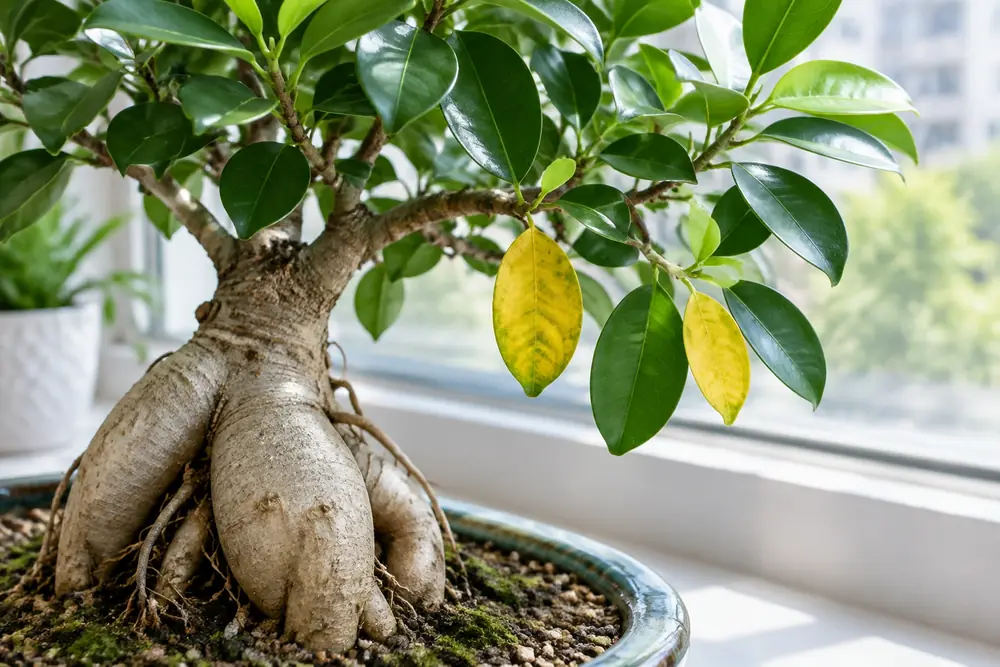
Yes. A ginseng ficus (Ficus microcarpa grown on a swollen root bulb) keeps its leaves for a year or two, then sheds them. Older leaves deep inside the canopy, which get little light, are the first to go. If you see one or two yellow leaves a week while the tree keeps making healthy new shoots, that is normal turnover and nothing to fix.
It is a problem when:
- Many leaves turn yellow within a few days.
- Yellow leaves appear all over the tree, including the outer, sunny ones.
- New leaves come out pale or yellow-green.
- Yellowing comes with spots, stickiness, or a soft root bulb.
Causes of ginseng ficus bonsai yellow leaves
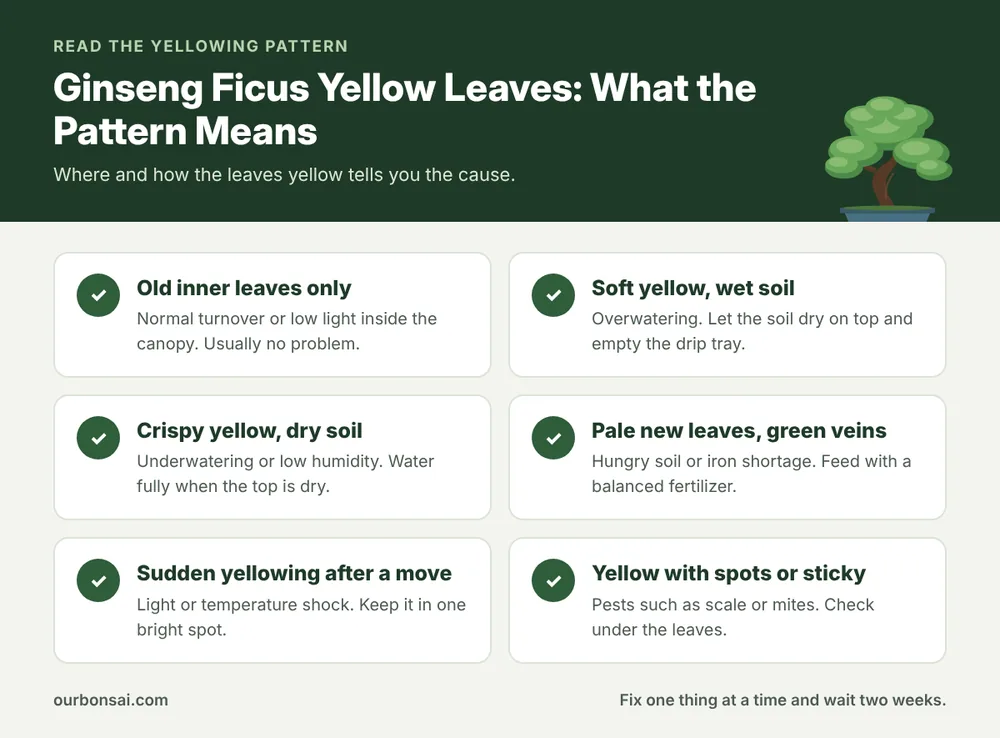
1. Overwatering
The number one cause. Ginseng ficus are often sold in dense soil that holds water like a sponge, often with a saucer underneath. Roots sit wet, lose oxygen and stop working. Leaves turn a soft, even yellow and drop while still flexible. The soil smells sour and stays dark and damp for days.
Fix: water only when the top 2 cm of soil is dry, empty the drip tray, and repot into a gritty mix at the next chance. Our ficus ginseng bonsai soil recipe shows how to mix one that drains well.
2. Underwatering and dry air
In a heated room the soil can dry out completely between waterings. Leaves yellow from the edges, go crispy and curl. The root bulb may look slightly wrinkled.
Fix: check the soil every day or two and water thoroughly when the top is dry, until water runs from the drainage holes. Our guide to watering indoor bonsai in winter covers the heating season in detail. A humidity tray helps in dry rooms.
3. Not enough light
A ginseng ficus on a shelf or a dim window keeps only the leaves it can feed. Inner and lower leaves yellow and fall first, and new shoots are long and pale. It is a slow decline over weeks.
Fix: move the tree to the brightest window you have, ideally south or west facing, or add a grow light. See how much light a bonsai tree needs for practical numbers.
4. Cold, drafts and sudden changes
Ficus are tropical. Cold window glass in winter, an AC vent in summer, or a trip home from the store in cold weather can trigger yellowing and leaf drop within days. A move to a new room often does the same while the tree adjusts to different light.
Fix: keep it between about 60 and 75°F (15 to 24°C), away from vents, doors and cold glass, and leave it in one spot.
5. Hungry soil and nutrient shortage
If new leaves come out pale yellow with darker green veins, the tree is likely short on nitrogen, iron or magnesium. Bonsai soil holds little food and gets flushed out with every watering. This yellowing between green veins is called chlorosis, and on young leaves it usually points to iron, while older leaves yellowing evenly points to nitrogen.
Fix: feed every two weeks in spring and summer with a balanced liquid fertilizer at half strength, and monthly in winter if the tree is still growing under lights. Our pick of the best liquid fertilizer for bonsai lists a few good ones, or browse liquid bonsai fertilizer options.
6. Pests
Scale insects, mealybugs and spider mites suck sap. Leaves turn yellow in speckles or patches, often with sticky residue, fine webbing or small bumps on the stems. Check the undersides of leaves with a magnifier.
Fix: wipe off scale and mealybugs with a cotton swab dipped in rubbing alcohol, then spray with insecticidal soap weekly until clean. Our ficus bonsai pests and diseases guide covers each pest.
7. Root problems
If none of the above fits, look at the roots. Slide the tree out of the pot. Black, mushy roots or a soft root bulb mean rot; a solid mass of circling roots means it is pot-bound and needs repotting.
Yellow leaves in winter vs summer
The season changes which cause is most likely. In winter, the usual suspects are low light, cold glass and dry air from heating, while the tree also drinks less, so overwatering becomes easier. Water less often, move it closer to the window (but not touching the glass), and consider a grow light for 10 to 12 hours a day.
In summer, the most common causes are drying out on hot days and pests, which multiply quickly in warm, dry air. Check the soil daily and look under the leaves weekly. If the tree spends summer outdoors, expect some yellowing for a week or two after each move in or out as it adjusts to the new light.
Should I cut off yellow leaves?
You can, but it is not necessary. A fully yellow leaf will not turn green again, and the tree will drop it on its own. Removing yellow leaves keeps the tree tidy and makes it easier to see whether new ones are appearing. Leave half-yellow leaves on for now; they still feed the tree a little.
How to prevent yellow leaves on a ginseng ficus
- Use a fast-draining bonsai soil and a pot with good drainage holes.
- Water by checking the soil, not by the calendar.
- Give it the brightest spot in your home, and turn it every week or two.
- Keep it away from heating vents, AC and cold window glass.
- Feed regularly while it grows.
- Inspect leaves for pests every time you water.
FAQ: ginseng ficus bonsai yellow leaves
Will yellow leaves turn green again?
No. Once a leaf has turned fully yellow, the tree has pulled the nutrients out of it. Focus on the new leaves.
Why are my ginseng ficus leaves turning yellow and falling off?
Usually overwatering, low light or a sudden change in temperature. Check the soil moisture first, then the light and drafts.
Can too much sun cause yellow leaves?
Rarely indoors. A tree moved straight from a dim room into hot direct sun outdoors can get bleached, yellow-white patches. Introduce more sun gradually.
How long until my ginseng ficus recovers?
Once you fix the cause, yellowing should stop within two weeks and new green leaves appear within four to six weeks.
Final thoughts
Ginseng ficus bonsai yellow leaves are a symptom, not a disease. Look at which leaves are yellowing, check the soil, light, temperature and pests, and fix one thing at a time. This forgiving tree usually responds quickly, and with a few habits in place it will stay glossy and green all year. If the tree is losing leaves without yellowing first, that is a different problem, often caused by a sudden change, and our article on bonsai losing leaves suddenly explains it.