Is My Juniper Bonsai Dying? Signs and How to Save It


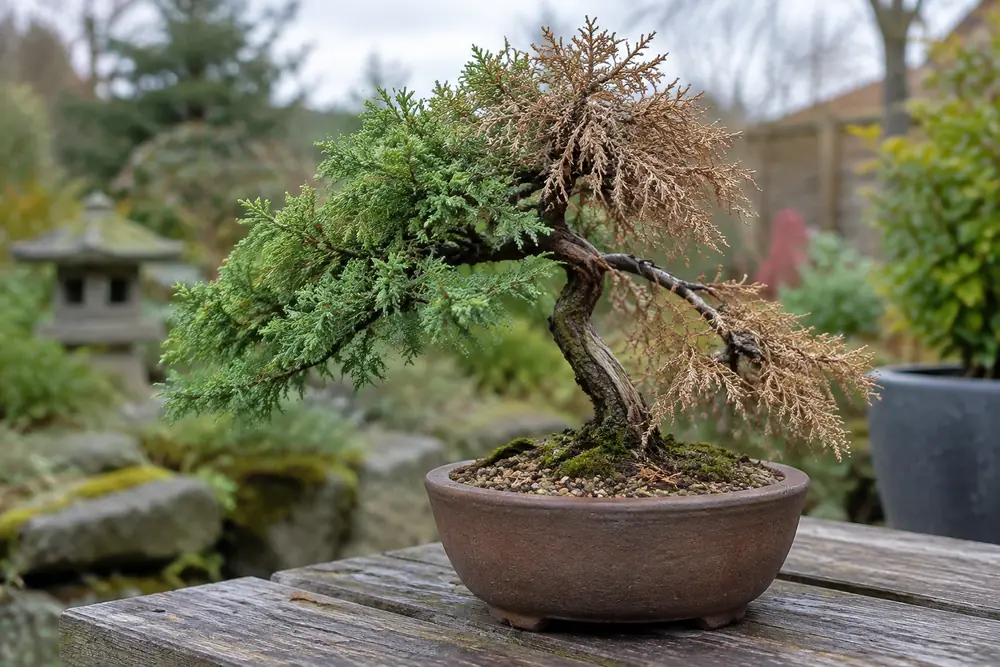
A juniper bonsai dying is tricky to catch, because junipers are masters at hiding stress. The foliage can stay green for two or three weeks after the roots have already failed. By the time you notice dull, grayish needles that then turn brown, the problem started a while ago. The most common causes are being kept indoors, overwatering that leads to root rot, letting the soil dry out completely, and pests like spider mites. If part of the tree is still green and flexible, there is a real chance to save it.
In this guide
- Why junipers hide their problems
- Signs your juniper bonsai is dying
- The most common reasons a juniper bonsai dies
- How to tell if your juniper is already dead
- How to save a dying juniper bonsai step by step
- Preventing a juniper from declining again
- How long does a juniper take to recover?
- Common mistakes when trying to save a juniper
- FAQ: juniper bonsai dying
- Final thoughts
This guide shows you how to tell whether your juniper is dying or already dead, what usually causes it, and what to do step by step.
Why junipers hide their problems
Junipers store water and nutrients in their foliage and bark. When roots stop working, the foliage keeps its color for a while by using those reserves. The first visible sign is often a subtle change: the bright green or blue-green color goes dull and slightly gray, as if the tree lost its shine. Then, sometimes quickly, whole sections turn yellow-brown and dry.
That delay is why checking your juniper’s soil and color regularly matters so much. For general background on the species, our juniper bonsai care guide is a good start.
Signs your juniper bonsai is dying
| Sign | What it often means |
|---|---|
| Foliage goes dull and grayish | Root problem or drought stress, early warning |
| Whole branches turn brown at once | Roots on that side died, or a fungal blight |
| Brown spreading from the inside out | Low light, poor airflow or natural old needle shedding |
| Brown tips on the outer foliage | Drying wind, sun scorch or severe underwatering |
| Fine webbing and speckled foliage | Spider mites |
| Small white or brown bumps on foliage | Juniper scale |
| Soil stays wet, sour smell | Root rot |
Brown inner foliage in autumn is often just the tree shedding old needles. That is normal, as our guide to Japanese juniper bonsai turning brown explains. The worry is when the outer, growing foliage loses color.
The most common reasons a juniper bonsai dies
1. Being kept indoors
This is the number one cause, especially for junipers sold as gifts. Junipers are outdoor trees. They need full sun, fresh air, daily temperature swings and a cold winter rest. Indoors, even in a bright window, they get a fraction of the light they need. They decline over months and then appear to die suddenly. If yours has been inside, read our guide to Japanese juniper bonsai indoors and plan to move it outside.
2. Overwatering and root rot
Junipers like their soil to dry slightly between waterings. In dense soil or a pot without good drainage, the roots stay wet, lose oxygen and rot. See our guide to root rot in bonsai for what rotten roots look like.
3. Drying out completely
The opposite problem. A small juniper in summer sun can dry out in a day. Fine roots die, and the damage shows up a week or two later as dull, then brown foliage.
4. Pests
Spider mites thrive on junipers in hot, dry weather and suck the color out of the foliage. Juniper scale and aphids also weaken trees. Our guide to juniper bonsai pests and diseases covers each pest in detail.
5. Fungal blights
Twig blights such as Phomopsis and Kabatina cause the tips of shoots to turn brown and die back, usually in wet weather. The Clemson Extension juniper factsheet has good photos and control advice.
6. Too much pruning
Cutting a juniper back to bare wood, or removing most of its foliage in one go, can kill whole branches or even the tree.
How to tell if your juniper is already dead
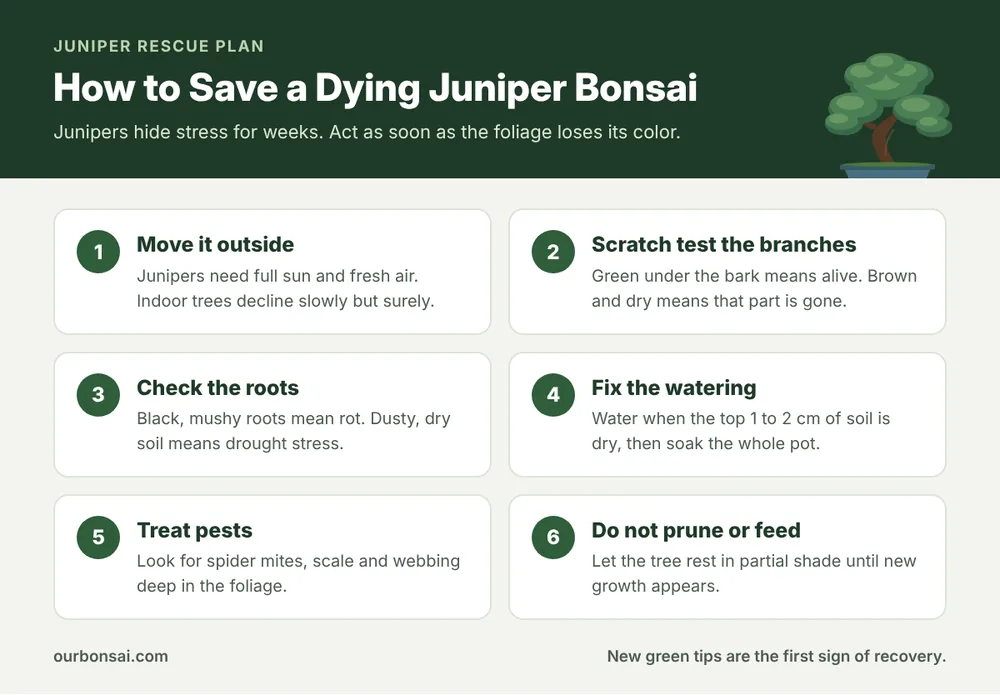
Do the scratch test on several branches and low on the trunk. Gently scrape a small patch of bark with your fingernail.
- Green and moist underneath: alive.
- Brown and dry underneath: that part is dead.
Also bend a few small twigs. Living ones bend, dead ones snap. If the trunk is brown under the bark all the way down to the soil and the foliage is crisp everywhere, the tree is dead. If you find green anywhere, keep going.
How to save a dying juniper bonsai step by step
- Move it outside. Choose a spot with morning sun and some afternoon shade while it recovers. Once it shows new growth, move it into full sun.
- Check the soil and roots. Slide the tree out of its pot. If the soil is soggy and roots are black and soft, trim the dead roots and repot into fresh, gritty soil. Our juniper bonsai soil recipe shows a good mix. If the roots look fine, put it back without disturbing them.
- Fix the watering. Water when the top 1 to 2 cm of soil is dry, and soak the whole pot each time. Do not let it stand in water.
- Mist the foliage on warm days to raise humidity around the tree and discourage spider mites.
- Treat pests if you found any. Rinse the foliage with a strong spray of water and use an appropriate treatment.
- Remove dead parts later. Cut away clearly dead, crispy branches once you are sure they are dead, but leave anything that is still green.
- Hold off on fertilizer. Start feeding gently only once you see fresh green growth at the tips.
Preventing a juniper from declining again
Once your tree is on the mend, a few habits will keep it from sliding back.
- Give it full sun outdoors. At least six hours of direct sun a day from spring to autumn.
- Use gritty soil. A mix of akadama, pumice and lava drains fast and keeps roots healthy. Repot every two to four years in early spring.
- Check the soil daily in summer. Small pots can dry out in an afternoon.
- Protect the roots in winter. Keep the tree outside so it gets its cold rest, but shelter the pot from hard frost and drying wind.
- Inspect for pests monthly. Tap a branch over white paper to check for mites, and look for scale on the foliage.
- Feed in the growing season. A balanced fertilizer from spring to autumn keeps new growth strong.
How long does a juniper take to recover?
Slowly. A stressed juniper may take a full growing season to show it is recovering. Signs of success are bright green new tips in spring or early summer. Do not prune or wire during this time. Let the tree grow freely and build strength.
Common mistakes when trying to save a juniper
- Watering more because it looks dry. Brown juniper foliage often comes from too much water, not too little. Check the soil first.
- Keeping it inside to “look after it”. Indoors is the problem, not the cure.
- Cutting all the brown off immediately. Wait to see what is really dead.
- Feeding heavily. Fertilizer burns damaged roots.
FAQ: juniper bonsai dying
Can a brown juniper bonsai turn green again?
No. Foliage that has turned fully brown and crispy will not recover. However, if the branch underneath is still alive, new growth can appear from nearby green tips.
Why did my juniper bonsai die suddenly?
It probably did not. Junipers hide stress for weeks, so a sudden collapse usually follows a longer period of root problems, drought or low light indoors.
Can I keep a juniper bonsai indoors?
Not long term. Junipers need outdoor sun and a cold winter rest. A few days inside for display is fine.
How often should I water a struggling juniper?
Only when the top of the soil is dry. Check daily, but do not water out of habit.
Final thoughts
A juniper bonsai dying is often a juniper that has been inside too long, watered too often or allowed to dry out. Catch the dull, grayish color early, check the roots, move it outdoors and fix the watering. If any green remains, give it time. Junipers are tough, and many recover to become beautiful trees again.